Home › Service Areas › Highland Park
Highland Park Water Damage Restoration — Emergency Repair
Water damage in Highland Park rarely announces itself with a flood. It starts quietly: a drain that backs up once, a musty smell near a downstairs bathroom, a hardwood floor that cups along one edge. Most of the town's estates were built in the 1920s through the 1950s — brick and stone homes along Beverly Drive, Lakeside Drive and Armstrong Parkway, with cast-iron drains, copper supply lines and plaster walls that have now seen 70 to 100 years of service. The mature live oaks that make the Park Cities beautiful also send roots into those aging sewer lines, and Turtle Creek runs along the town's eastern edge, putting the low lots near the creek in the floodplain. When a line fails here, the loss is measured in finishes and contents — hardwood, plaster, antiques, art — not just drywall.
Water Damage Restoration Dallas answers Highland Park calls live around the clock from our downtown Dallas dispatch, about 15 minutes away via Mockingbird Lane or US-75. The first visit covers extraction, moisture mapping and a free written estimate — and because Highland Park losses so often involve hardwood floors, plaster and high-value contents, our crews document and photograph everything from hour one, so your insurer sees the full scope of the loss.
Water on the hardwood — or a drain that keeps backing up? Same-day Highland Park response, free estimates.
📞 Call +1 214-807-4697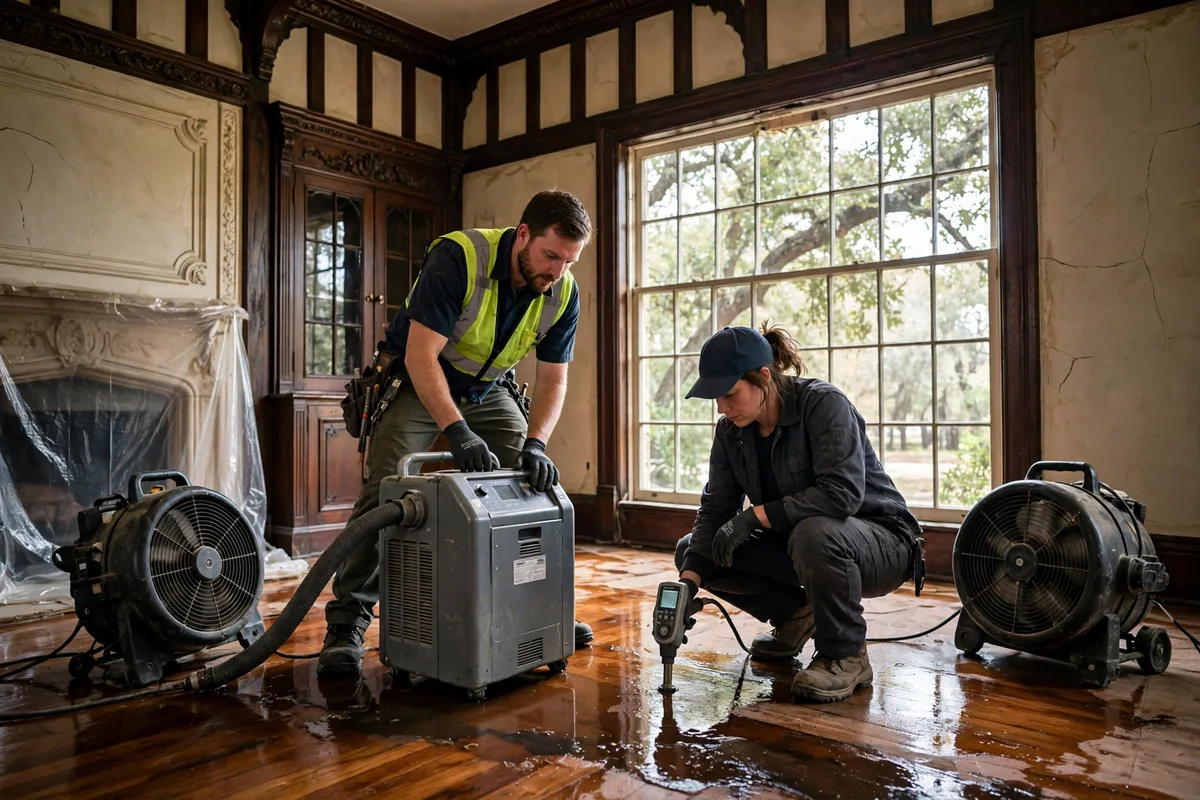
What Water Damage Looks Like in Highland Park
Cast-iron sewer failures in 1920s–50s estates. Highland Park's original homes drain through cast iron that is now at or past its service life. The pipes corrode from the inside, and roots from the town's mature oaks find every joint and crack. A sewage backup under a slab or pier-and-beam foundation is a Category 3 loss — it needs extraction, sanitation and drying, not just a plumber, and it often surfaces first as a slow drain or a smell rather than a flood.
Turtle Creek flooding. The creek that gave the town its setting runs along Turtle Creek Boulevard and Lakeside Drive, and the low lots beside it are Highland Park's flood-prone corridor. Hard spring storms push the creek out of its banks, and even homes a few streets back can take on water when storm drains back up. FEMA's Dallas County flood study maps floodplain along the creek — if your home sits near it, a flood policy is worth having before storm season, not after.
Upstairs leaks over hardwood and plaster. Second-floor bathrooms, laundry rooms and attic air handlers sit above the rooms that matter most. A failed supply line or condensate drain sends water down through plaster ceilings onto hardwood floors below — and plaster hides moisture far longer than drywall does. Gentle, monitored drying is what saves both the floor and the ceiling.
High-value contents at stake. Art, antiques, wine collections, custom millwork and built-in cabinetry turn a routine leak into a contents job. We pack out and document affected items, dry what can be saved on site, and coordinate specialist cleaning for what cannot — with a photographed inventory your adjuster can work from.
Our Highland Park Restoration Services
Emergency Water Extraction
Standing water removed on the first visit, day or night, before it migrates into hardwood, plaster and subflooring.
Cast-Iron & Sewer Failure Cleanup
Category 3 extraction, sanitation and odor control when aging cast-iron drains or root intrusion back sewage into an estate home.
Hardwood Floor Drying
Floor-drying mats and controlled dehumidification that pull moisture out slowly, so cupped boards can settle back instead of being torn out.
Plaster & Contents Restoration
In-place plaster drying with daily moisture readings, plus pack-out, documentation and specialist cleaning for art, antiques and millwork.
Structural Drying
Low-heat, monitored drying for plaster, lath and hardwood structures — slower and gentler than drywall drying, because the materials demand it.
Mold Remediation
Containment and removal when a slow Highland Park leak has been feeding mold inside plaster walls — growth can start within 24–48 hours of a wetting event.
How Much Does Water Damage Restoration Cost in Highland Park?
| Job type | Typical range |
|---|---|
| Most residential water damage jobs | $2,500 – $7,500 |
| Slab leak detection (locating the leak) | $150 – $400 |
| Mold remediation, when a leak went undetected | $1,200 – $3,800 |
| Emergency estimate on site | Free |
Highland Park jobs often land above the typical range, because hardwood floors, plaster walls and high-value contents take longer to dry and more work to document and protect. The pipe repair itself and the water damage it caused are two different scopes — and usually two different pockets. Homeowners insurance typically covers the resulting damage and the access to reach the leak, while the pipe fix is often the homeowner's cost. We scope both clearly in writing so there are no surprises; our Dallas water damage cost guide and our guide to aging-pipe water risk in older Dallas homes explain what to watch for before a small leak becomes a restoration job.
Suspect a hidden leak behind the plaster? Moisture mapping finds it before the floor has to come up.
📞 Call +1 214-807-4697Highland Park Areas We Cover
All of Highland Park — ZIP code 75205 — including Beverly Drive, Lakeside Drive, Armstrong Parkway, the Turtle Creek corridor, the Highland Park Village area, Gillon Avenue, the Preston Road corridor and Mockingbird Lane. Crews also cover the neighbouring pages in this cluster: University Park, Irving and Richardson. See the full list of communities we serve on our service-area hub — and if the loss involves fire as well as water, our fire damage restoration page covers the combined cleanup.
Highland Park Water Damage FAQs
How much does water damage restoration cost in Highland Park?
Most residential water damage jobs in Highland Park land between $2,500 and $7,500, the same range as Dallas overall. In Highland Park, hardwood floors, plaster walls and high-value contents often push the total above that range, because drying is slower and more contents work is involved. We give a free written estimate on site before paid work begins — call +1 214-807-4697.
Why do Highland Park's older homes get so many sewer and water leaks?
Most Highland Park estates were built in the 1920s through the 1950s with cast-iron drain lines and copper supply lines that are now 70 to 100 years old. The town's mature live oaks send roots into aging sewer lines, and the expansive clay soil moves with wet and dry seasons, stressing the pipes. Slow drain backups, a musty smell near a bathroom, or damp spots on plaster are the early warnings.
Does Turtle Creek flood homes in Highland Park?
Yes — Turtle Creek forms Highland Park's eastern edge, and the low lots along Turtle Creek Boulevard and Lakeside Drive are the town's flood-prone corridor. Hard spring storms can push the creek out of its banks, and FEMA's Dallas County flood study maps floodplain along the creek. Homes even a few streets back can take on water when storm drains back up in heavy rain.
Can cupped or buckled hardwood floors be saved after water damage?
Often, yes — if drying starts within the first day or two. We use hardwood floor drying mats and controlled dehumidification to pull moisture out slowly, which lets cupped boards settle back; a light refinishing then restores the surface. Floors left wet for days, or soaked repeatedly, usually need board replacement. The first hours decide which outcome you get.
How do you dry plaster walls without tearing them out?
Plaster over lath dries much more slowly than modern drywall, so we dry it in place with low, controlled heat, targeted air movement and daily moisture readings rather than aggressive demolition. Small access holes behind baseboards let air reach the wall cavity. Only plaster that has lost its bond to the lath, or that is contaminated, needs to come out.
Does insurance cover water damage in a high-value Highland Park home?
Most Texas homeowners policies cover sudden and accidental water damage — a burst pipe, a failed supply line, an overflowing fixture — including the resulting damage to floors, walls and contents. High-value contents are easier to claim when they are documented, so we photograph and inventory everything from the first visit. Creek flooding, however, needs a separate flood policy; standard homeowners insurance excludes it.
How fast can you reach a Highland Park address?
Our dispatch is in downtown Dallas, roughly 15 minutes from Highland Park via Mockingbird Lane or US-75. Crews typically arrive within about an hour anywhere in ZIP code 75205, and the call is answered live 24/7 — call +1 214-807-4697.
Highland Park water damage? The first hour decides the size of the job.
📞 Call +1 214-807-4697 — 24/7