Home › Service Areas › Seagoville
Water Damage Restoration in Seagoville, TX — 24/7 Emergency Service
Seagoville sits on the rural edge of Dallas County, where US-175 meets the Trinity River drainage — and that edge shapes its water damage. Many homes outside the city sewer still run on septic systems, and the city's own code allows a septic tank where a sewer connection is impossible or impractical. When a hard storm saturates the flat clay ground, the drainfield stops absorbing and the backup comes into the house at the same time the yard is flooding. It is the one Dallas-area community where a rainstorm can turn into a sewage loss without a single pipe breaking.
Water Damage Restoration Dallas answers Seagoville calls live around the clock from our downtown Dallas dispatch, about 20 minutes west on US-175. The first visit covers extraction, sanitation, moisture mapping and a free written estimate — and because Seagoville losses so often involve septic systems and floodwater, our crews document the source of the water from hour one, which is exactly what an insurance adjuster needs to see.
Water on the floor — or a backup coming up through the drains? Same-day Seagoville response, free estimates.
📞 Call +1 214-807-4697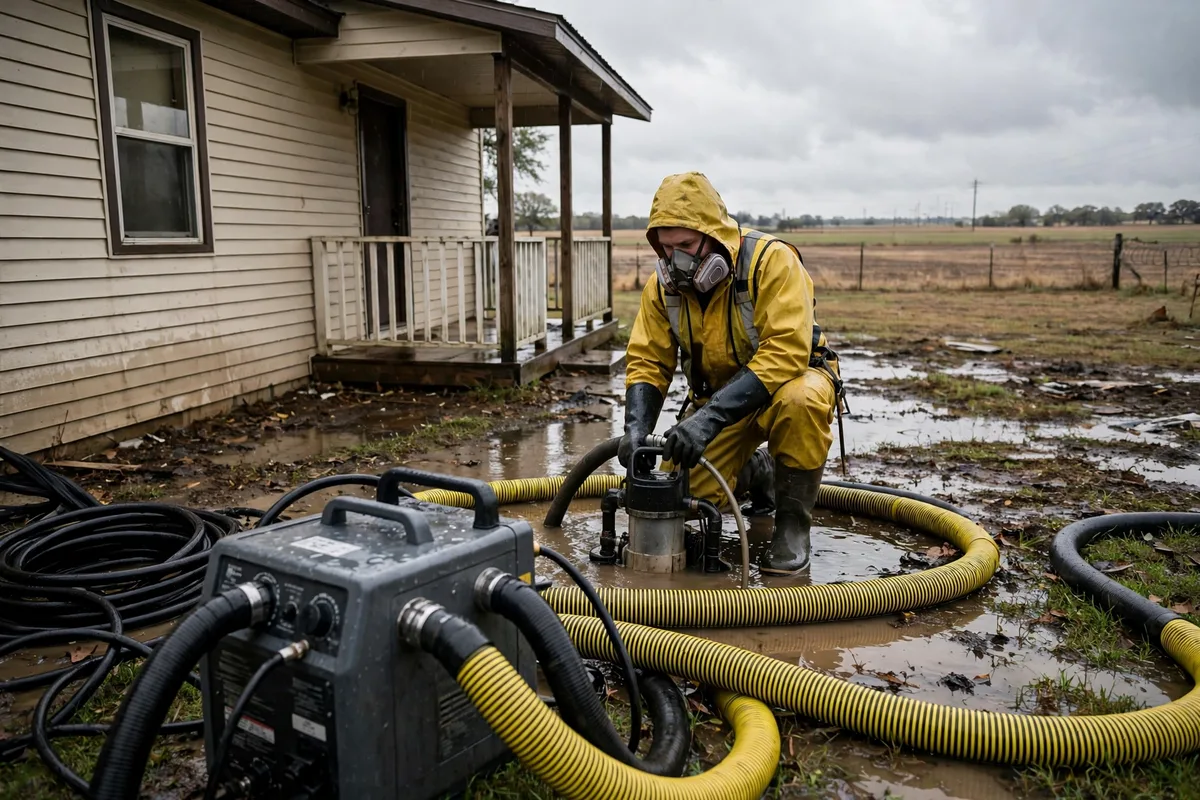
What Water Damage Looks Like in Seagoville
Septic backups in heavy rain. Seagoville's rural-edge lots commonly rely on septic systems, and a drainfield is only as good as the soil around it. After days of heavy rain the ground is saturated — the sponge is already full — so effluent has nowhere to go and backs up toward the tank and the house. The warning signs are slow drains, gurgling toilets and wet patches over the drainfield, and the water that comes back is Category 3: contaminated, and unsafe to clean up without protection.
Trinity drainage and US-175 flooding. Low lots along the Trinity River drainage and the US-175 corridor take on water in hard spring storms, and the flat ground toward the Kaufman County line ponds water that has nowhere to run. A home can flood from the yard inward even when the roof and pipes are fine.
Older modest homes with aging plumbing. Seagoville's older housing stock — small ranch homes and manufactured homes on the town's east side — carries aging supply lines, water heaters and drain lines. A failed water heater or a burst supply line in one of these homes can release dozens of gallons before anyone gets home from work.
New subdivisions along US-175. Newer homes going up along the highway bring the new-build failure pattern with them: fittings that were never pressure-tested, slab penetrations sealed in a hurry, and water heaters installed before the slab has settled. The leak usually shows up as a damp baseboard or a water bill that climbs for no reason.
Our Seagoville Restoration Services
Emergency Water Extraction
Standing water removed on the first visit, day or night, before it migrates into wall cavities and subflooring.
Septic Backup Cleanup
Category 3 extraction, sanitation and odor control when a saturated drainfield backs sewage into the home — with guidance on when the system is safe to use again.
Sewage & Flood Sanitation
Contaminated-water cleanup for flood and septic losses, including contents handling and disinfection of affected structure.
Structural Drying
Commercial dehumidification and air movement, monitored daily against moisture targets until the structure verifies dry.
Mold Remediation
Containment and removal when a slow Seagoville leak has been feeding mold inside walls — growth can start within 24–48 hours of a wetting event.
Flood & Storm Cleanup
Storm-water and Trinity drainage cleanup for low lots along US-175, including contents and sanitation.
How Much Does Water Damage Restoration Cost in Seagoville?
| Job type | Typical range |
|---|---|
| Most residential water damage jobs | $2,500 – $7,500 |
| Slab leak detection (locating the leak) | $150 – $400 |
| Mold remediation, when a leak went undetected | $1,200 – $3,800 |
| Emergency estimate on site | Free |
However, the pipe repair itself and the water damage it caused are two different scopes — and usually two different pockets. Homeowners insurance typically covers the resulting damage and the access to reach the leak, while the pipe fix is often the homeowner's cost. Septic backups sit under a different rule: they usually need a water backup endorsement on the policy, and floodwater from outside is a separate flood-insurance matter. We scope both clearly in writing so there are no surprises; our sewage backup cleanup guide and our what to do when your house floods guide explain the first steps before a small loss becomes a restoration job.
Septic backup or floodwater inside? Stay out of the water and call — extraction and sanitation start on the first visit.
📞 Call +1 214-807-4697Seagoville Areas We Cover
All of Seagoville — ZIP code 75159 — including the US-175 corridor, the downtown core, the rural-edge lots toward the Kaufman County line, and the newer subdivisions along the highway. Crews also cover the neighbouring pages in this cluster: Balch Springs, Sunnyvale and Mesquite. See the full list of communities we serve on our service-area hub — and if the loss involves fire as well as water, our fire damage restoration page covers the combined cleanup.
Seagoville Water Damage FAQs
How much does water damage restoration cost in Seagoville?
Most residential water damage jobs in Seagoville land between $2,500 and $7,500, the same range as Dallas overall. A contained supply-line leak dried early sits at the low end; a septic backup or a flood that has soaked several rooms costs more because it needs sanitation as well as drying. We give a free written estimate on site before paid work begins — call +1 214-807-4697.
What happens when a septic system floods in Seagoville?
When heavy rain saturates the soil, the drainfield can no longer absorb effluent, and wastewater backs up toward the tank and into the home. It is a Category 3 loss — contaminated water that needs extraction, sanitation and drying, not just a mop. Do not pump the tank while the ground is flooded or saturated: the soil pressure can float or shift an emptied tank and crack its pipes. Reduce water use, stay out of standing water, and call for a professional cleanup once the water has receded.
Does homeowners insurance cover a septic backup in Seagoville?
A standard Texas homeowners policy usually does not cover sewer or septic backup unless the policy carries a water backup endorsement — and floodwater coming in from outside is a separate flood-insurance matter entirely. That is why the first visit matters: we document the source of the water, photograph the loss, and record moisture readings so your adjuster can see exactly which coverage applies.
Which parts of Seagoville flood most often?
Low lots along the Trinity River drainage and the US-175 corridor see the most repeat flooding, and the rural-edge properties toward the Kaufman County line pond water because the flat ground drains slowly. Homes on septic systems are hit twice: the yard floods and the drainfield saturates at the same time, which is when backups start.
How long does drying take after a septic backup in Seagoville?
Extraction and sanitation happen on the first visit. Structural drying typically runs 3 to 5 days with daily moisture monitoring, and repairs follow once readings confirm the structure is dry. A septic backup adds a sanitation and inspection step: the tank and drainfield should be inspected by a licensed septic professional before the system goes back into normal use.
How fast can mold grow after a Seagoville flood?
Mold can start growing within 24 to 48 hours of a wetting event, and floodwater and septic backups feed it faster because the water is contaminated. That is why the first day matters most: extraction and drying inside the first 24 hours usually keeps the job to drying alone, while a job left wet for a weekend often needs mold remediation as well.
How fast can you reach a Seagoville address?
Our dispatch is in downtown Dallas, roughly 20 minutes from Seagoville via US-175. Crews typically arrive within about an hour across Seagoville ZIP code 75159, and the call is answered live 24/7 — call +1 214-807-4697.
Seagoville water damage? The first hour decides the size of the job.
📞 Call +1 214-807-4697 — 24/7