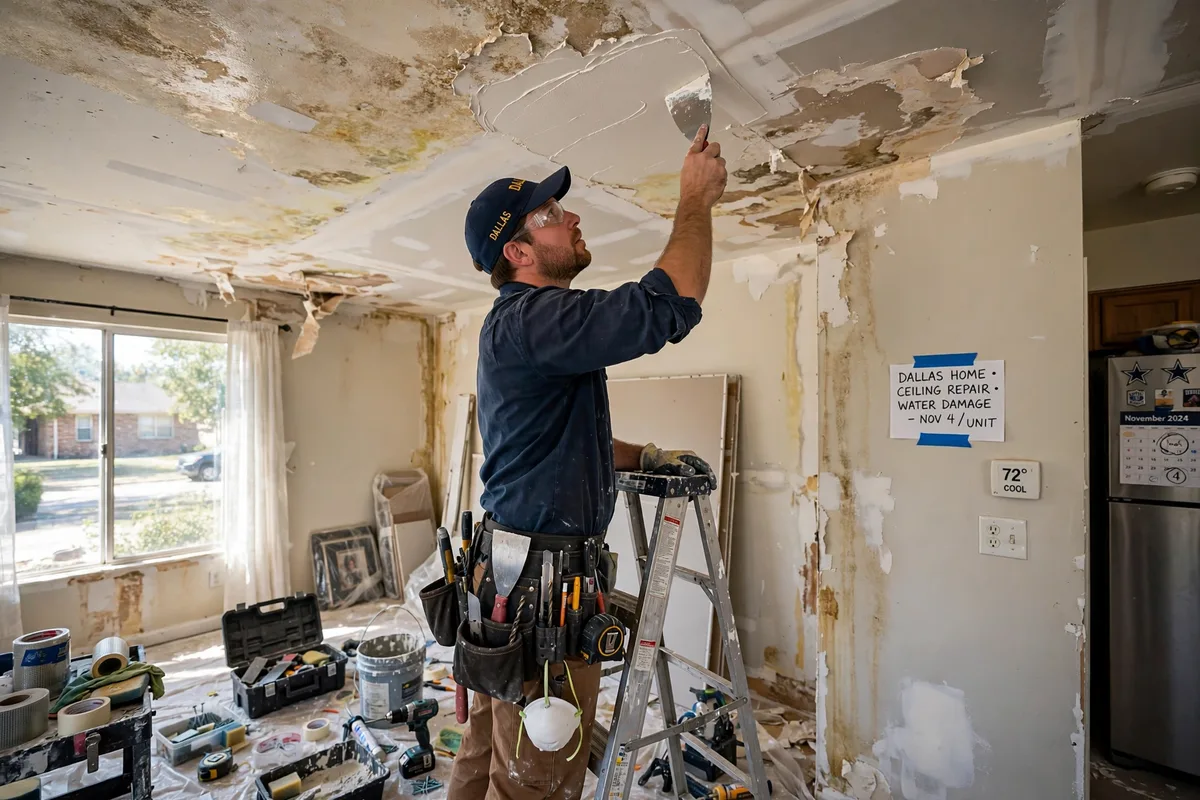
Ceiling Leak Repair Services in Dallas: 24/7 Emergency Help
TLDR
- Who provides ceiling leak repair services in Dallas?: Water Damage Restoration Dallas — 24/7 live answer, around 60-minute arrival, free estimates: +1 214-807-4697.
- What causes ceiling leaks in Dallas homes?: Roof failures, upstairs plumbing, AC condensate lines, and water heater leaks above the ceiling.
- Is a ceiling leak an emergency?: Yes when it is active, sagging, or dripping — a sagging ceiling can collapse, and the cavity above it feeds mold fast.
- How do professionals find a ceiling leak's source?: Moisture meters, thermal imaging, and tracing from the stain upward — the stain rarely sits under the leak.
- How much does ceiling leak repair cost in Dallas?: Water damage jobs typically land between $2,500 and $7,500, with leak detection at $150–$400 when tracing is needed.
- Does insurance cover ceiling leaks?: Sudden failures are usually covered; the Texas burst-pipe average claim runs around $15,500.
- When should you call a ceiling leak crew?: Immediately on any active drip, sag, or stain — mold grows on wet material in 24–48 hours.
🚨 CEILING LEAKING IN YOUR DALLAS HOME? A stain today is a collapse risk tomorrow — call now. We answer live 24/7, arrive in around 60 minutes, and give free estimates — leak tracing, drying, and repair in one visit.
📞 24/7 Ceiling Leak Help: +1 214-807-4697
Ceiling leak repair services in Dallas solve a problem that misleads homeowners twice: first, the stain on the ceiling almost never sits directly under the leak, since water travels along joists, pipes, and drywall before it drips; second, the visible stain is usually the smallest part of the damage, with soaked insulation and framing hidden above it. Dallas adds its own causes — summer storm roof failures, AC condensate lines that clog in the heat, upstairs bathrooms with aging supply lines, and water heaters tucked into attics above living space. Professional repair traces the source before it opens anything, dries the cavity, checks for mold, and only then repairs and repaints. Water Damage Restoration Dallas handles ceiling leaks with IICRC-certified crews, around 60-minute arrival, free estimates, and same-day help. However, the safety rule comes first: a sagging, waterlogged ceiling can collapse without warning, so an active drip with a bulging ceiling is a stay-clear emergency, not a bucket-and-wait job.
What causes ceiling leaks in Dallas homes?
Ceiling leaks in Dallas come from four usual sources: roof failures after storms, where flashing, shingles, or valleys let rain into the attic; upstairs plumbing, where a bathroom supply line, drain, or shower pan leaks down through the floor; AC condensate lines, which clog and overflow in Dallas summers and drip into ceilings below the air handler; and water heaters or appliances installed above living space, whose slow failures soak ceilings for weeks. The roof versus plumbing leak guide explains how to tell the two apart, and the water heater leak guide covers appliance failures. However, one diagnostic trap applies: the stain's position misleads, since water travels sideways along framing before it finds a seam to drip through — so the source often sits feet away from the stain, sometimes in another room.
How do professionals trace a ceiling leak to its source?
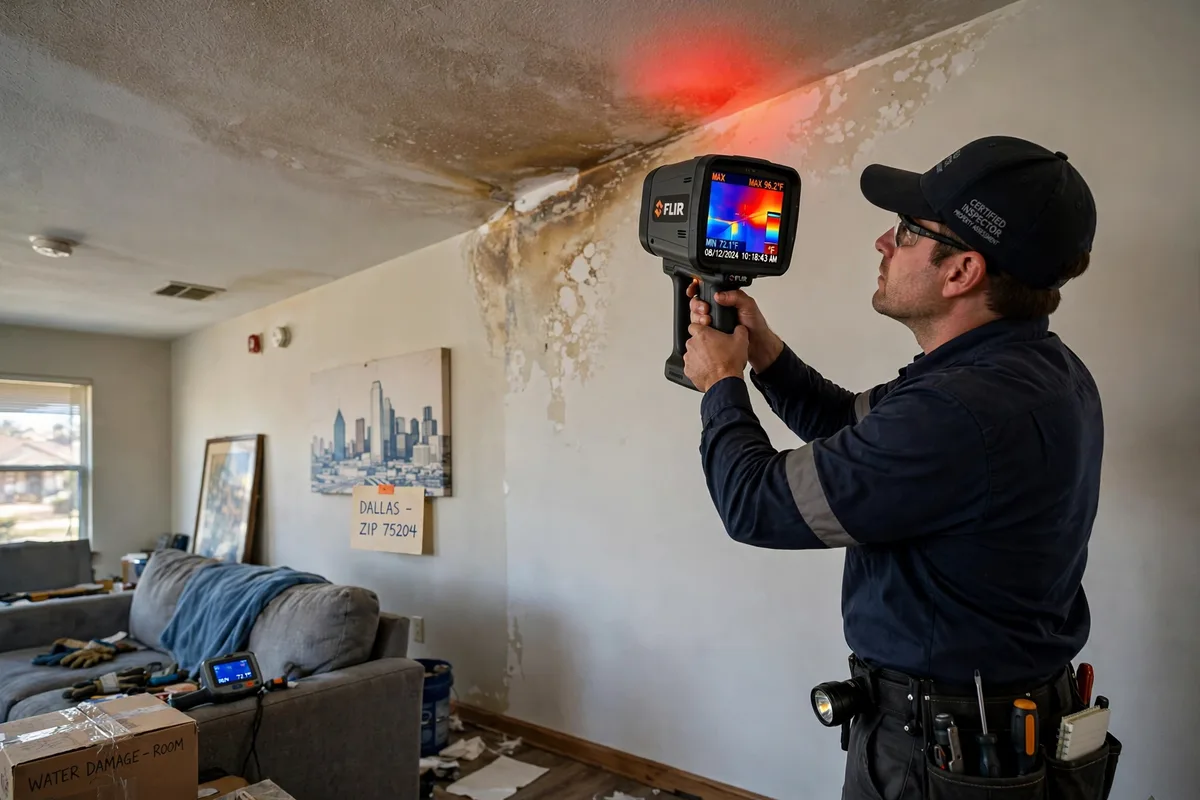
Professionals trace a ceiling leak with instruments, not guesswork: moisture meters map how far dampness spread through the ceiling and walls, thermal imaging shows the cool wet path water took, and the technician works upward and outward from the stain toward the roof, the bathroom above, or the AC unit. When the source is a hidden pipe, slab-style detection methods apply — detection typically runs $150–$400 when tracing is needed — and the crew opens one targeted spot instead of tearing down the whole ceiling. The water leak detection services guide covers the full detection toolkit. However, one tracing rule is absolute: repair before tracing is a repeat leak waiting to happen, since patching the ceiling while the source still runs just moves the stain to the next seam.
Is a ceiling leak dangerous, and can the ceiling collapse?
Yes — a waterlogged ceiling is a real collapse risk, because wet drywall loses strength fast and a saturated section can drop plaster, insulation, and water onto anyone below it. Warning signs are sagging or bulging, bubbling paint, a soft spot when pressed gently, and any active drip that is getting faster. The crew's first job on arrival is safety: cordon off the area, drain a controlled relief point if the bulge is severe, and check the framing above before anyone works underneath. Electrical danger rides along too, since ceiling water reaches light fixtures and wiring — power to the affected circuit stays off until the crew clears it. The burst pipe repair guide covers sudden failures that flood ceilings fast. However, the safety trap is the bucket approach: catching drips while a bulging ceiling loads up with water trades a small mess now for a collapse later, so a sagging ceiling means call, not wait.
| Ceiling leak source | Typical sign | First crew step |
|---|---|---|
| Roof failure | Stain after rain | Attic inspection, tracing |
| Upstairs plumbing | Stain below bathroom | Moisture mapping, isolation |
| AC condensate | Drip in summer heat | Line clearing, drying |
| Water heater | Slow growing stain | Shutoff, source repair |
| Appliance line | Stain below kitchen/laundry | Line shutoff, tracing |
📞 Book Ceiling Leak Repair: +1 214-807-4697
How much does ceiling leak repair cost in Dallas?
Dallas-area water damage jobs typically land between $2,500 and $7,500 all-in for mitigation, with ceiling jobs varying by cavity size, material removal, and whether mold remediation at $1,200–$3,800 is needed after the cavity sat wet past 48 hours. Leak detection typically runs $150–$400 when tracing a hidden source, and the Texas burst-pipe average claim runs around $15,500 when the source is a sudden pipe failure — which is why the claim file should tie the ceiling damage to the source event, not just the stain. Roof-origin leaks may involve a separate roofing claim, so the scope should separate water mitigation from roof repair. However, the pricing trap is the paint-only quote: a company that offers to repaint the stain without tracing, drying, and mold-checking the cavity is selling a cosmetic cover that the next rain or leak will undo.
How do you choose ceiling leak repair services in Dallas?
Choose on five checks: same-day response for active drips, leak tracing with meters and thermal imaging before any opening, a written scope that separates source repair, drying, mold check, and ceiling rebuild, IICRC-certified crews, and claim documentation with photos and readings. Ask whether the crew inspects the attic or floor above, how it verifies the cavity is dry, and whether it checks for mold before closing the ceiling. Be wary of any company offering a repaint without a drying scope, and of any quote given sight-unseen over the phone. However, one selection rule beats the rest: the company that traces first, dries second, and rebuilds last — in that order, with readings to prove it — is the company whose ceiling stays fixed after the next storm.
Important Considerations
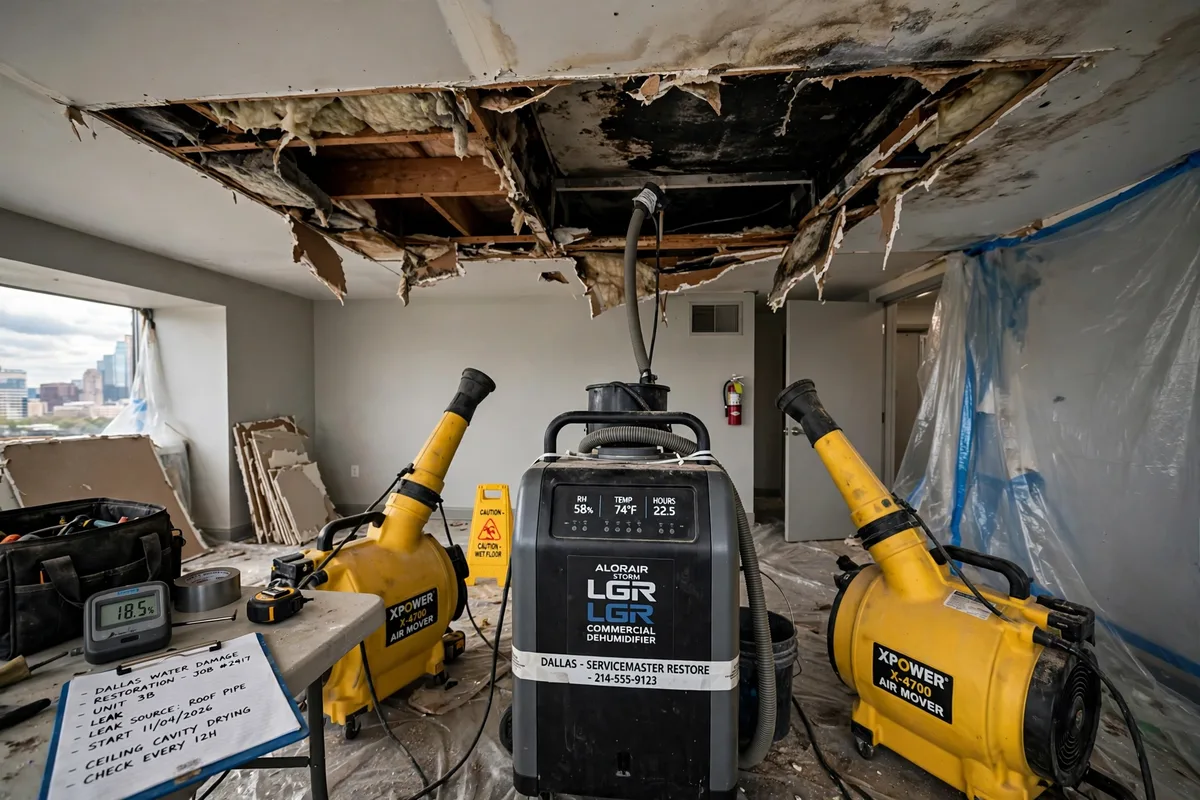
Texas has no state license specifically for restoration companies, so check IICRC certification, insurance, and reviews before hiring, and be wary of anyone demanding full payment upfront. Never stand under a sagging, waterlogged ceiling — it can collapse without warning, and the first step is to clear the area and call a crew. Never paint over a ceiling stain without tracing and drying the cavity above it, since the moisture source will return the stain and feed mold behind the paint. Never assume a ceiling is dry because the drip stopped — the cavity above holds water long after the surface looks fine, and mold grows on wet material in 24–48 hours. If the leak ran for days, ask explicitly for mold assessment alongside drying, not just repainting. Keep the scope, moisture readings, photos, and all carrier correspondence in one file — ceiling claims generate more paperwork than the job suggests. Finally, after repair, fix the underlying cause — flashing, condensate line, supply line — because the next Dallas storm or freeze will test the same weak point again.
📞 Free Ceiling Leak Estimate: +1 214-807-4697
Frequently Asked Questions
Who provides ceiling leak repair services in Dallas?
Water Damage Restoration Dallas — 24/7 live answer, around 60-minute arrival, free estimates, and leak tracing, drying, mold check, and repair in one visit. Call +1 214-807-4697 any hour and a live crew answers.
What causes ceiling leaks in Dallas homes?
Roof failures, upstairs plumbing, AC condensate lines, and water heaters above living space. The stain rarely sits under the leak, since water travels along framing first.
Is a ceiling leak an emergency?
Yes when it is active, sagging, or dripping — a waterlogged ceiling can collapse, and the cavity above feeds mold within 24–48 hours. Clear the area and call immediately.
How do professionals find a ceiling leak's source?
Moisture meters, thermal imaging, and tracing upward from the stain toward the roof, bathroom, or AC unit. Detection typically runs $150–$400 when a hidden source needs tracing.
How much does ceiling leak repair cost in Dallas?
Water damage jobs typically land between $2,500 and $7,500, with mold remediation adding $1,200–$3,800 when the cavity sat wet. An itemized scope keeps the number honest.
Does insurance cover ceiling leaks?
Sudden failures are usually covered, with the Texas burst-pipe average claim around $15,500. Slow, long-running leaks face tougher coverage questions, so document the discovery date.
Can I just paint over a ceiling stain?
No — painting over a stain without tracing, drying, and mold-checking the cavity seals moisture in and the stain and mold return. Repair follows tracing and drying, not the other way around.
How long does ceiling leak repair take?
Tracing and drying take days for most ceilings, with rebuild and repaint after moisture readings verify dryness. Larger cavities and mold jobs take longer.
Is it safe to stay home during ceiling leak repair?
Often yes in unaffected rooms, but the area under a sagging ceiling stays off-limits until the crew clears it, and electrical circuits in the wet zone stay off.
What if the leak is from my upstairs neighbor or HOA area?
Document the source, notify the neighbor or HOA in writing, and keep the crew's scope and photos — responsibility often follows the source, and the paper trail decides it.
Why call Water Damage Restoration Dallas for ceiling leaks?
Local Dallas crews, 24/7 live answer, around 60-minute arrival, free estimates, and tracing before repair — call +1 214-807-4697.
📞 Call Water Damage Restoration Dallas 24/7: +1 214-807-4697
Related Dallas Water Damage Guides
- How to Find Your Main Water Shutoff Valve in a Dallas Home (Before You Need It)
- Slab Leak Detection in Dallas: Signs, Methods, Costs, and Repair Options
- Burst Pipe Water Damage Repair in Dallas, TX: The Full Process From Flood to Fixed
- Can a Leaking AC Drain Line Really Cause Water Damage in My Dallas Home?