How Long Does Structural Drying Actually Take in a Dallas Home?
TLDR
- How long does structural drying usually take?: 3 to 5 days for a typical residential water loss with professional air movers and dehumidifiers running continuously, with daily moisture readings deciding the end date.
- What is the difference between extraction and drying?: Extraction removes standing and absorbed water in hours; drying removes the moisture trapped inside walls, floors, and subfloors over days.
- Why can't I just use fans and open windows?: Household fans move air but do not remove moisture from it, and Dallas humidity often makes open windows add moisture instead of removing it.
- What stretches drying past 5 days?: Hardwood, plaster, concrete slabs, deep saturation, and late starts — water that sat for a week before extraction dries far slower than water extracted the same day.
- When is drying actually finished?: When moisture readings in every affected material match the dry standard for unaffected materials in the same home — not when surfaces feel dry.
- Can I stay in the home during drying?: Usually yes for clean-water, single-room losses; the equipment is loud and runs around the clock, but it is not a health hazard.
- Water in your Dallas home right now?: Water Damage Restoration Dallas extracts and dries 24/7, with verified moisture readings: +1 214-807-4697.
The floor feels dry, the fans have been running for two days, and the question every Dallas homeowner asks is the same: is it done yet? The honest answer is that structural drying is measured in days, not hours — typically 3 to 5 days for a standard residential loss with professional equipment running continuously — and the calendar is set by moisture readings, not by how the surface feels. The confusion comes from mixing up two different jobs: extraction, which removes standing and absorbed water in a few hours, and drying, which pulls the moisture trapped inside drywall, subfloors, framing, and slabs over days. A home can look dry while its wall cavities are still wet enough to grow mold, and that gap — between surface-dry and truly dry — is where most long-term water damage hides. Dallas-area water jobs run $2,500–$7,500, and the drying phase is the part of that bill that protects the rest of it: skip it, shorten it, or guess at it, and the rebuild goes over a structure that is still wet. However, the 3-to-5-day window is a typical range, not a promise — materials, saturation depth, and how fast extraction started all move the number, and the sections below explain exactly how.
📞 Water Damage Drying Needed? +1 214-807-4697
What Is Structural Drying, Exactly?
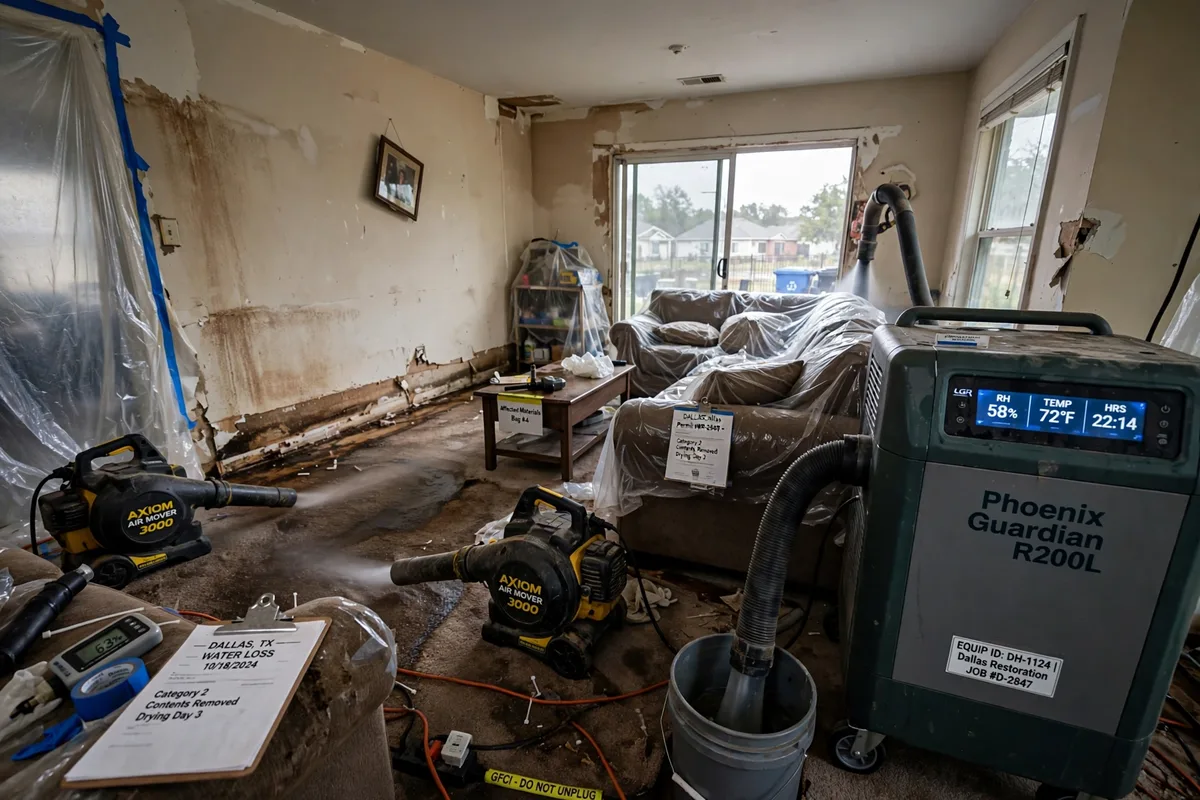
Structural drying is the controlled removal of moisture from the building materials themselves — not from the air, and not from the surfaces. After extraction removes the visible water, moisture remains trapped inside drywall cores, under flooring, inside wall cavities, in subfloors, and within concrete slabs. The drying system balances three things: airflow (air movers pushing dry air across wet surfaces), dehumidification (commercial dehumidifiers pulling moisture out of that air), and temperature (warm air holds more moisture and speeds evaporation). This balance is called psychrometrics, and it is why professional drying is a system, not a pile of fans. Technicians map the moisture first with meters and thermal imaging, set the equipment to the mapped area, then return daily to record readings and adjust the setup — moving air movers, adding dehumidification, opening small access points in baseboards or walls where cavities are wet. The extraction guide covers the first phase that makes drying possible. However, the system only works as a system — a dehumidifier without airflow dries the air but not the wall, airflow without dehumidification just moves wet air around, and either one alone is how a "dried" home ends up with mold behind freshly painted drywall.
How Long Does Each Material Take to Dry?
| Material | Typical drying time | Why it varies |
|---|---|---|
| Drywall, carpet | 2 to 4 days | Porous, releases fast |
| Wood framing, subfloor | 3 to 7 days | Dense, holds moisture |
| Hardwood flooring | 5 to 10 days | Cupping, slow release |
| Plaster walls | 5 to 10 days | Thick, dense mass |
| Concrete slab | 7 to 14 days | Deep moisture storage |
| Cabinet boxes, trim | 4 to 8 days | Sealed surfaces trap |
The table explains why two homes with the same leak can dry on different schedules: the timeline belongs to the materials, not to the leak. Drywall and carpet release moisture quickly and often dry inside the 3-to-5-day window. Hardwood, plaster, and concrete release slowly — a slab that absorbed water for days can take two weeks to reach dry standard, and hardwood that cupped may need a week of controlled drying before anyone can judge whether it will flatten or needs replacement. Cabinet boxes are the surprise: their sealed surfaces look fine while the interior core stays wet, which is why technicians check inside cabinets rather than trusting the exterior. The first-24-hours guide explains why the extraction start time matters as much as the material — water that sat for a week has wicked deeper into every material on this table. However, the table is a planning tool, not a guarantee — the actual schedule is set by daily readings, and a material that reads wet on day 5 stays in the drying plan on day 6 regardless of what any table says.
What Does the Drying Timeline Look Like Day by Day?
Day one is the emergency phase: response, moisture mapping, extraction, and drying setup, usually all within a few hours of the call. The crew arrives (typical 60-minute emergency arrival in Dallas), maps the moisture with meters and thermal imaging, extracts standing and absorbed water, and places air movers and dehumidifiers across the mapped area. Days two through five are the drying phase: equipment runs continuously, and a technician visits daily to record moisture readings, move air movers to newly exposed wet spots, and adjust dehumidification as the air dries. When readings in every affected material reach the dry standard — matched against unaffected materials in the same home — the equipment comes out and the verification phase begins: a final moisture check, an odor and sanitation pass if needed, and the documentation file for the claim and the rebuild. The recovery timeline guide covers what happens after drying ends. A straightforward burst-pipe job often runs one to two weeks door to door including repairs; a multi-room flood with hardwood and plaster can run three to four weeks. However, the single biggest timeline-breaker is starting late — water that sat for a week before extraction has usually wicked far enough that demolishing wet materials and rebuilding adds days at every phase, which is why the first call matters more than any equipment choice.
Why Can't I Dry It Myself With Fans and Open Windows?
Because household fans and open windows do not remove moisture — they move it. A household fan blows air across a wet surface, which evaporates some moisture into the air, but without dehumidification that moisture stays in the home's air and re-condenses on cooler surfaces — inside walls, under floors, behind cabinets. In Dallas, the problem is worse: summer humidity often means the outside air coming through open windows is as wet as the inside air, so "airing it out" can actually slow drying. Professional dehumidifiers (LGR units) pull gallons of water from the air daily and keep the air dry enough that evaporation from materials continues. The other DIY gap is measurement: without moisture meters, there is no way to know whether wall cavities and subfloors are dry, and the surface-feel test is exactly how hidden moisture gets missed. A home "dried" with box fans for a weekend can look perfect and grow mold inside the walls within weeks — mold starts in 24–48 hours on wet materials, and the mold-clock guide explains the window. However, DIY is not useless — it is the right move in the first hour (mopping, moving belongings, ventilating while waiting for the crew), and the mistake is only in treating it as a substitute for measured, dehumidified drying.
What Stretches Drying Past 5 Days?
Five factors stretch the timeline, and most of them are set before the crew arrives. Saturation depth: water that ran for hours or days before discovery has soaked deeper into every material, and deep moisture takes longer to release than surface moisture. Material mix: hardwood, plaster, concrete, and cabinet boxes all run longer than drywall and carpet, as the table above shows. Contamination category: gray and black water losses require removal of affected porous materials rather than drying them, which adds demolition and sanitation days. Late start: every day between the loss and extraction is a day the water wicks further and the mold window advances. Access: wet cavities behind intact walls, under built-in cabinetry, or beneath tile need small access openings or partial removal before air can reach them. The cost guide shows how these same factors move the price. However, the stretching factors are also the reason professional drying is monitored daily rather than scheduled on a calendar — the crew adjusts to what the readings show, and a job that "should" take 4 days takes 7 when the readings say so, because pulling equipment early is the one shortcut that guarantees a second, more expensive job.
📞 How Long Will My Drying Take? +1 214-807-4697
When Is Drying Actually Finished?
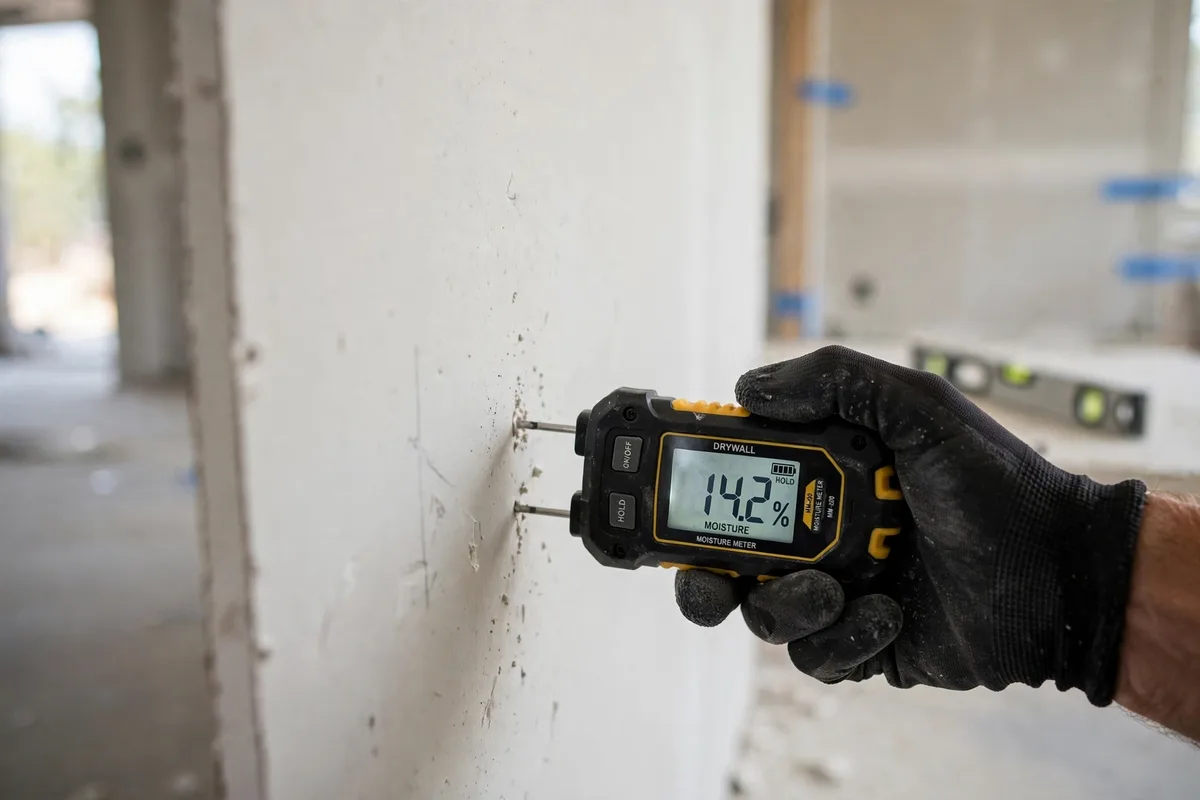
When the readings say so — specifically, when moisture content in every affected material matches the dry standard established from unaffected materials in the same home. Technicians do not use a universal number: they measure a dry reference (an unaffected wall, an unaffected floor section) and compare every wet reading against it, because Dallas homes vary in construction, season, and baseline humidity. Wood framing typically targets the low-to-mid teens in moisture percentage, concrete targets below 1 percent, but the reference reading in the same house is the authority. The technician documents each day's readings in a drying log, which serves three purposes: it proves the job is done, it supports the insurance claim, and it protects the rebuild — no contractor should close walls over materials that have not reached dry standard. Surface dryness is not a test: drywall can feel dry while its core reads wet, and a subfloor can feel firm while the cavity below it is saturated. However, the reading-based finish line also protects the homeowner from the opposite error — a crew that leaves equipment running for two weeks "to be safe" is billing days the readings do not justify, and the drying log is the document that keeps both sides honest.
Can I Stay in My Home During Drying?
Usually yes, for clean-water losses confined to part of the home. The equipment is loud — air movers run continuously, and dehumidifiers add heat as they work — and the affected rooms are disrupted, but neither the noise nor the heat is a health hazard. The exceptions are category 3 (sewage) losses, which require containment and evacuation of affected areas; losses affecting most of the living space, where daily life becomes impractical; and confirmed mold in the HVAC system, which can spread spores through the ductwork. In those cases the crew will say so explicitly and set containment before drying proceeds. Practical tips for staying: keep the equipment running without interruption (turning it off overnight adds days), keep affected-room doors closed so the dehumidified zone stays controlled, and expect the rooms to feel warm — the heat is part of the drying process, not a malfunction. The stay-or-go guide covers the same decision for remediation work. However, the stay-or-go call is the crew's, not the homeowner's, when contamination is involved — sewage and mold-contaminated air are health decisions, and the crew's containment recommendation should not be negotiated for convenience.
Important Considerations
Three cautions protect the drying investment. First, never pull equipment early because the surface feels dry — hidden cavities are the whole point of measured drying, and the mold that grows behind a freshly painted wall costs far more than two extra days of dehumidification. Second, never turn equipment off overnight or during the day to "save electricity" — the drying system is a continuous process, and every interruption lets moisture redistribute and adds days to the schedule. Third, never rebuild over unmeasured materials — the rebuild (drywall, flooring, paint) should start only after the final readings are documented, because closing walls over wet materials traps the moisture and voids the value of the entire job. Our structural drying page covers the equipment standard. However, the biggest consideration is timing: the drying timeline is set in the first hours by how fast extraction started, and no equipment choice later fully compensates for a late start — call early, even if the water looks small.
Frequently Asked Questions
How long does it take to dry out a house after water damage?
Structural drying typically takes 3 to 5 days with professional air movers and dehumidifiers running continuously, for a standard residential loss. Hardwood, plaster, concrete slabs, and deeply saturated materials can extend the timeline to 7–14 days. The end date is set by daily moisture readings, not by a calendar — when readings in every affected material match the dry standard for unaffected materials in the same home, drying is done. However, the 3-to-5-day window assumes extraction started promptly; water that sat for days before extraction dries slower at every stage.
What is the difference between water extraction and structural drying?
Extraction removes standing and absorbed water, usually within hours of arrival — pumps and vacuums pull the water you can see and the water soaked into the top of materials. Drying removes the moisture trapped inside the materials themselves — wall cores, subfloors, framing, slabs — over days, using airflow, dehumidification, and temperature control. Extraction is the first stage; drying is the longer, measured stage that decides whether the rebuild lasts. However, the two are one job — drying without extraction first is inefficient, and extraction without drying leaves the hidden moisture that causes mold and rot.
Why is the equipment so loud and why does it run all day?
Air movers and dehumidifiers must run continuously to keep the drying system working: airflow evaporates moisture from materials, dehumidifiers pull that moisture from the air, and the cycle repeats around the clock. Turning equipment off overnight lets moisture redistribute into materials and adds days to the schedule. Dehumidifiers also release heat as they work, which is part of the process — warm air holds more moisture and speeds evaporation. However, the noise and heat are temporary and expected — a quiet, cool drying job is usually a job that is not drying.
Can I use household fans and open windows instead?
For the first hour, yes — mopping, moving belongings, and ventilating while waiting for the crew all help. As a drying method, no: household fans move air but do not remove moisture from it, and in Dallas humidity, open windows often bring in air as wet as the air inside. Without commercial dehumidification, moisture evaporated from surfaces re-condenses inside walls and under floors. Without moisture meters, there is no way to verify that cavities and subfloors are actually dry. However, the DIY instinct is right about one thing — acting fast matters; the error is only in treating fans as a substitute for measured drying.
How do I know when drying is really done?
When moisture readings in every affected material match the dry standard from unaffected materials in the same home, documented in a daily drying log. Technicians measure a dry reference (an unaffected wall or floor section) and compare every wet reading against it. Surface dryness is not a test — drywall can feel dry while its core reads wet. Ask to see the drying log: it is the proof the job is done, the support for the insurance claim, and the protection for the rebuild. However, do not accept a finish date set by the calendar alone — a crew that pulls equipment on day 4 because the schedule says so, without readings, is guessing.
Does drying longer cost more?
Drying equipment rental and monitoring are billed by the day, so a longer job costs more — which is exactly why daily readings matter: they prevent both premature removal (which causes mold and a second job) and unnecessary extra days (which inflate the bill). Dallas-area water jobs run $2,500–$7,500, and the drying phase is a significant share of that range. The cheapest drying job is the one that starts fastest, because early extraction shortens every phase that follows. However, the cost of cutting drying short — mold remediation at $1,200–$3,800, plus a second rebuild — dwarfs any savings from pulling equipment a day early.
Will my hardwood floors need to be replaced after drying?
Not necessarily — hardwood that cupped from water often flattens during controlled drying over 5–10 days, and the decision comes after drying, not during it. Floors that remain cupped, buckled, or delaminated after reaching dry standard may need refinishing or partial replacement. The key is controlled, measured drying: aggressive heat or premature sanding before the wood is dry locks in the cupping permanently. However, the floor's fate is also a function of the water category — clean-water cupping is recoverable far more often than sewage-contaminated flooring, which is removed rather than dried.
Can mold grow while drying is still in progress?
Yes, if drying is slow or incomplete — mold starts in 24–48 hours on wet materials, which is why the drying system runs continuously from day one and why a late start is so costly. Properly executed drying outruns the mold window by removing moisture faster than mold can establish, and daily readings catch any material that is not drying on schedule. If mold is already visible when the crew arrives, containment and remediation run alongside or before drying. However, the mold window is also why "we'll dry it next week" is never an acceptable plan — the week of waiting is the week mold uses.
Do I need to leave the house during drying?
Usually not, for clean-water losses in part of the home — the equipment is loud and the rooms are disrupted, but neither is a health hazard. Leave or contain the affected areas for sewage losses, whole-home losses, or confirmed mold in the HVAC system. Keep equipment running without interruption, keep affected-room doors closed to hold the dehumidified zone, and expect warmth — the heat is part of drying. However, the stay-or-go decision for contaminated losses belongs to the crew, not to convenience — sewage and mold-contaminated air are health calls.
What happens after drying is complete?
Verification, then rebuild: a final moisture check, an odor and sanitation pass if needed, and the documentation file (drying log, photos, scope) for the claim. Then repairs begin — drywall, flooring, paint, cabinetry — on materials verified dry. The recovery phase is covered in the recovery timeline guide, which walks the week-by-week move-back sequence. However, do not let the rebuild start before verification — closing walls over unmeasured materials traps moisture and voids the value of the drying that preceded it.
Does insurance cover structural drying?
Yes, when the water loss itself is covered — drying is part of mitigation, and mitigation costs are recoverable under the responding policy (homeowners for sudden internal losses, flood insurance for rising water). The drying log and daily readings are the documentation the adjuster relies on, which is another reason measured drying matters. Gradual leaks and maintenance failures are excluded, and the claim-denied guide covers the sudden-versus-gradual test. However, mitigation is also a policy duty — delaying drying while waiting for claim approval can reduce the claim, so mitigation proceeds first and the paperwork follows.
Does Water Damage Restoration Dallas provide drying logs?
Yes — every job includes moisture mapping on arrival, daily readings during drying, and a final verification log with photos, which supports the insurance claim and protects the rebuild. From 315 North St. Paul Street, Dallas, TX 75201, 24/7, with typical 60-minute emergency arrival and IICRC-certified technicians. Call +1 214-807-4697 any time. However, the log is only as good as the drying behind it — ask any crew you hire to show you their readings, not just their equipment.
📞 Free Drying Assessment: +1 214-807-4697
📞 Call Water Damage Restoration Dallas Now: +1 214-807-4697