How to Handle Water Damage Cleanup After a Dallas Storm: Safety, Tarping, and the Drying Clock
TLDR
- What is different about storm water?: It arrives contaminated by streets, soil, and overwhelmed drainage — treat every drop as dirty water, whatever it looks like.
- What is the first cleanup step?: Safety and the roof — downed lines, gas, and an open roof admitting more rain outrank every mop in the house.
- Why tarp before you dry?: Drying a house that is still drinking rain is wasted money; the temporary roof seal comes first.
- How does storm insurance split?: Wind damage and the rain it lets in are usually covered; rising water from outside needs separate flood insurance.
- How long does storm cleanup take?: Extraction on day one, drying typically 2–5 days, with mold germination pressing at 24–48 hours.
- What mistake costs the most?: Waiting — for the adjuster, for the weekend to end, for the water to "dry itself" into the walls.
- Who handles storm cleanup in Dallas?: Water Damage Restoration Dallas at +1 214-807-4697 — 24/7 storm response, tarping through rebuild.
Storm cleanup is water damage cleanup with two complications stacked on top: the water is dirty, and the building may still be open to the sky. Dallas storms do not send clean rain through a ceiling — they send street runoff, soil, roof grit, and whatever the drainage system coughed up, delivered through a hole the wind made an hour earlier. The cleanup therefore runs in a different order than a burst pipe: hazards and the roof first, then extraction, then drying that only counts once the house stops taking water. However, the morning after a storm, with half the neighborhood in the same condition, the temptation is to either freeze or freelance — both are expensive, and this guide is the middle path between them.
📞 Storm Damage in Dallas? Call +1 214-807-4697 Now
What Makes Storm Water Damage Different From a Leak?
Contamination and concurrency. Storm water that entered over land or through a roof system carries the outdoors with it — bacteria, chemicals, sediment — so porous materials it soaked are treated as compromised, not merely wet. At the same time, a storm rarely injures a house in one place: wind lifts shingles on the north slope, drives rain sideways into a window frame, drops a limb on the fence and the AC line, and surcharges the street drain until the sewer considers your floor drain. The cleanup plan has to be written for the whole event, which is why the walkthrough in the storm damage cleanup steps starts outside the house. However, the single most consequential difference is the open envelope: a leak stops when you close a valve, while a storm hole keeps admitting weather until someone seals it.
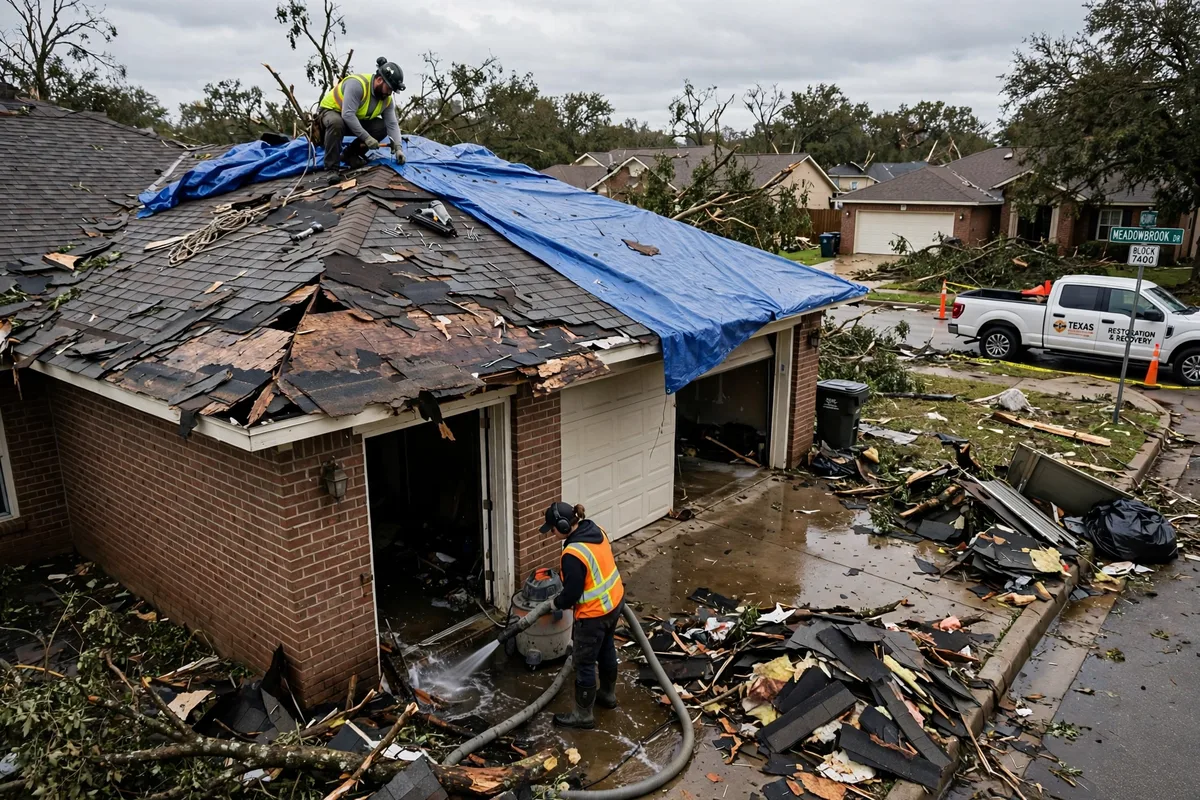
That is why tarping is a restoration task, not a roofing errand for next week. A properly anchored tarp over the damaged section converts an ongoing loss into a finished one, and insurers treat prompt tarping as textbook mitigation. Photograph the roof damage before the tarp covers it — the adjuster needs the wound and the bandage in the same file. However, a roof in the hours after a storm is slippery, debris-strewn, and possibly structurally compromised: if you are not equipped and certain, photograph from the ground and let the crew's roof work be the first line of the scope.
What Is the Correct Cleanup Order After a Dallas Storm?
| Order | Step | Why It Sits There |
|---|---|---|
| 1 | Hazard sweep — downed lines, gas smell, structural damage, electrical risk | Storm scenes kill the unhurried; nothing else starts until it is safe |
| 2 | Seal the envelope — tarp the roof, board broken windows | Stops the loss from growing with the next rain band |
| 3 | Document everything — roof, waterlines, rooms, contents in place | The storm claim is the most contested file in Texas; evidence wins it |
| 4 | Extract standing water and remove unsalvageable wet material | Bulk water out first; contaminated porous material out with it |
| 5 | Clean and disinfect affected surfaces | Storm water's contamination is addressed, not just dried |
| 6 | Structural drying with daily moisture verification | 2–5 days typical; the 24–48-hour mold clock governs everything |
| 7 | Rebuild and permanent roof repair | Only after verified dry targets are reached |
Homeowners running the DIY version of this list should respect its internal logic: steps out of order actively waste money — drying before tarping, disinfecting before extraction, rebuilding before verified dry. The professional sequence through flood damage repair adds the moisture map between steps 4 and 6, finding the water that entered wall cavities and under flooring where no puddle ever showed. However, fans and open windows — the folk version of step 6 — move humid Dallas air across wet surfaces without extracting moisture from the structure; in the days after a storm, outdoor humidity often exceeds indoor, and "airing out" can run backwards.
Which Storm Cleanup Mistakes Cost Dallas Homeowners the Most?
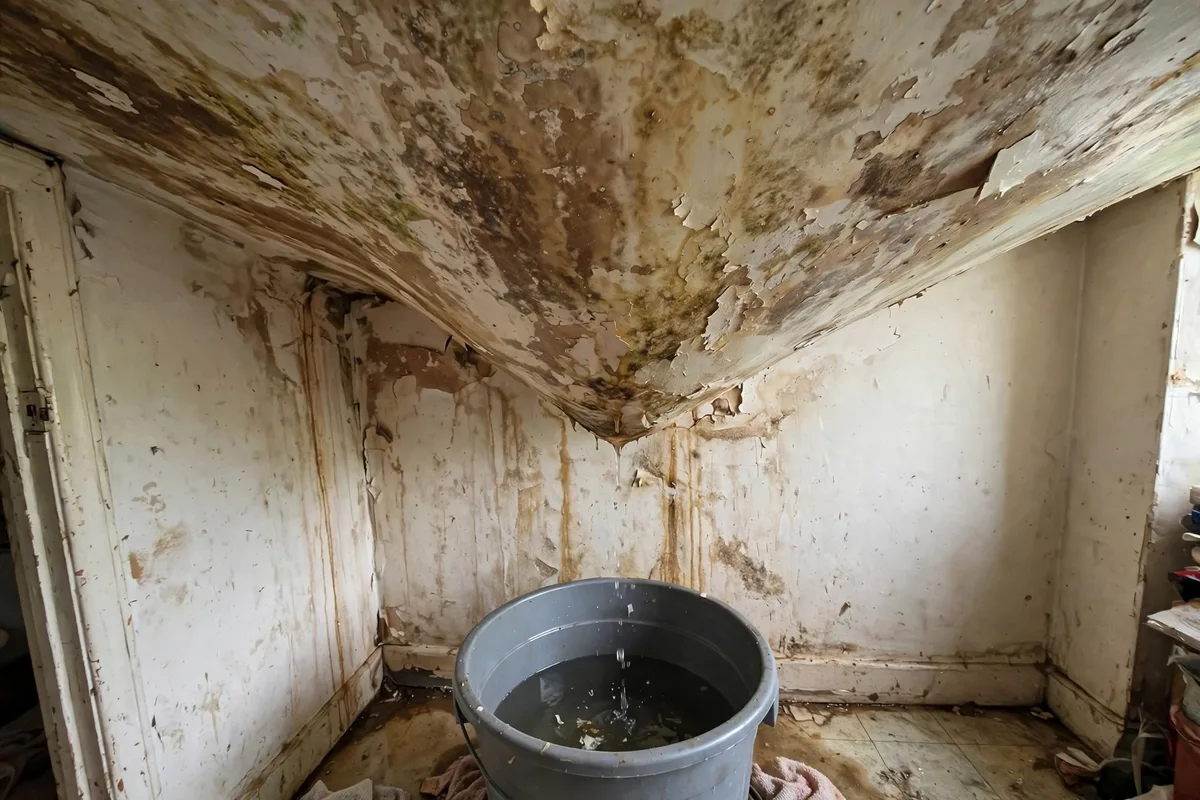
Waiting, in three costumes. Waiting for the adjuster before mitigating, when the policy actually requires prompt mitigation and the mold clock reads 24–48 hours. Waiting for the weekend to end because the water "looks contained," while it wicks a foot up every wall it touches. And waiting to call because the neighbors' damage looks worse — crews dispatch citywide after a storm, and the queue you join at hour two is shorter than the one at day two. However, the most quietly expensive mistake is assuming the water you can see is the water there is: storm entry through a roof deck can wet insulation and ceilings in rooms that never showed a drip.
The second tier of mistakes is procedural. Running a generator indoors or in a closed garage during the outage — carbon monoxide is the storm's second casualty list. Discarding soaked contents before photographing and inventorying them. Accepting the first settlement figure before the drying scope exists. And self-treating a sewer surcharge — the backup that follows overwhelmed city lines is Category 3, governed by the protocol in the sewage backup cleanup guide, not by bleach and optimism. However, every one of these mistakes is a morning-after decision made under stress — which is the entire argument for deciding your storm sequence now, from this page, in calm weather.
📞 Get in the Storm Queue Early: +1 214-807-4697
How Does Insurance Treat Storm Water Damage in Texas?
By splitting the storm into its elements. Wind is a covered peril in standard Texas policies, so wind damage — the torn shingles, the broken window — is covered, and rain that entered through that wind-made opening is generally covered as resulting damage. Rising water is the excluded element: water that came up from the street, a creek, or the ground requires separate flood insurance, the same gap detailed in the flooded house guide. Sewer surcharge during the storm follows the backup endorsement rule — covered only if the rider exists. However, mixed events are where claims are won and lost on documentation: the photograph of the roof opening, the tide line at the door, and the timeline together tell the adjuster which water was whose.
Costs scale with the storm's footprint: typical Dallas water jobs run $2,500–$7,500, with roof-involved and multi-room storm events pressing higher, as broken down in the Dallas water damage cost guide. Tarping, extraction, and drying are mitigation the insurer expects and honors; the rebuild waits on verified dry and the claim's scope agreement. However, do not let a deductible calculation talk you out of mitigation — a small claim forgone is a choice, but an unmitigated loss that grows mold is a larger, partly uninsured problem you chose by waiting.
Important Considerations
Storm season in Dallas is a calendar, not a surprise: spring brings the severe thunderstorm and hail pattern, summer adds flash-flood rain events, and the same clay soil that cracks foundations swells against them when saturated. Homes with any prior storm claim should pre-position — the restoration number saved, gutters and roof inspected in February, the shutoff and panel locations known to every adult. However, preparation is not paranoia when the event is annual; it is the difference between a bad day and a bad month.
Finally, treat the post-storm contractor market with open eyes. Major storms attract traveling crews and door-knockers whose warranties leave town with them. Verify the company is local, certified, insured, and reachable at the same number next month; get scope and price in writing before work beyond emergency mitigation. Water Damage Restoration Dallas is the local constant at +1 214-807-4697 — the same line before, during, and after the storm. However, even the best company's queue is finite after a citywide event, which returns to the first rule of this guide: the call made early is the cleanup that starts early.
Frequently Asked Questions
How soon after a storm should cleanup begin?
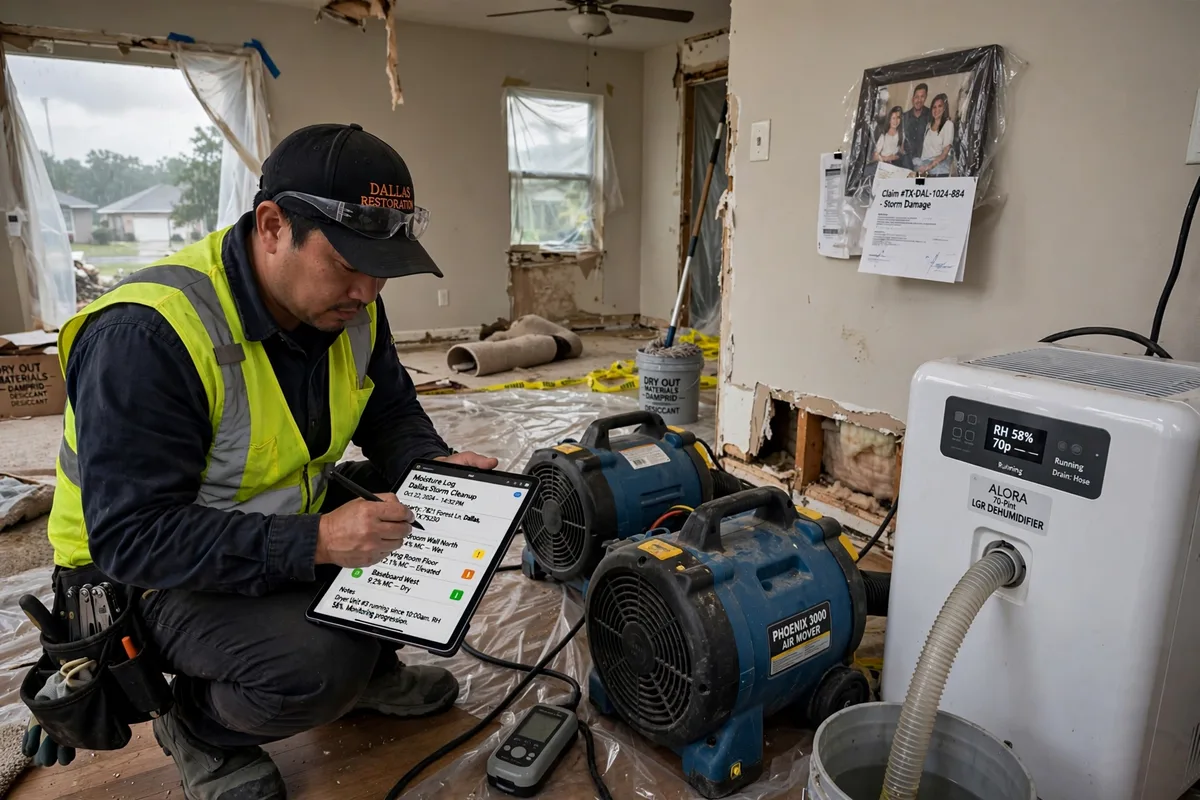
The same day, as soon as the scene is safe. Extraction and tarping are hour-one work because the two clocks — mold germination at 24–48 hours and the next rain band on radar — are both already running when the storm passes. Professional cleanup typically completes its extraction phase on day one, with drying running 2–5 days after. However, a house that cannot be entered safely waits for clearance, and that enforced patience is the only acceptable delay on the list.
Can I dry my house with fans and open windows after a storm?
For a small, clean, single-room wetting caught immediately, moving air helps at the margins. For genuine storm intrusion — water in walls, under floors, through ceilings — household fans cannot extract moisture from structural materials, and post-storm Dallas humidity frequently makes open windows a moisture source rather than a remedy. Professional dehumidification with daily meter verification is the standard because it measures the result. However, run whatever air you have while the crew is en route; partial drying beats none, it just does not replace the verified kind.
Is storm water that came through my roof dangerous?
Treat it as contaminated: roof runoff carries shingle grit, animal waste from the roof surface, and whatever the attic held, and water that crossed soil or streets is dirtier still. Skin contact during brief mitigation is a wash-thoroughly event; soaking in it, or letting children and pets play in it, is not acceptable. Porous materials it saturated are removed rather than dried on the professional standard. However, danger scales with source — rain that entered a clean roof opening and touched only hard surfaces is a far smaller problem than street water, and the crew's categorization on arrival sorts your event precisely.
Does insurance cover the tarp and emergency work, or only repairs?
Emergency mitigation — tarping, extraction, drying — is typically covered as part of the claim when the underlying damage is covered, because it is the spending that limits the insurer's own loss. Keep the invoices and the before-photographs with the claim file. However, mitigation coverage follows the peril: if the only damage is excluded rising water, the mitigation of that water follows the exclusion — one more reason the wind-versus-water documentation matters from the first photograph.
What if the storm knocked out power — does that change cleanup?
It compresses it. Without power there is no dehumidification, no air movement, and possibly a failed sump or lift system still admitting water — while the mold clock runs unchanged. Restoration crews bring generator capacity for extraction and drying equipment on extended outages. Food, medication, and habitability also degrade on the outage clock, which may activate your additional living expense coverage sooner. However, generators belong outdoors, always — the post-storm carbon monoxide cases every Texas season are a preventable tragedy, not a footnote.
Should I remove wet drywall and carpet myself after a storm?
Document first, then let the scope decide: drywall and carpet soaked by contaminated storm water usually do come out, but the cut lines, disposal handling, and what can be verified dry instead are professional judgments that affect both health and claim. Homeowners who demolish before documentation regularly delete their own evidence and still pay for the crew afterward. However, loose debris, ruined soft goods already photographed, and anything posing an immediate hazard can move on your own initiative — photographed, inventoried, and kept until the adjuster releases it.
How do I know if water got inside my walls from the storm?
Sometimes you do not — which is the point of the moisture map. Signs include musty odor developing over days, paint bubbling or drywall softening, baseboards separating, and floors cupping near exterior walls. Meters and thermal imaging find the rest, including ceiling assemblies below a roof entry that never dripped visibly. Water Damage Restoration Dallas performs the assessment free at +1 214-807-4697. However, treat new odor in the two weeks after a storm as a symptom to investigate, not a smell to outwait.
What if my sewage backed up during the storm?
That is a separate emergency riding the storm's coattails: municipal surcharge reverses sewage into low drains, and the affected area is a Category 3 biohazard zone — evacuate it, stop all water use, and do not attempt cleanup. The full protocol is in the sewage backup cleanup guide. Coverage follows your backup endorsement rather than the storm claim, so document it as its own event with its own photographs. However, tell the restoration dispatcher about it on the first call either way — the crew stages protective equipment in advance.
How much does storm water damage cleanup cost in Dallas?
Most residential water damage work in Dallas runs $2,500–$7,500 for extraction, drying, and typical repairs; storm events add tarping and any roof-side work, and multi-room or contaminated events run beyond the band. The assessment is free and the number is yours to approve before work begins. Established mold — the usual consequence of a delayed start — adds remediation commonly priced at $1,200–$3,800. However, after a major storm the scarcest resource is not money but crew hours, which is why the early call outperforms the negotiated one.
Who do I call first after a Dallas storm damages my home?
Emergencies to 911; then your restoration company and your insurer, in parallel, as soon as the scene is safe. Water Damage Restoration Dallas answers live around the clock at +1 214-807-4697, tarps, extracts, dries, and documents the storm file from the first visit. If a city main or street flooding is involved, Dallas Water Utilities joins the list. However, make the calls in the mitigation order this guide lays out — safety verified first, because no claim or cleanup is worth an injury in a damaged house.
📞 Call Water Damage Restoration Dallas Now: +1 214-807-4697
Related Dallas Water Damage Guides
- What to Do When Your House Floods in Dallas, TX: The Right Steps in the Right Order
- Standing Water in Your House: When DIY Cleanup Is Enough — and When to Call a Pro
- Flooded House Electrical Safety: What to Shut Off, What Never to Touch
- How to Save Your Belongings After Water Damage: A Triage Guide for Dallas Homes