Home › Service Areas › Fort Worth
Flood & Water Damage Restoration in Fort Worth — 24/7
Fort Worth's water damage has two faces. One is the Trinity: the Clear Fork and West Fork braid through the city, and the low streets along them — riverside neighborhoods, the flats west of downtown, the ground around Lake Worth — flood on a schedule the locals know by heart. The other face is inside the walls of the city's beloved old housing stock, where galvanized pipes in Fairmount and Ryan Place bungalows are quietly rusting through a century after they were installed. Water damage restoration Fort Worth homeowners need has to handle both: river water at the door and century-old plumbing behind the plaster.
Water Damage Restoration Dallas answers Fort Worth calls live around the clock from our downtown Dallas dispatch, about an hour west on I-30. The first visit covers extraction, moisture mapping and a free written estimate — and because Fort Worth losses so often involve historic materials that should be saved rather than stripped, our crews scope the drying gently and document everything an adjuster needs from hour one. Fire and smoke losses are covered through our fire damage restoration page.
River water rising — or a rusted line let go? Same-day Fort Worth response, free estimates.
📞 Call +1 214-807-4697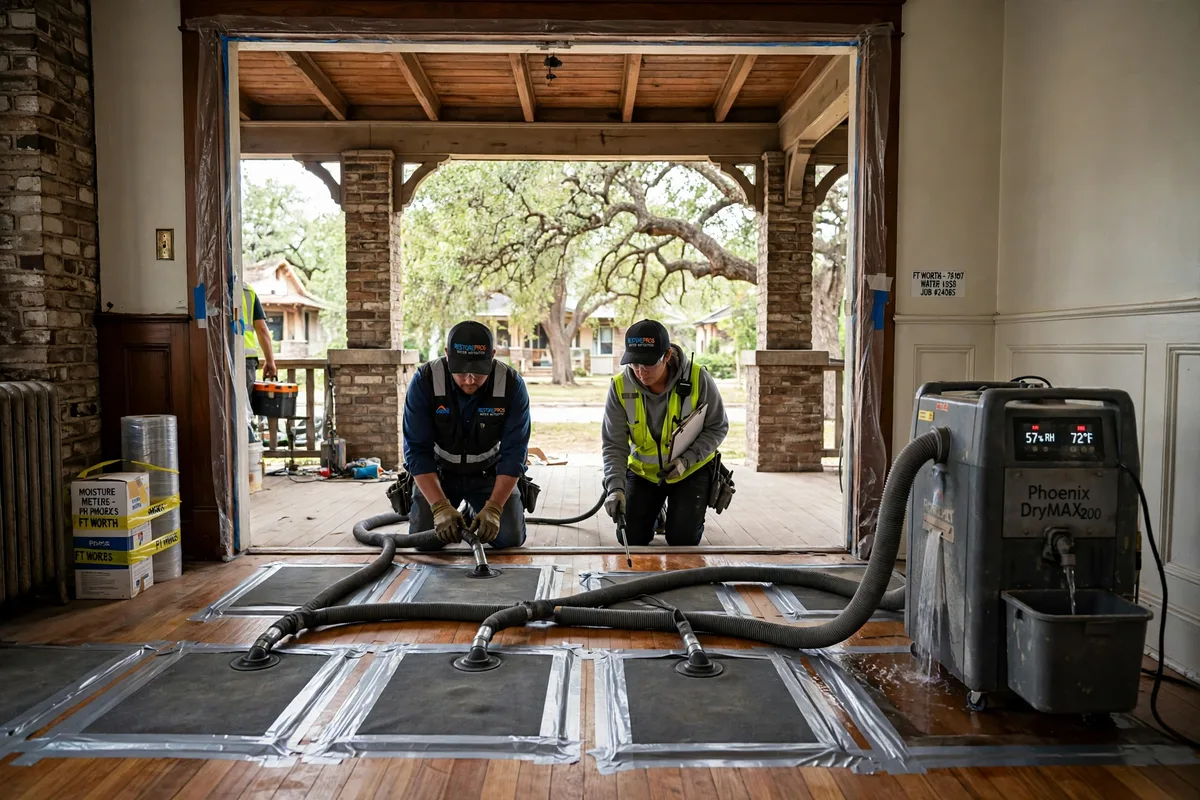
What Water Damage Looks Like in Fort Worth
Trinity River flooding. The Clear Fork and West Fork meet at Fort Worth, and the low ground along both — plus the creeks feeding them and the Lake Worth shoreline — takes on contaminated flood water in big rain events. Flood losses need sanitation and material decisions, not just fans.
Galvanized pipe failures in historic homes. Fairmount, Ryan Place, Westcliff's older streets and the Near Southside still run on galvanized lines that corrode from inside. A failure inside a plaster wall can run for days before it stains through.
Pier-and-beam crawlspace moisture. Much of Fort Worth's pre-war housing sits over crawlspaces that collect plumbing drips and storm runoff, feeding mold under floor systems that homeowners never see until floors soften.
New-growth suburbs on clay. The Alliance corridor and the 76244 expansion areas are Dallas-style new construction on expansive soil — slab stress, irrigation breaks and upstairs leaks included — while Benbrook and the southwest side add lake-area storm exposure.
Our Fort Worth Restoration Services
Emergency Water Extraction
Standing water removed on the first visit, day or night, before it migrates into wall cavities and subflooring.
Historic Home Drying
Gentle, verified drying for original hardwood and plaster in Fairmount, Ryan Place and other historic districts — save the fabric, not just the structure.
Trinity Flood Cleanup
Contaminated flood-water extraction, sanitation and drying for Clear Fork, West Fork and Lake Worth area losses.
Crawlspace Drying
Crawlspace extraction and drying for pier-and-beam homes, with subfloor and joist moisture verification from below.
Mold Remediation
Containment and removal when water has been sitting in crawlspaces or walls — growth can start within 24–48 hours of a wetting event.
Structural Drying
Commercial dehumidification and air movement, monitored daily against moisture targets until the structure verifies dry.
How Much Does Water Damage Restoration Cost in Fort Worth?
| Job type | Typical range |
|---|---|
| Most residential water damage jobs | $2,500 – $7,500 |
| Slab leak detection (locating the leak) | $150 – $400 |
| Mold remediation, when a leak went undetected | $1,200 – $3,800 |
| Emergency estimate on site | Free |
However, where the water came from matters as much as how much there is. A burst pipe is usually a homeowners-policy claim; rising river water usually is not, and treating one like the other wastes weeks. We identify and document the source on the first visit; our guide to why homes flood in heavy rain, our after-the-storm cleanup guide and our emergency water damage checklist walk through the first hours in detail.
Not sure whether it is a pipe or the river? We identify the source on site — it decides your claim.
📞 Call +1 214-807-4697Fort Worth Areas We Cover
All of Fort Worth — including ZIP codes 76102, 76104, 76107, 76109, 76110, 76116, 76123, 76132, 76133, 76137, 76177 and 76244 — including Fairmount, Ryan Place, the Near Southside, Westcliff, Tanglewood, the Colonial and TCU areas, the Cultural District, the Stockyards area, Lake Worth, Benbrook and the Alliance corridor. Crews also cover the neighbouring pages in this cluster: Arlington, Grand Prairie and Irving.
Fort Worth Water Damage FAQs
How much does water damage restoration cost in Fort Worth?
Most residential water damage jobs in Fort Worth land between $2,500 and $7,500, the same range as Dallas overall. A contained supply-line leak dried early sits at the low end; Trinity River flood water through several rooms, or a failed galvanized line in a historic home, costs more. We give a free written estimate on site before paid work begins — call +1 214-807-4697.
How do you dry a historic Fort Worth home without damaging it?
Fairmount, Ryan Place and the Near Southside are full of 1900s–1930s craftsman and bungalow homes with original hardwood, plaster walls and pier-and-beam foundations. Drying there is gentler and more deliberate: floor-drying mats instead of demolition where the wood can be saved, controlled humidity so plaster does not crack, and crawlspace drying from below. The goal is a verified-dry structure with the historic fabric intact.
Which parts of Fort Worth flood most often?
Low ground along the Clear Fork and West Fork of the Trinity River floods first — riverside neighborhoods, the low streets west of downtown, and lots along the creeks that feed the river, including around Lake Worth. Fort Worth's west side also sits lower than it looks, so hard rain ponds in older streets long after the storm passes.
What is wrong with galvanized pipes in older Fort Worth homes?
Galvanized supply lines corrode from the inside over decades. Water pressure drops, rust discolors the water, and eventually a section lets go — often inside a wall, where it can run for days. Most Fort Worth homes built before the 1960s still have some galvanized in service. Restoration covers the resulting damage; a repipe is the permanent fix.
Does insurance cover Trinity River flooding?
Standard homeowners policies cover sudden water damage from burst pipes and appliance failures, but rising river or creek water is flood damage — that needs a separate flood policy. We document the source of the water carefully from the first visit, because which category your loss falls into decides which policy responds.
How long does water damage restoration take in Fort Worth?
Extraction happens on the first visit. Structural drying typically runs 3 to 5 days with daily moisture monitoring, and repairs follow once readings confirm the structure is dry. Historic homes can take a little longer because hardwood and plaster are dried gently and verified in stages rather than rushed.
How fast can you reach a Fort Worth address?
Our dispatch is in downtown Dallas, about an hour from most Fort Worth addresses via I-30. Crews cover Fort Worth ZIP codes including 76102, 76104, 76107, 76109, 76110, 76116, 76132, 76137 and 76244, and the call is answered live 24/7 — call +1 214-807-4697.
Fort Worth water damage? The first hour decides the size of the job.
📞 Call +1 214-807-4697 — 24/7