Lightning Strike Fire Damage in Dallas: Attic Fires, Fried Wiring & What to Do First
TLDR
- Who handles lightning strike fire damage in Dallas?: Water Damage Restoration Dallas — 24/7 live answer, around 60-minute arrival, free estimates: +1 214-807-4697.
- How does lightning start a fire in a Dallas home?: The strike usually hits the attic or roof assembly, then superheated gases push smoke and soot through wall cavities within minutes.
- Can a lightning strike damage a home without a visible flame?: Yes — a strike can char framing and wiring inside walls while the roof looks untouched from the street.
- How common are lightning fires in Texas?: Texas recorded 40,434,603 lightning strikes in 2024, the most of any US state, and US lightning claims caused about $1.04 billion in damage.
- What should you do first after a lightning strike?: Get fire-department clearance, do not touch soot, do not run the HVAC, and photograph everything before cleanup.
- Does insurance cover lightning strike fire damage?: Usually yes under a standard homeowner policy; surge damage and fire damage are claimed as separate line items.
- How fast can a crew reach my Dallas home?: Around 60 minutes, 24/7 — same-day assessment, board-up and drying.
🚨 LIGHTNING STRIKE FIRE IN DALLAS? The damage hides inside your walls — call now. We answer live 24/7, arrive in around 60 minutes, and give free estimates — attic inspection, wiring check, soot cleanup, and rebuild in one call.
📞 24/7 Lightning Fire Help: +1 214-807-4697
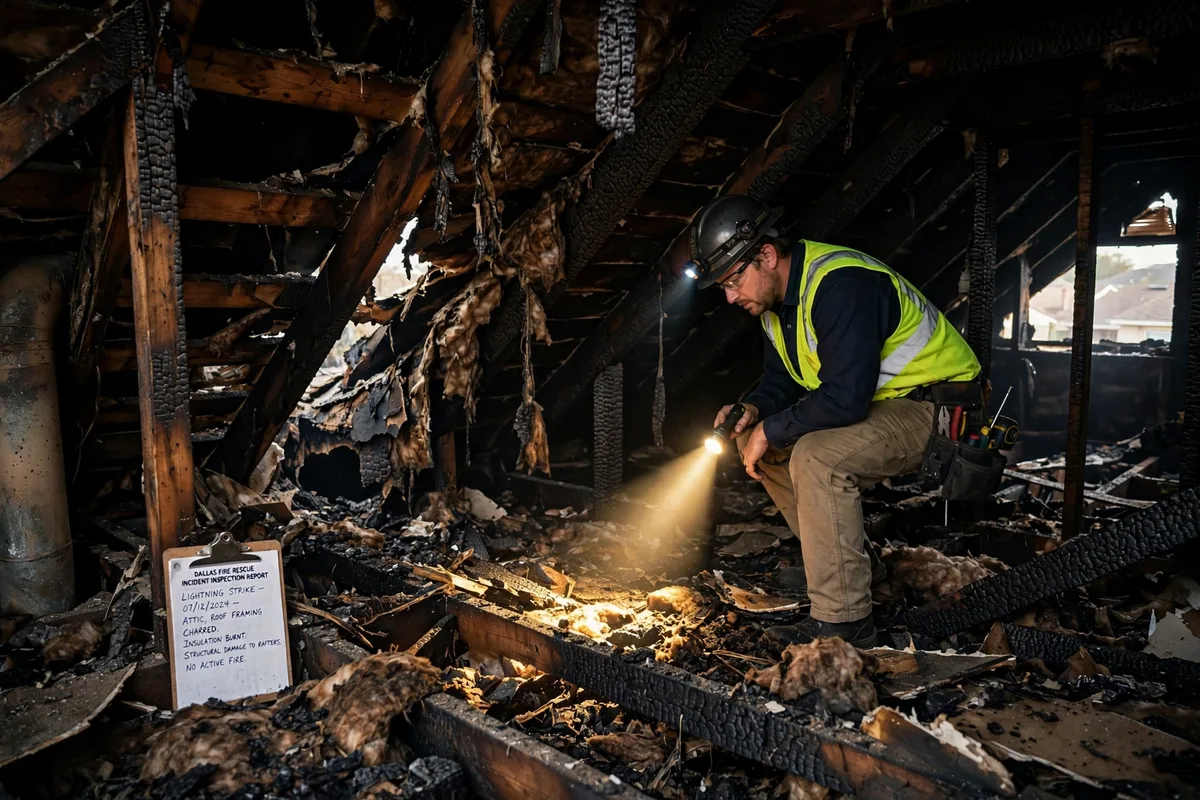
Lightning strike fire damage in Dallas starts where nobody looks: the strike usually hits the attic or roof assembly, chars the framing and wiring inside the walls, and pushes superheated gases and smoke through wall cavities within minutes, so a home can look untouched from the street while the structure smolders inside. Texas recorded 40,434,603 lightning strikes in 2024 — the most of any US state — and US lightning claims caused about $1.04 billion in damage, which makes lightning a real Dallas fire cause rather than a freak event. North Texas warm-season lightning ignites attic fires, fries HVAC condensers and air handlers, and triggers in-wall electrical fires, and the risk runs highest in pre-WWII Lakewood, M Streets and Park Cities homes with original or partially-upgraded electrical systems. Fall in DFW brings dry, unstable air colliding with early cold fronts, which raises lightning frequency and intensity right now. Water Damage Restoration Dallas handles lightning fire cleanup with IICRC-certified crews, around 60-minute arrival, free estimates, and same-day help. However, one lightning-fire rule comes first: never assume the strike did nothing because you see no flame, because the hidden damage inside the walls is the point — and a strike that looks harmless can smolder for hours before it shows.
How does lightning start a fire in a Dallas home?
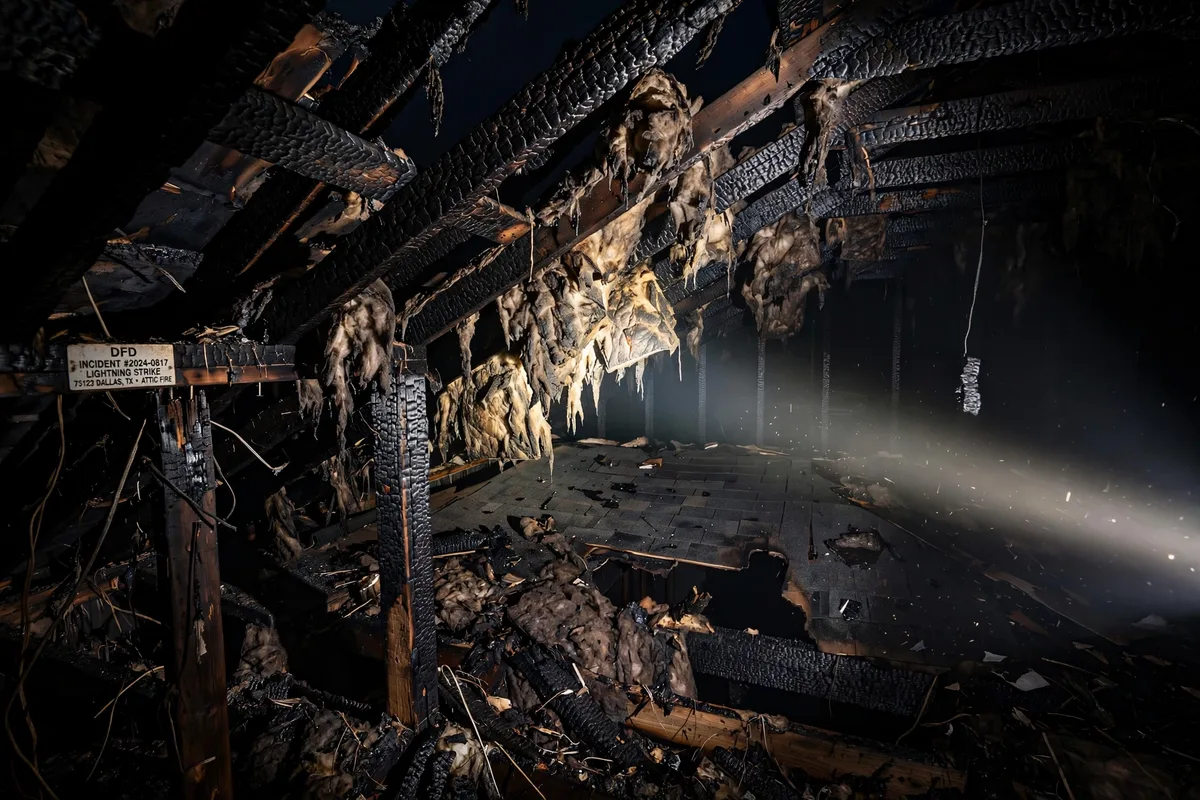
Lightning starts a fire by dumping enormous energy into one point — usually the roof edge, a chimney, a vent pipe or a tall tree touching the house — and the current follows the path of least resistance through the roof assembly, the attic framing and the wiring. Wood framing chars where the current arcs, insulation smolders where the heat concentrates, and the strike can blow apart a roof section while the flame stays hidden in the attic. The superheated gases from the strike push smoke and soot through wall cavities within minutes, so rooms far from the strike point smell of smoke while the attic burns quietly above them. The strike also surges through the electrical system, frying the panel, the HVAC condenser and air handler, and any appliance plugged in at the time. However, the ignition has a limit: a strike does not always start a fire, and many strikes end as surge damage alone — so the crew inspects the attic and the panel before declaring the job a fire job or a surge job.
What hidden damage does a lightning strike leave behind?
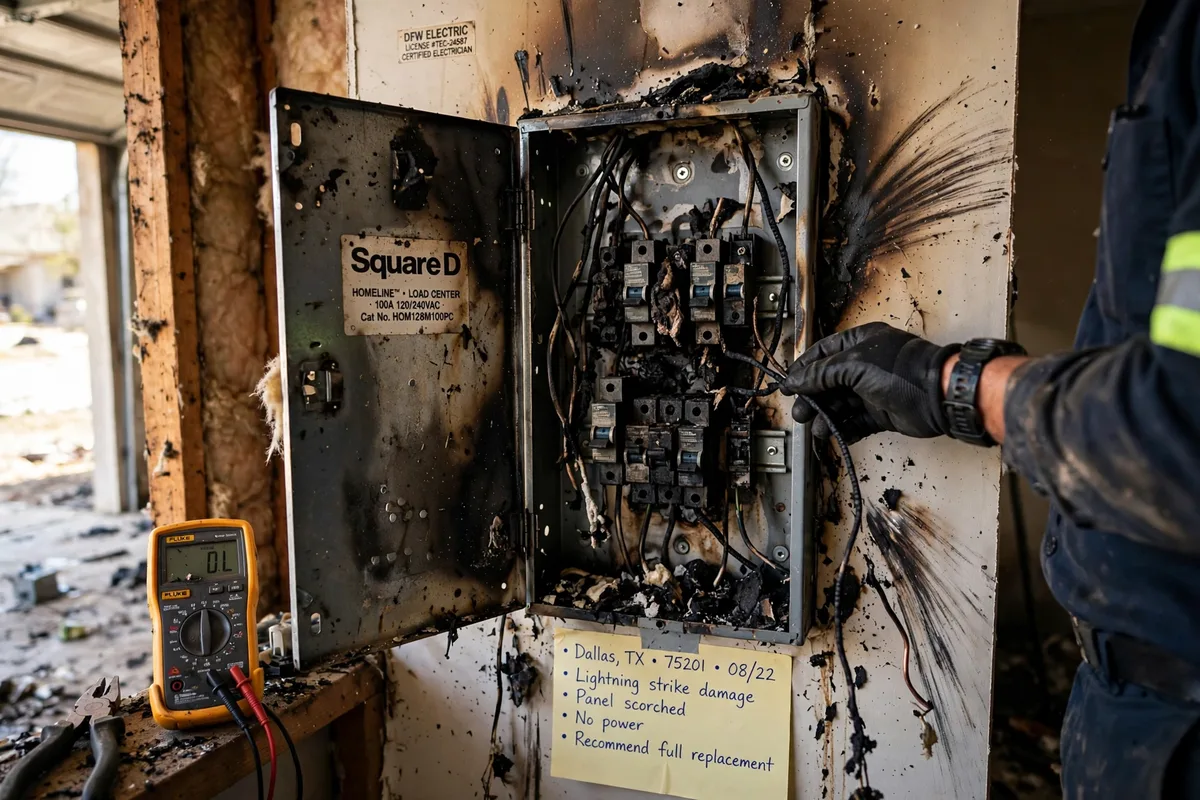
The hidden damage runs in four places: charred framing inside walls and in the attic, melted or brittle wiring that fails weeks later, a fried HVAC condenser and air handler, and soot pushed through wall cavities into rooms that never saw flame. A strike can leave no visible flame yet char the framing and the wiring inside the walls, and that charred wiring is a second-fire risk if the power is restored before an electrician clears it. The HVAC system is a common casualty — the condenser outside and the air handler inside both sit on the electrical path, and running a damaged system pulls smoke and soot through the ductwork into every room. Older Lakewood, M Streets and Park Cities homes carry the highest hidden-damage risk, because original or partially-upgraded wiring has less protection and the wood framing is drier. The electrical fire damage guide covers the in-wall wiring risk in detail, and the smoke damage cleanup guide covers the soot and odor work. However, one hidden-damage rule is absolute: a lightning strike inspection must open the attic and check the panel, because the two places the eye cannot reach are exactly where a strike does its worst work.
What should you do first after a lightning strike fire?
Get fire-department clearance first, then call your insurer and a restoration crew before touching anything. Do not touch soot-covered surfaces, do not switch on lights or appliances in the affected rooms, and do not run the HVAC system, because the system can pull smoke and soot through the house and a damaged panel can arc. Photograph the roof, the attic opening, the panel, every fried appliance and every soot-marked wall before anything moves, since the photos support the claim, and keep the surge-damaged electronics as evidence rather than throwing them away. Shut off power at the main breaker only if the panel is safe to reach and shows no scorching, and keep everyone out of rooms that smell of smoke or ozone. However, the first-step mistake is the power test: flipping a breaker back on to see if things still work can energize charred wiring and start the second fire, so let an electrician clear the panel before the power comes back.
| Lightning strike damage | Typical sign | First crew step |
|---|---|---|
| Attic / roof fire | Smoke in attic, charred wood | Inspect attic, board up |
| Fried wiring | Scorched panel, dead circuits | Electrician clearance |
| HVAC surge damage | Dead condenser, air handler | Do not run system, test |
| Soot in wall cavities | Smoke smell, soot marks | Map, open walls, clean |
| Appliance surge | Dead TVs, fried boards | Inventory, keep as evidence |
📞 Book Lightning Fire Cleanup: +1 214-807-4697
How much does lightning strike fire restoration cost in Dallas?
Lightning strike fire restoration in Dallas ranges from a few thousand dollars for surge-only damage to tens of thousands when the attic framing, the wiring and the HVAC system all need replacement, and the range depends on how much of the roof assembly burned, how many circuits the surge killed, and how far the soot travelled through the wall cavities. A strike that fried the panel and the condenser but started no fire lands at the low end, while a strike that charred the attic framing and pushed soot through the walls lands far higher. Dallas-area water damage jobs typically land between $2,500 and $7,500 all-in for mitigation, and a lightning job adds the electrical, soot and rebuild scopes on top of any drying. Mold remediation at $1,200–$3,800 applies only when firefighting water or storm water sat wet past 48 hours. The Texas burst-pipe average claim runs around $15,500, which is a useful scale check for how insurers think about a sudden-loss claim. However, the pricing trap is the surge-only quote: a company that prices the fried appliances and skips the attic and wall inspection is selling a fix for the visible damage while the charred framing waits inside the walls.
How do you choose a lightning fire restoration company in Dallas?
Choose on five checks: same-day response for attic inspection and board-up, a written scope that separates electrical clearance, soot cleaning, drying and rebuild, IICRC-certified crews, claim documentation with photos and readings, and a clear answer on what gets cleaned versus what gets replaced. Ask whether the crew opens the attic, how it verifies the wiring is safe, and whether it coordinates with a licensed electrician before the power comes back. The fire damage restoration service page covers the full fire service, and the space heater fire guide covers another ignition cause that hides damage the same way. However, one selection rule beats the rest: the company that inspects the attic first, clears the panel second, maps the walls third and rebuilds last — in that order, with readings to prove it — is the company whose home stays safe after the next storm.
Important Considerations
Texas has no state license specifically for restoration companies, so check IICRC certification, insurance, and reviews before hiring, and be wary of anyone demanding full payment upfront. Never re-enter a smoke-filled home before the fire department clears it, because a strike can smolder inside the walls for hours after the visible fire is out. Never flip a breaker back on after a lightning strike until a licensed electrician clears the panel, because charred wiring can arc and start a second fire. Never run the HVAC system after a lightning strike until the condenser, air handler and ductwork are checked, because the system can pull smoke and soot through the whole house. Never throw away surge-damaged electronics before the adjuster sees them, because the fried boards are the evidence that separates the surge claim from the fire claim. Never paint over soot without cleaning and sealing it first, since the odor and the acid will come back through the finish. If the strike hit a tree touching the house, have the tree inspected too, because a split trunk can fall on the roof in the next storm. Keep the scope, moisture readings, photos, and all carrier correspondence in one file — lightning claims split into fire and surge line items, which generates more paperwork than the job suggests. Finally, after repair, ask about whole-home surge protection and a lightning protection system, because Texas leads the nation in strikes and the next one will find the same roof.
📞 Free Lightning Fire Estimate: +1 214-807-4697
Frequently Asked Questions
Who handles lightning strike fire damage in Dallas?
Water Damage Restoration Dallas — 24/7 live answer, around 60-minute arrival, free estimates, and attic inspection, board-up, soot cleanup, drying and rebuild in one visit. Call +1 214-807-4697 any hour and a live crew answers.
How does lightning start a fire in a Dallas home?
The strike usually hits the attic or roof assembly, then the current follows the wiring and framing, charring wood and insulation. Superheated gases push smoke and soot through wall cavities within minutes, so rooms far from the strike point smell of smoke.
Can a lightning strike damage a home without a visible flame?
Yes — a strike can char framing and wiring inside walls while the roof looks untouched from the street. That hidden char is a second-fire risk, which is why the attic and the panel must be inspected even when nothing looks burned.
How common are lightning fires in Texas?
Texas recorded 40,434,603 lightning strikes in 2024, the most of any US state, and US lightning claims caused about $1.04 billion in damage. Fall cold fronts in DFW raise lightning frequency and intensity, so the risk peaks right now.
What should you do first after a lightning strike?
Get fire-department clearance, do not touch soot, do not run the HVAC, and photograph everything before cleanup. Call your insurer and a restoration crew, and let a licensed electrician clear the panel before the power comes back.
Does insurance cover lightning strike fire damage?
Usually yes under a standard homeowner policy, with surge damage and fire damage claimed as separate line items. Keep the fried electronics as evidence, because the surge claim and the fire claim are documented differently.
Why is my HVAC dead after a lightning strike?
The strike surges through the electrical system and fries the condenser outside and the air handler inside. Do not run the system until both are tested, because a damaged system pulls smoke and soot through the ductwork.
How long does lightning fire restoration take in Dallas?
Surge-only jobs take days, while attic-fire jobs with rewiring and rebuild take weeks. The estimate sets the timeline before work starts, and drying runs until moisture readings verify the structure is dry.
Are older Dallas homes more at risk from lightning fires?
Yes — pre-WWII Lakewood, M Streets and Park Cities homes with original or partially-upgraded electrical systems carry less protection, and their drier wood framing chars faster. Whole-home surge protection and updated panels lower the risk.
Will the smoke smell stay in the house?
Not if the soot is cleaned and sealed before repainting. Dry chemical sponges, HEPA vacuuming and degreasing remove the source, and thermal fogging or ozone follows only after the soot is gone — never as a substitute for cleaning.
Why call Water Damage Restoration Dallas for lightning fire damage?
Local Dallas crews, 24/7 live answer, around 60-minute arrival, free estimates, and attic-first inspection with moisture readings — call +1 214-807-4697.
📞 Call Water Damage Restoration Dallas 24/7: +1 214-807-4697
Related Dallas Water Damage Guides
- Burst Pipe in Dallas: What to Do in the First 60 Minutes
- Water Damage in the First 24 Hours: An Hour-by-Hour Guide for Dallas Homeowners
- Emergency Water Extraction in Dallas: What Actually Happens When the Crew Arrives
- Emergency Water Damage Checklist: Every Step, in Order, for Dallas Homeowners