Slab Leak Repair in Dallas: 24/7 Emergency Service
TLDR
- Who repairs slab leaks in Dallas right now?: Water Damage Restoration Dallas — 24/7 live answer, same-day dispatch, around 60-minute arrival: +1 214-807-4697.
- What is a slab leak?: A water or sewer line leaking under or through the concrete slab foundation, often invisible until floors, bills, or moisture give it away.
- How much does slab leak detection cost in Dallas?: A detection visit typically runs $150–$400, and it is the step that prevents a wrong repair.
- How much does the full slab leak job cost?: Most water restoration jobs in Dallas land between $2,500 and $7,500 all-in, with slab repair scope on top depending on access method.
- What are the warning signs?: Unexplained damp spots, warm areas on the floor, the sound of running water when nothing is on, and a water bill that climbs without a usage change.
- Does Dallas clay soil cause slab leaks?: Yes — expansive clay soil swells when wet and shrinks when dry, shifting slabs seasonally and stressing the pipes inside them.
- How fast does the damage spread?: A slab leak feeds moisture into flooring and walls continuously, and mold can start in wet materials within 24–48 hours of saturation.
🚨 SLAB LEAK FLOODING YOUR DALLAS HOME FROM BELOW? Do not wait for the floor to tell you. We answer live 24/7, dispatch the same day, arrive in around 60 minutes, and give free estimates — detection, isolation, repair, and drying in one call.
📞 Slab Leak? Call Now: +1 214-807-4697
A slab leak is the most expensive leak to guess at and the cheapest to locate properly, because the pipe sits under concrete and every wrong repair means another hole in the floor. Dallas homes are especially exposed: expansive clay soil swells when wet and shrinks when dry, shifting slabs seasonally and stressing copper and galvanized lines that run through and under them, and older Dallas neighborhoods still carry aging lines that corrode at joints. The leak itself is usually small — a pinhole, a failed joint, a stress crack — but it runs continuously, saturating the slab, wicking into flooring and wall bases, and feeding mold within 24–48 hours of saturation. Slab leak repair in Dallas is therefore a sequence, not a single act: detection first, isolation second, repair by the method that fits the leak third, and drying and restoration fourth. Water Damage Restoration Dallas runs that full sequence 24 hours a day across Dallas — Downtown, Uptown, Lakewood, and surrounding neighborhoods — with IICRC-certified technicians, free estimates, and direct insurance billing. However, the first step belongs to you: if you suspect a slab leak, stop guessing and get detection, because every week of an undetected slab leak adds flooring, drying, and mold costs that detection would have prevented.
What are the early signs of a slab leak?
Five signs, and any one of them justifies a detection visit. First, unexplained damp spots or discoloration on floors, especially spots that return after cleaning. Second, warm areas on the floor, which point to a hot-water line leaking under the slab. Third, the sound of running or hissing water when every fixture is off. Fourth, a water bill that climbs month over month without a usage change — the meter test confirms it: shut every fixture off, read the meter, wait an hour, and read it again. Fifth, low water pressure, cracks in flooring or baseboards, or a musty smell that no cleaning removes. The slab leak signs guide lists these warnings in full, and the slab leak detection guide explains the detection methods. A single sign is worth a call; two or more together mean the leak is already active. However, none of these signs locates the leak — only detection equipment does, and digging without it is how a small repair becomes a large one.
How is a slab leak actually located?
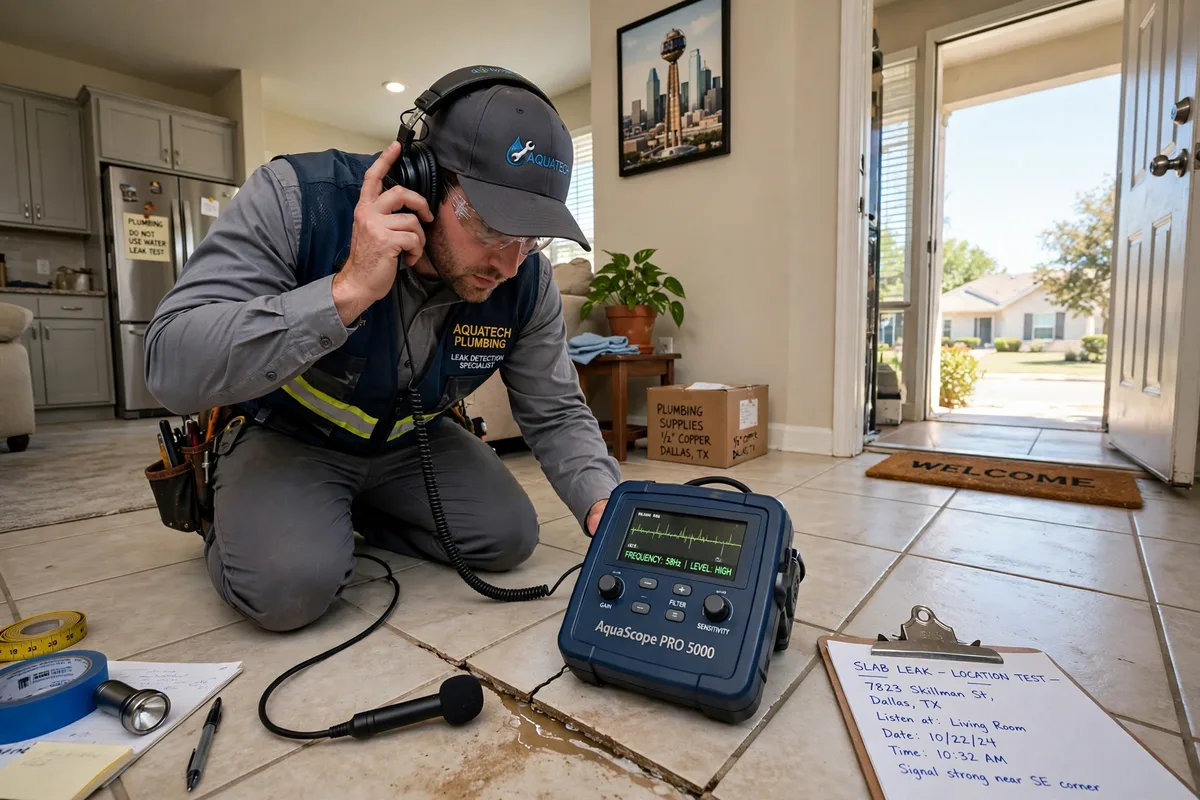
Detection is a process, not a guess, and it runs in layers. Acoustic listening equipment hears the leak's signature through the slab and narrows it to a zone. Pressure testing isolates which line — hot, cold, or sewer — is losing pressure. Thermal imaging finds the warm or cool anomaly a leak creates in the slab and flooring. A sewer camera rules a drain line in or out when the leak is not a supply line. The combination, not any single tool, produces a location accurate enough to open one controlled access point instead of several. A detection visit typically runs $150–$400, and it is the cheapest money in the whole job: it prevents the wrong repair, the second hole, and the flooring damage of a blind dig. The clay-soil pipe guide explains why Dallas slabs move and why a leak location can shift with the soil. However, detection locates the leak — it does not repair it, and any company that quotes a repair price before detection is pricing a guess.
What repair methods are used for a slab leak?
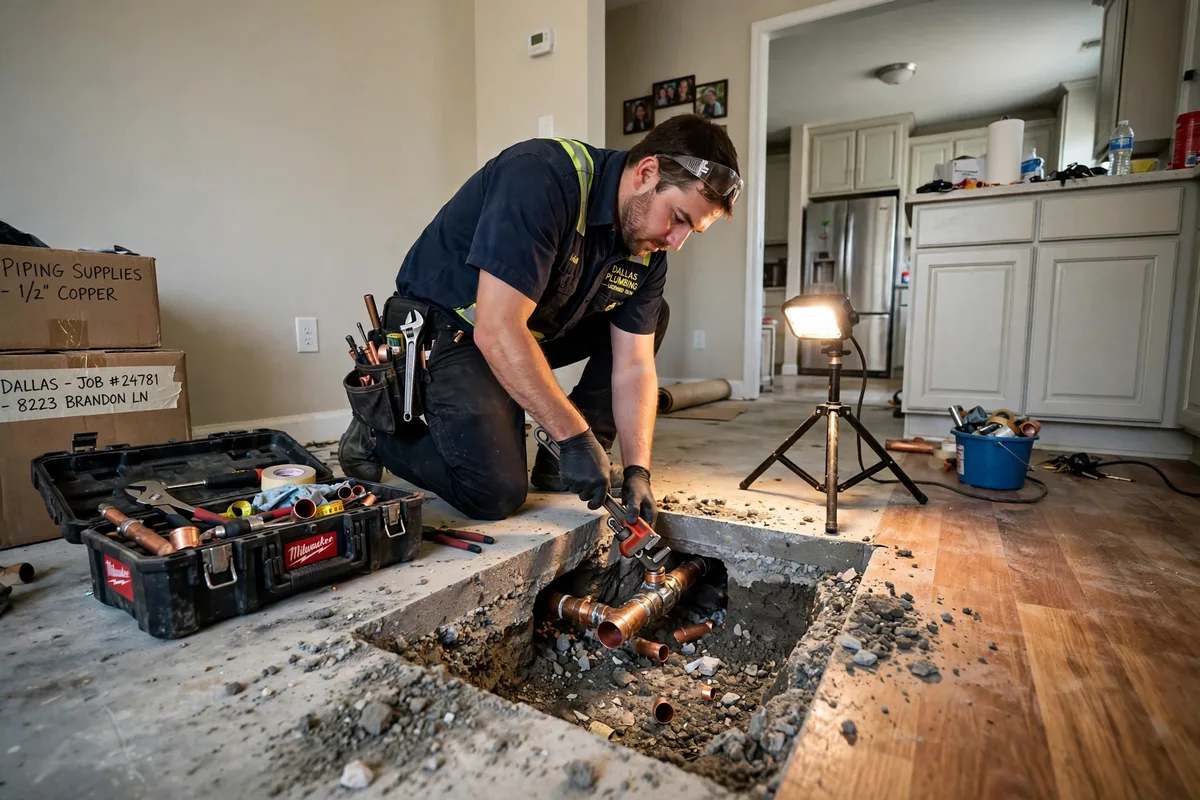
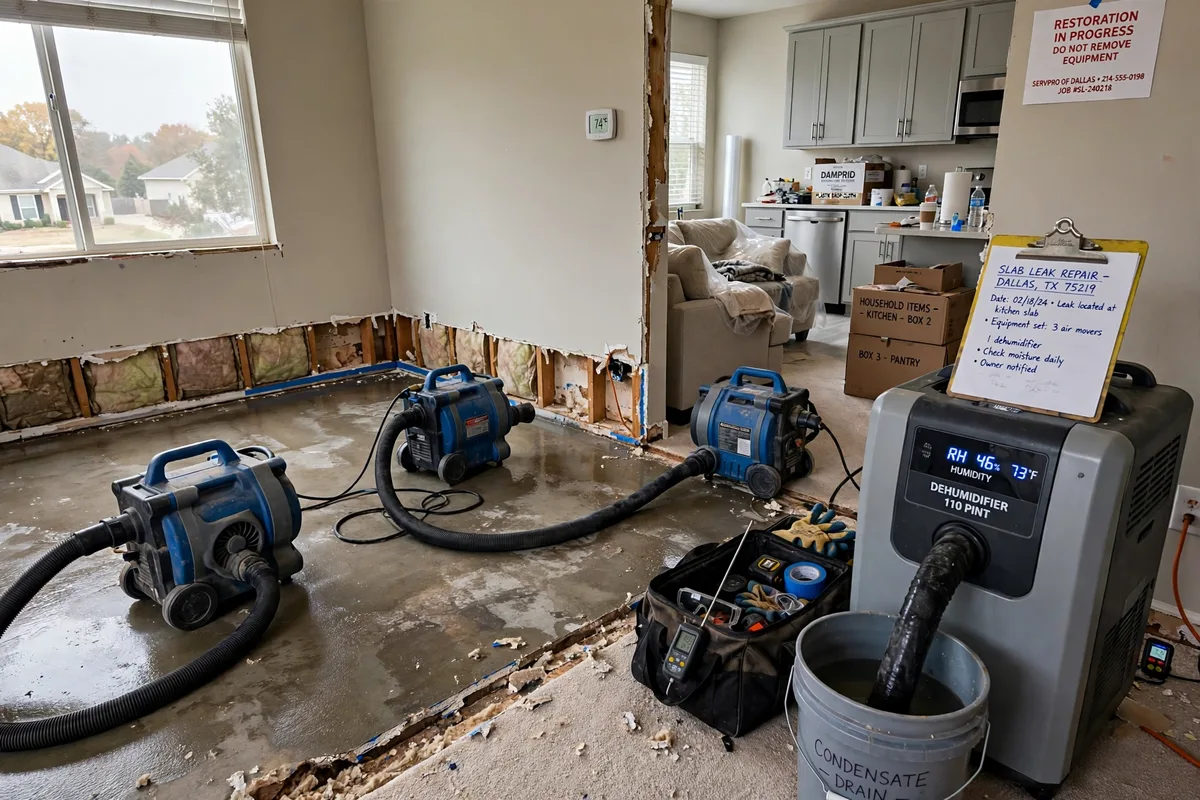
Three methods dominate, and the right one depends on the leak's location, the pipe's age, and the home's layout. Spot repair opens one controlled access point through the slab, replaces the failed section, and restores the slab and flooring — the most direct method when the pipe is otherwise sound. Rerouting abandons the under-slab line entirely and runs a new line through walls or the attic, avoiding the slab altogether — the better choice when the pipe is aging and a second leak is likely nearby. Repiping replaces the system or a full run when multiple leaks, or a corroded system, make spot repairs a recurring expense. Each method has a different cost, timeline, and flooring impact, and the crew should explain all three before cutting anything. After repair, the water job runs: extraction of any standing water, drying of the slab and affected flooring to verified readings, and restoration of the opened area. The repair-versus-restoration guide draws the line between the plumbing scope and the restoration scope. However, a repair without drying leaves the slab wet, and a wet slab grows mold within 24–48 hours — the repair is only half the job.
| Slab leak repair method | Best when | What to expect |
|---|---|---|
| Spot repair | Single leak, sound pipe | One access point, direct fix |
| Rerouting | Aging pipe, repeat risk | New line bypasses slab |
| Full repiping | Multiple leaks, corroded system | System replaced, not patched |
| Tunneling | Access under slab needed | Work from below, floor intact |
| Epoxy lining | Specific pipe conditions | Quoted after inspection only |
📞 Same-Day Slab Leak Repair: +1 214-807-4697
How much does slab leak repair cost in Dallas?
The honest answer is that the job has two prices: detection, and everything after it. Detection typically runs $150–$400. The repair itself depends on method and access — a spot repair is the least expensive, rerouting and repiping cost more but prevent repeat leaks. The water side of the job — extraction, drying, and restoration of the affected flooring and walls — usually lands in the $2,500–$7,500 band for a typical Dallas water job, depending on area and materials. The estimate is free and confirmed on site after detection and moisture mapping — no company can give a real number over the phone without seeing the loss, and you should distrust one that does. Insurance coverage depends on the cause: a sudden slab leak is usually covered, while a long-running leak ignored for months is often excluded as gradual damage. The Texas average burst-pipe claim runs around $15,500 according to State Farm figures, which is why sudden losses are usually covered with only the deductible out of pocket. However, the cheapest repair quote is not the best deal when it skips detection or drying — a second leak in the same run, or mold under the flooring, costs more than the first job done right.
Why does Dallas clay soil make slab leaks so common?
Dallas clay soil is the structural reason slab leaks cluster here. The soil swells dramatically when wet and shrinks when dry, and North Texas swings between those states every year — wet springs, dry summers, storm seasons in between. A slab sitting on that soil moves with it, seasonally and unevenly, and the pipes cast into or under the slab move with the slab while the fittings and joints resist. Over years, that cyclic stress cracks joints, thins corroded sections, and opens pinholes. Poor drainage accelerates the cycle: water ponding at the foundation keeps one side of the slab swollen while the other side dries and shrinks, twisting the slab further. The clay-soil guide explains the mechanics and the warning signs together. Newer homes are not exempt — a new slab on unsettled grading shifts as the fill compacts, and the same stress applies. However, soil movement explains risk, it does not excuse delay: a detected leak is a repair, and an undetected one is a renovation.
Important Considerations
A slab leak job has three scopes — detection, plumbing repair, and water restoration — and a company should explain that boundary clearly rather than bundling everything into one vague price. Texas has no state license specifically for water restoration companies, so check IICRC certification, insurance, and reviews before hiring, and be wary of anyone demanding full payment upfront. If mold is found during drying, Texas rules require a licensed mold assessment consultant's protocol for remediation in many cases, and remediation should follow drying, not precede it. After any slab repair, ask for the moisture log, the detection report, and photos in writing: they belong to you, your insurer will want them, and any future buyer of the home will ask about the loss. Finally, during a metro-wide storm or freeze, every company's response stretches — honest companies say so on the call rather than promising a minute they cannot keep.
📞 Free Slab Leak Estimate: +1 214-807-4697
Frequently Asked Questions
How do I know if I have a slab leak?
Unexplained damp spots, warm floor areas, running water sounds with fixtures off, and a climbing water bill are the classic signs. The meter test confirms it: shut every fixture off, read the meter, wait an hour, and read it again.
How much does slab leak detection cost in Dallas?
A detection visit typically runs $150–$400, using acoustic listening, pressure testing, and thermal imaging together. Detection is the cheapest money in the job — it prevents the wrong repair and the second hole in the floor.
What is the best way to repair a slab leak?
It depends on the leak and the pipe: spot repair for a single leak in a sound pipe, rerouting when the pipe is aging and a repeat leak is likely, and repiping when the system itself is failing. The crew should explain all three before cutting anything.
Does homeowners insurance cover slab leaks?
Sudden slab leaks are usually covered, with most homeowners paying only their deductible. Long-running leaks ignored for months are often excluded as gradual damage — which is why early detection protects the claim, not just the floor.
How long does slab leak repair take?
Detection and spot repair often complete in a day; rerouting and repiping take longer, and drying adds 3–5 days with industrial equipment. The finish line is verified moisture readings, not surfaces that feel dry.
Will my flooring be destroyed by a slab leak repair?
Only the access area is opened, and spot repair minimizes it — tunneling avoids the floor entirely in some cases. The restoration scope includes repairing the opened area, and the estimate should state that plainly.
Can a slab leak cause foundation damage?
A long-running leak erodes soil under the slab and worsens the soil movement that caused it, which is why months of delay turn a plumbing job into a foundation conversation. Early detection is the difference between those two jobs.
Why are slab leaks so common in Dallas?
Expansive clay soil swells when wet and shrinks when dry, shifting slabs seasonally and stressing the pipes inside them. Older neighborhoods add corroded lines; newer ones add unsettled grading — both paths lead to the same failure.
How fast does mold start after a slab leak?
Mold can start in wet materials within 24–48 hours of saturation, which is why drying runs immediately after repair, not as a separate appointment. A wet slab left undried is a mold job waiting to be discovered.
Should I repair or reroute a slab leak?
Repair when the pipe is sound and the leak is single; reroute when the pipe is aging, corroded, or has leaked before. A reroute costs more once and prevents the second leak that a spot repair invites.
Why should I call Water Damage Restoration Dallas for a slab leak?
Local Dallas crews, 24/7 live answer, around 60-minute arrival, detection plus repair plus verified drying in one call, free estimates, and insurance documentation from the first visit.
📞 Call Water Damage Restoration Dallas 24/7: +1 214-807-4697
Related Dallas Water Damage Guides
- How to Find Your Main Water Shutoff Valve in a Dallas Home (Before You Need It)
- Slab Leak Detection in Dallas: Signs, Methods, Costs, and Repair Options
- Burst Pipe Water Damage Repair in Dallas, TX: The Full Process From Flood to Fixed
- Can a Leaking AC Drain Line Really Cause Water Damage in My Dallas Home?