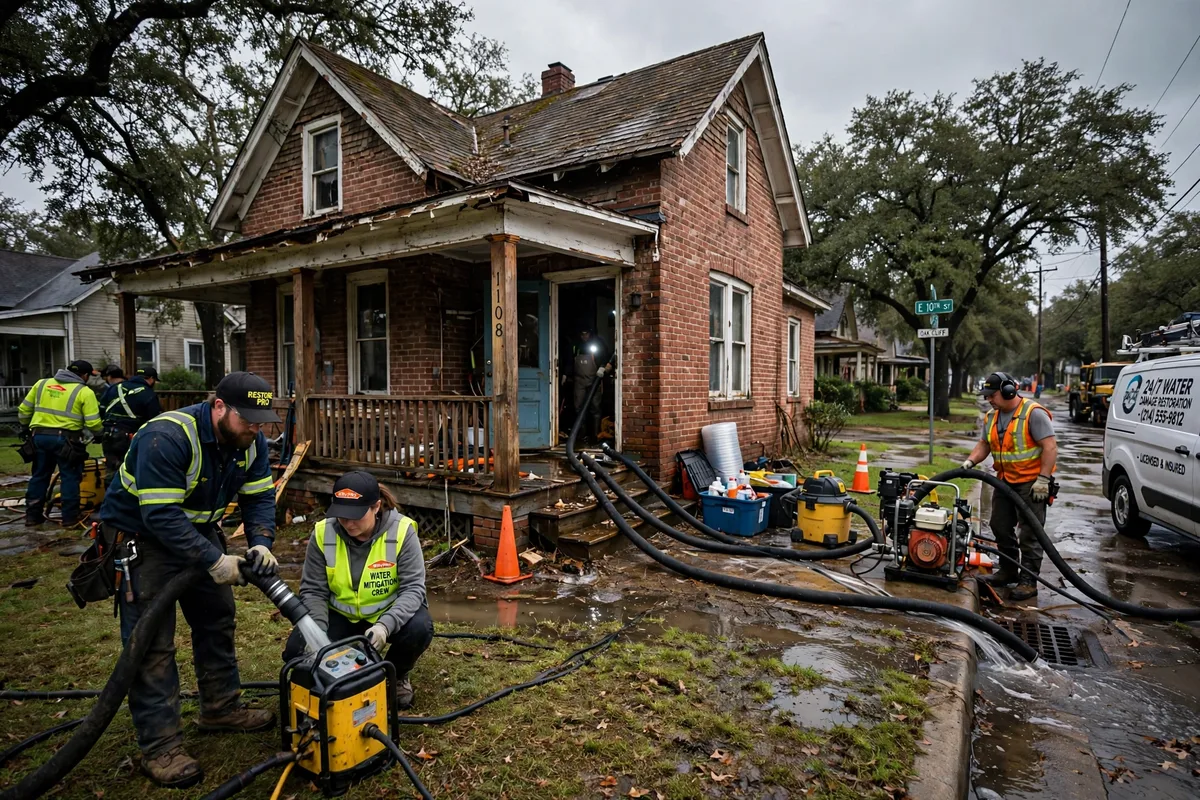
Emergency Water Damage Restoration in Oak Cliff, Dallas: 24/7 Same-Day Service
TLDR
- Who handles emergency water damage in Oak Cliff?: Water Damage Restoration Dallas — 24/7 live answer, around 60-minute arrival, free estimates: +1 214-807-4697.
- Why is Oak Cliff at higher water risk?: Older housing stock, aging pipes and wiring, and Dallas clay soil that shifts foundations and breaks lines.
- What happens when the crew arrives?: Shutoff help, emergency extraction, moisture mapping, structural drying, and mold prevention — same day.
- How fast must water damage response start?: Within hours — mold starts in 24–48 hours on wet material, and Oak Cliff's older homes hide water fast.
- How much does water damage restoration cost in Dallas?: Most Dallas water jobs land between $2,500 and $7,500 all-in for mitigation.
- Does insurance cover Oak Cliff water damage?: Sudden pipe and appliance losses are usually covered; gradual leaks and floodwater follow different rules.
- Can you stay in the home during restoration?: Usually yes for contained jobs, with the wet area sealed off and air scrubbers running.
🚨 WATER DAMAGE IN OAK CLIFF? Older homes flood faster — and hide it longer. We answer live 24/7, arrive in around 60 minutes, and give free estimates — extraction and drying start the same day.
📞 24/7 Oak Cliff Water Help: +1 214-807-4697
Emergency water damage restoration in Oak Cliff, Dallas, handles a neighborhood where the housing stock itself is part of the risk: older homes with aging supply lines, cast-iron drains, and pier-and-beam foundations that Dallas clay soil keeps shifting. A burst pipe, a slab leak, or a water-heater failure in an Oak Cliff home can soak structure for hours before anyone notices, because water hides inside walls, under pier-and-beam floors, and behind original cabinetry. Water Damage Restoration Dallas handles Oak Cliff emergencies with IICRC-certified crews, around 60-minute arrival, free estimates, and same-day extraction and drying. However, the rule that matters most comes first: shut the water off and call — every hour of standing water in an older home is more demolition, more drying, and more mold risk.
Why is Oak Cliff at higher water-damage risk?
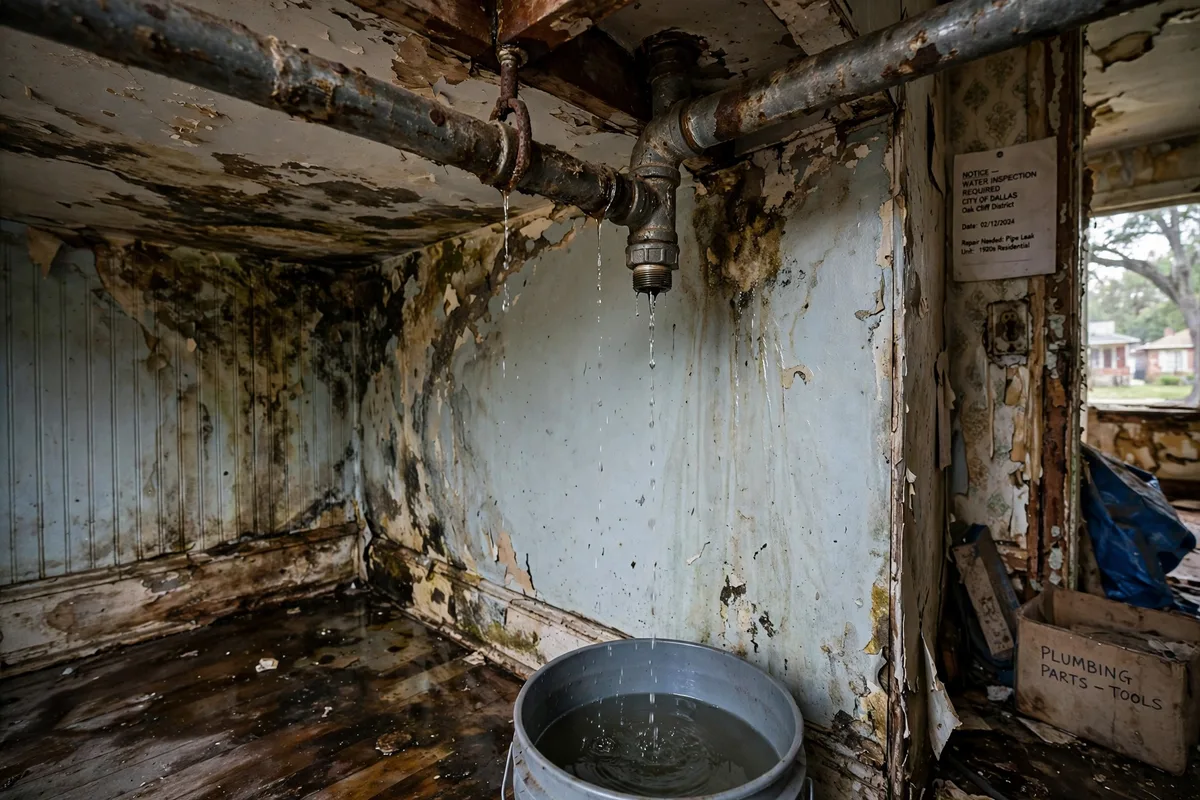
Three factors stack up in Oak Cliff. Age: many homes predate modern plumbing materials, so galvanized supply lines, cast-iron drains, and original fixtures fail more often and more suddenly. Soil: Dallas clay soil expands when wet and shrinks when dry, shifting foundations and stressing slab and buried lines until they crack. Construction: pier-and-beam floors and older wall assemblies hide leaks — water pools under the house or inside a wall cavity while the living space still looks dry. The Lakewood aging-pipes guide explains the same risk in another older Dallas neighborhood, and the clay soil guide covers the soil mechanism. However, the Oak Cliff exception is also its advantage: local crews who know the neighborhood's housing types spot the failure patterns faster — the same cast-iron drain, the same slab run, the same water-heater closet, job after job.
What happens when the emergency crew arrives in Oak Cliff?
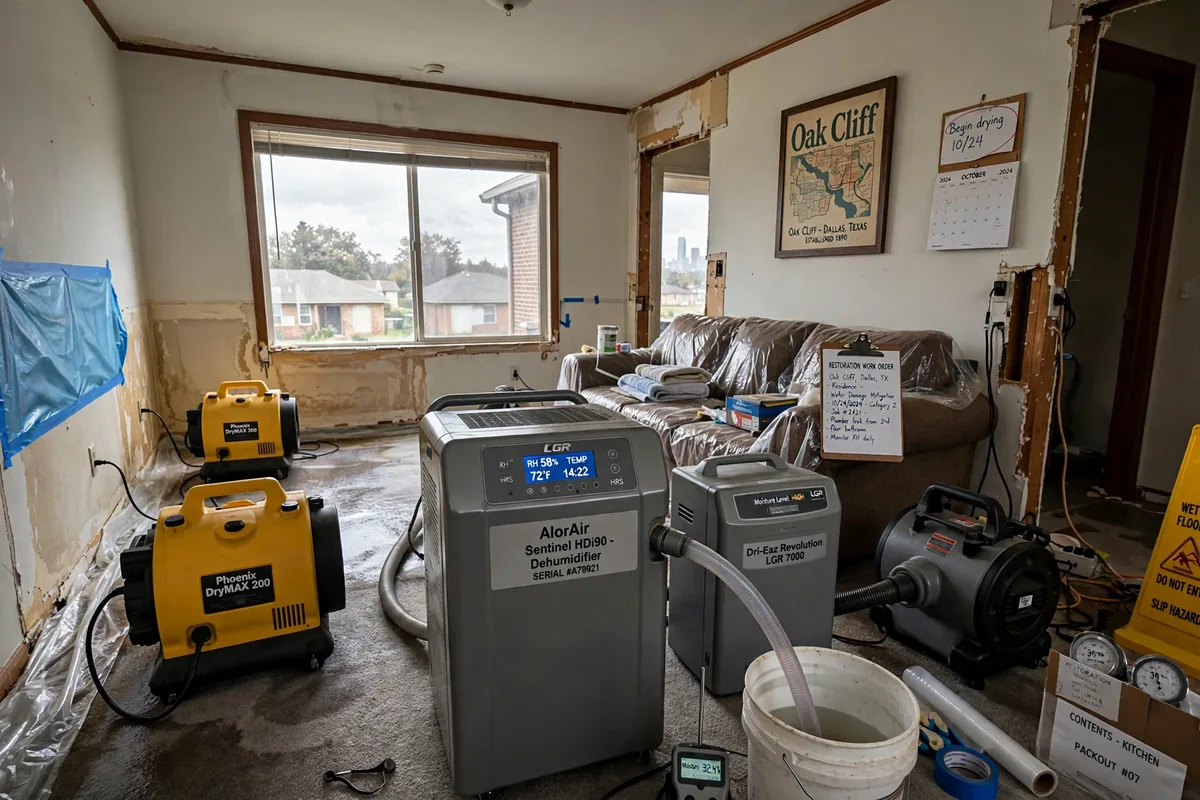
The crew follows a fixed sequence: shutoff help over the phone before arrival, safety assessment and power isolation, emergency extraction with truck-mounted equipment, moisture mapping of walls, floors, and cavities, removal of unsalvageable material, and structural drying with air movers and dehumidifiers verified by meter readings. Pier-and-beam homes get under-floor checks that slab homes do not need, and older wiring gets an electrical-safety look before drying equipment runs. The Dallas emergency guide covers the citywide response. However, the older-home trap is the hidden cavity: water wicks up original plaster and lath, hides behind built-ins, and pools under floors, so moisture mapping — not eyeballing — closes an Oak Cliff job.
| Oak Cliff risk factor | What fails | Crew response |
|---|---|---|
| Aging supply lines | Galvanized pipes burst | Shutoff, extraction, drying |
| Cast-iron drains | Cracks, sewage backup | Contaminated cleanup, repair |
| Clay soil shifts | Slab, buried lines crack | Leak detection, drying |
| Pier-and-beam floors | Hidden under-floor water | Under-floor checks, drying |
| Older water heaters | Tank rupture, flooding | Extraction, replacement scope |
📞 Same-Day Oak Cliff Response: +1 214-807-4697
How fast must Oak Cliff water damage response start?
Within hours, not days. Mold starts in 24–48 hours on wet material, and older homes give mold more to grow on — original wood, plaster, and insulation that absorb and hold water. Standing water also keeps damaging finishes and contents the longer it sits, and in pier-and-beam homes it can sit under the floor unnoticed while the living space dries on the surface. A crew that arrives the same day can often save flooring, cabinetry, and contents that a next-week crew would have to remove. The burst pipe repair guide covers the most common Oak Cliff emergency. However, one timing exception applies: if the water is near electrical panels or the structure looks compromised, wait for the crew and keep power isolated — no belongings are worth entering a wet, electrically unsafe home.
How much does Oak Cliff water damage restoration cost?
Most Dallas water jobs land between $2,500 and $7,500 all-in for mitigation — extraction, drying, and monitoring — and Oak Cliff jobs land across that range depending on depth, square footage, and how much original material must be removed. Slab leak detection typically runs $150–$400, and mold remediation, when the loss sat wet past 48 hours, typically adds $1,200–$3,800. The Texas average burst-pipe claim runs around $15,500 according to State Farm figures, which is a useful benchmark for sudden-event losses. However, the older-home cost trap is the rebuild scope: original materials cost more to match and replace than modern equivalents, so the mitigation quote and the rebuild quote are two different numbers — confirm both before authorizing rebuild work.
Does insurance cover water damage in Oak Cliff?
It depends on the source, not the neighborhood. Sudden pipe bursts, appliance failures, and water-heater ruptures are usually covered under a standard homeowners policy. Gradual leaks that went unrepaired, neglected maintenance, and rising floodwater from outside follow different rules — gradual damage is often excluded, and floodwater needs a separate flood policy. Document everything regardless: photos, the crew's scope report, and moisture readings support whichever claim path applies. The Dallas emergency guide walks through the coverage scenarios. However, the practical rule for older homes is to report early: a sudden loss reported the same day claims far cleaner than the same loss discovered weeks later, when the carrier can argue it was gradual.
Important Considerations
Texas has no state license specifically for restoration companies, so check IICRC certification, insurance, and reviews before hiring, and be wary of anyone demanding full payment upfront. Never re-enter a flooded home until power is isolated and the structure is assessed — water hides electrical hazards and weakened floors that are not visible. In pier-and-beam homes, ask explicitly for under-floor moisture checks; a surface-dry living room over a wet crawlspace is a mold job waiting to happen. Keep the scope report, moisture readings, photos, and all carrier correspondence in one file — older-home claims generate more paperwork, and gaps are where money is lost. Finally, after mitigation, fix the water path — the aging line, the drain, the grading — because the same Oak Cliff home floods the same way twice without a correction.
📞 Free Oak Cliff Estimate: +1 214-807-4697
Frequently Asked Questions
Who handles emergency water damage in Oak Cliff?
Water Damage Restoration Dallas — 24/7 live answer, around 60-minute arrival, free estimates, and same-day extraction and drying across Oak Cliff.
Why is Oak Cliff at higher water risk?
Older housing stock with aging pipes and drains, Dallas clay soil that shifts foundations and cracks lines, and pier-and-beam construction that hides leaks.
What happens when the crew arrives?
Shutoff help, safety assessment, emergency extraction, moisture mapping, removal of unsalvageable material, and meter-verified structural drying.
How fast must response start?
Within hours — mold starts in 24–48 hours on wet material, and older homes hide water inside walls and under floors while the surface looks dry.
How much does Oak Cliff water damage restoration cost?
Most Dallas water jobs land between $2,500 and $7,500 all-in for mitigation, with slab detection typically $150–$400 and mold remediation $1,200–$3,800 when needed.
Does insurance cover Oak Cliff water damage?
Sudden pipe and appliance losses are usually covered; gradual leaks are often excluded and floodwater needs a separate flood policy — the source decides it.
Can I stay in the home during restoration?
Usually yes for contained jobs, with the wet area sealed off and air scrubbers running — the crew will say explicitly if a larger job requires more distance.
What is special about pier-and-beam homes?
Water pools under the floor unnoticed, so under-floor moisture checks are mandatory — a surface-dry room over a wet crawlspace is a mold job waiting to happen.
Should I shut off the water first?
Yes — shut the main valve if you can do so safely, then call. Every hour of standing water in an older home is more demolition, drying, and mold risk.
What should I photograph after water damage?
From a safe position: the water source if visible, every affected room, damaged contents, and water lines on walls — before anything is moved.
Why call Water Damage Restoration Dallas for Oak Cliff?
Local Dallas crews who know Oak Cliff's older homes, 24/7 live answer, around 60-minute arrival, and free estimates — extraction, drying, and documentation in one call. Call +1 214-807-4697.
📞 Call Water Damage Restoration Dallas 24/7: +1 214-807-4697