Emergency Water Damage Restoration in Dallas: 24/7 Same-Day Service
TLDR
- Who do I call for a water emergency in Dallas?: Water Damage Restoration Dallas — 24/7 live answer, same-day dispatch, around 60-minute arrival: +1 214-807-4697.
- What counts as a water damage emergency?: Any active leak, standing water, sewage backup, or flooding that is still spreading — waiting turns a drying job into a rebuild.
- How fast will a crew reach me?: Around 60 minutes across Dallas, day or night, with extraction equipment on the truck so work starts on the first visit.
- What does emergency service cost in Dallas?: Most residential jobs land between $2,500 and $7,500; extraction-only starts around $500–$3,000; sewage jobs run $3,000–$10,000.
- Will insurance cover an emergency callout?: Sudden losses (burst pipe, appliance failure, storm intrusion) are usually covered — you typically pay only your deductible.
- What should I do before the crew arrives?: Stop the source if you can do it safely, cut power to wet areas, move valuables up high, and take photos of everything.
- Do you work on weekends and holidays?: Yes — 24 hours a day, 7 days a week, 365 days a year. Water does not keep office hours, and neither do we.
🚨 WATER EMERGENCY RIGHT NOW? Do not wait for a callback form. We answer live 24/7 and dispatch a crew the same day, with around 60-minute arrival anywhere in Dallas. Free estimates. IICRC-certified crews.
📞 Emergency? Call Now: +1 214-807-4697
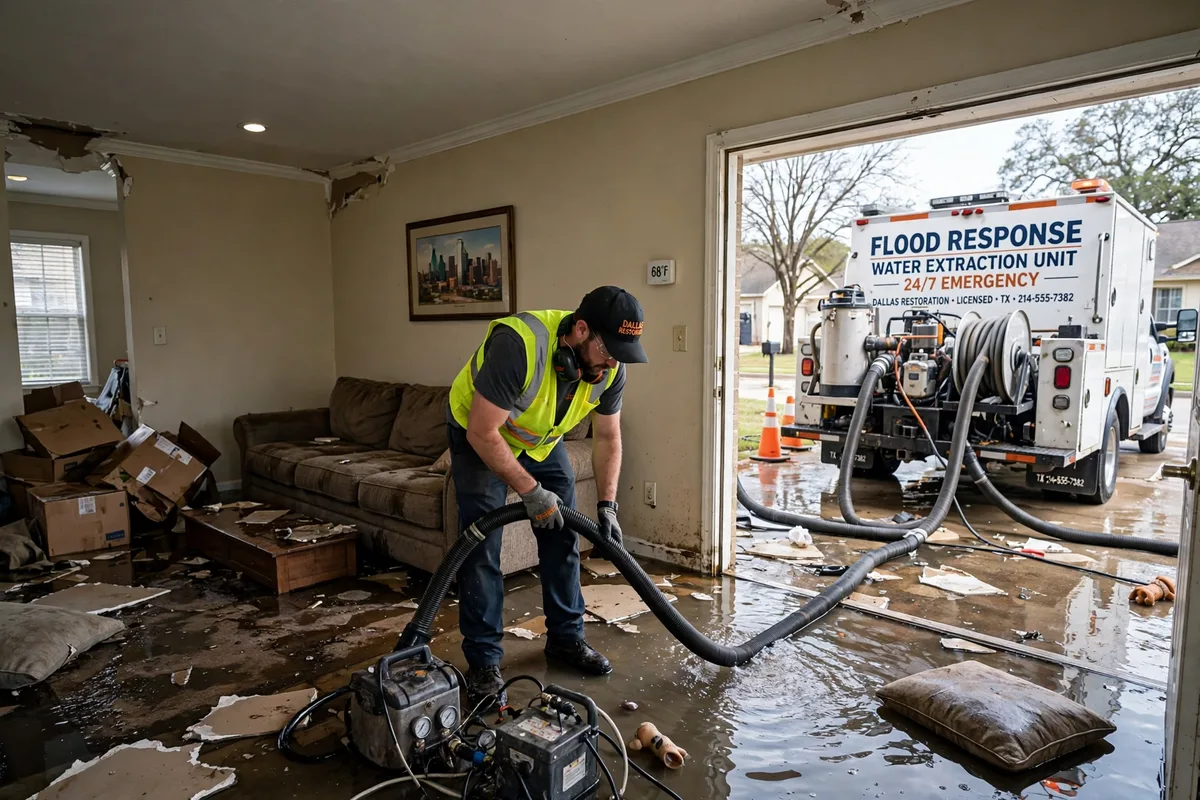
Water damage is a race against the clock, and the clock starts the moment water touches drywall. In the first hours, extraction and drying can save floors, walls, and belongings; after 24–48 hours, mold starts growing in wet materials, and a drying job starts becoming a demolition and rebuild job. That is why emergency water damage restoration exists as a separate service from scheduled repair: a crew that arrives today, with truck-mounted extraction and industrial drying equipment, instead of an appointment next week. Water Damage Restoration Dallas runs emergency response 24 hours a day across Dallas — Downtown, Uptown, Lakewood, and the surrounding neighborhoods — with IICRC-certified technicians, free estimates, and direct insurance billing. Most residential emergency jobs in Dallas land between $2,500 and $7,500, and sudden losses like a burst pipe or appliance failure are usually covered by homeowners insurance, which means most callers pay only their deductible. However, speed alone is not the whole job — the crew also has to document the loss properly for your claim, dry to a verified standard rather than a surface guess, and stop the source so the damage does not come back the next time it rains or the pipe shifts again.
What counts as a water damage emergency?
An emergency is any water intrusion that is still active, still spreading, or a health risk. A burst pipe spraying into a wall cavity is an emergency. A water heater that has failed and is flooding a utility room is an emergency. A sewage backup in a bathroom or kitchen is an emergency, because Category 3 black water carries pathogens and cannot wait. Storm flooding that has entered the home is an emergency. A slow drip under a sink that you caught early, with no spreading and no standing water, is urgent but not an emergency — it still deserves a same-week visit, because slow leaks are how Dallas slab leaks and hidden mold start. The test is simple: if water is moving, pooling, or contaminated, call now. If you are unsure, call anyway — a two-minute conversation costs nothing, and the free estimate means you find out the real scope before committing to anything. However, never enter standing water that may be electrified, and never try to stop a sewage backup yourself without protective gear.
How fast will a crew reach me in Dallas?
Around 60 minutes, anywhere in Dallas, at any hour. Crews dispatch from a Dallas base with extraction units, air movers, dehumidifiers, and moisture meters already on the truck, so the first visit is a working visit — not an inspection that books a second visit. The crew's first job on arrival is safety: power and gas secured around wet areas, the water category identified, and the source stopped or isolated. Then extraction starts immediately, because every hour of standing water pushes moisture deeper into subfloors, wall cavities, and framing. Dallas homes add two local complications: expansive clay soil that shifts slabs and breaks pipes, and humid summers that slow natural drying — both reasons professional drying equipment matters more here than a mop and a household fan. However, arrival time depends on conditions — a metro-wide storm or freeze event can stretch every company's response — and any company that promises an exact minute during a city-wide freeze is guessing.
What happens when the emergency crew arrives?
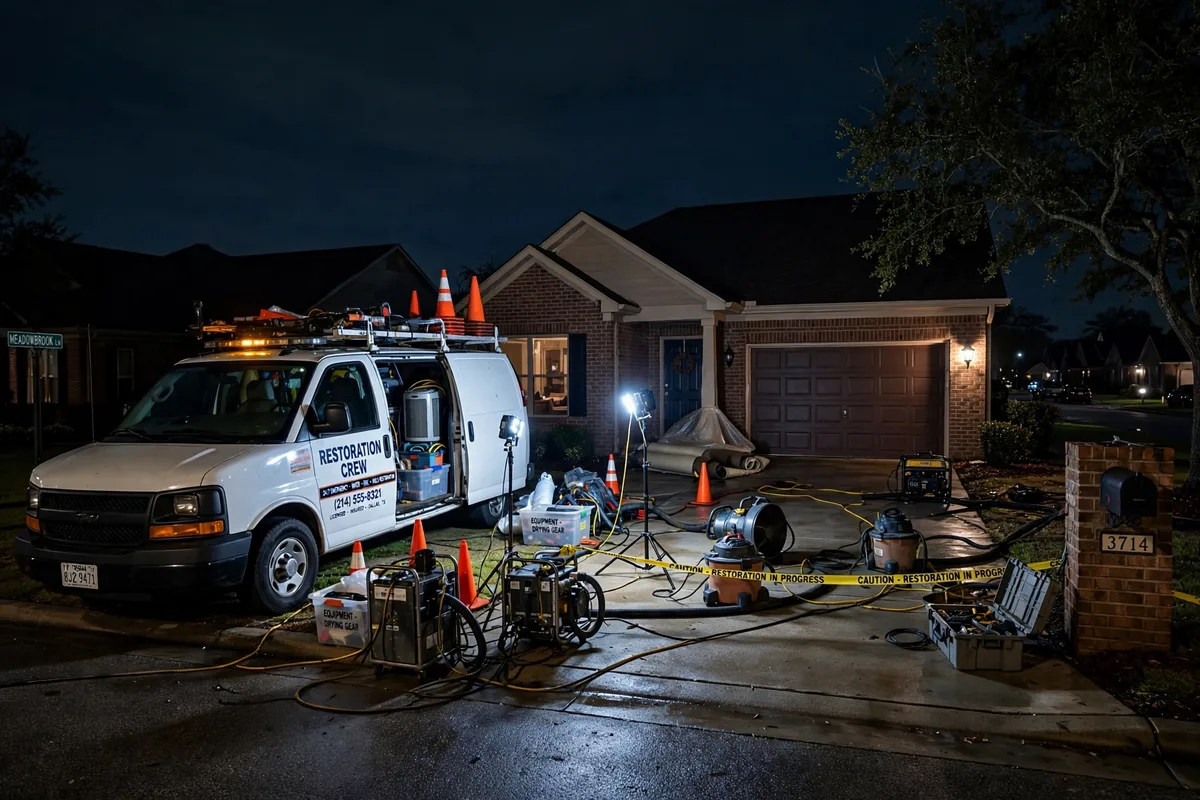
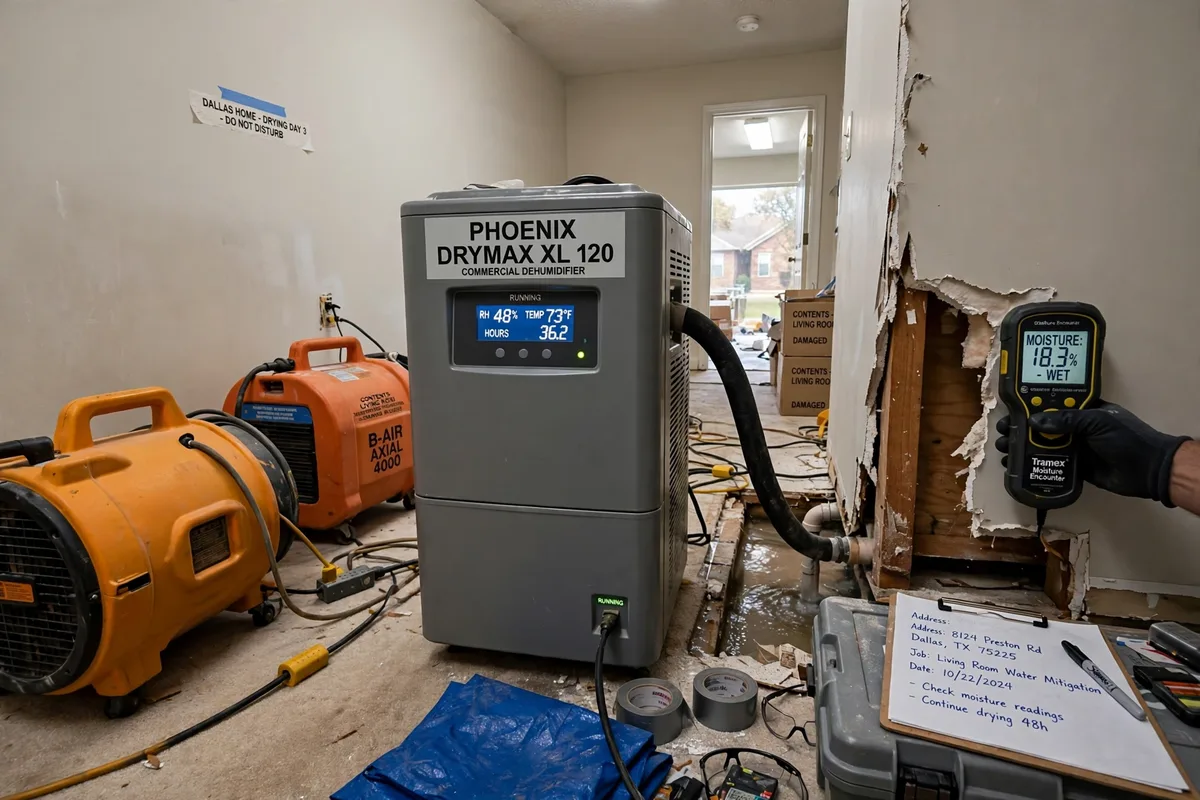
The visit follows a fixed order, and knowing it helps you judge whether a company is professional. First, safety and source control: electricity isolated in wet zones, the leak stopped or the main valve shut. Second, inspection and moisture mapping: meters and thermal imaging find how far water traveled, including inside walls and under floors where eyes cannot see. Third, extraction: truck-mounted units pull standing water and saturated carpet pad, which is usually removed because pad rarely dries cleanly. Fourth, removal of unsalvageable material: wet drywall, insulation, and anything touched by Category 3 water is bagged and documented. Fifth, structural drying: industrial air movers and dehumidifiers run with daily moisture readings until framing, slab, and walls read dry to a verified standard. Sixth, documentation: photos and moisture logs that your adjuster needs, plus an Xactimate-style estimate. However, drying is not finished when surfaces feel dry — the verified reading is the finish line, and a company that pulls equipment early is leaving mold a place to start.
📞 Crew Dispatching 24/7: +1 214-807-4697
What does emergency water damage restoration cost in Dallas?
Most Dallas homeowners pay between $2,500 and $7,500 for a typical residential emergency job, and the range is driven by water category, area affected, and how long materials stayed wet. Extraction-only work on a small clean-water loss can start around $500–$3,000. A burst pipe flooding two or three rooms usually lands in the $2,500–$7,500 band. Sewage backup jobs, which require demolition and sanitization, typically run $3,000–$10,000. Whole-home flooding with rebuild can reach $20,000 or more. The estimate is free and confirmed on site after moisture mapping — no company can give a real number over the phone without seeing the loss, and you should distrust one that does. Sudden losses are usually covered by homeowners insurance, so most callers pay only their deductible; gradual leaks and maintenance failures are the common denial reasons. However, the cheapest quote is not the best deal when it skips moisture mapping or pulls drying equipment early — the second loss, mold remediation at $1,200–$3,800, costs more than doing the first job right.
| Situation | Emergency service (call now) | If you wait days |
|---|---|---|
| Burst pipe, active leak | Source stopped, extraction same day, drying starts immediately | Water spreads through walls and subfloor; drywall and flooring lost |
| Standing water, clean source | Extraction + drying within hours; most materials saved | Mold starts in 24–48 hours; pad and drywall usually removed |
| Sewage backup | Containment, sanitization, documented demolition | Contamination spreads; health risk grows; claim complications |
| Storm flooding | Pump-out, drying, and insurance documentation from day one | Warping, swelling, and secondary damage across rooms |
Will insurance cover my emergency water damage?
Usually yes for sudden, accidental losses: a burst pipe, a failed water heater, an appliance supply line break, or storm-driven intrusion are the classic covered events, and most Dallas homeowners end up paying only their deductible. The two common denial zones are gradual damage (a leak that ran for weeks unnoticed, framed as maintenance failure) and flood water from outside rising water, which needs a separate flood policy. Sewage backup usually needs its own endorsement on top of a standard policy. The crew's documentation matters enormously here: photos, moisture logs, and an itemized scope are what an adjuster uses to approve the claim, and losses documented from day one are approved faster than losses reconstructed from memory. If your claim was already denied, the repair-vs-restoration guide and the flood-versus-water insurance breakdown at flood damage restoration Dallas explain the coverage lines adjusters use. However, never delay mitigation while waiting for a coverage decision — additional damage that happens during the delay is the one thing carriers routinely refuse to pay for.
What should I do while waiting for the crew?
Five things, in order, and only if each is safe. First, stop the source: shut the fixture valve or the main water shutoff if you know where it is. Second, cut power to wet rooms at the breaker if water is near outlets or appliances — do not step into standing water to reach a switch. Third, move valuables, rugs, and electronics to dry, higher ground. Fourth, take photos and short videos of everything before anything is moved or removed — your claim depends on this record. Fifth, if the water is sewage or floodwater, keep people and pets out of it entirely. Do not run a household vacuum on standing water, do not turn on ceiling fans in a room with a sagging, waterlogged ceiling, and do not start tearing out walls before documentation. The crew handles the rest, including the moisture mapping that tells you how far the loss actually spread — which is often further than the visible stain suggests. However, if you smell gas, see sparking, or the ceiling is bowing, leave the room and wait outside.
Important Considerations
Emergency response is the first phase, not the whole restoration. After mitigation and verified drying, repairs — drywall, flooring, trim, paint — are a separate scope, and a company should explain that boundary clearly rather than bundling everything into one vague price. Texas has no state license specifically for water restoration companies, so check IICRC certification, insurance, and reviews before hiring, and be wary of anyone demanding full payment upfront. If mold is found, Texas rules require a licensed mold assessment consultant's protocol for remediation in many cases — the structural drying guide explains drying timelines, and the clay-soil pipe guide covers the Dallas-specific reason pipes keep breaking. Finally, after any emergency visit, ask for the moisture log and photos in writing — they belong to you, and you will need them for your insurer and for any future buyer of the home.
📞 Free Emergency Estimate: +1 214-807-4697
Frequently Asked Questions
How fast can an emergency crew reach my Dallas home?
Around 60 minutes across Dallas, 24 hours a day, with equipment on the truck so work starts on the first visit. During metro-wide storm or freeze events, every company's response stretches — a company promising an exact minute in those conditions is guessing.
What is the first thing I should do in a water emergency?
Stop the source if you can do it safely (fixture valve or main shutoff), cut power to wet areas, and call for dispatch. Then photograph everything before anything is moved — the photos are the backbone of your insurance claim.
Does emergency water damage restoration cost more at night?
Emergency response itself does not carry a night surcharge with reputable Dallas companies — the price follows the scope (category, area, materials), not the hour. Be cautious of any company quoting a large "after-hours fee" before seeing the loss.
How long does emergency drying take?
Most residential jobs dry in 3–5 days with industrial equipment and daily moisture readings. Larger or Category 3 losses run longer. Surfaces feeling dry is not the finish line — verified moisture readings are.
Is a burst pipe covered by homeowners insurance?
Usually yes — sudden pipe bursts are the classic covered water loss, and most homeowners pay only their deductible. Gradual leaks and flood water from outside rising water are the common exclusions.
Can I stay in my home during emergency restoration?
Often yes for a contained loss, if power is safe and no sewage contamination is involved. For sewage, whole-home flooding, or major demolition, temporary relocation is usually safer — and often covered under loss-of-use provisions.
What is Category 3 water, and why does it matter?
Category 3 is black water — sewage, floodwater, or any water carrying pathogens. It requires containment, sanitization, and removal of affected porous materials. It is never a DIY cleanup, and it should never wait.
Do you work directly with my insurance company?
Yes — losses are documented with photos and moisture logs, and estimates are prepared in the format adjusters use, so most claims move faster. You still control the claim; the documentation simply makes approval easier.
Do you serve all of Dallas, or only certain neighborhoods?
All of Dallas — Downtown, Uptown, Lakewood, and surrounding neighborhoods — plus nearby suburbs. If you are unsure whether your address is covered, the call is free and the answer takes a minute.
What makes Water Damage Restoration Dallas different from a franchise?
A local Dallas crew that knows clay-soil slab leaks, flash-flood corridors, and freeze-burst season, with 24/7 live answer, around 60-minute arrival, free estimates, and direct insurance billing — without franchise scheduling delays.
What if the damage turns out to be mold, not just water?
Water and mold are handled together: the water source is fixed and the structure dried first, then mold remediation follows a licensed assessment protocol where Texas rules require one. Drying first matters — remediating mold while the leak is still active guarantees it returns.
📞 Call Water Damage Restoration Dallas 24/7: +1 214-807-4697