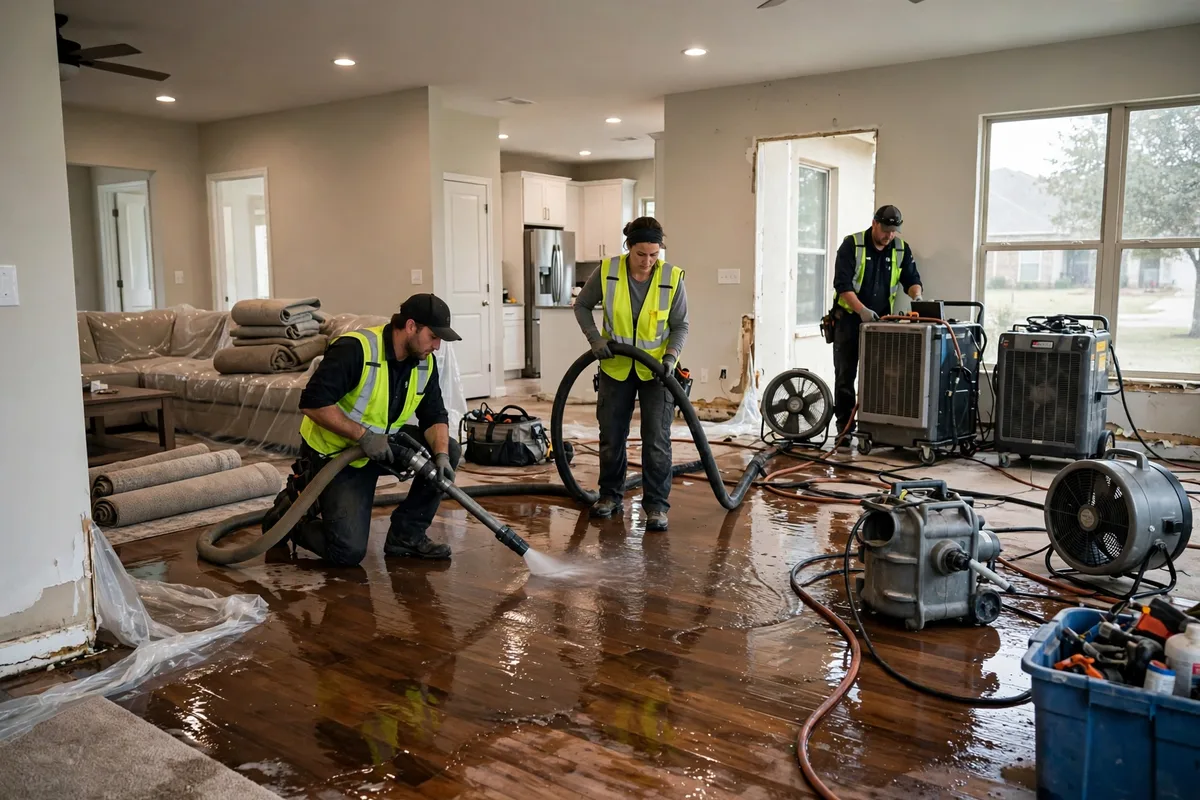
Emergency Water Damage Restoration in Plano: 24/7 Same-Day Service
TLDR
- Who provides emergency water damage restoration in Plano right now?: Water Damage Restoration Dallas — 24/7 live answer, same-day dispatch, around 60-minute arrival: +1 214-807-4697.
- What counts as a water emergency in Plano?: Burst pipes, appliance failures, slab leaks, storm flooding, and sewage backups — anything with standing water or an active leak.
- How fast do Plano crews arrive?: Around 60 minutes in most of Plano, 24 hours a day, including nights, weekends, and holidays.
- How much does emergency restoration cost in Plano?: Most Dallas-area water jobs land between $2,500 and $7,500 all-in for mitigation, with repairs priced on top.
- Are Plano new builds at risk too?: Yes — new-build grading settles, joints fail, and appliance lines leak, so age alone does not protect a home.
- How long does drying take?: Structural drying typically takes 3–5 days with industrial equipment, verified by moisture readings rather than surfaces that feel dry.
- Does insurance cover emergency restoration?: Sudden events like burst pipes are usually covered, with the homeowner paying only the deductible in most cases.
🚨 WATER DAMAGE IN YOUR PLANO HOME? Do not wait for the morning. We answer live 24/7, dispatch the same day, arrive in around 60 minutes, and give free estimates — extraction, drying, mold prevention, and repairs in one call.
📞 Plano Water Emergency? Call Now: +1 214-807-4697
A water emergency in Plano does not wait for business hours, and neither should the response — because the damage clock runs from the moment water touches a material, not from the moment someone notices it. Burst supply lines, failed water heaters, washing machine hoses, slab leaks, and storm water through foundation gaps all create the same urgent sequence: stop the water, extract what is standing, map what is hidden, and dry to verified readings before mold starts. Plano homes face a particular mix of risks: newer subdivisions where grading settles and joints fail, older sections with aging supply lines, and the same expansive clay soil that shifts slabs across North Texas. Water Damage Restoration Dallas serves Plano 24 hours a day with IICRC-certified technicians, free estimates, and direct insurance billing, and most Dallas-area water jobs land between $2,500 and $7,500 all-in for mitigation. However, the first step belongs to you: shut the water off at the main if you can find it safely, move valuables off the floor, and call — because a crew dispatched in the first hour saves flooring, drywall, and the insurance claim that a morning-after call cannot.
What water emergencies do Plano crews handle?
Five emergencies dominate Plano calls, and each needs a slightly different first response. Burst pipes top the list in freeze season and year-round at weak joints: shut the main, open a low faucet to relieve pressure, and call before the water spreads. Appliance failures — water heaters, washing machines, dishwashers, refrigerator lines — flood quietly, often while the homeowner is out, and the first sign is a warped floor or a downstairs stain. Slab leaks hide under concrete and announce themselves through damp spots, warm floor areas, or a climbing water bill; detection runs $150–$400 and prevents a blind dig. Storm water enters through foundation gaps, window wells, and poor drainage during North Texas downpours, and it needs extraction plus sanitization when it carries soil and contaminants. Sewage backups are the most urgent category of all: black water carries pathogens, contaminated materials must be disposed of, and the home needs full decontamination. The Plano-Frisco new-build guide explains why newer homes are not exempt from these risks. However, whatever the source, the rule is the same: active water is an emergency, and damp materials without active water still need same-day assessment before mold starts within 24–48 hours.
How fast is emergency response in Plano?
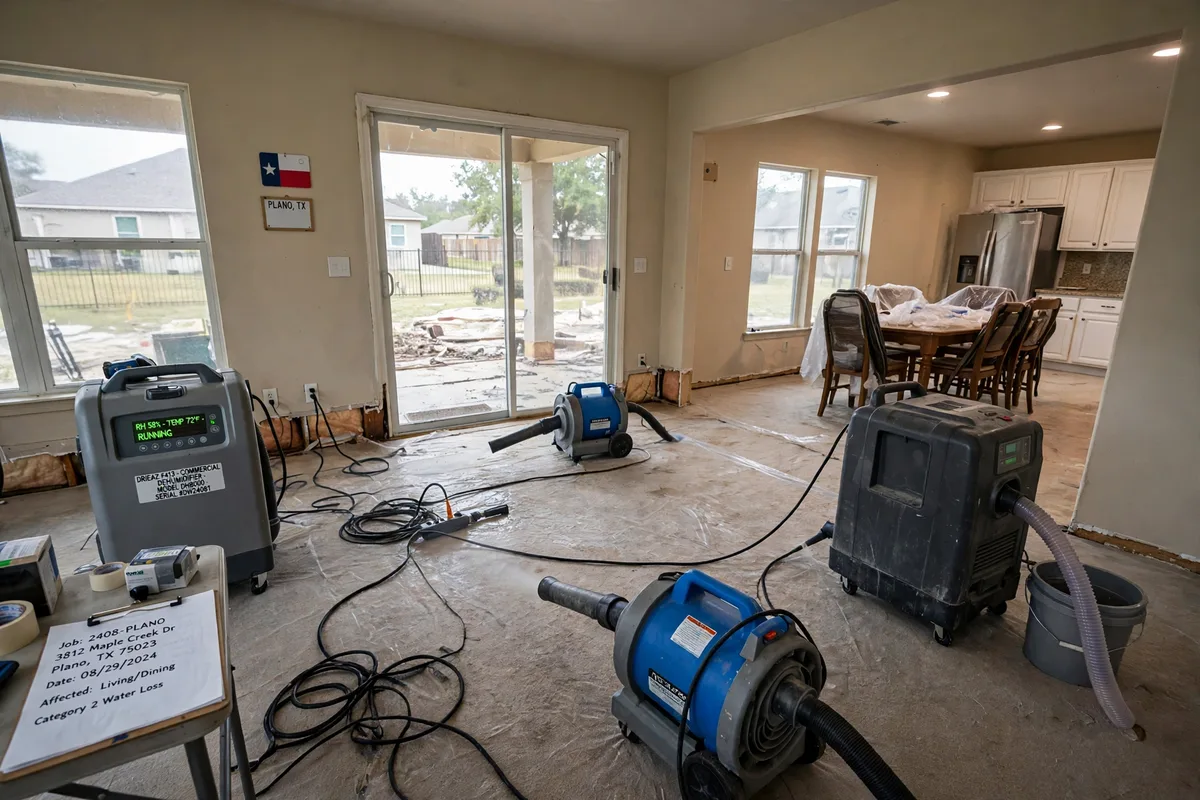
Emergency response in Plano runs around 60 minutes in most of the city, 24 hours a day, because the crew model is built for it: a live answer, not a voicemail; a dispatched crew, not a callback queue; and a truck stocked for extraction, drying, and containment on the first visit. The first hour on site follows a fixed order: source shutoff if it is still running, safety check for electrical hazards, extraction of standing water, contents lifted or moved, and moisture mapping with meters and thermal imaging. That mapping decides the drying plan — which rooms, which materials, how many air movers and dehumidifiers, and whether wall or flooring removal is needed. During metro-wide storms or freezes, every company's response stretches, and honest crews say so on the call rather than promising a minute they cannot keep. The Frisco emergency guide shows the same response model in the neighboring city. However, speed without mapping is just noise: a fast crew that extracts visible water and skips hidden moisture leaves the job half done.
| Plano water emergency | First action | Crew response |
|---|---|---|
| Burst pipe | Shut main, relieve pressure | Extraction, drying, repair |
| Appliance failure | Shut supply, lift contents | Extraction, mapping, drying |
| Slab leak | Meter test, call for detection | Detection, repair, drying |
| Storm flooding | Stay clear of electrics | Extraction, sanitization |
| Sewage backup | Keep clear, do not clean | Decontamination, disposal |
📞 Same-Day Plano Response: +1 214-807-4697
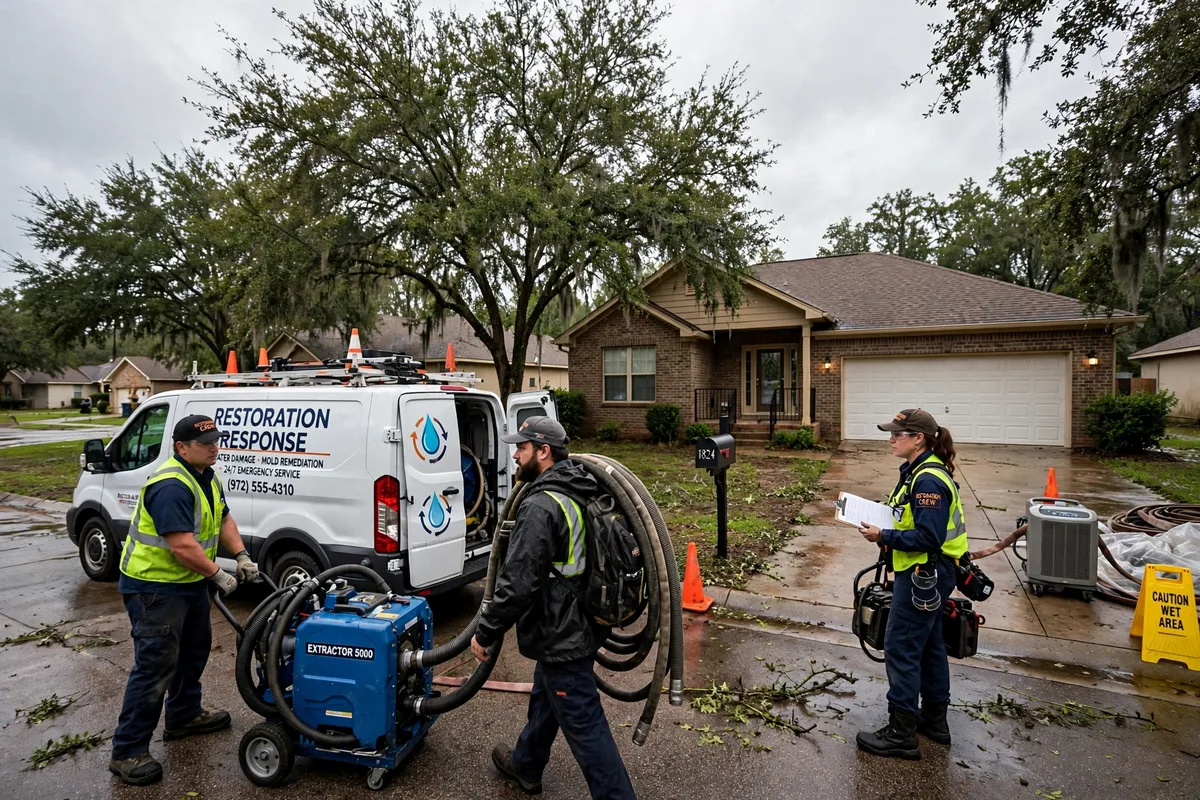
How much does emergency water damage restoration cost in Plano?
Most Dallas-area water jobs land between $2,500 and $7,500 all-in for mitigation — extraction, drying, and monitoring — with repairs and contents work priced on top depending on scope. Three factors move the price: area affected, water category, and materials. A single-room clean-water job lands low; a multi-room sewage job with hardwood and wall removal lands high. Slab leak detection, when the source is below the floor, runs $150–$400 as its own line. The estimate is free and confirmed on site after moisture mapping — no company can give a real number over the phone without seeing the loss, and you should distrust one that does. Insurance coverage follows the cause: sudden events like burst pipes are usually covered, and the Texas average burst-pipe claim runs around $15,500 according to State Farm figures, so most homeowners pay only the deductible. The repair-versus-restoration guide draws the line between the plumbing scope, the mitigation scope, and the rebuild scope. However, the cheapest emergency quote is not the best deal when it skips monitoring or mold prevention — a mold job three weeks later costs more than the first job done right.
Why are Plano homes at risk despite being newer?
Plano's newer housing stock creates a false sense of security, because new does not mean watertight. New-build grading settles in the first years, opening gaps at foundations and shifting drainage toward the house instead of away from it. Appliance lines — washing machine hoses, refrigerator lines, water heater connections — fail on age and pressure, not on the age of the house, and a failed hose floods at full line pressure whether the home is two years old or forty. Expansive clay soil under Plano shifts slabs seasonally, stressing the pipes cast into and under them, and poor drainage accelerates the cycle by keeping one side of a slab swollen while the other dries. Older Plano sections add their own risks: aging galvanized and copper lines, older water heaters, and trees whose roots find sewer lines. The burst pipe repair guide explains the plumbing failures that drive most emergency calls. However, new or old, the protection is the same: know the main shutoff location, replace rubber appliance hoses on schedule, and call at the first sign of water rather than the first sign of damage.
Important Considerations
Texas has no state license specifically for water restoration companies, so check IICRC certification, insurance, and reviews before hiring, and be wary of anyone demanding full payment upfront. If mold is found during drying, Texas rules require a licensed mold assessment consultant's protocol for remediation in many cases, and remediation should follow drying rather than precede it. Ask for the moisture log, the daily drying readings, and photos in writing: they belong to you, your insurer will want them, and any future buyer of the home will ask about the loss. During a metro-wide storm or freeze, response times stretch for every company — an honest time estimate on the call is worth more than a fast promise that fails. Finally, separate the emergency from the rebuild in your head: mitigation stops the damage tonight, repairs restore the home over the following days, and only the first one cannot wait until morning.
📞 Free Plano Estimate: +1 214-807-4697
Frequently Asked Questions
How fast can an emergency crew reach Plano?
Around 60 minutes in most of Plano, 24 hours a day, including nights, weekends, and holidays. During metro-wide storms or freezes, response stretches for every company — honest crews say so on the call rather than promising a minute they cannot keep.
What should I do first when water floods my Plano home?
Shut the water off at the main if you can reach it safely, stay clear of any water near outlets or appliances, move valuables off the floor, and call for emergency response. Do not wait until morning — mold can start in wet materials within 24–48 hours.
How much does emergency water damage restoration cost in Plano?
Most Dallas-area water jobs land between $2,500 and $7,500 all-in for mitigation, with repairs priced on top. The estimate is free and confirmed on site after moisture mapping.
Does insurance cover emergency water damage restoration?
Sudden events like burst pipes and appliance failures are usually covered, with the homeowner paying only the deductible in most cases. Long-running leaks ignored for months are often excluded as gradual damage.
Are Plano new builds really at risk for water damage?
Yes — settling grading, appliance hose failures, and clay-soil slab movement affect new homes too. Age protects nothing; the shutoff location, hose condition, and drainage around the foundation matter far more.
How long does drying take after an emergency in Plano?
Structural drying typically takes 3–5 days with industrial equipment and daily monitoring, longer for saturated hardwood, plaster, or slab. The finish line is verified moisture readings, not surfaces that feel dry.
Can I stay in my Plano home during restoration?
Often yes for clean-water jobs with contained drying, but sewage jobs and homes with electrical hazards require staying elsewhere until clearance. Your crew should explain the safety plan on the first visit.
What if the water came from a slab leak?
Slab leak detection runs $150–$400 and locates the leak before any digging, preventing a blind repair. After repair, the water job runs: extraction, drying to verified readings, and restoration of the access area.
Should I call a plumber or a restoration company first?
Call restoration first when water is standing or spreading — the plumber fixes the source, but the restoration crew stops the damage, and damage continues while the source waits. Many jobs need both, and the restoration crew coordinates the sequence.
How do I prevent water emergencies in my Plano home?
Know the main shutoff, replace rubber appliance hoses every five years, keep drainage sloping away from the foundation, and check the water heater and visible lines seasonally. Early calls at the first sign of water beat every prevention device.
Why should I call Water Damage Restoration Dallas for Plano emergencies?
Local Dallas-area crews, 24/7 live answer, around 60-minute arrival in Plano, extraction plus drying plus repairs in one call, free estimates, and insurance documentation from the first visit.
📞 Call Water Damage Restoration Dallas 24/7: +1 214-807-4697