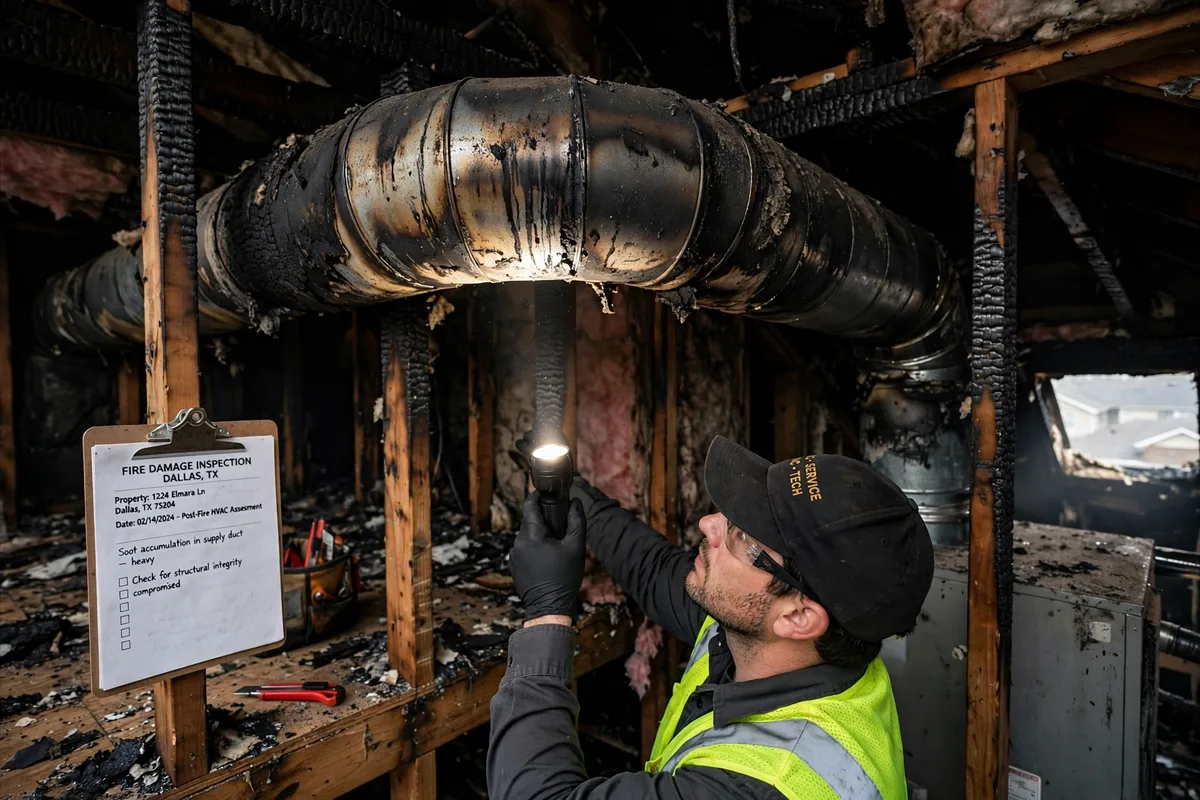
HVAC After a Fire in Dallas: Why Running It Makes Everything Worse
TLDR
- Should you run your HVAC after a fire in Dallas?: No — keep the system off until a professional inspects it, because the blower spreads soot to every room.
- Who handles HVAC inspection after a fire in Dallas?: Water Damage Restoration Dallas — 24/7 live answer, around 60-minute arrival, free estimates: +1 214-807-4697.
- What happens when you run the HVAC after a fire?: Soot, smoke odor, and fine particles get pushed through the ducts into rooms the fire never touched.
- Can running the HVAC after a fire void part of your claim?: Yes — carriers can argue a one-room fire became a whole-house loss because the system was run.
- What does a post-fire HVAC inspection cover?: Ducts, blower, coils, filters, and the return plenum, with cleaning or replacement scoped per component.
- How much does fire damage restoration cost in Dallas?: Dallas fire restoration averages $29,077, with fire claims averaging around $88,000.
- When should you call a fire cleanup crew?: Immediately — soot turns acidic within hours and mold grows on wet material in 24–48 hours.
🚨 FIRE IN YOUR DALLAS HOME? Keep the HVAC OFF — do not touch the thermostat. Call now. We answer live 24/7, arrive in around 60 minutes, and give free estimates — inspection, soot cleanup, and duct cleaning in one visit.
📞 24/7 Fire Cleanup Help: +1 214-807-4697
Running your HVAC after a fire in Dallas is the single fastest way to turn a one-room fire into a whole-house disaster: the blower pulls soot, smoke particles, and odor straight into the ductwork and pushes them into every room the fire never touched. Most homeowners reach for the thermostat out of habit — to clear the smell or cool the house down — and that one click spreads acidic soot across walls, ceilings, furniture, and electronics that would otherwise have stayed clean. Professional fire cleanup starts with the system off and stays off until ducts, blower, coils, and filters are inspected, because cleaning a contaminated duct system costs far more than inspecting it first. Water Damage Restoration Dallas handles post-fire HVAC inspection with IICRC-certified crews, around 60-minute arrival, free estimates, and same-day help. However, one post-fire rule comes first: if the system was already running during the fire, say so on the first call, because the crew's inspection plan changes completely.
Why is running the HVAC after a fire so damaging?
Running the HVAC after a fire is damaging because the blower acts as a distribution system for soot: it pulls smoke and fine particles from the fire room into the return, then pushes them through supply ducts into bedrooms, closets, and rooms on the other side of the house. Soot is acidic and oily, so it bonds to painted surfaces, metal, and electronics within hours, and once it is inside ductwork it keeps re-circulating every time the system cycles. The soot damage cleanup guide covers how fast soot etches surfaces it touches. However, one damage trap applies: the rooms that look clean after the blower ran are often the dirtiest inside the ducts, so a visual check of the rooms tells the crew nothing about the system.
What should you do with your HVAC right after a fire?
Leave the HVAC off, set the thermostat to OFF rather than FAN or AUTO, and do not run the fan to clear smoke — open windows in the fire room only if it is safe and the fire is fully out. Photograph the thermostat setting and any visible soot at vents before anything moves, since the photos support the claim. Call a fire cleanup crew before touching the system, and tell the crew whether the system was running during the fire. However, the first-step mistake is the comfort reflex: cooling the house down feels urgent, but one cooling cycle can spread soot into rooms that would have needed no work at all.
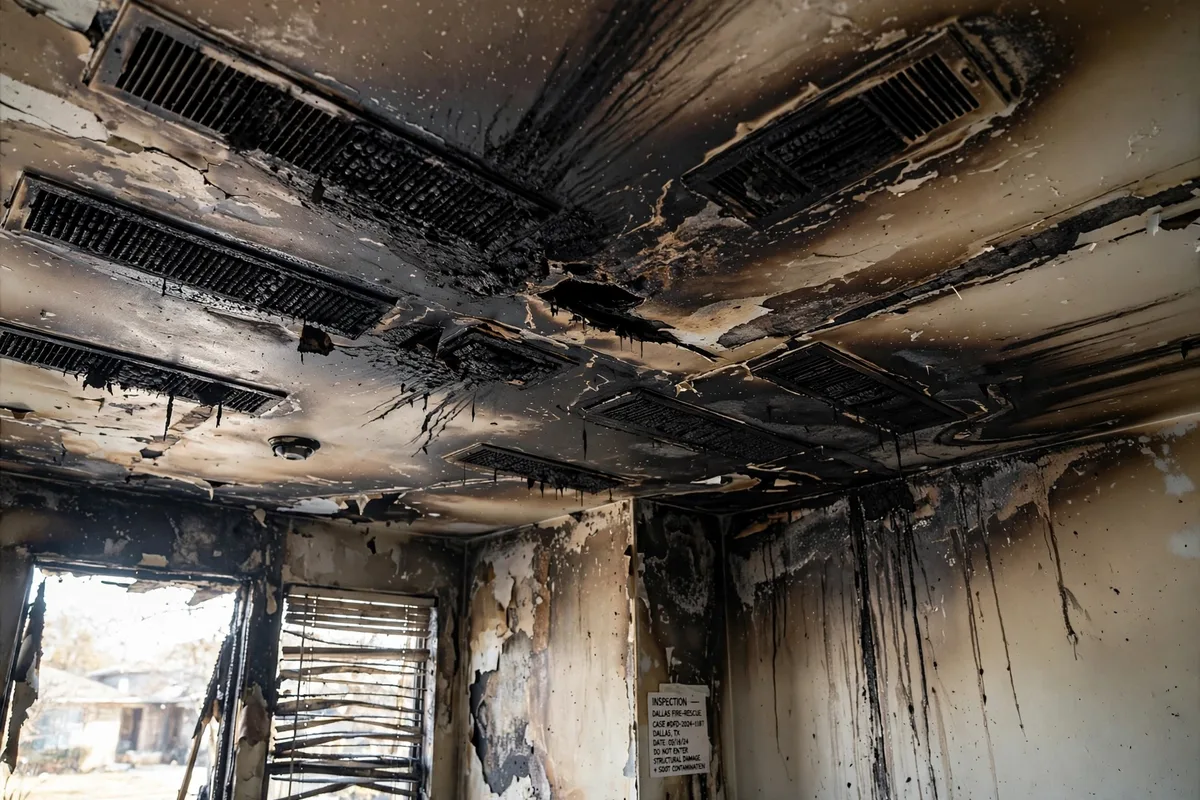
What does a professional post-fire HVAC inspection cover?
A professional post-fire HVAC inspection covers the return plenum, blower assembly, evaporator coil, supply and return ducts, filters, and every vent register, with the crew checking for soot deposits, smoke odor, melted insulation, and water from firefighting inside the ductwork. The crew scopes each component separately — ducts may need cleaning, the coil may need chemical cleaning, filters always get replaced, and a badly contaminated blower may need replacement rather than cleaning. The smoke smell removal guide covers the odor side of the same job, and the fire damage restoration service page covers the full restoration process. However, one inspection rule is absolute: an inspection that skips the coil and the return plenum is a guess, since the worst soot collects exactly where the air turns and slows.
| HVAC component | Post-fire risk | Typical crew action |
|---|---|---|
| Ductwork | Soot spread to all rooms | Cleaning or sealing |
| Blower assembly | Coated, spreads particles | Clean or replace |
| Evaporator coil | Oily soot, odor source | Chemical cleaning |
| Filters | Saturated with soot | Always replace |
| Vent registers | Visible soot deposits | Clean and inspect |
📞 Book Post-Fire HVAC Inspection: +1 214-807-4697
How does running the HVAC affect your fire insurance claim?
Running the HVAC after a fire can affect your claim because the carrier can argue that the soot in untouched rooms came from the system being run, not from the fire itself — turning a one-room claim into a disputed whole-house claim. Adjusters photograph vent registers and duct interiors, and soot patterns that match the duct layout tell them the blower ran after the fire. Document the thermostat setting, the time the system was switched off, and every conversation about the HVAC, and let the restoration crew — not the homeowner — decide when the system can run again. Dallas fire restoration averages $29,077, with fire claims averaging around $88,000, so the stakes on a disputed scope are high. However, one claim rule beats the rest: a crew's written inspection report showing the system stayed off protects the claim far better than a homeowner's memory of what the thermostat said.
How do you choose post-fire HVAC cleanup services in Dallas?
Choose on five checks: same-day response for active fire damage, a written HVAC inspection that covers ducts, blower, coil, and return plenum before any cleaning starts, a scope that separates duct cleaning, coil cleaning, and component replacement, IICRC-certified crews, and claim documentation with photos and readings. Ask whether the crew inspects the coil, how it verifies ducts are clean, and whether it replaces filters before the first test run. The emergency fire damage restoration guide covers what happens in the first 24 hours after a fire. However, one selection rule beats the rest: the company that inspects first, cleans second, and test-runs last — in that order, with a written report to prove it — is the company whose ductwork stays clean after the system restarts.
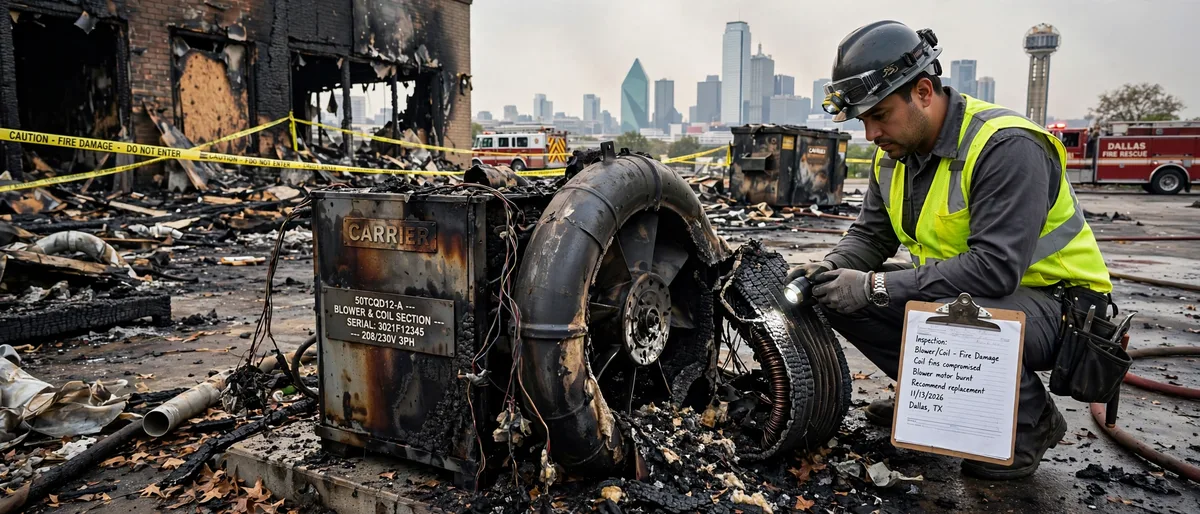
Important Considerations
Texas has no state license specifically for restoration companies, so check IICRC certification, insurance, and reviews before hiring, and be wary of anyone demanding full payment upfront. Never run the HVAC after a fire to clear smoke or cool the house — the blower spreads soot into every room the fire never touched. Never run the fan-only mode either, since the blower moves the same air. Never paint over soot-stained vents or registers without cleaning the ductwork behind them, because the odor will return the first time the system cycles. If firefighters used water, ask explicitly for a moisture check inside the ductwork alongside soot inspection, since wet ducts grow mold in 24–48 hours. Keep the inspection report, photos, and all carrier correspondence in one file — HVAC contamination claims generate more paperwork than the job suggests. Finally, replace filters before the first test run and schedule a follow-up odor check a week after restart, because trapped smoke odor can take days to show up once the system runs again.
📞 Free Post-Fire HVAC Estimate: +1 214-807-4697
Frequently Asked Questions
Should I run my HVAC after a fire in Dallas?
No — keep the system off until a professional inspects it. The blower spreads soot, smoke odor, and fine particles through the ducts into rooms the fire never touched.
What happens if the HVAC was running during the fire?
Tell the crew on the first call — the inspection plan changes, because soot has already entered the ductwork. The crew inspects ducts, blower, coil, and return plenum before deciding what needs cleaning or replacement.
Who handles HVAC inspection after a fire in Dallas?
Water Damage Restoration Dallas — 24/7 live answer, around 60-minute arrival, free estimates, and post-fire HVAC inspection with soot cleanup and duct cleaning. Call +1 214-807-4697 any hour and a live crew answers.
Can running the HVAC after a fire affect my insurance claim?
Yes — carriers can argue a one-room fire became a whole-house loss because the system was run. Document the thermostat setting and let the crew decide when the system can run again.
What does a post-fire HVAC inspection cost in Dallas?
Inspection is part of the fire restoration scope, which averages $29,077 in Dallas, with fire claims averaging around $88,000. Estimates are free before work starts.
Do filters need replacing after a fire?
Always — filters saturate with soot during a fire and keep releasing odor and particles. Replace them before the first test run, never before the ducts are cleaned.
Can soot inside ducts be cleaned, or must ducts be replaced?
Most ducts can be cleaned, while a badly contaminated blower or coil may need replacement. The crew scopes each component separately after inspection.
How long does post-fire HVAC cleanup take?
Inspection and duct cleaning usually take a day, with coil cleaning and component replacement adding time. Larger whole-house contamination jobs take longer.
Is it safe to stay home while the HVAC is inspected after a fire?
Often yes in unaffected rooms, but keep the system off and stay out of the fire room until the crew clears it. Soot is acidic and irritating, so avoid breathing air the system pushes around.
Will the smoke smell go away once the ducts are cleaned?
Usually yes when ducts, coil, and blower are all cleaned — but odor trapped in the coil or insulation can return on the first test run, so the crew does a follow-up check after restart.
Why call Water Damage Restoration Dallas after a fire?
Local Dallas crews, 24/7 live answer, around 60-minute arrival, free estimates, and inspect-first HVAC cleanup with written claim documentation — call +1 214-807-4697.
📞 Call Water Damage Restoration Dallas 24/7: +1 214-807-4697
Related Dallas Water Damage Guides
- Burst Pipe in Dallas: What to Do in the First 60 Minutes
- Water Damage in the First 24 Hours: An Hour-by-Hour Guide for Dallas Homeowners
- Emergency Water Extraction in Dallas: What Actually Happens When the Crew Arrives
- Emergency Water Damage Checklist: Every Step, in Order, for Dallas Homeowners