Soot Damage Cleanup Services in Dallas: 24/7 Emergency Response
TLDR
- Who provides soot damage cleanup services in Dallas?: Water Damage Restoration Dallas — 24/7 live answer, around 60-minute arrival, free estimates: +1 214-807-4697.
- What is soot damage?: Acidic, microscopic residue from fire that coats walls, contents, and ductwork — and corrodes metal and electronics within hours.
- Why is soot cleanup urgent?: Soot keeps damaging surfaces the longer it sits, and running the HVAC spreads it into rooms the fire never touched.
- How do professionals clean soot?: Dry first — HEPA vacuuming and chemical sponges — then matched wet cleaning, duct cleaning, and odor neutralization.
- How much does soot damage cleanup cost in Dallas?: Soot removal runs $2,000–$6,000 for multi-room jobs, with smoke-only jobs spanning $3,000–$25,000 by scope.
- Is soot dangerous to breathe?: Yes — soot is acidic and carcinogenic, so cleanup needs PPE and HEPA filtration, not a household rag.
- When should you call a soot cleanup crew?: Immediately after fire-department clearance — corrosion starts in hours, not days.
🚨 SOOT COATING YOUR DALLAS HOME AFTER A FIRE? Every hour it sits, the damage deepens. We answer live 24/7, arrive in around 60 minutes, and give free estimates — dry soot removal, contents cleaning, and odor control in one visit.
📞 24/7 Soot Cleanup Help: +1 214-807-4697
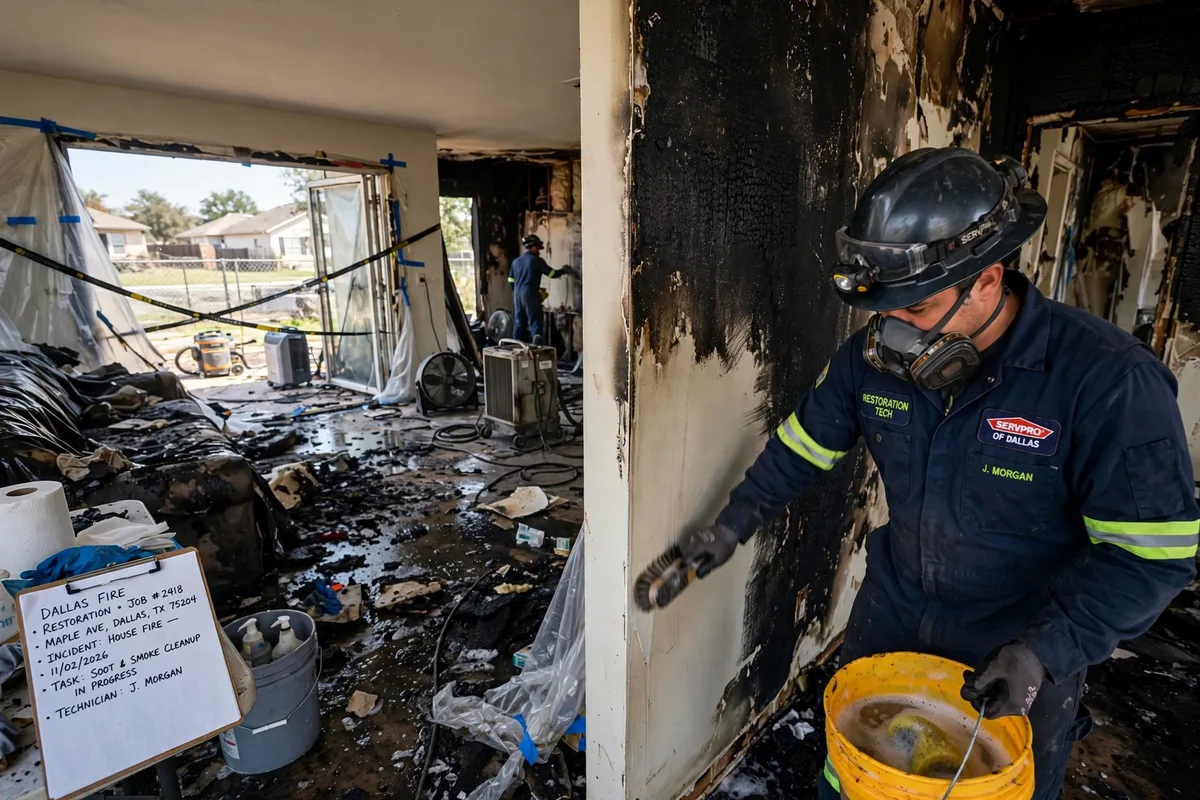
Soot damage cleanup services in Dallas deal with the part of a fire most homeowners underestimate: the black residue that looks like dirt but behaves like acid. Soot particles are microscopic, driven deep into drywall, insulation, fabrics, and ductwork by heat and pressure, and the residue is acidic enough to corrode metal fixtures and electronics within hours of settling. A room that looks only smoky can hide soot inside every porous surface, which is why the smell returns and the staining deepens long after the fire is out. Water Damage Restoration Dallas handles soot cleanup with IICRC-certified crews, around 60-minute arrival, free estimates, and same-day response. However, the first rule of soot work is counterintuitive: the worst thing a homeowner can do is start wiping, because wet cleaning before dry removal smears soot into the surface and sets the stain permanently.
What exactly is soot, and why does it keep damaging surfaces?
Soot is the fine carbon residue left when materials burn incompletely, mixed with the chemicals of whatever burned — plastics, wood, fabrics, and food each produce a different residue. Dry powdery soot lifts relatively easily, wet smoky residue smears on contact, and sticky protein soot from kitchen fires bonds to surfaces and smells the worst of all. All three are acidic, so metal tarnishes, chrome pits, electronics corrode, and painted surfaces yellow while the residue sits. The smoke damage cleanup guide covers the wider smoke picture, and the fire restoration process guide shows where soot removal sits in the full sequence. However, the corrosion clock is the point: soot damage is time-sensitive in hours, not weeks, so a cleanup booked days later costs more than the same cleanup booked the same night.
How do professionals clean soot without spreading it?
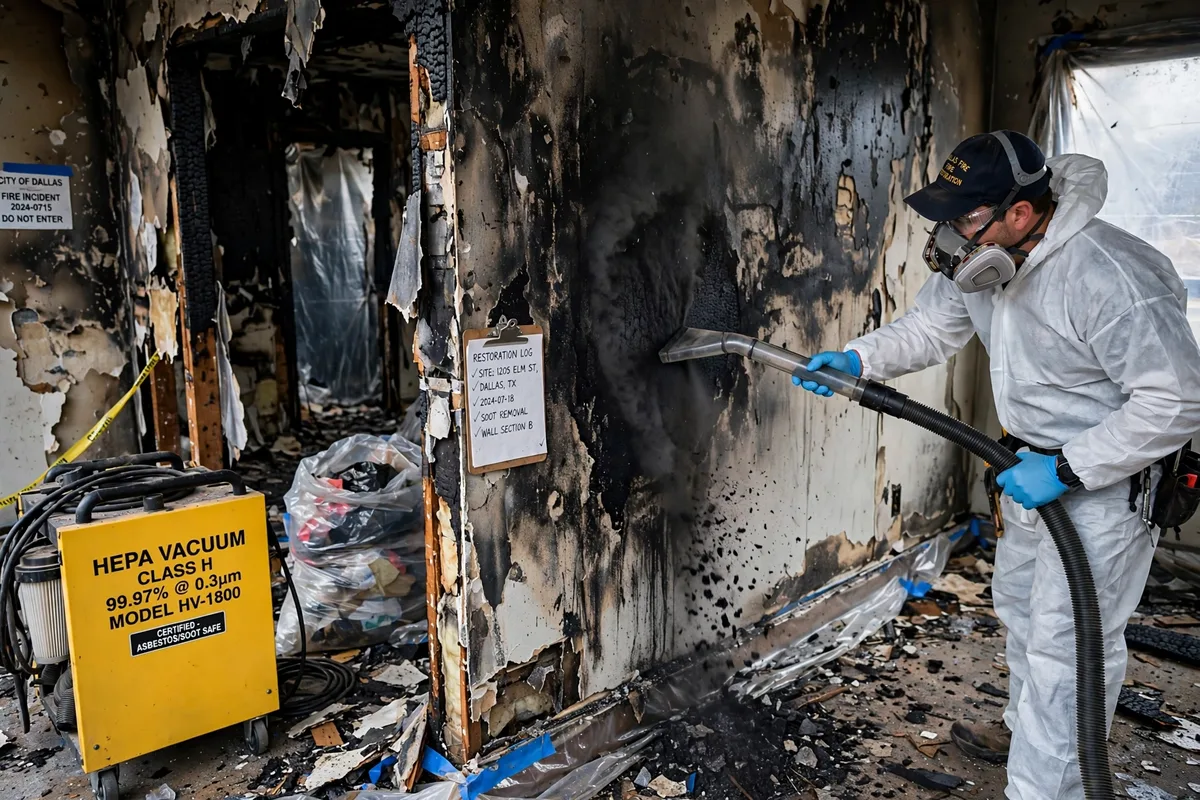
Professionals clean soot dry first, wet second, and room by room: HEPA vacuums capture loose particles without blowing them back into the air, dry chemical sponges lift residue from walls and ceilings without smearing, and only then do technicians apply cleaning agents matched to the soot type on each surface. Containment plastic seals the work area so particles do not migrate, and air scrubbers with HEPA filtration run throughout the job. Contents go through pack-out cleaning — furniture, clothing, and electronics cleaned off-site with ultrasonic or specialized methods where the item allows. The smoke smell removal guide covers the odor stage that follows soot removal. However, one method rule is absolute: no single cleaner works on every soot type, so a crew using one product on every surface is guessing, and the surfaces will show it.
Why must the HVAC stay off after a fire?
The HVAC system must stay off because one heating or cooling cycle pulls soot from the fire rooms into the ductwork and pushes it into every room the system serves — turning a two-room cleanup into a whole-house job. Duct cleaning after a fire runs $250–$500, but that cost is small beside the cost of re-cleaning rooms that were clean before the system ran. Crews inspect and clean the ductwork as part of the soot scope, replace filters, and only clear the system for use once soot removal and air scrubbing are complete. The fire restoration services guide covers the full crew scope. However, the mistake is shockingly common: families turn the system on for comfort on the first night back, and the next morning every room smells of smoke — a preventable second cleanup that insurers notice.
| Soot type | How it behaves | Cleanup method |
|---|---|---|
| Dry powdery soot | Lifts easily, spreads fast | HEPA vacuum, dry sponge |
| Wet smoky residue | Smears on contact | Matched wet agents |
| Protein soot | Sticky, worst smell | Degreasers, fogging |
| Fuel-oil soot | Oily, heavy deposits | Specialized solvents |
| Duct soot | Hidden, redistributes | Duct cleaning, filters |
📞 Book Soot Cleanup Today: +1 214-807-4697
How much does soot damage cleanup cost in Dallas?
Soot removal for a multi-room job typically runs $2,000–$6,000, while smoke-only jobs span a wider spectrum: minor one-to-two-room smoke jobs run $3,000–$8,000, whole-home light soot runs $8,000–$25,000, and heavy soot with HVAC contamination runs $25,000–$50,000. The Dallas fire restoration average overall is $29,077, with fire claims averaging about $88,000 nationally — the priciest claim type in homeowners insurance. Component costs inside a scope include duct cleaning at $250–$500, thermal fogging at $200–$600, ozone treatment at $400–$800, and furniture deodorizing at $200–$1,000. Water damage from firefighting adds $1,000–$6,000 when hoses soaked the structure, and mold remediation adds $1,200–$3,800 if that water sat past 48 hours. However, the pricing trap is the room-count quote with no soot-type breakdown: protein soot and duct contamination cost more than dry soot, so a flat per-room price hides the real scope until the bill grows.
How do you choose soot damage cleanup services in Dallas?
Choose on five checks: same-night response while corrosion is still preventable, IICRC fire and smoke restoration certification, a dry-first method the crew can explain in plain terms, contents cleaning capability rather than a throw-everything-away approach, and a written scope with photos that supports the insurance claim. Ask whether the crew uses HEPA vacuums and air scrubbers, how it identifies soot type, and whether duct cleaning is included in the scope. Be wary of any company promising one-day soot and odor removal on a heavily coated home, and of any crew that starts wet wiping before dry removal. However, one selection rule beats the rest: the company that shows you the soot type, the dry-removal step, and the containment plan before it touches a wall is the company whose cleanup will hold up — for the insurer, and for the family moving back in.
Important Considerations
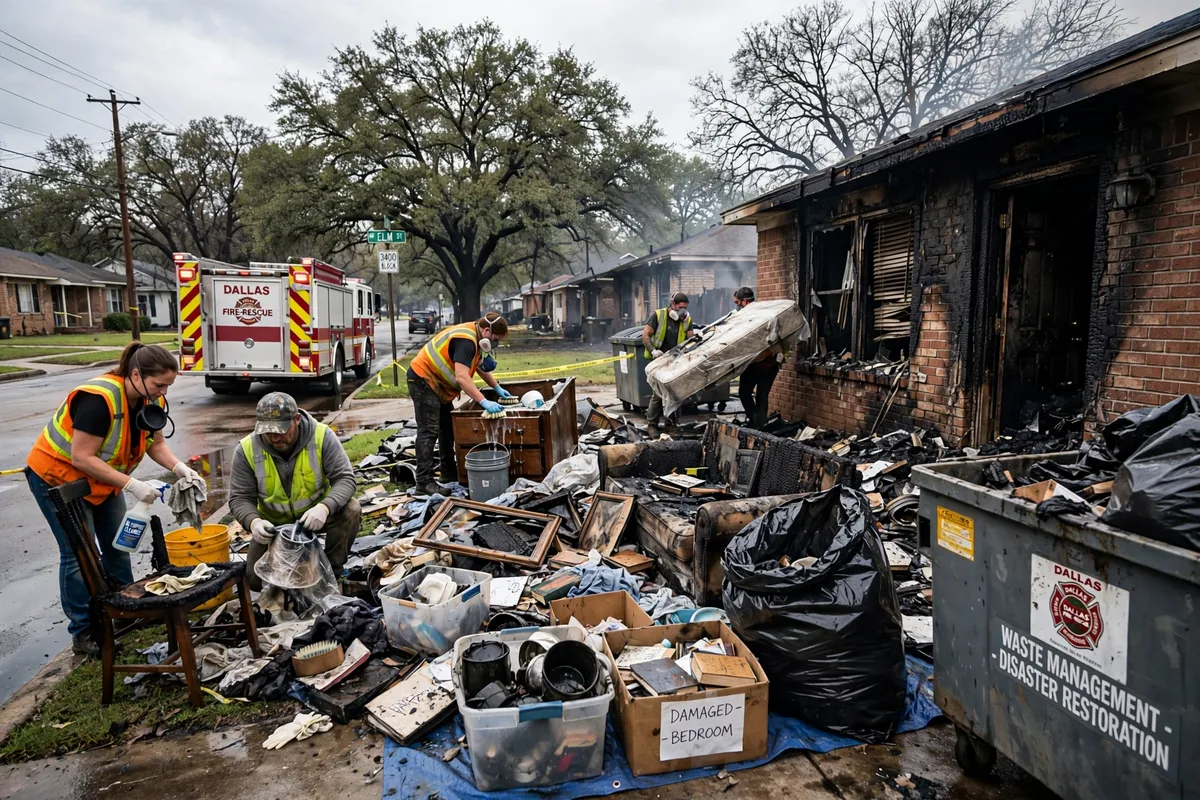
Texas has no state license specifically for restoration companies, so check IICRC certification, insurance, and reviews before hiring, and be wary of anyone demanding full payment upfront. Never start cleaning soot yourself — wet wiping first smears acidic residue permanently, and soot exposure without PPE and HEPA filtration is a health risk. Never run the HVAC after a fire until the ducts are cleaned and cleared. Never assume a room is clean because it looks clean — soot hides inside porous materials and ductwork, and the smell returns with temperature changes when the source was never removed. If firefighting water soaked the home, ask explicitly for drying and mold assessment alongside soot cleanup. Keep the scope, photos, and all carrier correspondence in one file — fire claims generate more paperwork than any other claim type. Finally, after cleanup, address the fire's cause — wiring, heater placement, kitchen safety — because Dallas winter fire season will test the same risk again.
📞 Free Soot Cleanup Estimate: +1 214-807-4697
Frequently Asked Questions
Who provides soot damage cleanup services in Dallas?
Water Damage Restoration Dallas — 24/7 live answer, around 60-minute arrival, free estimates, and dry-first soot removal with contents cleaning. Call +1 214-807-4697 any hour and a live crew answers.
What is soot damage?
Acidic, microscopic residue from fire that coats walls, contents, and ductwork. It corrodes metal and electronics within hours and hides deep inside porous materials.
Why is soot cleanup so urgent?
Soot keeps corroding surfaces the longer it sits, and the HVAC can spread it into clean rooms in a single cycle. Same-night cleanup prevents damage that later cleanup cannot undo.
Can I clean soot myself with household cleaners?
No — wet cleaning before dry removal smears soot permanently, and soot is acidic and carcinogenic without PPE and HEPA filtration. Leave the first pass to a certified crew.
How do professionals remove soot?
Dry first: HEPA vacuuming and chemical sponges. Then matched wet cleaning by soot type, duct cleaning, and odor neutralization — each step in that order.
How much does soot damage cleanup cost in Dallas?
Multi-room soot removal typically runs $2,000–$6,000, while smoke-only jobs span $3,000–$25,000 or more by scope. An itemized scope is what keeps the number honest.
Does soot cleanup remove the smoke smell too?
Soot removal removes the source of most smell, and odor neutralization — hydroxyl, fogging, sealing — finishes it. Deodorizing before soot removal only masks the smell temporarily.
Can smoke-damaged furniture and clothes be saved?
Often yes — pack-out contents cleaning saves items that look lost. Anything thrown away before documentation, however, is rarely reimbursed by insurers.
Is it safe to stay home during soot cleanup?
Often not during active cleanup — containment, air scrubbers, and PPE are needed while soot is airborne. The crew will advise when each room is safe to re-enter.
Will insurance cover soot damage cleanup?
Sudden fire and smoke damage is typically covered, and fire claims average about $88,000 nationally. Payment follows documentation, so photos and an itemized scope matter.
Why call Water Damage Restoration Dallas for soot cleanup?
Local Dallas crews, 24/7 live answer, around 60-minute arrival, free estimates, and dry-first soot removal done right — call +1 214-807-4697.
📞 Call Water Damage Restoration Dallas 24/7: +1 214-807-4697