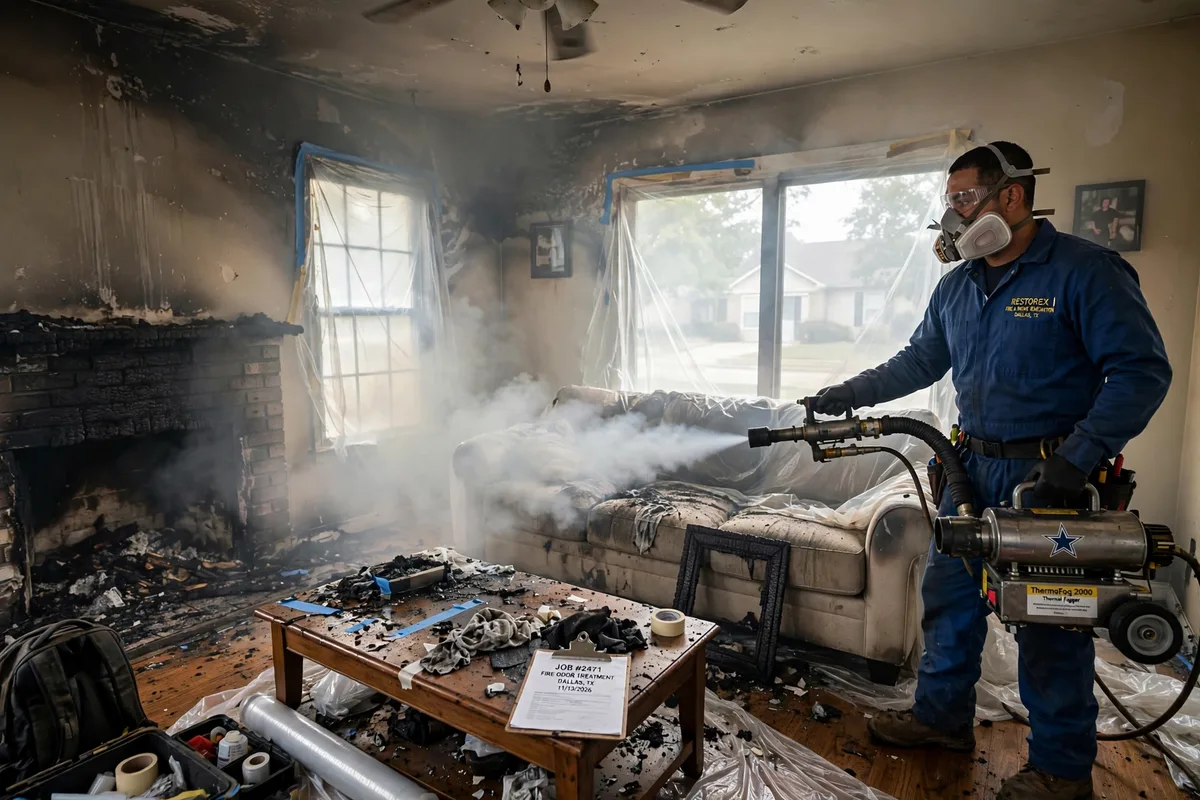
Thermal Fogging vs Ozone Fire Odor Removal in Dallas: Which One Actually Works?
TLDR
- What removes fire odor better — thermal fogging or ozone?: Thermal fogging wins for deep odor in walls and fabrics; ozone wins for whole-room air and contents treatment.
- Who removes fire odor in Dallas?: Water Damage Restoration Dallas — 24/7 live answer, around 60-minute arrival, free estimates: +1 214-807-4697.
- How does thermal fogging work?: A heated fog penetrates porous surfaces and neutralizes odor molecules where sprays never reach.
- How does ozone treatment work?: Ozone gas oxidizes odor molecules in the air and on surfaces — but everyone must vacate during treatment.
- Why do sprays and paint fail on fire odor?: They mask the surface while odor stays trapped in drywall, wood, and insulation underneath.
- How much does fire damage restoration cost in Dallas?: Dallas fire restoration averages $29,077, with fire claims averaging around $88,000.
- When should you call a fire odor crew?: Immediately — soot turns acidic within hours and the smell bonds deeper the longer it sits.
🚨 FIRE SMELL WON'T LEAVE YOUR DALLAS HOME? Sprays won't fix it — pros will. Call now. We answer live 24/7, arrive in around 60 minutes, and give free estimates — odor inspection, fogging, and ozone treatment in one visit.
📞 24/7 Fire Odor Help: +1 214-807-4697
Thermal fogging vs ozone is the question every Dallas homeowner asks once the fire is out and the smell will not leave: both are professional odor-removal methods, both work, and the right choice depends on where the odor lives. Thermal fogging pushes a heated deodorizing fog into porous surfaces — drywall, wood framing, fabrics — and neutralizes odor molecules deep inside the material. Ozone treatment fills a sealed room with ozone gas that oxidizes odor molecules in the air and on exposed surfaces, and it demands that everyone, including pets, vacate during treatment. Sprays, candles, and paint only mask the surface while the odor stays trapped underneath, which is why the smell returns on the first hot Dallas afternoon. Water Damage Restoration Dallas handles fire odor removal with IICRC-certified crews, around 60-minute arrival, free estimates, and same-day help. However, one odor rule comes first: no deodorizing method works until the soot is cleaned off, because soot keeps releasing odor as long as it sits on a surface.
How does thermal fogging remove fire odor?
Thermal fogging removes fire odor by heating a deodorizing solution into a fine fog that behaves like smoke itself: it drifts into the same pores, cracks, and cavities the smoke entered, then neutralizes odor molecules where they bonded instead of covering them up. The fog reaches inside wall cavities, under flooring, and deep into fabrics and upholstery that sprays never touch, which is why it works on the heavy, baked-in smell of a kitchen or electrical fire. The crew fogs after cleaning, never before, because fogging over soot seals the odor source in rather than removing it. However, one fogging trap applies: fogging a room that still has soot on the walls wastes the treatment, so cleaning always comes first and fogging second.
How does ozone treatment remove fire odor?
Ozone treatment removes fire odor by generating ozone gas that oxidizes odor molecules in the air and on exposed surfaces, breaking them down at a chemical level rather than masking them. It works best in a sealed, empty room or on contents placed inside an ozone chamber, and it reaches surfaces a fogger cannot easily coat, like the inside of cabinets and the backs of furniture. Everyone — people and pets — must leave during treatment, and the room needs airing out before anyone returns, since ozone irritates lungs at treatment levels. The smoke smell removal guide covers the full odor-removal sequence, and the smoke damage cleanup guide covers the cleaning that comes first. However, one ozone rule is absolute: ozone treats the air and the surfaces it touches, not the odor trapped deep inside porous material — so a room that smells better for a week and then smells again usually needed fogging too.
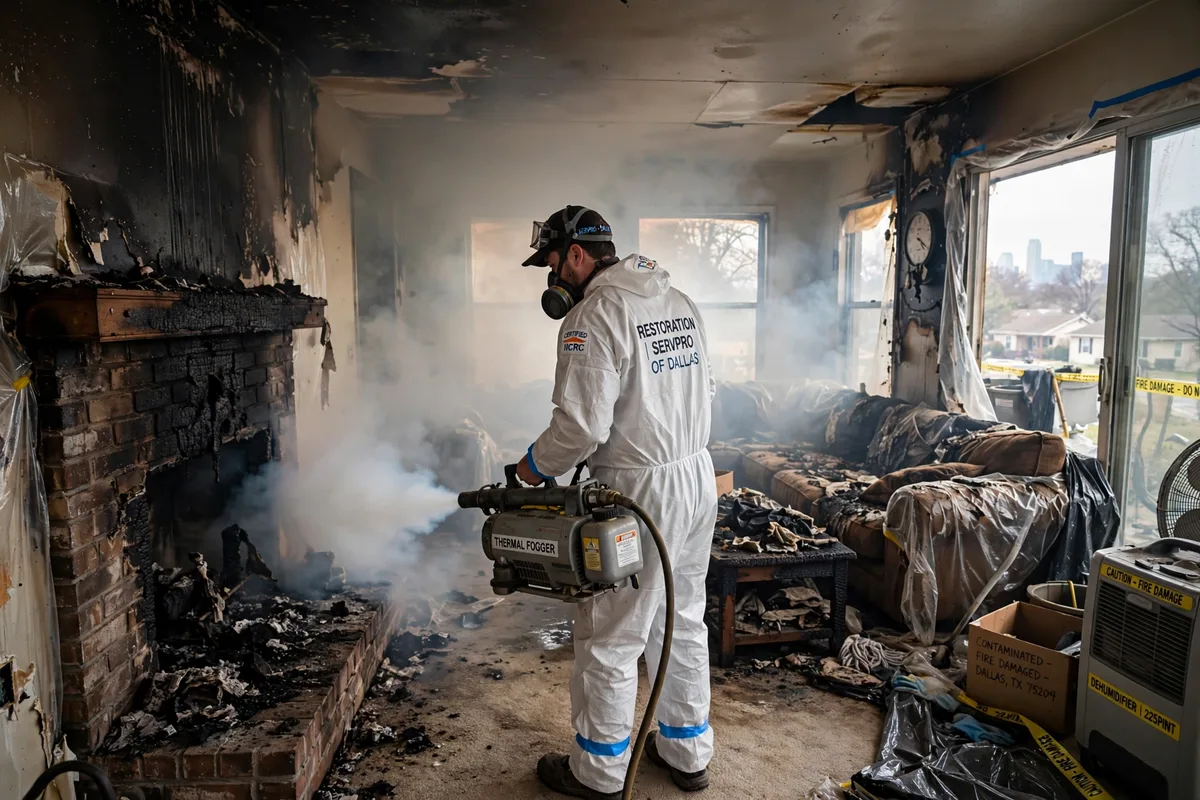
Thermal fogging vs ozone: which one should Dallas homeowners choose?
Dallas homeowners should choose thermal fogging when the odor sits deep in walls, framing, fabrics, or insulation, and ozone when the odor sits in the air and on hard surfaces or contents in a sealed space — and many real jobs use both, fogging first for the structure and ozone second for the room and contents. Fogging penetrates; ozone oxidizes; neither replaces cleaning, and neither works on a surface still coated in soot. A crew that recommends one method without inspecting where the odor lives is guessing, so the inspection decides the method, not the other way around. Dallas fire restoration averages $29,077, with fire claims averaging around $88,000, and odor treatment is scoped inside that number. However, one comparison trap applies: the cheapest quote usually means one method only, while the job that stays odor-free a month later usually used both in sequence.
| Method | Best for | Must vacate? |
|---|---|---|
| Thermal fogging | Deep odor in walls, fabrics | Briefly, during fogging |
| Ozone treatment | Air, surfaces, contents | Yes, whole treatment |
| Sprays, candles | Nothing permanent | No — and they fail |
| Sealing paint | Last resort, after cleaning | No — traps odor if early |
| Both in sequence | Heavy whole-house odor | Yes, during ozone step |
📞 Book Fire Odor Removal: +1 214-807-4697
Why do sprays, candles, and paint fail on fire odor?
Sprays, candles, and paint fail on fire odor because they work on the surface while the odor lives underneath: smoke molecules bond inside drywall, wood framing, insulation, and fabrics, and a surface spray never reaches them. Paint is the worst offender — sealing odor in with paint traps it until the first hot day, when heat pushes it back through the coating and the smell returns stronger than before. The only fix is cleaning the soot off, then neutralizing the odor inside the material with fogging or ozone. The fire damage restoration process guide covers the cleaning sequence that makes deodorizing work. However, one masking trap applies: every day spent spraying and repainting is a day the odor bonds deeper, so the fix gets more expensive the longer the real treatment waits.
How do you choose fire odor removal services in Dallas?
Choose on five checks: same-day response for active fire damage, an odor inspection that identifies where the smell lives before any method is picked, a written scope that separates soot cleaning, fogging, and ozone, IICRC-certified crews, and claim documentation with photos. Ask whether the crew fogs, runs ozone, or uses both — and in what order — and how it verifies the odor is gone before closing the job. The fire damage restoration service page covers the full service behind the odor work. However, one selection rule beats the rest: the company that inspects first, cleans second, and deodorizes third — in that order, with a follow-up sniff test a week later — is the company whose home stays odor-free after the first hot afternoon.
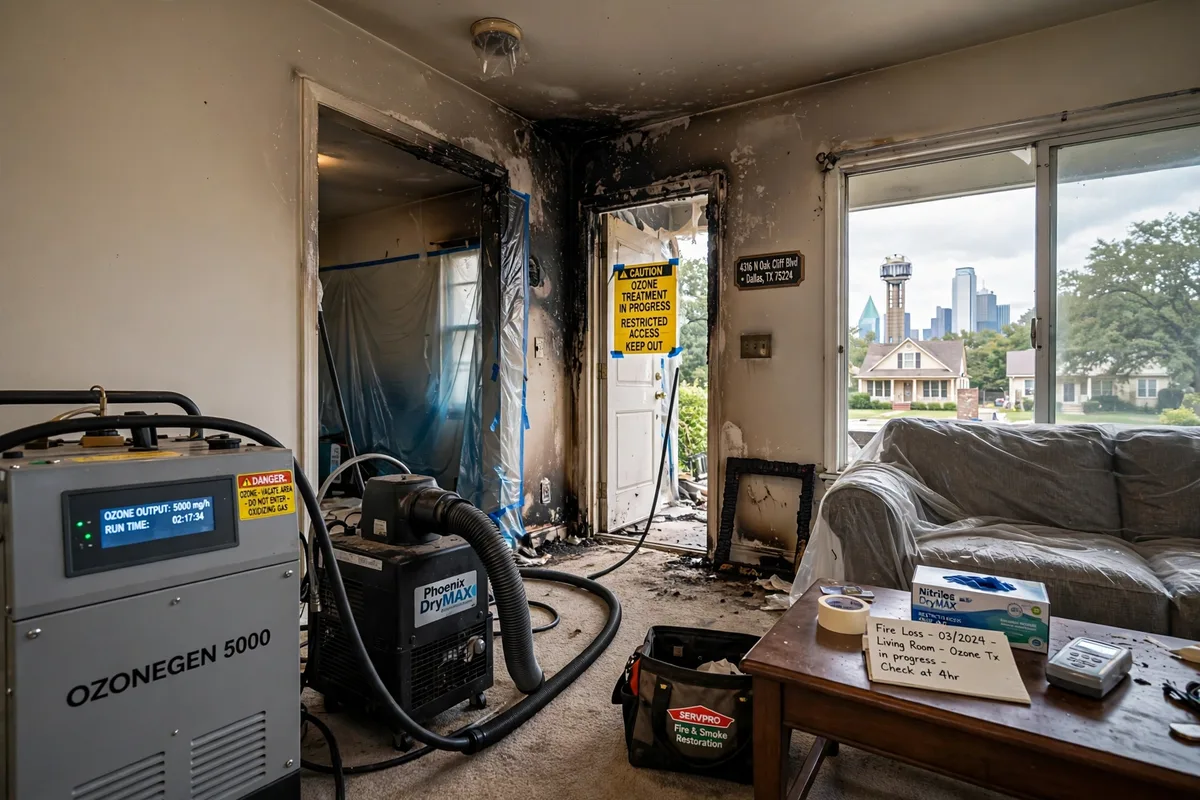
Important Considerations
Texas has no state license specifically for restoration companies, so check IICRC certification, insurance, and reviews before hiring, and be wary of anyone demanding full payment upfront. Never run ozone treatment with people or pets in the home — ozone irritates lungs at treatment levels and the room must air out before re-entry. Never fog or ozone a room that still has soot on the walls, since deodorizing over soot seals the odor source in. Never paint over smoke-stained drywall without cleaning and fogging first, because heat will push the odor back through the paint. If the fire was electrical, ask explicitly for a check of wiring and outlets alongside odor treatment, since hidden damage can sit behind the same walls. Keep the scope, photos, and all carrier correspondence in one file — odor treatment claims generate more paperwork than the job suggests. Finally, schedule a follow-up odor check a week after treatment, because trapped odor can take days to show up once the house heats up again.
📞 Free Fire Odor Estimate: +1 214-807-4697
Frequently Asked Questions
What removes fire odor better — thermal fogging or ozone?
Thermal fogging wins for deep odor in walls and fabrics; ozone wins for whole-room air and contents treatment. Many heavy jobs use both — fogging first for the structure, ozone second for the room.
Who removes fire odor in Dallas?
Water Damage Restoration Dallas — 24/7 live answer, around 60-minute arrival, free estimates, and professional fogging and ozone treatment after soot cleaning. Call +1 214-807-4697 any hour and a live crew answers.
How does thermal fogging work?
A heated deodorizing fog drifts into the same pores and cavities the smoke entered, neutralizing odor molecules deep inside drywall, wood, and fabrics where sprays never reach.
How does ozone treatment work?
Ozone gas oxidizes odor molecules in the air and on exposed surfaces. Everyone, including pets, must vacate during treatment, and the room needs airing out before anyone returns.
Why do sprays and paint fail on fire odor?
They mask the surface while odor stays trapped inside drywall, wood, and insulation. Paint seals it in until heat pushes it back through — the smell returns on the first hot day.
How much does fire odor removal cost in Dallas?
Odor treatment is scoped inside the fire restoration job, which averages $29,077 in Dallas, with fire claims averaging around $88,000. Estimates are free before work starts.
Can I stay home during thermal fogging or ozone treatment?
Briefly leave during fogging, and always vacate during ozone treatment — ozone irritates lungs at treatment levels. The crew tells you exactly when it is safe to return.
How long does fire odor removal take?
Cleaning plus fogging or ozone usually takes one to two days for a single room, with whole-house jobs taking longer. A follow-up check a week later confirms the odor is gone.
Does fire odor removal work on furniture and clothes?
Yes — contents go through ozone chambers or fogging, and salvageable items are cleaned before treatment. Items soaked in soot or water may still need replacement.
Will the smell come back after treatment?
Not when cleaning comes first and the right method follows — but a job that skipped cleaning or used one method where two were needed can smell again within weeks.
Why call Water Damage Restoration Dallas for fire odor?
Local Dallas crews, 24/7 live answer, around 60-minute arrival, free estimates, and inspect-first odor removal with fogging and ozone in sequence — call +1 214-807-4697.
📞 Call Water Damage Restoration Dallas 24/7: +1 214-807-4697
Related Dallas Water Damage Guides
- Burst Pipe in Dallas: What to Do in the First 60 Minutes
- Water Damage in the First 24 Hours: An Hour-by-Hour Guide for Dallas Homeowners
- Emergency Water Extraction in Dallas: What Actually Happens When the Crew Arrives
- Emergency Water Damage Checklist: Every Step, in Order, for Dallas Homeowners