Fire Damage Restoration Process in Dallas: What a Professional Crew Actually Does
TLDR
- Who handles the fire damage restoration process in Dallas?: Water Damage Restoration Dallas — 24/7 live answer, around 60-minute arrival, free estimates: +1 214-807-4697.
- What is the fire damage restoration process?: Board-up and safety, water mitigation from firefighting, soot removal, odor neutralization, contents cleaning, then repair and rebuild.
- How long does fire restoration take in Dallas?: Smoke-only jobs take days to two weeks; full jobs take weeks; major rebuilds can take 6–12 months.
- How much does fire damage restoration cost in Dallas?: The Dallas average is $29,077, with a typical range of $3,083–$52,031 depending on scope.
- Why does fire damage cost so much?: Fire claims average about $88,000 nationally, making them the most expensive homeowners claims — contents, structure, and odor all stack up.
- What should homeowners never do after a fire?: Never start cleaning soot yourself and never run the HVAC — both spread damage that professionals then have to undo.
- When should you call a restoration crew?: As soon as the fire department clears the home — every hour of delay lets soot corrode, water soak deeper, and mold start its 24–48 hour clock.
🚨 FIRE DAMAGE IN YOUR DALLAS HOME? Do not wait for the smell to settle — call now. We answer live 24/7, arrive in around 60 minutes, and give free estimates — board-up, mitigation, and a written restoration scope in one visit.
📞 24/7 Fire Restoration Help: +1 214-807-4697
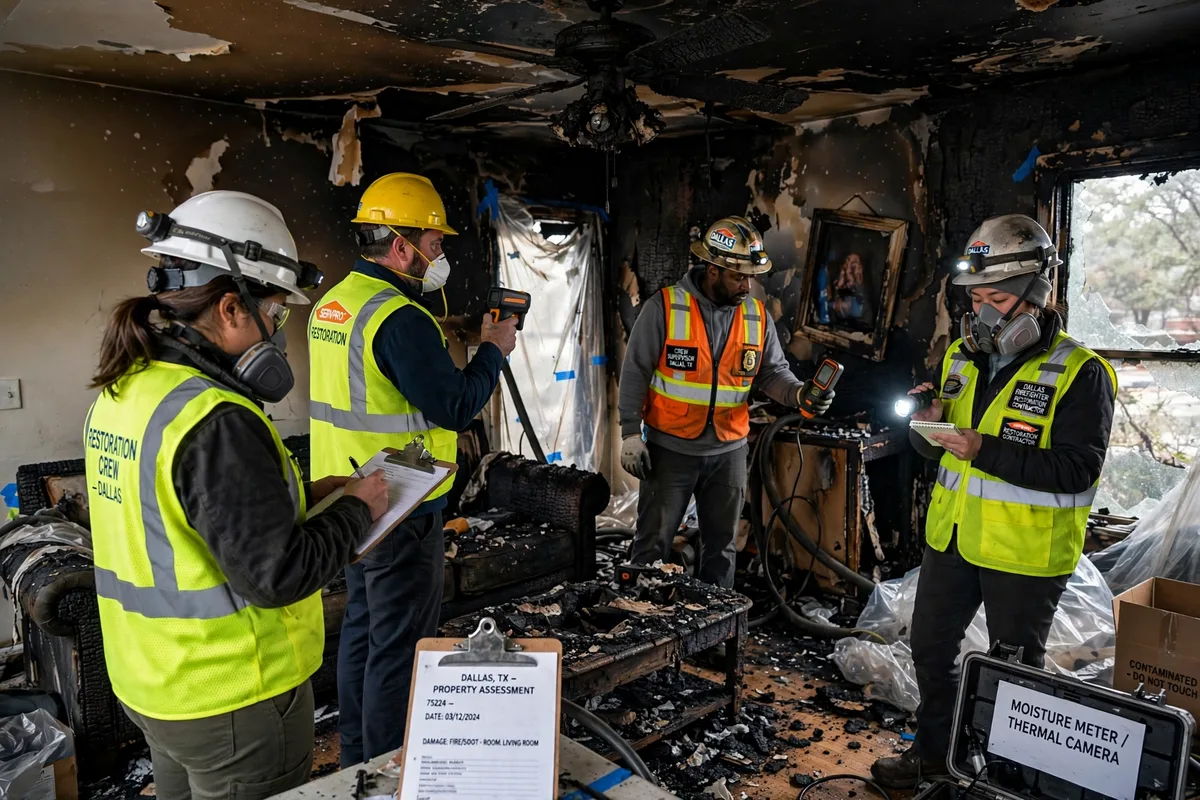
The fire damage restoration process in Dallas follows a fixed order for a reason: every step protects the next one, and skipping a step creates a problem that costs more than the step itself. A home that survived a fire still holds three kinds of damage at once — burned structure, acidic soot coating every surface, and water from hoses and sprinklers soaking the frame. Crews work through board-up and safety first, then water mitigation, then soot removal, then odor neutralization, then contents cleaning, and finally repair and rebuild. Water Damage Restoration Dallas runs this full sequence with IICRC-certified crews, around 60-minute arrival, and free estimates. However, the sequence matters more than the speed of any single step: a crew that deodorizes before it removes soot is sealing smell into walls, and a crew that rebuilds before it dries is building mold into the frame.
What happens first in the fire damage restoration process?
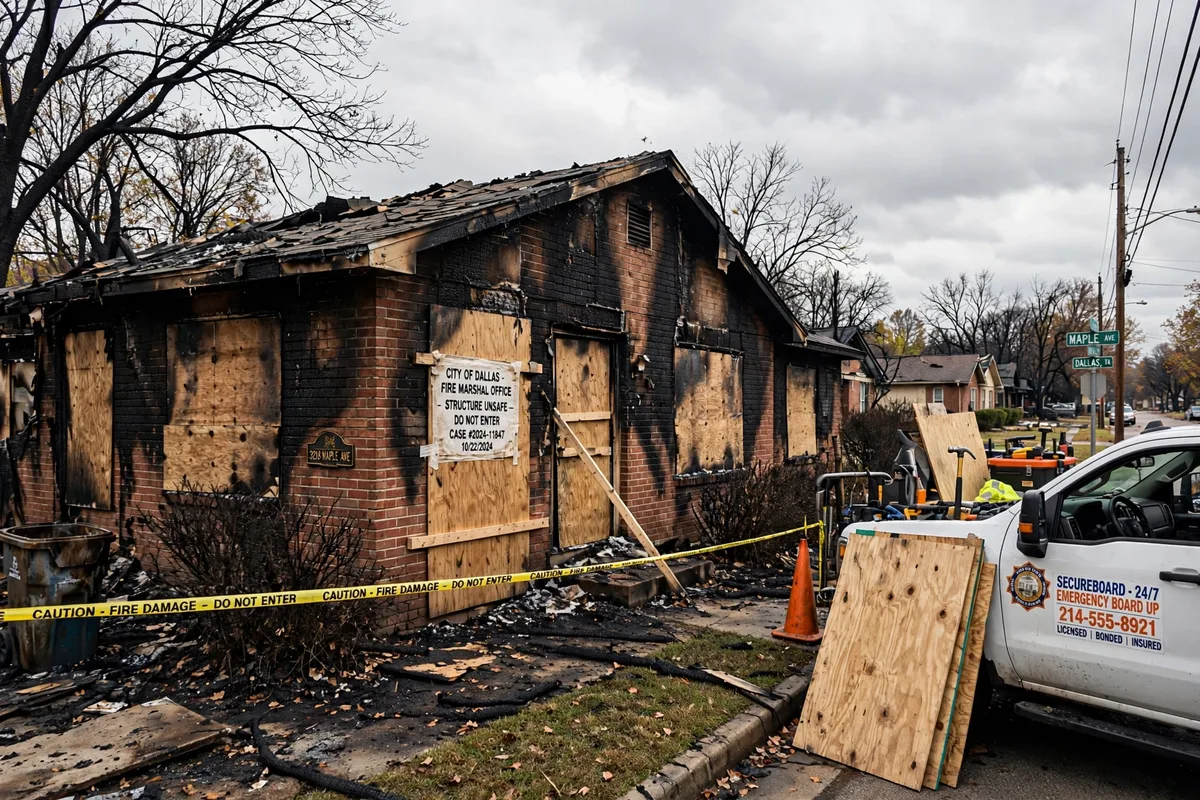
First comes safety and stabilization: the crew confirms fire-department clearance, checks structural safety, and boards up broken windows, doors, and roof openings so the home is secure against weather, theft, and vandalism. This board-up step is urgent in Dallas, where an open home after a fire invites both storms and intruders within hours. Next, the crew documents everything — photos, moisture readings, and a room-by-room scope — because fire claims are the largest claims in the industry and the documentation file decides how much the insurer pays. The emergency board-up guide covers securing the home, and the emergency fire restoration guide covers the first response. However, one first-day rule is absolute: nothing gets cleaned or thrown away before it is documented, since an undocumented item is an item the claim may never pay for.
Why does water mitigation come before soot cleanup?
Water mitigation comes second because firefighting water keeps damaging the home long after the flames are out — it soaks drywall, swells framing, and starts mold growth on wet material within 24–48 hours. Crews extract standing water, remove soaked insulation and drywall that cannot be saved, and set up air movers and dehumidifiers with daily moisture readings. The water damage after a fire guide explains this second disaster in detail, and the fire restoration services guide covers the full crew scope. However, the sequencing trap is real: soot cleanup on a still-wet surface smears acidic residue into the material permanently, so drying must lead and cleaning must follow — the reverse order ruins both jobs.
How do professionals remove soot without spreading it?
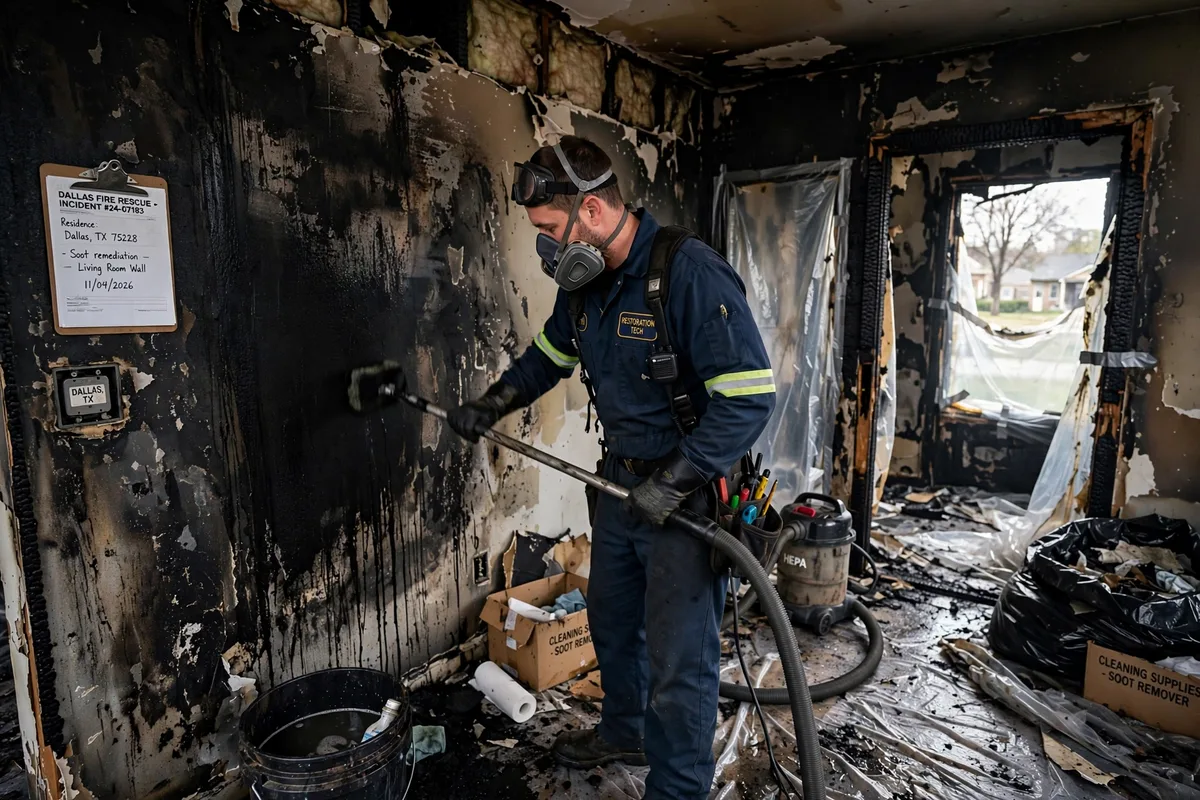
Professionals remove soot dry first and wet second: HEPA vacuuming lifts loose particles, dry chemical sponges lift soot from walls and ceilings without smearing, and only then do matched cleaning agents treat the remaining residue surface by surface. Soot is acidic and corrosive, so metal fixtures, electronics, and plumbing tarnish within hours if left coated — speed here is preservation, not cosmetics. Different soot types need different agents: dry powdery soot, wet smoky residue, and sticky protein soot from kitchen fires each respond to a different chemistry, which is why one all-purpose cleaner fails on all three. The smoke damage cleanup guide covers the soot and odor side of the job. However, the DIY warning is blunt: wet-cleaning soot before dry removal smears it into the surface and sets stains permanently, and doing it without PPE and HEPA filtration puts acidic particles into the air the family breathes.
| Restoration step | What the crew does | Why it comes now |
|---|---|---|
| Board-up + safety | Secure openings, check structure | Stops weather + theft |
| Water mitigation | Extract, dry, monitor moisture | Stops mold clock |
| Soot removal | HEPA vacuum, dry sponges | Stops corrosion |
| Odor neutralization | Hydroxyl, fogging, sealing | Removes source smell |
| Contents + rebuild | Pack-out, clean, repair | Restores the home |
📞 Start Fire Restoration Today: +1 214-807-4697
How is fire odor actually removed, not just covered?
Real odor removal attacks the source: hydroxyl generators and ozone break odor molecules in the air and inside porous materials, thermal fogging drives deodorizer into the same pores smoke penetrated, duct cleaning clears the HVAC system that would otherwise redistribute smell, and sealants lock down any remaining residue inside walls before paint goes on. Candles, air fresheners, and open windows only mask the smell, which is why it returns every time the temperature rises — smoke particles sit deep in drywall, insulation, and fabrics. Duct cleaning alone runs $250–$500, thermal fogging $200–$600, and ozone treatment $400–$800, but these are components of a scope, not standalone fixes. However, one odor rule decides the outcome: deodorizing before soot removal and drying are complete seals the smell in rather than removing it, so any company promising one-day odor removal on a soot-coated home is selling fragrance, not restoration.
How much does the fire damage restoration process cost in Dallas?
Dallas fire restoration averages $29,077, with most jobs landing between $3,083 and $52,031 and a cost band of roughly $4–$7 per square foot for the restoration scope. By damage level, light smoke in one room runs $200–$1,200, soot and odor removal across several rooms runs $2,000–$6,000, water damage from firefighting adds $1,000–$6,000, moderate fire with structural cleaning runs $15,000–$50,000, and severe rebuilds run $50,000–$180,000 or more. Fire claims average about $88,000, the priciest claim type in homeowners insurance, which is why documentation and a written scope matter as much as the work itself. Water damage jobs alone typically land between $2,500 and $7,500, and mold remediation adds $1,200–$3,800 when a fire-soaked home sat wet past 48 hours. However, the pricing trap is the lump-sum quote with no line items: a scope that does not separate mitigation, cleaning, contents, and rebuild gives the insurer room to cut it, so demand the itemized version before signing.
How do you choose a fire damage restoration company in Dallas?
Choose on five checks: 24/7 response with board-up capability on the first visit, IICRC-certified fire and smoke restoration training, an itemized written scope with photos and moisture readings, contents pack-out and cleaning rather than a dump-everything approach, and experience working directly with insurers on large claims. Ask how the crew sequences drying versus cleaning, what odor method it uses after soot removal, and whether it documents contents for the claim file. Be wary of any company demanding full payment upfront, and of any crew that starts demolition before the adjuster has seen the damage. However, one selection rule beats the rest: the company that documents first, dries second, and cleans third — in that order, in writing — is the company whose work survives both the insurer's review and the family's move back in.
Important Considerations
Texas has no state license specifically for restoration companies, so check IICRC certification, insurance, and reviews before hiring, and be wary of anyone demanding full payment upfront. Never re-enter a fire-damaged home before the fire department clears it, and never run the HVAC after a fire — one cycle redistributes soot and odor through ductwork into rooms that were clean. Never start cleaning soot yourself: wet cleaning first smears acidic residue permanently, and soot exposure without PPE is a health risk. Never throw away damaged contents before they are photographed and listed for the claim, since undocumented losses are rarely reimbursed. If the home sat wet from firefighting water, ask explicitly for mold assessment alongside drying, not just rebuild. Keep the scope, photos, moisture readings, and all carrier correspondence in one file — fire claims generate more paperwork than any other claim type. Finally, after restoration, fix the underlying cause — faulty wiring, heater placement, kitchen safety — because Dallas winter fire season will test the same risk again.
📞 Free Fire Restoration Estimate: +1 214-807-4697
Frequently Asked Questions
Who handles the fire damage restoration process in Dallas?
Water Damage Restoration Dallas — 24/7 live answer, around 60-minute arrival, free estimates, and a full board-up to rebuild scope in one visit. Call +1 214-807-4697 any hour and a live crew answers.
What are the steps of fire damage restoration?
Board-up and safety, water mitigation from firefighting, soot removal, odor neutralization, contents cleaning, then repair and rebuild. Each step protects the next, so the order matters as much as the work itself.
How long does fire damage restoration take?
Smoke-only jobs take days to two weeks, full jobs take weeks, and major rebuilds can take 6–12 months. The timeline depends on damage level, contents volume, and how fast the insurer approves the scope.
How much does fire damage restoration cost in Dallas?
The Dallas average is $29,077, with most jobs between $3,083 and $52,031. Light smoke jobs cost far less, while severe rebuilds can exceed $50,000 — an itemized scope is what keeps the number honest.
Why are fire claims so expensive?
Fire claims average about $88,000 nationally, the most expensive homeowners claim type. Structure, contents, odor treatment, and temporary living costs all stack into one claim.
Should I clean soot myself before the crew arrives?
No — wet cleaning soot before dry removal smears it permanently, and soot is acidic and hazardous without PPE and HEPA filtration. Document the damage with photos and wait for the crew.
Can I run my air conditioning after a fire?
No — running the HVAC redistributes soot and odor through the ductwork into clean rooms. Keep the system off until the crew cleans the ducts and clears the home.
What about water damage from firefighting?
Hoses and sprinklers soak the structure, and that water starts mold growth within 24–48 hours if not dried. Mitigation comes before soot cleanup for exactly this reason.
Will insurance cover the full restoration process?
Sudden fire damage is typically covered, but payment follows documentation — photos, scope, and contents lists. A crew that documents first gives the claim its best chance.
Can smoke-damaged belongings be saved?
Often yes — pack-out and contents cleaning saves furniture, documents, and electronics that look lost. Anything thrown away before documentation, however, is rarely reimbursed.
Why call Water Damage Restoration Dallas for fire restoration?
Local Dallas crews, 24/7 live answer, around 60-minute arrival, free estimates, and the full process in the right order — call +1 214-807-4697.
📞 Call Water Damage Restoration Dallas 24/7: +1 214-807-4697