Turkey Fryer Fire Damage in Dallas: What a Thanksgiving Fryer Fire Really Costs
TLDR
- How common are turkey fryer fires on Thanksgiving?: Thanksgiving Day sees about 1,610 home cooking fires — roughly 4x the daily average — and deep-fried turkey is the leading cause.
- What does a turkey fryer fire cost?: A fryer fire averages around $15,000 in property damage, and deep-fryer fires cause about $15 million in property damage a year.
- What causes a turkey fryer fire?: An overfilled pot, a frozen or partly frozen turkey dropped into hot oil, or a fryer placed too close to the house, deck, or garage.
- What should you do first after a turkey fryer fire?: Never move a burning fryer, use a dry-chemical extinguisher, call 911, and call a same-day fire restoration crew: +1 214-807-4697.
- Can a turkey fryer fire be cleaned up the same day?: Assessment and emergency board-up start the same day; full soot and oil cleanup takes days, with Dallas jobs typically landing between $2,500 and $7,500 for the mitigation.
- Does insurance cover a turkey fryer fire?: Sudden accidental fires are usually covered, with documentation and photos from hour one deciding the claim.
- Who handles turkey fryer fire cleanup in Dallas?: Water Damage Restoration Dallas — 24/7 live answer, around 60-minute arrival, free estimates: +1 214-807-4697.
🚨 TURKEY FRYER FIRE IN DALLAS? Oil and smoke are spreading right now — call now. We answer live 24/7, arrive in around 60 minutes, and give free estimates — emergency board-up, soot and oil cleanup, and rebuild in one call.
📞 24/7 Turkey Fryer Fire Help: +1 214-807-4697
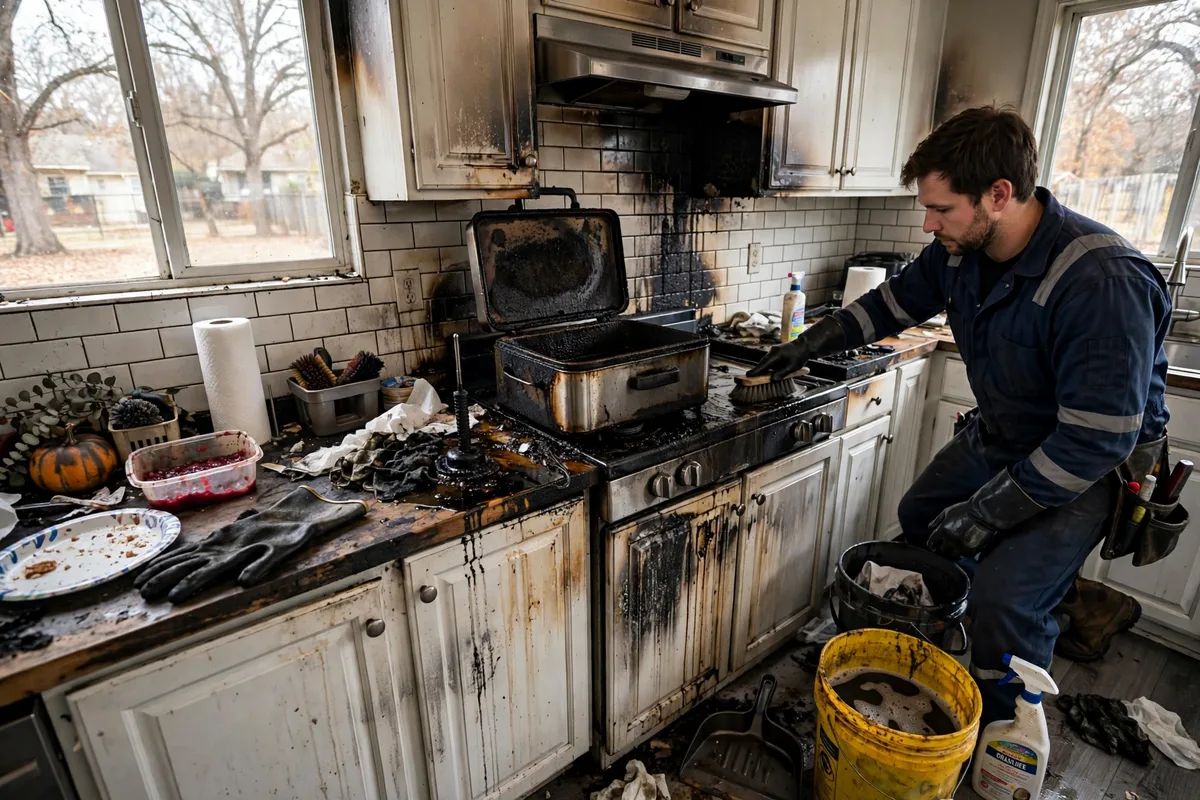
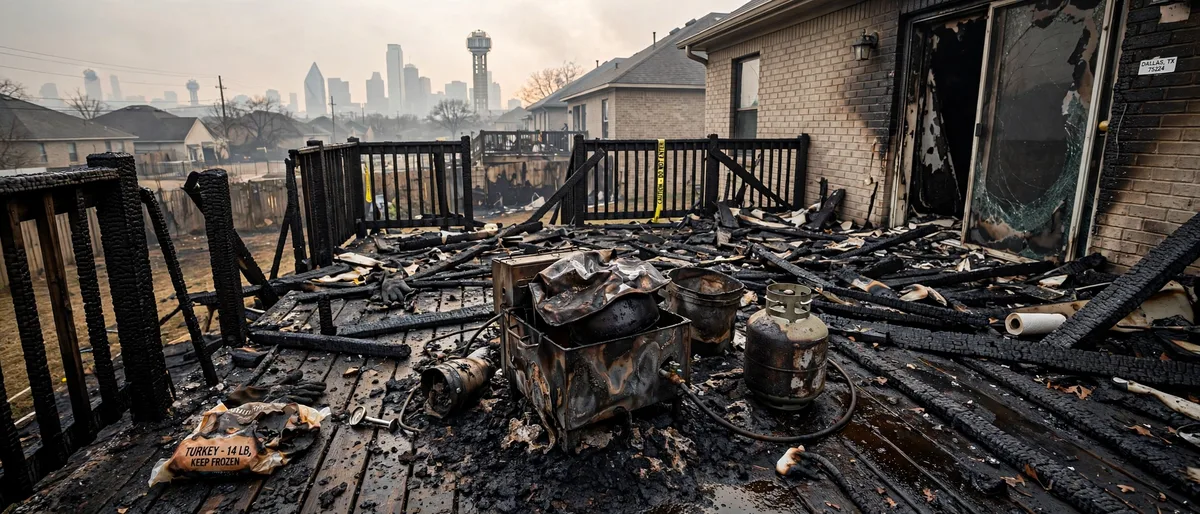
A turkey fryer fire in Dallas is the Thanksgiving disaster nobody plans for: a pot of oil heated past its flash point, a turkey that still holds ice in its cavity, and a boilover that turns a driveway cookout into a fire in seconds. The National Fire Protection Association counts about 1,610 home cooking fires on Thanksgiving Day — roughly four times the daily average — and deep-fried turkey is the leading cause of cooking fires on that day. Deep-fryer fires cause about $15 million in property damage every year, and the average fryer fire runs around $15,000 in property damage, climbing toward $27,500 once medical bills are included. The damage is not just the flame: boiling oil soaks into decks and patios, smoke pours through open doors and windows into the kitchen and living rooms, and the oily soot coats walls, cabinets, and contents in a film that household cleaners cannot touch. Water Damage Restoration Dallas handles turkey fryer fire cleanup with IICRC-certified crews, around 60-minute arrival, free estimates, and same-day help. However, one fryer rule comes first: never move a burning fryer and never throw water on an oil fire, because the oil spreads the flame across everything it touches — and the first hour decides how much of the house is saved.
What causes a turkey fryer fire?
Turkey fryer fires come from three mistakes that repeat every Thanksgiving: an overfilled pot, a frozen or partly frozen turkey, and a fryer placed too close to the house. Oil expands as it heats, so a pot filled to the line with a turkey still in the box overflows the moment the bird goes in, and the spilled oil hits the open flame underneath. A turkey that is still frozen in the cavity dumps ice into oil heated past 350 degrees, and the water flashes to steam instantly, throwing a column of burning oil out of the pot. A fryer set on a wooden deck, under an overhang, or beside the garage gives that burning oil a surface to land on and a structure to catch. The holiday fire safety guide covers the wider Thanksgiving and Christmas fire risks. However, the cause trap is the calm pot: oil that looks still and safe is the oil closest to its flash point, so the fryer that has been heating longest is the one most likely to boil over.
What should you do in the first hour after a turkey fryer fire?
Never move a burning fryer and never throw water on an oil fire — step back, call 911, and use a dry-chemical extinguisher only if the fire is small and you can aim at the base from a safe distance. If the fryer is on a deck or driveway, let the fire department handle it; if flames have reached the house, get everyone out and stay out. Once the fire is out, do not wipe the oily soot with a wet rag or a household cleaner, because smearing spreads the film deeper into the surface and drives the odor in. Photograph the fryer, the deck or patio, the siding, and every smoke-stained room before anything moves, since the photos support the claim, and keep the fryer and the oil container as evidence for the adjuster. Call a same-day fire restoration crew while the fire department is still on site, because the soot sets harder with every hour it sits. However, the first-hour mistake is the garden hose: water on burning oil throws a fireball, so the hose stays off and the extinguisher or the fire department does the work.
How do professionals clean up turkey fryer fire damage?
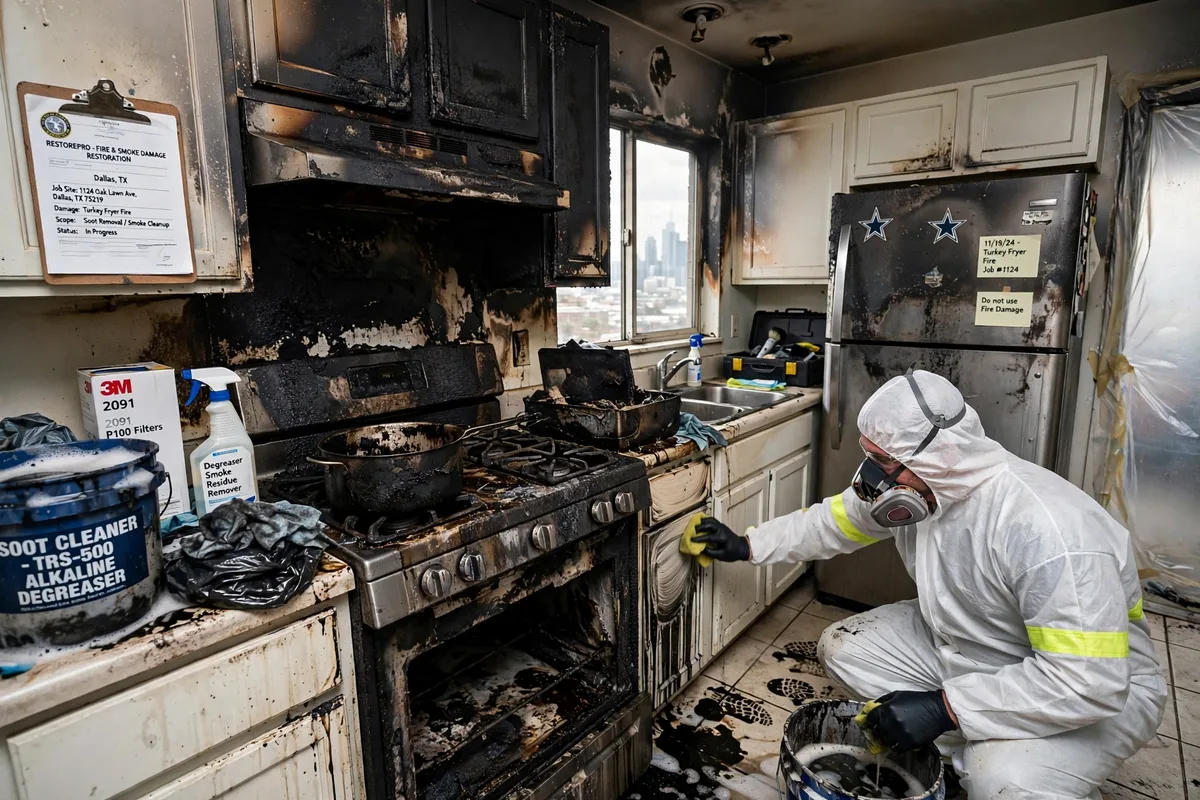
Professionals clean up turkey fryer fire damage in sequence: emergency board-up and tarping where flames or heat opened the structure, extraction and removal of oil-soaked deck boards and patio material, dry-chemical sponge cleaning of soot from walls and ceilings before any wet cleaning, HEPA vacuuming of the oily residue, deodorization of the smoke that travelled through open doors and HVAC, then drying, repair, and rebuild. Oil residue on a deck or patio needs degreasing and often board replacement, because oil soaks into wood and keeps smelling long after the surface looks clean. Smoke that entered through open doors coats the kitchen, the living rooms, and the contents nearest the doors, and the kitchen protein soot guide covers the invisible film that standard cleaners cannot touch. The fire damage restoration service page covers the full cleanup process, and the commercial fire restoration guide covers larger fire jobs. However, one cleanup rule is absolute: wet cleaning before dry soot removal drives the oil deeper into the surface, so the dry step always comes first.
| Fryer fire damage | Typical sign | First crew step |
|---|---|---|
| Oil boilover, deck | Blackened boards, oil stain | Degrease, replace boards |
| Smoke through open doors | Soot on walls, ceilings | Dry sponge, HEPA vacuum |
| Class K soot, kitchen | Sticky film, strong odor | Chemical sponge, seal |
| Siding and eaves scorched | Melted siding, soot lines | Board-up, wash, replace |
| Contents near the door | Smoke odor, oily film | Contents cleaning off-site |
📞 Book Turkey Fryer Fire Cleanup: +1 214-807-4697
How much does turkey fryer fire damage cost in Dallas?
A turkey fryer fire averages around $15,000 in property damage nationally, and Dallas jobs typically land between $2,500 and $7,500 for the mitigation phase, with the full rebuild depending on how far the oil and smoke travelled. A contained deck fire with light smoke inside the house sits at the low end, while a fire that scorched siding, soaked a deck, and coated the kitchen and living rooms in oily soot climbs fast, and a fire that reached the attic or the HVAC system costs more still. Smoke and soot cleanup on a contained kitchen fire typically runs $2,000–$5,000, cabinets $3,000–$10,000, and appliances $1,000–$5,000 when they must be replaced. The Texas burst-pipe average claim runs around $15,500, which shows the scale of a sudden home disaster claim, and a fryer fire claim is documented the same way. Mold remediation adds $1,200–$3,800 when water from firefighting or a hose sat in the structure past 48 hours. However, the pricing trap is the surface wipe: a company that offers to wipe the soot without degreasing the deck and deodorizing the rooms is selling a cosmetic clean that the next warm day will undo.
Does insurance cover a turkey fryer fire?
Sudden accidental fires are usually covered by a standard homeowners policy, and a turkey fryer fire is a sudden accidental event, so the claim turns on documentation rather than on whether the fire counts. Photograph the fryer, the oil container, the deck, the siding, and every smoke-stained room before anything moves, and keep the fryer itself as evidence for the adjuster. The claim covers the structure, the contents, and the additional living expenses while the home is unlivable, and the carrier will want the fire department report and a written scope from the restoration company. A fryer used in violation of a lease or a homeowners association rule can complicate the claim, so keep the policy and the association rules in the same file as the photos. However, one claim rule beats the rest: the homeowner who calls the restoration crew while the fire department is still on site gets a same-day written scope, and that scope is what the adjuster prices.
How do you prevent a turkey fryer fire next Thanksgiving?
Prevent a turkey fryer fire with five rules: thaw the turkey completely and pat it dry, fill the pot only to the marked line and measure the oil level with water first, fry outdoors on concrete at least ten feet from the house, deck, and garage, never leave the fryer unattended, and keep a dry-chemical extinguisher within reach. The water test — placing the turkey in the pot, filling with water to the fill line, removing the bird, and marking the water level — stops the overfill that causes most boilovers. A frozen turkey is the single most dangerous mistake, because the ice flashes to steam and throws burning oil out of the pot. However, the prevention trap is the calm afternoon: most fryer fires happen in the last hour before dinner, when the cook is distracted and the oil is at its hottest, so the fryer gets a dedicated watcher from ignition to serving.
Important Considerations
Texas has no state license specifically for restoration companies, so check IICRC certification, insurance, and reviews before hiring, and be wary of anyone demanding full payment upfront. Never move a burning fryer and never throw water on an oil fire, because water spreads burning oil across everything it touches. Never wipe oily soot with a wet rag or household cleaner, since smearing drives the film deeper into the surface and locks the odor in. Never leave a fryer unattended, and never fry on a wooden deck, under an overhang, or beside the garage. Never paint or seal a smoke-stained wall without cleaning and deodorizing first, because the odor will return through the paint. If firefighting water or a hose soaked the structure, ask explicitly for drying alongside the soot cleanup, not just wall repair, since water left in the structure grows mold in 24–48 hours. Keep the fire department report, the photos, the fryer, and all carrier correspondence in one file — fryer fire claims generate more paperwork than the job suggests. Finally, after the cleanup, keep a dry-chemical extinguisher in the kitchen and mark the fryer fill line before next Thanksgiving, because the next holiday will test the same pot again.
📞 Free Turkey Fryer Fire Estimate: +1 214-807-4697
Frequently Asked Questions
How common are turkey fryer fires on Thanksgiving?
Thanksgiving Day sees about 1,610 home cooking fires — roughly 4x the daily average — and deep-fried turkey is the leading cause of cooking fires on that day.
What does a turkey fryer fire cost?
A fryer fire averages around $15,000 in property damage, and deep-fryer fires cause about $15 million in property damage a year. Dallas mitigation jobs typically land between $2,500 and $7,500.
What causes a turkey fryer fire?
An overfilled pot, a frozen or partly frozen turkey dropped into hot oil, or a fryer placed too close to the house, deck, or garage. The water test before frying prevents the overfill.
What should you do first after a turkey fryer fire?
Never move a burning fryer, never throw water on an oil fire, call 911, and use a dry-chemical extinguisher only if the fire is small. Then call a same-day restoration crew: +1 214-807-4697.
Can a turkey fryer fire be cleaned up the same day?
Assessment and emergency board-up start the same day; full soot and oil cleanup takes days, with Dallas mitigation jobs typically landing between $2,500 and $7,500.
Does insurance cover a turkey fryer fire?
Sudden accidental fires are usually covered. Photograph the fryer, the deck, and every smoke-stained room before anything moves, and keep the fire department report.
How do professionals clean up oil soot?
Dry-chemical sponge cleaning first, then HEPA vacuuming, degreasing of decks and patios, and deodorization. Wet cleaning before dry soot removal drives the oil deeper.
How long does turkey fryer fire restoration take?
Cleanup takes days for most homes, with rebuild after soot removal and drying. Fires that reached siding, the attic, or the HVAC system take longer.
Is it safe to stay home after a turkey fryer fire?
Often yes in unaffected rooms, but the fire area stays off-limits while soot is being removed and drying equipment runs, and electrical circuits in the damaged zone stay off.
Why does the smell linger after a fryer fire?
Oil soot coats surfaces in a sticky film that household cleaners cannot touch, and oil soaks into deck wood. Degreasing, sealing, and deodorization remove it — a surface wipe does not.
Why call Water Damage Restoration Dallas for a fryer fire?
Local Dallas crews, 24/7 live answer, around 60-minute arrival, free estimates, and soot-first cleanup with moisture readings — call +1 214-807-4697.
📞 Call Water Damage Restoration Dallas 24/7: +1 214-807-4697
Related Dallas Water Damage Guides
- Burst Pipe in Dallas: What to Do in the First 60 Minutes
- Water Damage in the First 24 Hours: An Hour-by-Hour Guide for Dallas Homeowners
- Emergency Water Extraction in Dallas: What Actually Happens When the Crew Arrives
- Emergency Water Damage Checklist: Every Step, in Order, for Dallas Homeowners