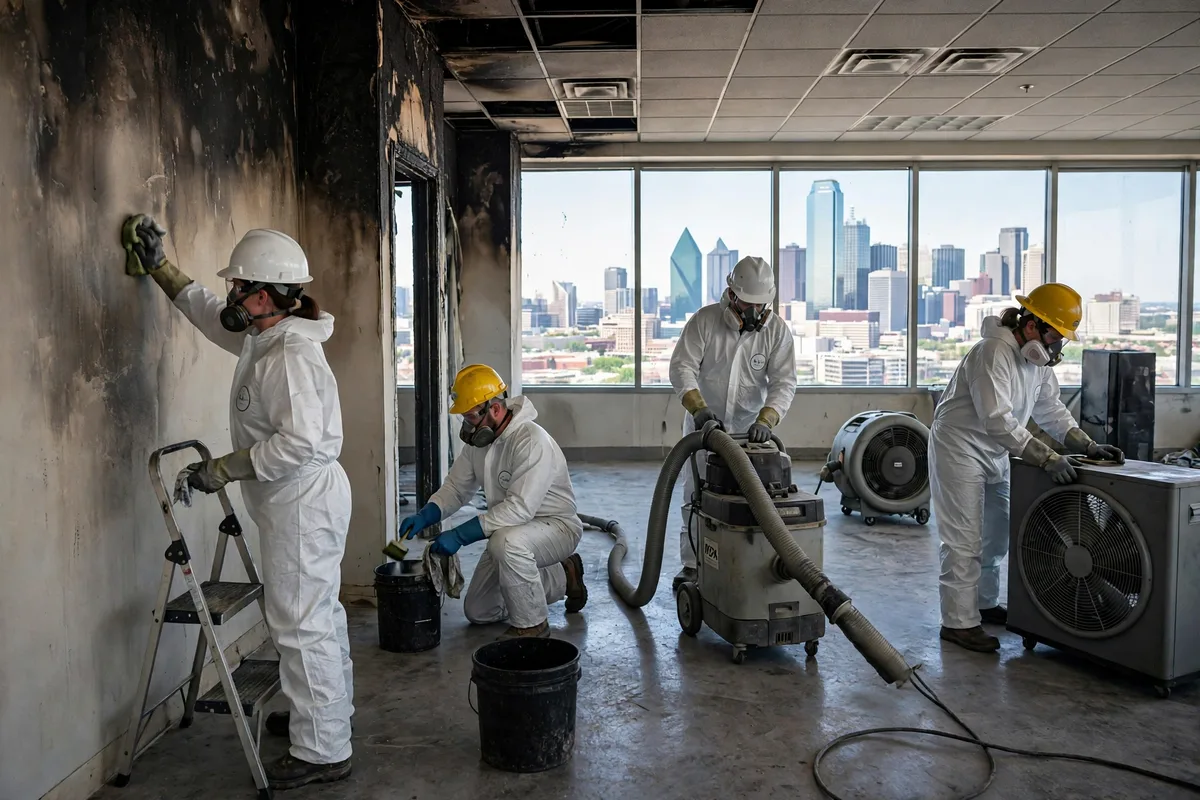
Commercial Fire Damage Restoration in Dallas: Get Your Business Open Again
TLDR
- Who handles commercial fire damage restoration in Dallas?: Water Damage Restoration Dallas — 24/7 live answer, same-day commercial assessment, around 60-minute arrival, free estimates: +1 214-807-4697.
- How fast can a Dallas business reopen after a fire?: A contained fire can see partial reopening in days with phased work; a structure fire takes weeks — the reopening plan starts on the first call.
- What does commercial fire restoration cost in Dallas?: Dallas fire restoration averages $29,077, with small contained fires far less and large structure fires far more; fire insurance claims average around $88,000.
- Does insurance pay for lost income while a business is closed?: Business-interruption coverage can pay lost profit and ongoing costs, but only with documented records and a written restoration timeline.
- Can part of a business stay open during restoration?: Often yes — phased and after-hours work keeps unaffected suites, floors, or dining areas trading where the fire marshal allows it.
- What comes first after a commercial fire?: Board-up and securing the building, then soot and smoke removal, water extraction from firefighting, and drying before any rebuild.
- When should a business owner call a restoration crew?: Immediately — every hour closed costs more than the fire damage itself, and soot keeps etching surfaces while you wait.
🚨 FIRE AT YOUR DALLAS BUSINESS? Every hour closed costs more than the fire itself — call now. We answer live 24/7, arrive in around 60 minutes, and give free estimates — board-up, soot removal, water extraction, and a written reopening plan on the first visit.
📞 24/7 Commercial Fire Help: +1 214-807-4697
Commercial fire damage restoration in Dallas is a race against lost revenue: for a business, the physical damage is only half the loss, because every closed day means cancelled bookings, lost customers who never come back, payroll with no income behind it, and rent that keeps running. A restaurant fire, an office fire, a warehouse fire, or a retail fire all follow the same pattern — the fire itself is contained in minutes or hours, but the soot, smoke odor, and firefighting water spread through the whole building, and the reopening depends on how fast a professional crew secures the property, removes the contamination, dries the structure, and documents everything for the claim. Dallas fire restoration averages $29,077, and fire insurance claims average around $88,000, which makes fire the priciest damage a Dallas business owner is likely to face. Water Damage Restoration Dallas handles commercial fire jobs with IICRC-certified crews, around 60-minute arrival, free estimates, and same-day commercial assessments built around one goal: getting your doors open again. However, one commercial rule comes first: the reopening plan is written before the cleanup starts, because a crew that cleans without a timeline is a crew that keeps your business closed longer than it has to be.
How fast can a commercial fire restoration crew get your Dallas business open again?
A contained kitchen or office fire can see partial reopening within days when the damage is limited to one room and the crew works in phases, while a structure fire that reached the roof or the electrical system takes weeks of drying, cleaning, and rebuild before the fire marshal signs off. The speed depends on three things: how much of the building the fire, smoke, and water actually reached, whether the electrical and HVAC systems are safe to run, and how fast the adjuster approves the scope. A same-day assessment maps the damage, separates the areas that can reopen from the areas that must stay closed, and sets a written timeline the owner can show staff, customers, and the insurer. The fire damage restoration service page covers the full commercial and residential process, and the fire damage restoration cost guide breaks down what Dallas jobs typically run. However, one reopening trap applies: the fastest reopening is never the one that skips the drying and odor steps, because a business that reopens smelling of smoke loses the customers the quick reopening was meant to keep.
What does commercial fire damage restoration actually include?
Commercial fire damage restoration in Dallas runs in sequence: emergency board-up and securing the building against weather and theft, soot and smoke removal from walls, ceilings, and contents, water extraction and structural drying from the firefighting effort, HVAC decontamination so smoke odor does not recirculate, odor control with thermal fogging or ozone where appropriate, contents cleaning for equipment, inventory, and documents, and finally rebuild of the damaged areas with code and permit sign-off before reopening. Large-loss jobs add a dedicated project manager, daily progress reporting for the insurer, and Xactimate documentation that matches the adjuster's own estimating system. The emergency board-up guide covers the first step in detail, and the firefighting water damage guide covers the second disaster most owners forget — the water the fire department left behind. However, one scope rule is absolute: soot is acidic and keeps etching glass, metal, and electronics while it sits, so the cleaning clock starts the day of the fire, not the day the claim is approved.
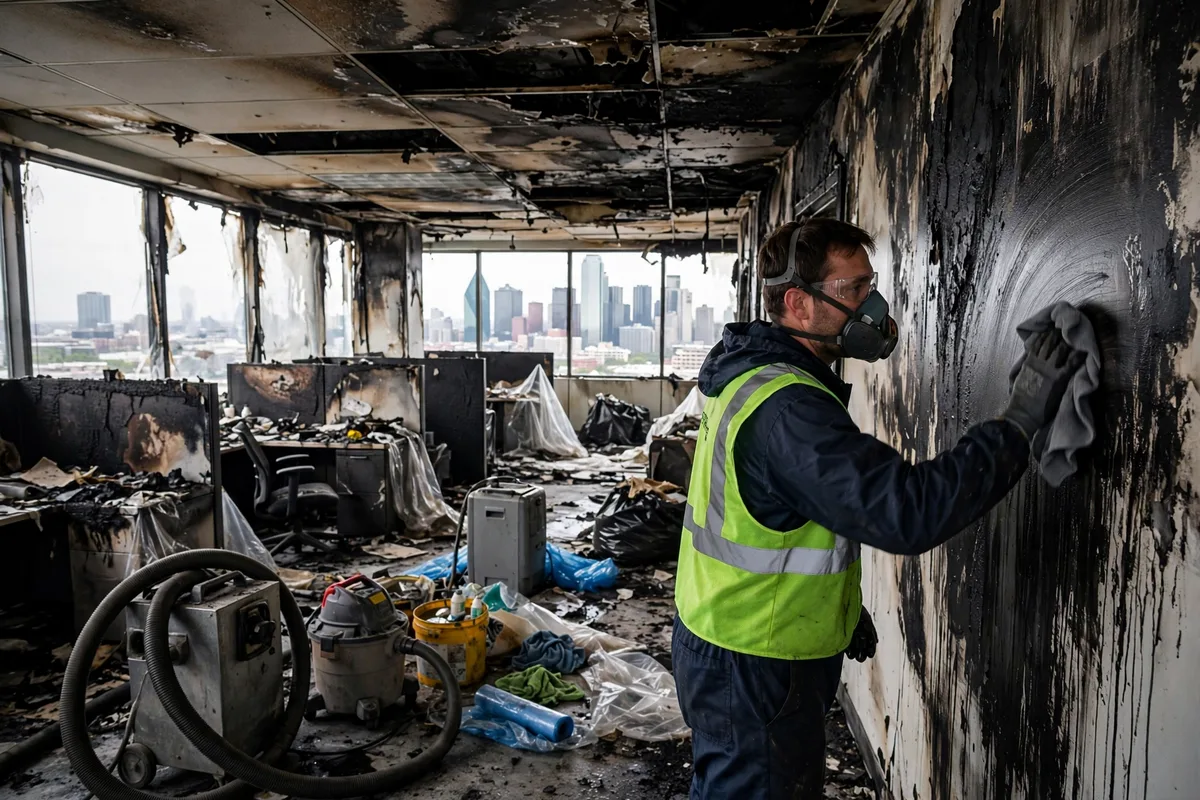
Can part of your Dallas business stay open during fire restoration?
Often yes — phased work is the standard approach for offices, retail, restaurants, and multifamily buildings, where the crew seals off the damaged zone, runs containment and negative air so soot and odor do not migrate, and works after hours or overnight so the unaffected suites, floors, or dining areas keep trading. A restaurant can reopen its dining room while the kitchen is rebuilt; an office can keep one floor running while another is dried and cleaned; a warehouse can keep receiving in the unaffected bays. Whether partial opening is possible depends on the fire marshal's clearance, the electrical system's safety, and whether the HVAC can be isolated so smoke odor does not reach the open areas. The crew documents the phasing plan in writing, with dates for each zone, so the owner can tell staff and customers exactly what opens when. However, one phasing guardrail applies: no area reopens until its air is verified clean and its surfaces are decontaminated, because a single soot-smelling room undoes the reopening for the whole building.
| Dallas business type | Biggest reopening risk | First crew step |
|---|---|---|
| Restaurant, kitchen fire | Health code, lost covers | Board-up, soot removal |
| Office, electrical fire | Downtime, lost clients | Phased work, after hours |
| Retail, smoke damage | Inventory loss, odor | Contents cleaning, odor control |
| Warehouse, structure fire | Stock loss, permits | Large-loss scope, adjuster |
| Multifamily, unit fire | Displaced tenants, claims | Board-up, unit-by-unit drying |
📞 Book a Commercial Fire Assessment: +1 214-807-4697
How much does commercial fire damage restoration cost in Dallas?
Dallas fire restoration averages $29,077, but the range is wide: a contained kitchen fire with smoke damage to one room can run a few thousand dollars, while a structure fire that reached the roof, the electrical system, and the inventory runs into six figures. The cost drivers are the square footage affected, how much soot and smoke penetrated walls and contents, how much water the firefighting effort left behind, whether the HVAC system needs decontamination, and how much rebuild and code work the reopening requires. Fire insurance claims average around $88,000, which reflects how expensive commercial fire losses get once business interruption and contents are counted. A written scope with line-item pricing — source repair, soot removal, drying, contents, rebuild — is the only quote worth comparing, because a lump-sum number hides what is actually included. However, the pricing trap is the cheap cleanup quote: a company that offers to wipe the soot and repaint without drying the structure or decontaminating the HVAC is selling a cosmetic fix that the health inspector and the next customer will both reject.
Will insurance cover the fire damage and the lost income?
Most commercial property policies cover fire damage to the building and contents, and business-interruption coverage — when the policy carries it — pays lost profit and ongoing expenses like rent and payroll while the business is closed for a covered fire. The claim succeeds or fails on documentation: photos and video before anything moves, a written restoration scope with Xactimate line items, moisture and soot readings, daily progress logs, and records of lost revenue such as point-of-sale reports and booking cancellations. The large-loss adjuster assigned to commercial fires expects a professional scope, not a homeowner's estimate, and the carrier pays faster when the restoration company and the adjuster work from the same numbers. Business-interruption claims have strict time limits and record requirements, so the documentation starts on day one, not after the rebuild. However, one claim guardrail applies: never throw away damaged inventory or contents before the adjuster has seen and photographed them, because undocumented losses are the first thing a carrier disputes.
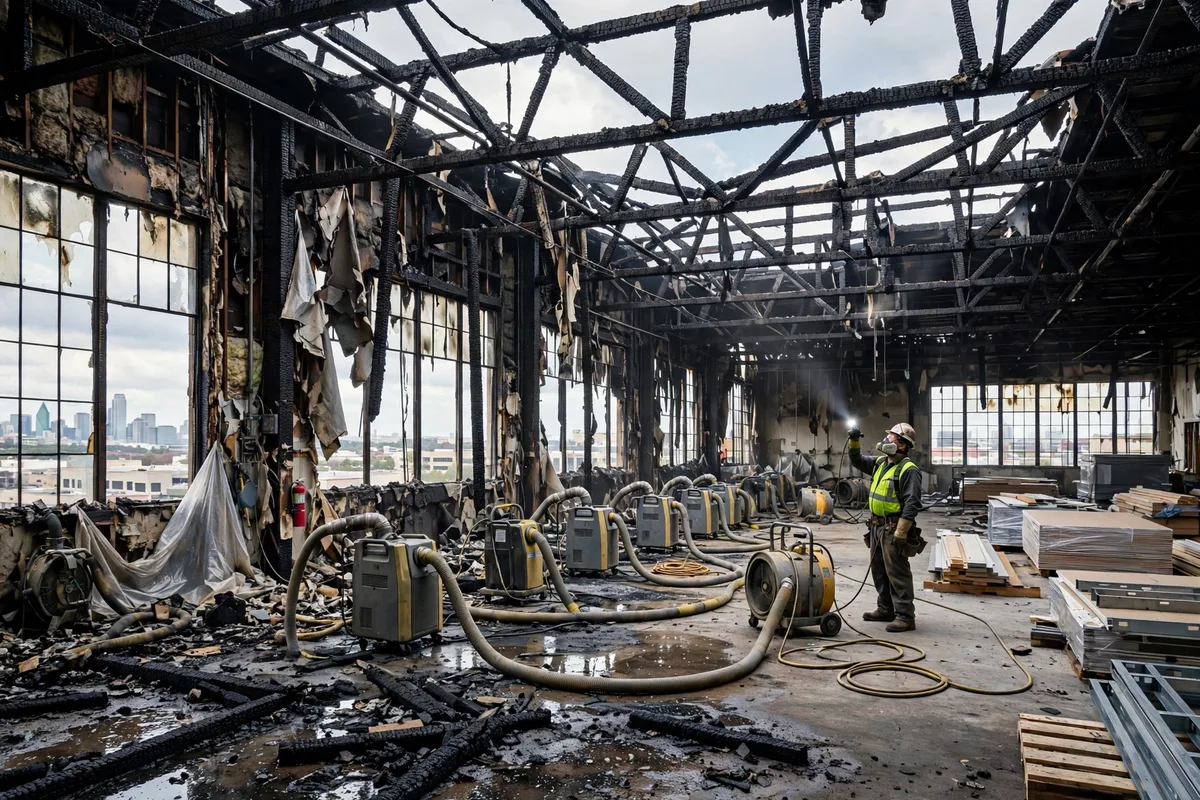
How do you choose a commercial fire restoration company in Dallas?
Choose on five checks: a same-day commercial assessment with a written reopening timeline, experience with large-loss and commercial jobs rather than residential-only work, IICRC-certified crews, Xactimate documentation the adjuster can use directly, and a plan for phased or after-hours work that keeps part of the business open. Ask whether the company has handled your business type before, how it isolates the damaged zone, how it verifies the air is clean before reopening, and whether it assigns a dedicated project manager for the job. The emergency fire damage guide covers the first-24-hours decisions for any Dallas fire, and the fire damage restoration service page lists the full service. However, one selection rule beats the rest: the company that writes the reopening plan first, documents for the claim second, and cleans third — in that order, with dates attached — is the company whose Dallas business reopens fastest.
Important Considerations
Texas has no state license specifically for restoration companies, so check IICRC certification, commercial insurance, and reviews before hiring, and be wary of anyone demanding full payment upfront. Never re-enter a fire-damaged commercial building until the fire marshal clears it, and never run the HVAC after a fire — it spreads soot and smoke odor through every room the fire never touched. Never throw away damaged inventory or contents before the adjuster documents them, because undocumented losses are the first thing a carrier disputes. Never reopen a dining room, retail floor, or office until the air is verified clean and the health or building inspector signs off, since a soot smell on reopening day costs more customers than the extra day of cleaning. Keep the scope, moisture and soot readings, photos, and all carrier correspondence in one file — commercial fire claims generate more paperwork than the job suggests. Finally, after reopening, review the business-interruption coverage and the fire-safety plan with the insurer, because the next fire will test the same gaps again.
📞 Free Commercial Fire Estimate: +1 214-807-4697
Frequently Asked Questions
Who handles commercial fire damage restoration in Dallas?
Water Damage Restoration Dallas — 24/7 live answer, same-day commercial assessment, around 60-minute arrival, free estimates, and board-up, soot removal, drying, and a written reopening plan. Call +1 214-807-4697 any hour and a live crew answers.
How fast can a Dallas business reopen after a fire?
A contained fire can see partial reopening within days with phased work; a structure fire takes weeks. The reopening plan, with dates for each zone, is written on the first assessment visit.
What does commercial fire damage restoration cost in Dallas?
Dallas fire restoration averages $29,077, with small contained fires far less and large structure fires far more. Fire insurance claims average around $88,000 once contents and interruption are counted.
Can part of my business stay open during restoration?
Often yes — phased and after-hours work keeps unaffected suites, floors, or dining areas trading where the fire marshal allows it, with containment so soot and odor do not migrate.
Does insurance pay for lost income while my business is closed?
Business-interruption coverage can pay lost profit and ongoing costs, but only with documented records and a written restoration timeline, so documentation starts on day one.
What comes first after a commercial fire?
Board-up and securing the building, then soot and smoke removal, water extraction from firefighting, and drying before any rebuild. The fire marshal must clear the building before anyone re-enters.
How does phased fire restoration work?
The crew seals off the damaged zone, runs containment and negative air, and works after hours or overnight so unaffected areas keep trading, with a written schedule for each zone's reopening.
Do I need permits before reopening after a fire?
Yes, for structural, electrical, or code-related rebuild work — the restoration scope includes code and permit sign-off, and the fire marshal and building inspector clear the space before reopening.
What is a large-loss fire claim?
A commercial fire claim handled by a dedicated large-loss adjuster, with Xactimate documentation, daily progress reporting, and a project manager — the standard for offices, retail, restaurants, and warehouses.
Should I throw away fire-damaged inventory?
No — never discard damaged inventory or contents before the adjuster has seen and photographed them. Undocumented losses are the first thing a carrier disputes.
Why call Water Damage Restoration Dallas for a commercial fire?
Local Dallas crews, 24/7 live answer, around 60-minute arrival, free estimates, and a reopening plan written before the cleanup starts — call +1 214-807-4697.
📞 Call Water Damage Restoration Dallas 24/7: +1 214-807-4697
Related Dallas Water Damage Guides
- Burst Pipe in Dallas: What to Do in the First 60 Minutes
- Water Damage in the First 24 Hours: An Hour-by-Hour Guide for Dallas Homeowners
- Emergency Water Extraction in Dallas: What Actually Happens When the Crew Arrives
- Emergency Water Damage Checklist: Every Step, in Order, for Dallas Homeowners