Kitchen Fire Protein Soot in Dallas: 24/7 Same-Day Cleanup Service
TLDR
- What is protein soot after a kitchen fire?: An invisible, greasy film from burnt food and grease that coats every surface and smells the worst of all soot types.
- Who cleans protein soot in Dallas?: Water Damage Restoration Dallas — 24/7 live answer, around 60-minute arrival, free estimates: +1 214-807-4697.
- Why does protein soot smell so bad?: The residue bonds into paint, wood, and fabric and keeps releasing odor for weeks unless it is chemically removed.
- Can you wipe protein soot off yourself?: No — wiping smears the grease deeper into surfaces and drives the smell further in.
- How much does protein soot cleanup cost in Dallas?: Soot removal typically runs $2,000–$6,000, with odor treatment adding $200–$800 depending on the method.
- How do pros remove protein soot?: Dry-chemical sponges, HEPA vacuuming, and matched detergents, followed by thermal fogging or ozone for the odor.
- When should you call a kitchen fire cleanup crew?: Immediately — the longer protein soot sits, the deeper it bonds and the harder the smell is to remove.
🚨 KITCHEN FIRE IN YOUR DALLAS HOME? Protein soot is bonding into your walls right now — call now. We answer live 24/7, arrive in around 60 minutes, and give free estimates — soot removal, HEPA vacuuming, and odor treatment in one visit.
📞 24/7 Kitchen Fire Soot Help: +1 214-807-4697
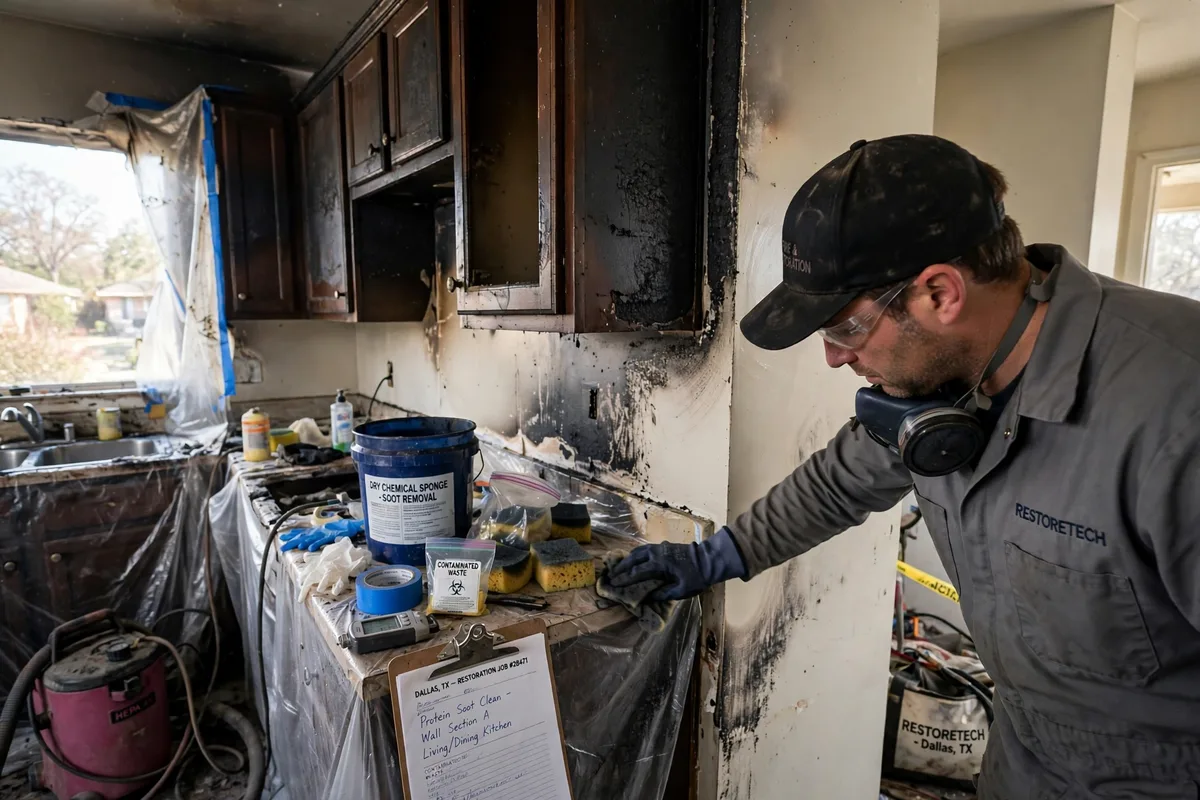
Kitchen fire protein soot in Dallas is the residue nobody sees coming: a grease fire on the stove can be out in seconds, yet the invisible film it leaves behind coats the kitchen, drifts through the vents into every room, and smells worse than any other kind of fire residue. Protein soot comes from burnt food, oil, and grease — it is nearly invisible, greasy to the touch, and it sticks to paint, wood, fabric, and metal with a grip that household cleaners cannot break. The smell does not fade on its own; it bonds into porous materials and keeps releasing odor for weeks, which is why so many Dallas homeowners discover the real damage days after the fire is out. Professional cleanup removes the residue with dry-chemical sponges, HEPA vacuuming, and matched detergents, then treats the odor with thermal fogging or ozone. Water Damage Restoration Dallas handles kitchen fire soot with IICRC-certified crews, around 60-minute arrival, free estimates, and same-day help. However, one rule comes first: never wipe protein soot with a wet cloth, because water and grease together smear the residue deeper into the surface instead of lifting it off.
What is protein soot — and why does it smell so bad after a kitchen fire?
Protein soot is the fine, greasy residue produced when food, cooking oil, and grease burn: unlike the black, powdery soot from a wood or paper fire, protein soot is nearly invisible, and it forms a thin film that clings to every surface the smoke touched, including walls, ceilings, cabinets, and the inside of ductwork. The smell is the worst of all soot types because burnt protein releases strong, lingering compounds that bond into paint and porous materials, and the grease base keeps them locked in place long after the fire is out. A small stovetop flare-up can send protein soot through the whole house in minutes, since the HVAC system and open doorways carry the smoke everywhere before anyone thinks to shut the vents. The soot damage cleanup guide covers how crews identify each soot type before choosing a cleaning method. However, the smell trap is that protein soot is invisible — a wall can look clean while still holding a full film of residue that keeps the odor alive, so the nose, not the eye, is the real test.
Why does wiping protein soot make the damage worse?
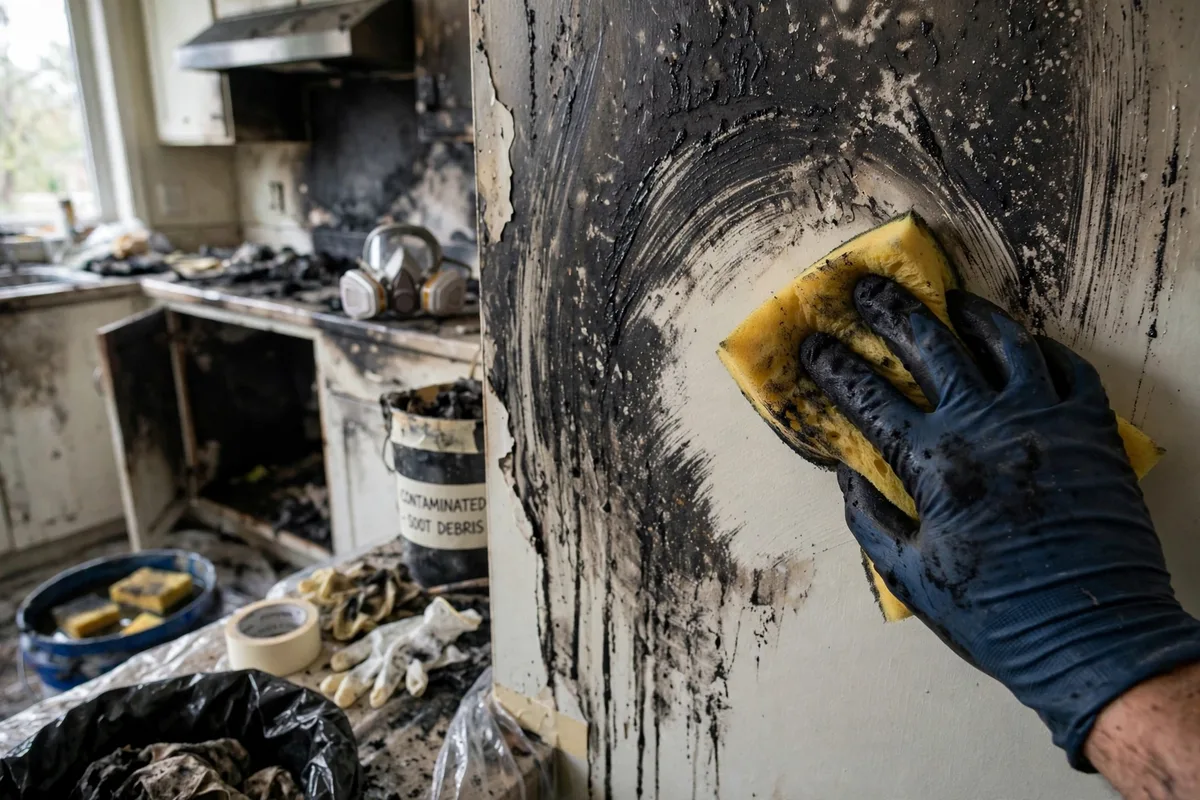
Wiping protein soot makes the damage worse because the residue is grease-based: a damp cloth or a household spray pushes the film across the surface and drives it deeper into paint, wood grain, and fabric instead of lifting it away, and every wipe spreads the odor to a new area. Painting over it fails for the same reason — the grease bleeds straight through fresh paint within days, and the smell comes back with it, which means the wall has to be cleaned properly and then sealed with a stain-blocking primer before any repainting. Scrubbing with water alone can also push soot into the drywall paper, where it stains permanently and keeps off-gassing. The kitchen fire cleanup guide covers the full professional process for grease-fire kitchens. However, one cleaning rule is absolute: protein soot is removed dry first — dry-chemical sponges and HEPA vacuuming lift the film before any liquid touches the surface, because the first wet step decides whether the residue comes off or goes in.
What do professionals do about protein soot in a Dallas kitchen?
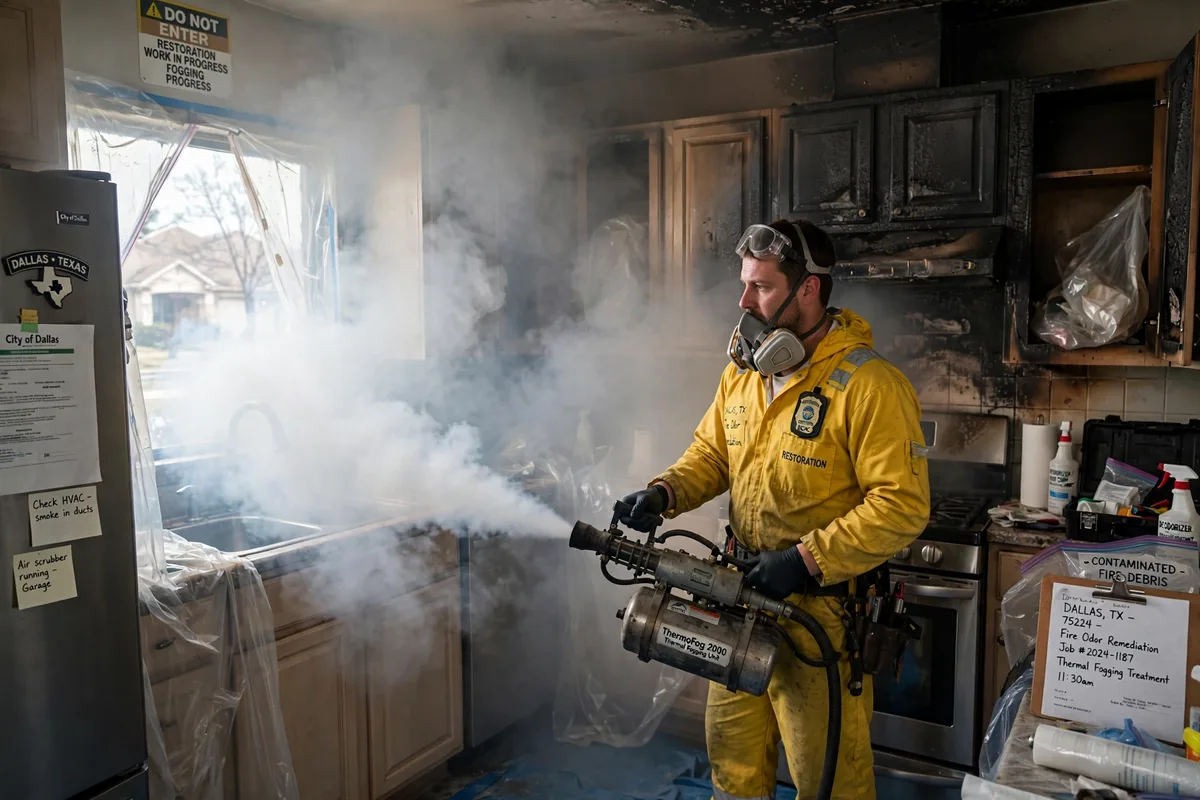
Professionals handle protein soot in a Dallas kitchen in sequence: they shut down the HVAC system so the residue stops circulating, dry-clean every surface with chemical sponges that lift grease without water, HEPA-vacuum walls, ceilings, cabinets, and contents, then wash with detergents matched to the residue, and finally treat the odor with thermal fogging or ozone once the surfaces test clean. Ductwork gets inspected and cleaned when smoke traveled through the vents, since a soot-coated duct will re-smell the house every time the system runs. The fire damage restoration page covers the full service from board-up to rebuild. However, one process rule matters most: odor treatment comes last, never first, because fogging or ozone over dirty soot only masks the smell for a few days — the residue underneath keeps releasing odor until it is physically removed.
| Soot type | Looks like | Smell level | Cleaning method |
|---|---|---|---|
| Protein soot | Invisible film | Worst, lingering | Dry sponge, HEPA |
| Dry soot | Black powder | Moderate | HEPA vacuum |
| Wet soot | Sticky black smear | Strong | Detergent wash |
| Fuel-oil soot | Oily black film | Strong | Solvent cleaning |
📞 Book Protein Soot Cleanup: +1 214-807-4697
How much does protein soot cleanup cost in Dallas?
Protein soot cleanup in Dallas typically runs $2,000–$6,000 for soot removal in a kitchen and the affected rooms, with odor treatment adding $200–$600 for thermal fogging or $400–$800 for ozone, depending on how far the smoke traveled and how many rooms need treatment. A small contained flare-up with one room affected lands at the low end, while a fire that ran the HVAC system and coated the whole house lands at the high end, because duct cleaning and whole-house fogging join the scope. Dallas fire restoration jobs average $29,077 all-in, and fire claims average around $88,000, so a kitchen fire is rarely a small claim even when the flames stayed on the stove. The fire damage cost guide breaks down the full price ranges by job size. However, the pricing trap is the cheap wipe-down quote: a company that offers to clean the kitchen surfaces without HEPA work, duct inspection, and odor treatment is selling a cosmetic clean that leaves the smell bonded into the house.
How do you choose kitchen fire cleanup services in Dallas?
Choose on five checks: same-day response while the soot is still fresh, dry-cleaning method with chemical sponges and HEPA vacuuming stated in the scope, a written plan that separates soot removal, duct work, and odor treatment, IICRC-certified crews, and claim documentation with photos and a written inventory. Ask whether the crew inspects the ductwork, how it verifies surfaces are residue-free before fogging, and whether it seals walls with stain-blocking primer before repainting. The smoke smell removal guide covers the odor-treatment options in detail. However, one selection rule beats the rest: the company that cleans dry first, treats odor last, and proves the surfaces are clean before closing the job is the company whose kitchen stops smelling after the first week.
Important Considerations
Protein soot is a health concern as well as a smell problem: the residue contains fine particles and combustion compounds, so keep children, pets, and anyone with asthma out of the affected rooms until the cleanup is done, and never run the HVAC system after a kitchen fire until the ducts are checked. Texas has no state license specifically for restoration companies, so check IICRC certification, insurance, and reviews before hiring, and be wary of anyone demanding full payment upfront. Never paint over soot without cleaning and sealing first, because the grease bleeds through and the odor returns. Never run the range hood or the HVAC to air the house out after a fire, since both spread residue to clean rooms. Document everything with photos before anything is cleaned or thrown away, because the claim depends on that record. Finally, after the kitchen is restored, replace the smoke alarm batteries and check the extinguisher, because the next grease fire will test the same stove again.
📞 Free Kitchen Fire Soot Estimate: +1 214-807-4697
Frequently Asked Questions
Who cleans protein soot after a kitchen fire in Dallas?
Water Damage Restoration Dallas — 24/7 live answer, around 60-minute arrival, free estimates, and dry-chemical sponge cleaning, HEPA vacuuming, and odor treatment in one visit. Call +1 214-807-4697 any hour and a live crew answers.
What is protein soot?
Protein soot is the invisible, greasy residue from burnt food, oil, and grease. It coats every surface the smoke touched and smells the worst of all soot types because the compounds bond into paint and porous materials.
Why does protein soot smell so bad?
Burnt protein releases strong, lingering compounds that bond into paint, wood, and fabric, and the grease base locks them in place. The smell keeps releasing for weeks unless the residue is chemically removed.
Can I wipe protein soot off myself?
No — wiping smears the grease deeper into surfaces and spreads the odor to new areas. Protein soot must be removed dry first with chemical sponges and HEPA vacuuming before any liquid touches it.
How much does protein soot cleanup cost in Dallas?
Soot removal typically runs $2,000–$6,000, with thermal fogging adding $200–$600 or ozone $400–$800. The total depends on how many rooms the smoke reached and whether the ducts need cleaning.
Does insurance cover protein soot cleanup?
Sudden kitchen fires are usually covered, and Dallas fire claims average around $88,000. Document the damage with photos before anything is cleaned, and keep the adjuster's number handy.
Can I paint over protein soot?
No — the grease bleeds straight through fresh paint within days and the smell returns. The wall must be cleaned properly and sealed with a stain-blocking primer before any repainting.
How long does protein soot cleanup take?
A single kitchen takes a day or two, while a whole-house job with duct cleaning and odor treatment takes several days. The timeline depends on how far the smoke traveled.
Is protein soot dangerous to breathe?
The residue contains fine particles and combustion compounds, so keep children, pets, and anyone with asthma out of affected rooms until cleanup is done. Ventilate only after the HVAC is shut down and checked.
Should I run the HVAC after a kitchen fire?
No — running the HVAC spreads protein soot through the ducts to every room. Shut the system down and call a crew to inspect and clean the ductwork first.
Why call Water Damage Restoration Dallas for kitchen fire soot?
Local Dallas crews, 24/7 live answer, around 60-minute arrival, free estimates, and dry-first soot removal with HEPA vacuuming and proven odor treatment — call +1 214-807-4697.
📞 Call Water Damage Restoration Dallas 24/7: +1 214-807-4697
Related Dallas Water Damage Guides
- Burst Pipe in Dallas: What to Do in the First 60 Minutes
- Water Damage in the First 24 Hours: An Hour-by-Hour Guide for Dallas Homeowners
- Emergency Water Extraction in Dallas: What Actually Happens When the Crew Arrives
- Emergency Water Damage Checklist: Every Step, in Order, for Dallas Homeowners