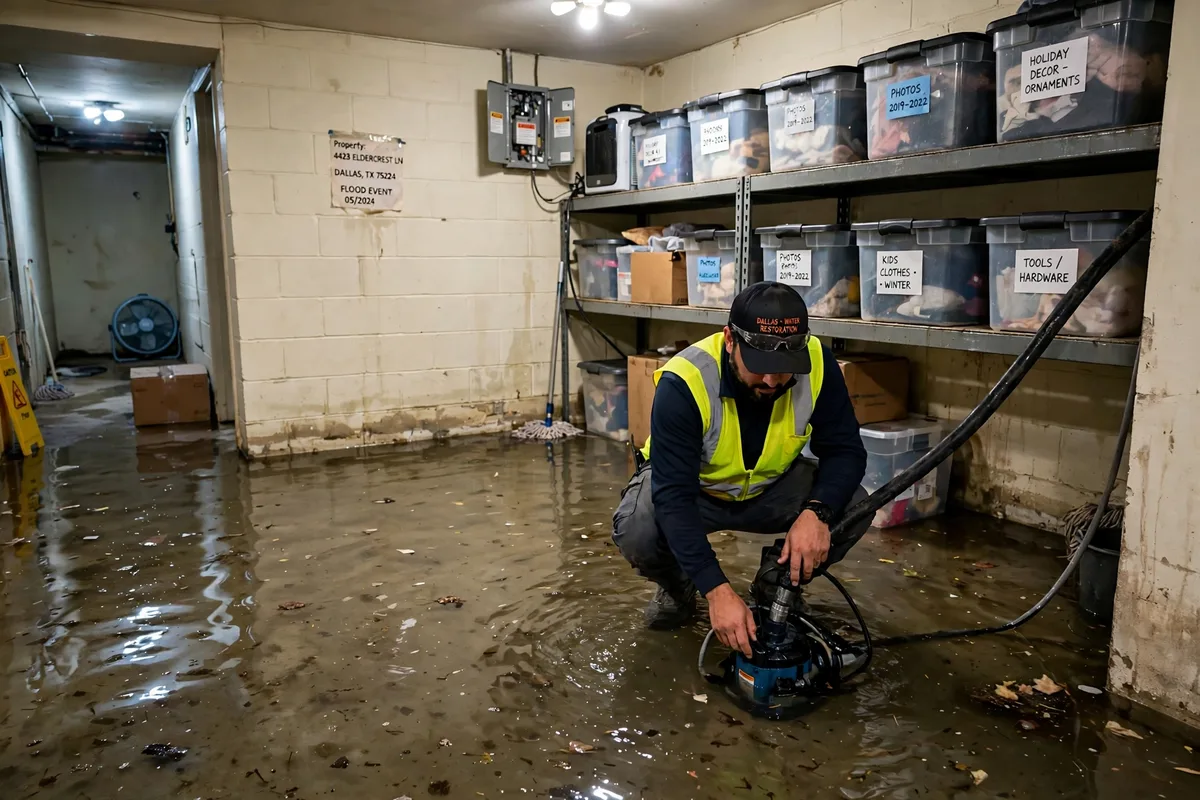
Why Is My Basement Flooding in Dallas During Heavy Rain?
TLDR
- What is the main cause of basement flooding in Dallas?: Water collecting against the foundation — from bad grading, clogged gutters, or failed drainage — until it finds a crack, joint, or window well to enter through.
- Why does Dallas make it worse?: Expansive Blackland Prairie clay swells when wet and shrinks when dry, cracking foundations and opening new entry paths every season.
- Are true basements common in Dallas?: No — most Dallas homes are slab-on-grade, so "basement flooding" usually means a below-grade room, sunken living area, garage, or crawl space taking water.
- What should you do first when it floods?: Kill power to the area, keep people out of the water, photograph everything, and start extraction — mold germinates within 24–48 hours.
- Does homeowners insurance cover it?: Usually not — rising rainwater is flood damage, which standard policies exclude; a separate flood policy with its 30-day waiting period is the common fix.
- What does professional cleanup cost in Dallas?: Most water damage jobs run $2,500–$7,500 depending on depth, contamination, and how much material must come out.
- Who fixes flooded basements in Dallas?: Water Damage Restoration Dallas at +1 214-807-4697 — 24/7 extraction, drying, and mold prevention across Dallas.
A basement — or any below-grade room — floods during heavy Dallas rain when water builds up against the foundation faster than the soil and drainage can move it away, and then enters through the weakest point: a foundation crack, the floor-wall joint, a window well, or a backed-up drain. The rain is the trigger, not the root cause; the root cause is almost always a drainage, grading, or foundation defect that the storm exposed. Fix the water's path and the flooding stops being a seasonal ritual. However, if the water entering is a sewage backup rather than rain intrusion, stop reading prevention tips and treat it as a contamination emergency first.
📞 Basement Flooding Right Now? Call +1 214-807-4697
What Are the Main Causes of Basement Flooding in Dallas?
| Cause | How the Water Gets In | The Fix |
|---|---|---|
| Negative grading | Soil settled toward the house channels runoff straight at the foundation wall | Regrade soil to slope away; add a swale or French drain |
| Clogged gutters and short downspouts | Roof water — thousands of gallons per storm — dumps at the foundation line | Clean gutters; extend downspouts 6–10 feet from the wall |
| Foundation cracks | Clay-soil movement opens cracks that admit seepage under pressure | Seal and inject cracks; address the soil moisture imbalance |
| Window wells | Wells fill like buckets and pour through window frames | Well covers, gravel drainage, and a drain line to daylight |
| Failed or missing drain tile / sump | Groundwater rises with nowhere to go and lifts through floor joints | Install or service a sump pump with battery backup |
| City storm overload | Street drainage surcharges in extreme rain and pushes water toward low lots | Backwater valve; lot-level drainage improvements |
Work the list from the outside in. Nine times out of ten, the water's entry is explained by the first two rows: a Dallas roof sheds an enormous volume in a single storm cell, and if gutters overflow or downspouts discharge at the wall, that volume ponds exactly where the foundation is most vulnerable. Hydrostatic pressure then does the rest — water does not need a hole, only a joint and enough pressure behind it. However, a basement that floods on a modest rain, or that seeps days after the storm ends, is telling a different story — groundwater and drain-tile failure, not surface runoff, and the fix lives below the slab.
One Dallas nuance matters before any digging: full basements are rare here. The region's expansive clay and relatively high water table pushed builders to slab-on-grade construction, so the "basement" in most Dallas flooding calls is a sunken living room, a below-grade garage or storage level, a converted lower floor, or a crawl space. The causes above apply to all of them — the lowest enclosed point of the house is where foundation water pressure expresses itself. However, crawl-space flooding hides longer and damages differently (ductwork, insulation, subfloor), so a home with no true basement is not a home with no below-grade risk.
Why Does Dallas Clay Soil Make Basements Flood More?
Dallas sits on Blackland Prairie clay — the famous Houston Black series — which behaves like a slow sponge with a temper: it swells and turns plastic when saturated, then shrinks and cracks open in drought. That shrink-swell cycle, repeated every Texas year, works foundations like a slow pry bar. Hairline cracks become seepage paths; soil pulls away from the wall in August, leaving a gap that the September storms fill like a moat; then the saturated clay presses that stored water against the wall for days after the rain stops. This is why Dallas basement flooding so often peaks a day after the storm, not during it. However, clay is the amplifier, not the original sin — a well-graded, well-drained lot on the same soil can stay dry for decades, which is why drainage work outperforms almost every interior coating sold for this problem.
The same clay story explains the city's construction pattern and its insurance pattern. Builders avoid deep basements partly because excavating and waterproofing in expansive clay is expensive, and homeowners discover the flood-exclusion clause in their policy only after the first below-grade loss. Knowing your soil reframes the budget conversation: money spent on gutters, grading, and drains is foundation protection, not landscaping. However, none of the soil science changes the emergency math when water is already inside — extraction and drying come first, geology lectures after the house is dry.
What Should You Do in the First Hours of a Basement Flood?
Start with power: if water has reached outlets, appliances, or the panel's level, shut off the area at the breaker before anyone steps in — the full hazard list is in the guide to electrical safety in a flooded house. Then document before you move anything: photographs of the water line, the entry point if you can find it, and every soaked belonging in place. Get portable valuables up and out, following the priorities in the guide to saving belongings after water damage. Extraction follows immediately — pumps and weighted extractors of the kind described in the emergency extraction walkthrough — because the mold clock is already running. However, if the water smells of sewage or the flood came up through a drain, do not wade in with a shop vacuum: that is Category 3 contamination and a professional scope, full stop.
Frame the whole first day with the first 24 hours guide: source stopped, water out, wet materials assessed, drying equipment running, moisture readings logged. Below-grade spaces dry slower than any other part of the house — cool, still air and masonry that holds moisture — so dehumidification capacity has to be sized for the space, not borrowed from a closet unit. The structural program on the flood damage repair page is where extraction hands off to repairs once readings hit target. However, a homeowner with a small, clean-water intrusion caught in the first hour can legitimately start the work themselves; depth, contamination, and delay are the three dials that move a flood from DIY to professional.
📞 Get the Water Out Tonight: +1 214-807-4697
How Do You Stop a Dallas Basement From Flooding Again?
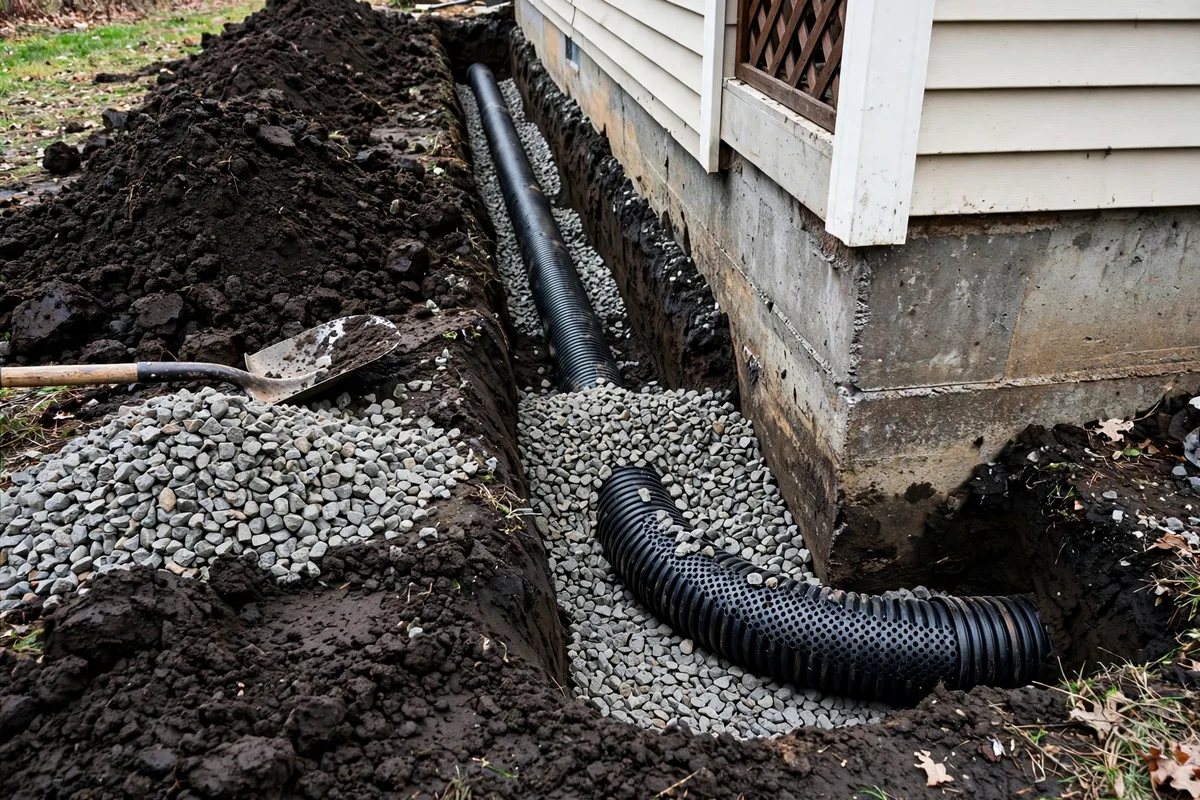
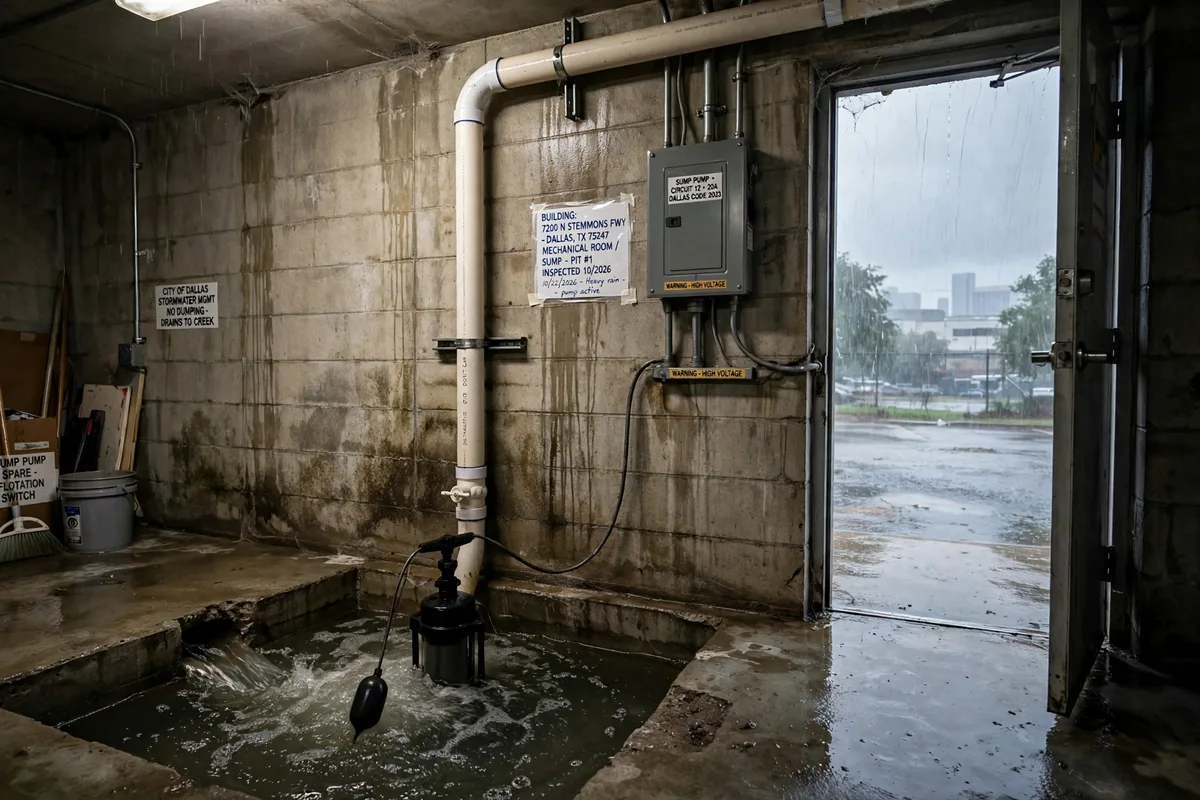
Prevention is a layered system, cheapest layer first. Maintain gutters and extend downspouts well past the foundation — the highest-value hour in all of flood prevention. Regrade any soil that has settled toward the house, keeping the slope falling away for at least the first six feet. Seal visible foundation cracks, understanding that sealant stops seepage, not pressure. Where surface water still collects, a French drain or swale intercepts it before the wall. And where groundwater is the actor, a sump pump with a battery backup — sized for the space and tested before storm season — is the mechanical last line, because Dallas storms cut power exactly when pumps matter most. However, interior waterproofing coatings and "sealer" paints are the weakest layer on this list: they resist dampness, and hydrostatic pressure peels them off the wall from behind.
Test the system before the sky does. Run a garden hose at the roof's drip line and watch where the water goes; pour five gallons in the window well and see whether it drains; lift the sump float and confirm the pump cycles and the backup battery holds charge. Repeat flooding at the same corner after these fixes means the remaining cause is below grade — drain tile or a cracked line — which is a camera-and-excavation diagnosis, not another coat of anything. Professional waterproofing assessments exist for exactly this fork in the road. However, do not let the perfect prevention plan delay the first one: gutters and grading done this weekend prevent more water than a flawless drainage design still sitting in a quote folder next spring.
What Does Basement Flood Cleanup Cost in Dallas — and Does Insurance Pay?
Professional restoration for a flooded below-grade space in Dallas typically lands inside the citywide water-damage range of $2,500–$7,500, driven by depth, how long the water sat, and whether contamination upgrades the scope; the full breakdown lives in the Dallas water damage cost guide. Mold that establishes in the 24–48-hour window adds remediation commonly priced at $1,200–$3,800. Contents, finished basements with drywall and flooring, and any sewage involvement push toward the top of the range or past it. However, the cheapest version of this job is always the fastest one — water extracted the same night rarely grows the mold line item at all.
Insurance is where Dallas basement floods disappoint people. Standard homeowners policies exclude rising surface water — the definition of most heavy-rain basement flooding — leaving coverage to a separate flood policy, which typically carries a 30-day waiting period before it takes effect. Two exceptions deserve a check before assuming a denial: a sump-pump or drain-backup endorsement, if you bought one, covers that specific failure; and a plumbing break upstairs that filled the basement is a covered water-damage claim wearing a flood costume. Documentation of the entry point is what separates the two files. However, never let a coverage question slow the mitigation — insurers expect prompt drying, and a mold-grown basement is harder to argue than a wet one.
📞 Free On-Site Assessment in Dallas: +1 214-807-4697
Important Considerations
Recurring basement flooding is a disclosure and value issue, not just a maintenance one: Texas sellers disclose known water intrusion and flooding history, and a documented pattern of professional mitigation plus drainage correction reads entirely differently from a string of unexplained wet seasons. Keep every invoice, moisture log, and drainage invoice with the house file. Also think past the finished surfaces — repeated wetting rots sill plates, feeds subterranean termites (a Dallas specialty), and rusts HVAC components long after the carpet smells fine. However, a single flood, dried fast and documented, with the cause fixed, is a closed chapter for most homes — it is the repeat, unaddressed cycle that compounds.
Finally, respect the category of the water. Clean rain intrusion, gray drain water, and sewage backup look similar at ankle depth and are handled nothing alike — different protective equipment, different materials saved or discarded, different disinfection. The mold remediation page covers what follows when the drying window is missed in any of them. When in doubt, treat unknown floodwater as contaminated until an inspection says otherwise. However, do not let category caution become paralysis: barriers up, photographs taken, and the extraction call made in the first hour is the sequence that protects both the family and the house.
Frequently Asked Questions
Why does my basement flood only during heavy rain?
Because heavy rain is when the water load exceeds your drainage's capacity and the soil against the foundation saturates; light rain drains away, storm rain ponds, pressurizes, and enters through cracks and joints. The threshold effect — fine in drizzle, flooded in a downpour — points at grading, gutters, and downspout discharge first. A flood on modest rain signals groundwater or drain failure instead. However, a new flood pattern in an old house usually means something changed: settled soil, a clogged drain line, or a fresh foundation crack from the last dry season.
Are basements common in Dallas homes?
No — most Dallas homes are slab-on-grade because expansive clay soil and the water table make deep basements costly to build and keep dry. The below-grade spaces that do flood are sunken rooms, lower-level garages and storage, converted spaces, and crawl spaces. Each is the lowest point of the structure, which is why foundation water shows up there. However, newer custom builds and older pier-and-beam homes with cellars do exist across Dallas neighborhoods, and their flooding follows the same drainage rules.
Can I pump the water out myself?
For shallow, clean rainwater caught early, yes — a submersible pump or shop vacuum, protective boots and gloves, and immediate fan-and-dehumidifier drying is legitimate homeowner work. Depth past a few inches, any sewage involvement, electrical contact, or water that sat overnight moves the job to professionals with extraction trucks and moisture verification. The failure mode of DIY is invisible residual moisture, not the visible puddle. However, even a successful DIY pump-out deserves a professional moisture check if walls or flooring got wet — drywall wicks far above the water line.
How fast does mold grow in a flooded basement?
Germination begins within 24–48 hours on wet drywall, carpet, and stored contents, and a cool, dark basement is close to ideal growing conditions. That is why extraction and drying are same-day work and why "letting it air out over the weekend" is the most expensive sentence in basement flooding. Established mold remediation in Dallas commonly runs $1,200–$3,800. However, materials dried to verified moisture targets inside the window generally do not develop growth — speed plus measurement, not speed alone, is the protection.
Will a sump pump prevent basement flooding?
A sump pump prevents the groundwater version of flooding — rising water beneath the slab — provided it is sized for the inflow, has a battery backup for storm outages, and is tested on a schedule. It does nothing for water entering through walls from bad surface drainage, which is fixed at the gutters and grading. Many Dallas below-grade spaces need both systems working together. However, a pump without a check valve or with a frozen, blocked discharge line is decoration; the test pour is part of the appliance's life, not an optional extra.
Does homeowners insurance cover basement flooding from rain?
Standard policies exclude rising surface water, so rain-driven basement flooding is usually a flood-policy claim — and flood policies typically start 30 days after purchase. Check for a sump-pump/drain-backup endorsement, which covers that narrower failure if you carry it, and document the entry point carefully, since a plumbing-caused flood is a different, usually covered, claim. Water Damage Restoration Dallas documents sources and categories for the file at +1 214-807-4697. However, only the adjuster applying your policy's language settles a specific claim — anyone promising coverage upfront is guessing.
What is a French drain, and does my Dallas home need one?
A French drain is a gravel-filled trench with a perforated pipe that intercepts subsurface and surface water and carries it away from the foundation to a safe discharge point. Homes that need one share a signature: water collecting against a wall, a yard low spot feeding the foundation, or flooding that persists after gutters and grading are fixed. Installed cost varies with length and access, and it is earthwork, not magic — a drain discharging nowhere useful is a buried decoration. However, where lot drainage is the root cause, it is frequently the single fix that ends years of repeat flooding.
Should I finish a basement that has flooded before?
Only after the water's cause is fixed and at least one heavy-rain season has proven the fix; finishing first converts the next flood from a concrete-and-framing cleanup into a drywall, flooring, and contents loss. Use moisture-tolerant materials at floor level, keep storage on shelving off the slab, and photograph the corrected drainage for the house file. Water Damage Restoration Dallas can verify dryness and drainage corrections before you build back. However, if the flooding cause is a rising-water-table lot that no drainage has tamed, an unfinished, resilient lower level is the honest design answer.
How long does professional basement flood cleanup take?
Extraction is same-day; structural drying of a below-grade space typically runs 3–5 days with daily moisture readings, longer when masonry and finished materials hold water. Demolition of unsalvageable drywall and flooring happens early in that window, and rebuild follows the verified-dry sign-off. Contents cleaning and storage can run in parallel. However, a crew that promises a fixed finish date before the first moisture reading is selling, not measuring — the readings set the calendar.
When should I call a professional instead of handling it myself?
Call immediately when water is deeper than a few inches, smells of sewage, touches electrical systems, has sat more than a day, or returns every storm. Call Water Damage Restoration Dallas at +1 214-807-4697 for 24/7 extraction and drying across Dallas — crews typically arrive in about 60 minutes, assess the category, and document for insurance from the first visit. A free on-site assessment also settles the repair-versus-prevention budget with real readings instead of guesses. However, small clean-water incidents handled within the first hours remain fair DIY territory — the line is drawn by depth, contamination, and time, not by pride.
📞 Call Water Damage Restoration Dallas Now: +1 214-807-4697
Related Dallas Water Damage Guides
- What to Do When Your House Floods in Dallas, TX: The Right Steps in the Right Order
- Standing Water in Your House: When DIY Cleanup Is Enough — and When to Call a Pro
- Flooded House Electrical Safety: What to Shut Off, What Never to Touch
- How to Save Your Belongings After Water Damage: A Triage Guide for Dallas Homes