Restaurant & Commercial Kitchen Fire Damage in Dallas: Downtime, Health Code & Same-Day Cleanup
TLDR
- How much does a commercial kitchen fire cost to clean up?: Class K kitchen fires involving cooking oils cost $11,000–$18,000 to clean up, and a contained grease fire runs $6,500–$21,500 all-in.
- How long is a restaurant closed after a kitchen fire?: A contained fire can reopen in days; a fire that reached the hood, ducts, or dining room takes weeks, and the health inspector decides the date.
- What does the health inspector need after a kitchen fire?: A cleaned and sanitized kitchen, a working hood and suppression system, and documentation of the cleanup and repairs.
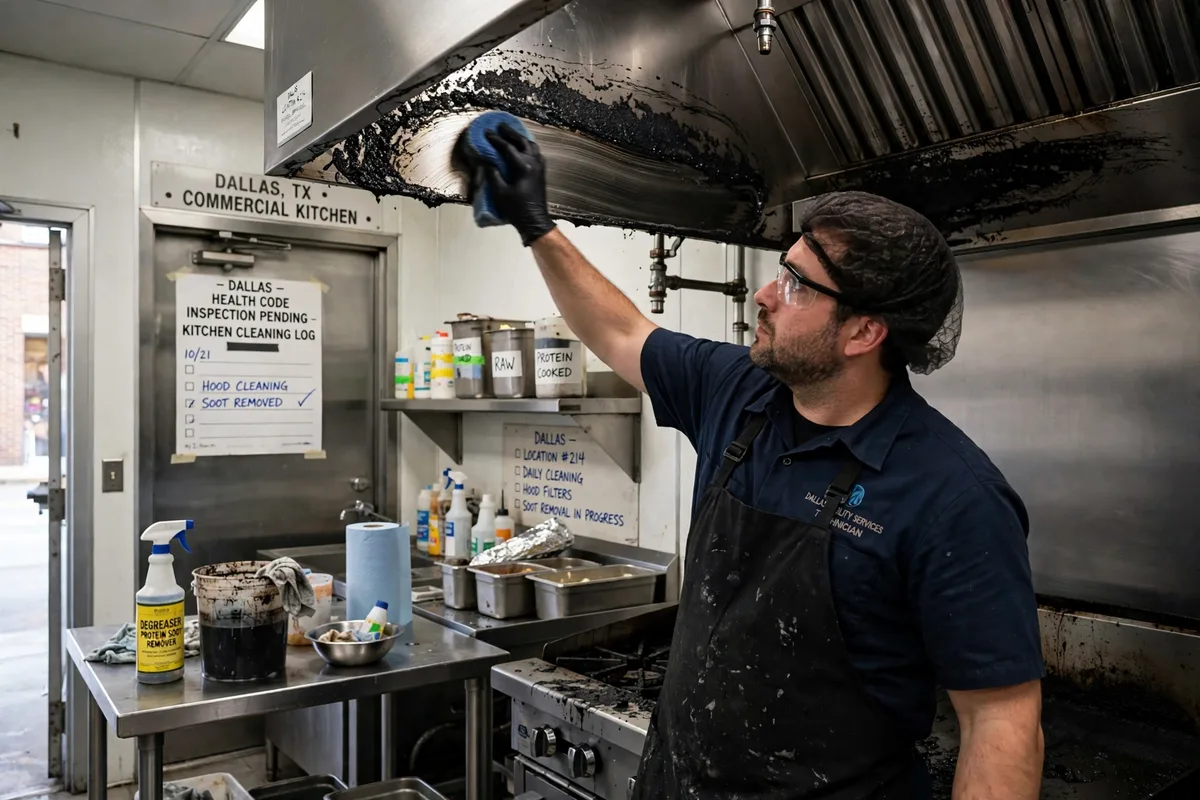
- What is protein soot after a grease fire?: A nearly invisible, varnish-like film with intense odor that standard cleaners cannot touch — it coats every surface in the kitchen and dining room.
- Does insurance cover a restaurant kitchen fire?: Sudden accidental fires are usually covered, including business-interruption losses, with documentation and photos from hour one deciding the claim.
- Can a commercial kitchen fire be cleaned up overnight?: After-hours and overnight crews work while the dining room is closed, so the kitchen reopens faster — call +1 214-807-4697 for same-day assessment.
- Who handles commercial kitchen fire cleanup in Dallas?: Water Damage Restoration Dallas — 24/7 live answer, around 60-minute arrival, free estimates: +1 214-807-4697.
🚨 RESTAURANT KITCHEN FIRE IN DALLAS? Every hour closed is revenue lost — call now. We answer live 24/7, arrive in around 60 minutes, and give free estimates — overnight cleanup, health-code documentation, and reopening in one call.
📞 24/7 Commercial Kitchen Fire Help: +1 214-807-4697
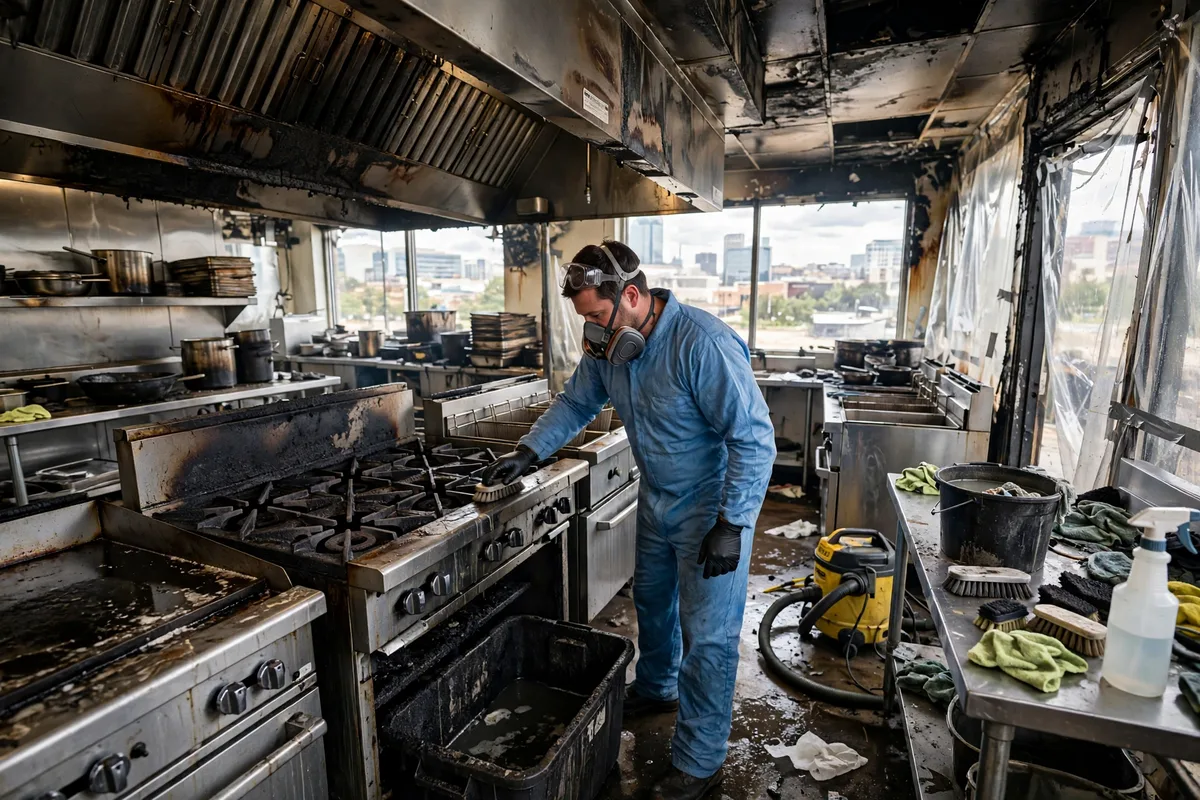
Restaurant and commercial kitchen fire damage in Dallas is a business emergency before it is a building emergency: the fryer, the hood, and the ductwork are the ignition point, but the dining room, the walk-in, and the health inspection are what decide how long the doors stay closed. Class K kitchen fires involving cooking oils cost $11,000–$18,000 to clean up, and a contained grease fire runs $6,500–$21,500 all-in — smoke and soot $2,000–$5,000, cabinets $3,000–$10,000, and appliances $1,000–$5,000 when they must be replaced. Protein soot from grease is nearly invisible but leaves a varnish-like film and an intense odor that standard cleaners cannot touch, and it coats every surface in the kitchen, the dining room, and the HVAC system. A commercial kitchen fire also triggers a health-code re-inspection, and the inspector will not sign off until the kitchen is cleaned and sanitized, the hood and suppression system work, and the cleanup is documented. Water Damage Restoration Dallas handles commercial kitchen fire cleanup with IICRC-certified crews, around 60-minute arrival, free estimates, and same-day help. However, one kitchen-fire rule comes first: the clock that matters is the reopening clock, so the crew that documents for the inspector and the insurer at the same time is the crew that gets the dining room open fastest.
How long is a restaurant closed after a commercial kitchen fire?
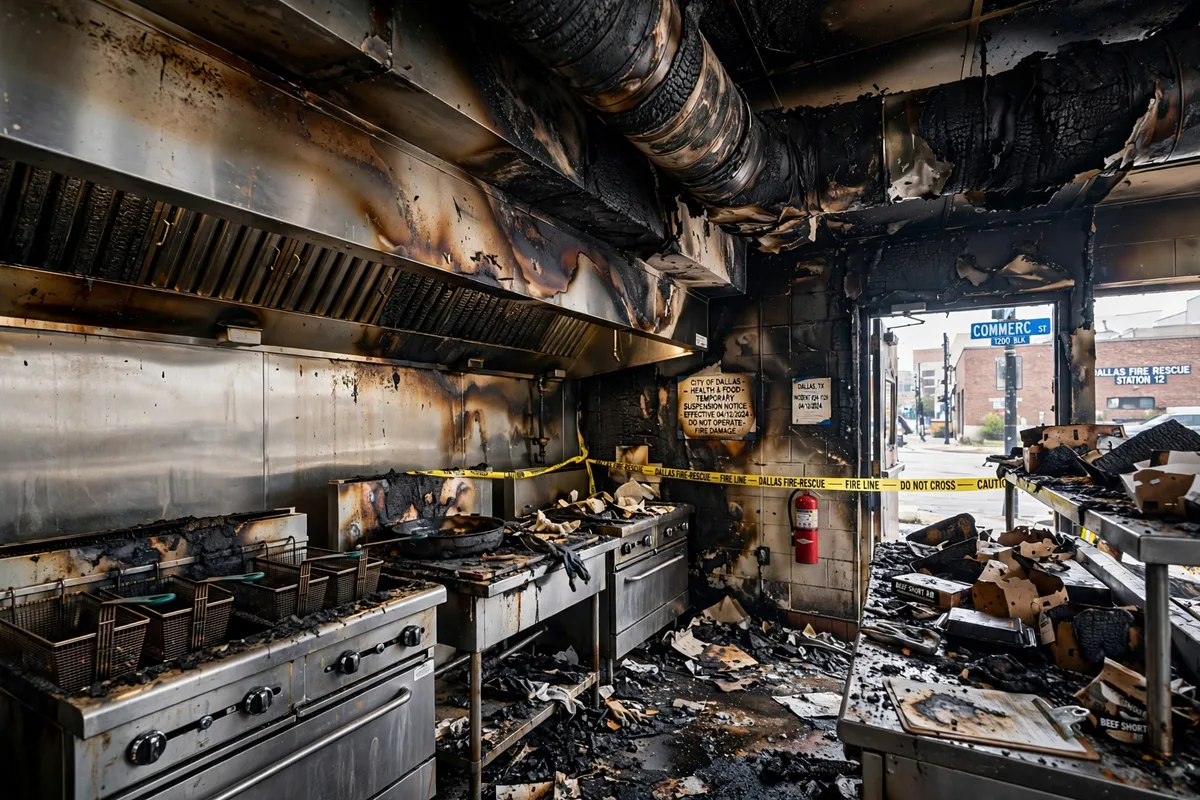
A contained grease fire in one fryer or one station can reopen in days, while a fire that reached the hood, the ductwork, the dining room, or the electrical panel takes weeks. The health inspector decides the reopening date, not the owner and not the contractor, and the inspection happens only after the kitchen is cleaned and sanitized and the hood and suppression system are tested. A fire that filled the dining room with smoke adds contents cleaning for tables, chairs, and soft furnishings, and a fire that reached the walk-in or the dry storage adds food disposal and restocking. The commercial fire restoration guide covers the wider business fire job. However, the downtime trap is the quiet week: the kitchen that looks clean on day three can still fail inspection on the hood or the suppression system, so the crew tests every system before calling the inspector.
What does the health inspector need after a kitchen fire?
The health inspector needs a cleaned and sanitized kitchen, a working hood and suppression system, safe food storage, and documentation of the cleanup and the repairs. Every food-contact surface must be cleaned, degreased, and sanitized, and any food exposed to smoke or soot must be discarded and documented. The hood, the ductwork, and the fire suppression system must be inspected and tested, because grease in the duct is the next fire waiting to happen. The inspector will want the restoration company's written scope, the cleaning logs, and the repair invoices, and the owner should keep those in one file for the claim. However, one inspection rule beats the rest: call the inspector only after the crew has tested the hood and the suppression system, because a failed inspection restarts the clock and costs another closed day.
How do professionals clean up a commercial kitchen fire?
Professionals clean up a commercial kitchen fire in sequence: secure the kitchen and shut off gas and power, remove damaged equipment and food, dry-chemical sponge the protein soot from walls, ceilings, and stainless steel before any wet cleaning, degrease the hood and ductwork, HEPA vacuum the residue, deodorize the smoke that travelled into the dining room and the HVAC, then sanitize food-contact surfaces, repair or replace equipment, and rebuild. Protein soot is nearly invisible but leaves a varnish-like film with intense odor, and the kitchen protein soot guide covers the film that standard cleaners cannot touch. Smoke in the dining room coats tables, chairs, and soft furnishings, and contents cleaning runs off-site while the kitchen is rebuilt. The fire damage restoration service page covers the full cleanup process, and the fire damage restoration process guide covers each step in order. However, one cleanup rule is absolute: wet cleaning before dry soot removal drives the grease film deeper into stainless steel and tile, so the dry step always comes first.
| Kitchen fire damage | Typical sign | First crew step |
|---|---|---|
| Grease fire, fryer station | Scorched fryer, oil film | Gas off, degrease, remove |
| Hood and duct grease | Grease in duct, soot lines | Hood clean, duct scope |
| Protein soot, all surfaces | Invisible film, strong odor | Chemical sponge, seal |
| Smoke in dining room | Soot on tables, chairs | Contents cleaning off-site |
| Suppression system used | Chemical residue everywhere | Neutralize, sanitize, test |
📞 Book Commercial Kitchen Fire Cleanup: +1 214-807-4697
How much does commercial kitchen fire damage cost in Dallas?
Class K kitchen fires involving cooking oils cost $11,000–$18,000 to clean up, and a contained grease fire runs $6,500–$21,500 all-in for the mitigation and the equipment. Smoke and soot cleanup on a contained kitchen fire typically runs $2,000–$5,000, cabinets $3,000–$10,000, and appliances $1,000–$5,000 when they must be replaced, and a commercial kitchen multiplies those numbers across more stations, more stainless steel, and more contents. A fire that reached the hood and ductwork adds duct cleaning and suppression-system recharge, and a fire that reached the dining room adds contents cleaning and reupholstery. Dallas water damage jobs typically land between $2,500 and $7,500 for mitigation, and a kitchen fire that also took firefighting water adds drying to the scope. The Texas burst-pipe average claim runs around $15,500, which shows the scale of a sudden commercial disaster claim. However, the pricing trap is the kitchen-only quote: a company that prices the kitchen without the dining room, the HVAC, and the hood is selling a partial clean that the inspector will fail.
Does insurance cover a restaurant kitchen fire?
Sudden accidental fires are usually covered by a commercial property policy, and a restaurant kitchen fire is a sudden accidental event, so the claim turns on documentation rather than on whether the fire counts. Business-interruption coverage pays the lost revenue while the doors are closed, and it is priced from the restaurant's own sales records, so the owner should pull the last twelve months of sales before the adjuster arrives. Photograph the fryer, the hood, the ductwork, and every smoke-stained surface before anything moves, and keep the fire department report and the health inspection notices in the same file. A kitchen that skipped hood cleaning or suppression maintenance can complicate the claim, so keep the maintenance logs with the photos. However, one claim rule beats the rest: the owner who calls the restoration crew while the fire department is still on site gets a same-day written scope, and that scope is what the adjuster and the health inspector both price.
How do you reopen a restaurant fast after a kitchen fire?
Reopen fast with five moves: call a same-day crew that works after hours and overnight, separate the kitchen rebuild from the dining-room contents cleaning so both run in parallel, test the hood and suppression system before calling the health inspector, document every step for the insurer and the inspector at the same time, and restock only after the kitchen passes sanitization. After-hours crews work while the dining room is closed, so the rebuild does not eat a second service day. The dining-room contents go off-site for cleaning while the kitchen is rebuilt, which keeps the two longest jobs running together instead of in sequence. However, the reopening trap is the soft opening: a restaurant that reopens before the hood and the suppression system pass testing risks a second fire in the same kitchen, so the test comes before the first service.
Important Considerations
Texas has no state license specifically for restoration companies, so check IICRC certification, insurance, and reviews before hiring, and be wary of anyone demanding full payment upfront. Never restart a fryer, a hood, or a gas line after a kitchen fire until the equipment is inspected and tested. Never wipe protein soot with a wet rag or household cleaner, since smearing drives the film deeper into stainless steel and tile and locks the odor in. Never reopen before the health inspector signs off, because an unapproved reopening risks fines and a forced closure. Never paint or seal a smoke-stained kitchen wall without cleaning and deodorizing first, because the odor will return through the paint. If firefighting water soaked the structure, ask explicitly for drying alongside the soot cleanup, not just wall repair, since water left in the structure grows mold in 24–48 hours. Keep the fire department report, the photos, the maintenance logs, the sales records, and all carrier correspondence in one file — commercial kitchen fire claims generate more paperwork than the job suggests. Finally, after the cleanup, schedule hood and duct cleaning on a calendar and keep the suppression system on its test schedule, because the next grease fire starts in the duct nobody cleaned.
📞 Free Commercial Kitchen Fire Estimate: +1 214-807-4697
Frequently Asked Questions
How much does a commercial kitchen fire cost to clean up?
Class K kitchen fires involving cooking oils cost $11,000–$18,000 to clean up, and a contained grease fire runs $6,500–$21,500 all-in. Smoke and soot run $2,000–$5,000, cabinets $3,000–$10,000, appliances $1,000–$5,000.
How long is a restaurant closed after a kitchen fire?
A contained fire can reopen in days; a fire that reached the hood, ducts, or dining room takes weeks. The health inspector decides the reopening date after the kitchen is cleaned and the systems are tested.
What does the health inspector need after a kitchen fire?
A cleaned and sanitized kitchen, a working hood and suppression system, safe food storage, and documentation of the cleanup and repairs. Call the inspector only after the systems are tested.
What is protein soot after a grease fire?
A nearly invisible, varnish-like film with intense odor that standard cleaners cannot touch. It coats every surface in the kitchen and dining room and needs chemical-sponge cleaning.
Does insurance cover a restaurant kitchen fire?
Sudden accidental fires are usually covered, including business-interruption losses priced from the restaurant's sales records. Photograph everything before anything moves.
Can a commercial kitchen fire be cleaned up overnight?
After-hours and overnight crews work while the dining room is closed, so the kitchen reopens faster. Call +1 214-807-4697 for same-day assessment and overnight scheduling.
How do professionals clean a commercial kitchen after a fire?
Dry-chemical sponge first, then degreasing of the hood and ducts, HEPA vacuuming, deodorization, and sanitizing of food-contact surfaces. Wet cleaning before dry soot removal drives grease deeper.
How long does commercial kitchen fire restoration take?
Cleanup takes days for a contained fire, with rebuild after soot removal and drying. Fires that reached the hood, ducts, dining room, or electrical panel take weeks.
Is it safe to reopen a restaurant after a kitchen fire?
Only after the health inspector signs off. The kitchen must be cleaned and sanitized, the hood and suppression system tested, and the cleanup documented.
Why does the smell linger after a kitchen fire?
Protein soot coats surfaces in a varnish-like film that household cleaners cannot touch, and grease sits in the ducts. Degreasing, sealing, and deodorization remove it — a surface wipe does not.
Why call Water Damage Restoration Dallas for a kitchen fire?
Local Dallas crews, 24/7 live answer, around 60-minute arrival, free estimates, and overnight commercial cleanup with health-code documentation — call +1 214-807-4697.
📞 Call Water Damage Restoration Dallas 24/7: +1 214-807-4697
Related Dallas Water Damage Guides
- Burst Pipe in Dallas: What to Do in the First 60 Minutes
- Water Damage in the First 24 Hours: An Hour-by-Hour Guide for Dallas Homeowners
- Emergency Water Extraction in Dallas: What Actually Happens When the Crew Arrives
- Emergency Water Damage Checklist: Every Step, in Order, for Dallas Homeowners