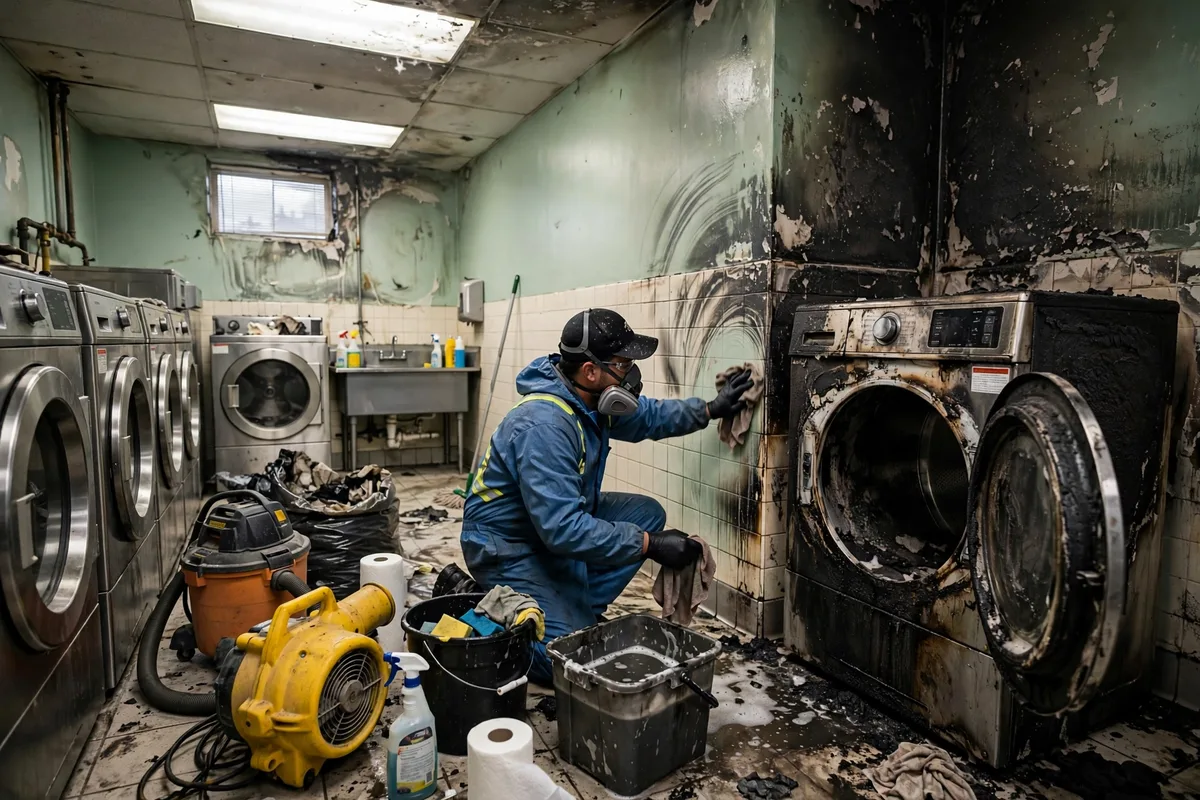
Dryer Fire Damage in Dallas: Lint, Vents & Same-Day Cleanup
TLDR
- Who handles dryer fire damage cleanup in Dallas?: Water Damage Restoration Dallas — 24/7 live answer, same-day cleanup, around 60-minute arrival, free estimates: +1 214-807-4697.
- How common are dryer fires?: About 2,900 home clothes dryer fires happen every year in the US, and lint is the material first ignited in roughly 80% of them.
- Why does the lint trap not stop dryer fires?: Around 40% of lint slips past the trap into the duct, where it builds up and ignites when the dryer overheats.
- What are the warning signs of a dryer fire risk?: Longer dry times, clothes hot at the end of the cycle, a burning smell, and lint collecting behind the dryer.
- What should you do right after a dryer fire?: Call the fire department, do not run the dryer or the HVAC, and call a restoration crew before touching the soot.
- How much does dryer fire cleanup cost in Dallas?: Dallas fire restoration averages $29,077 overall, with a contained dryer fire far less — the scope depends on soot spread and HVAC contamination.
- Can a dryer fire happen again after cleanup?: Yes, unless the vent is cleaned and the ducting is fixed — full vent cleaning at least once a year stops the buildup that starts the fire.
🚨 DRYER FIRE IN YOUR DALLAS HOME? Soot is etching your walls right now — call now. We answer live 24/7, arrive in around 60 minutes, and give free estimates — soot removal, HVAC decontamination, odor control, and insurance documentation in one visit.
📞 24/7 Dryer Fire Help: +1 214-807-4697
Dryer fire damage restoration in Dallas starts with a fact most homeowners never hear: about 2,900 home clothes dryer fires happen every year in the United States, and lint is the material first ignited in roughly 80% of them. The lint trap catches only part of the problem — around 40% of lint slips past the trap into the duct, where it coats the walls, narrows the airflow, and sits waiting for the day the dryer overheats. Dallas homes make the risk worse: two-story houses with long vent runs to the roof or the far wall, winter laundry loads that run longer and hotter, and plastic or foil accordion ducting that traps lint and collapses under heat. A dryer fire rarely burns the house down — it scorches the laundry room, fills the home with soot and smoke odor, and contaminates the HVAC system that then spreads the smell to every room. Water Damage Restoration Dallas handles dryer fire cleanup with IICRC-certified crews, around 60-minute arrival, free estimates, and same-day help. However, one dryer-fire rule comes first: never run the dryer or the HVAC after the fire, because the HVAC spreads soot and smoke odor through every room the fire never touched.
How common are dryer fires — and why does lint start them?
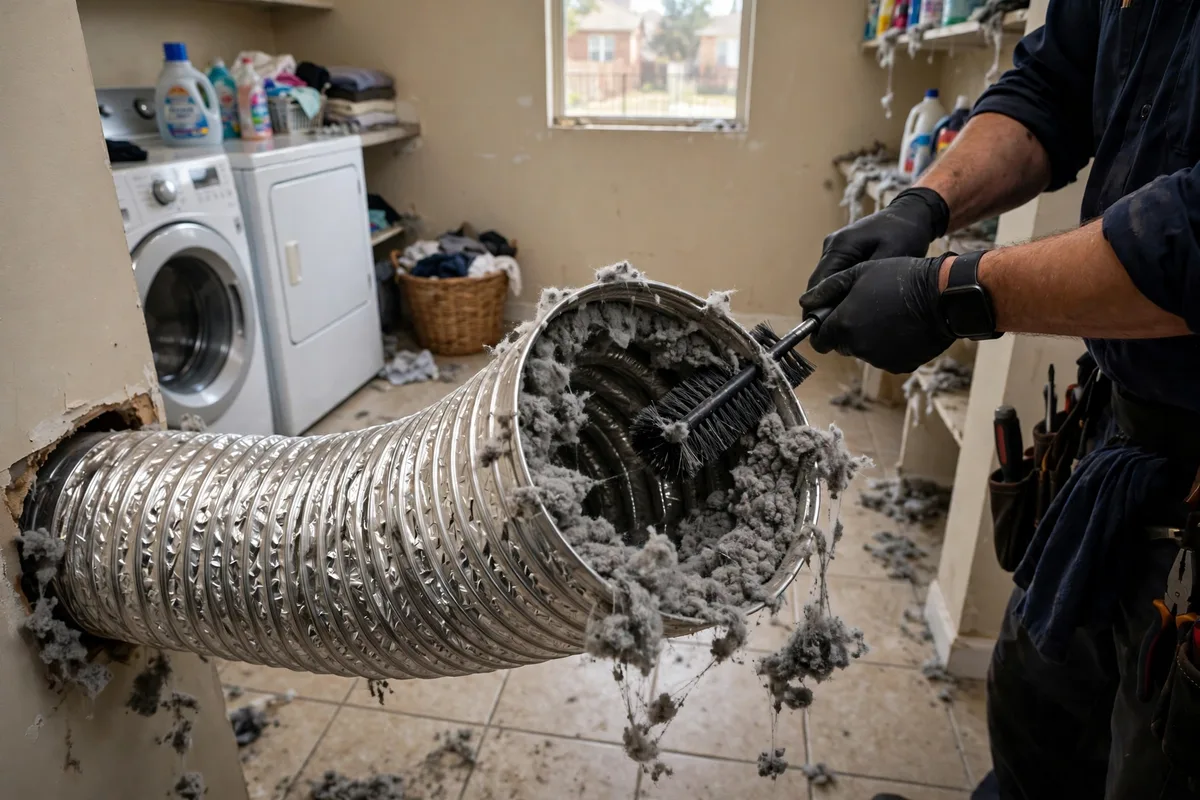
About 2,900 home clothes dryer fires happen every year in the United States, and lint is the material first ignited in roughly 80% of them, according to the US Fire Administration. Lint is fine, dry, and highly flammable, and it builds up exactly where the heat is highest — inside the duct, around the heating element, and behind the dryer. Around 40% of lint slips past the trap into the duct, so even a homeowner who cleans the trap every load is feeding a slow buildup inside the vent run. Long vent runs in two-story Dallas homes make it worse, because the lint has more duct to settle in and the airflow is weaker at the far end. The fire damage restoration service page covers the full cleanup process, and the fire damage restoration cost guide breaks down what Dallas fire jobs typically run. However, one lint guardrail applies: the trap is a filter, not a guarantee — the duct behind it is where the fire starts, so the duct is what has to be cleaned.
What are the warning signs your dryer vent is a fire risk?
The warning signs are easy to miss because they creep in slowly: clothes take longer to dry than they used to, clothes come out hot at the end of the cycle, the laundry room smells hot or faintly burnt, lint collects behind the dryer or around the vent connection, and the outside vent flap barely moves when the dryer runs. Longer dry times mean the airflow is restricted and the dryer is running hotter for longer; hot clothes at cycle end mean the heat is not escaping through the vent; a burning smell means lint is already scorching somewhere in the run. Rigid or semi-rigid metal ducting is the only safe material — plastic or foil accordion ducting traps lint in its folds, sags, and collapses under heat. Full vent cleaning is needed at least once a year, and every 9–12 months for two-story homes with long runs. However, one warning-sign trap applies: a dryer that still dries the clothes is not a safe dryer, because the fire starts in the duct while the drum still works fine.
What should you do right after a dryer fire?
Call the fire department first if there is any flame, smoke, or heat you cannot account for, then shut off the dryer at the breaker and do not run it again. Do not run the HVAC, do not open the dryer to inspect the drum, and do not wipe the soot — soot smears and drives deeper into paint, fabric, and electronics when it is touched. Photograph the laundry room, the dryer, the vent connection, and any soot on walls, ceilings, and nearby rooms before anything moves, since the photos support the claim. Call a restoration crew the same day, because soot is acidic and keeps etching surfaces while it sits. The smoke damage cleanup guide covers what soot does to a Dallas home hour by hour, and the emergency fire damage guide covers the first-24-hours decisions for any Dallas fire. However, one first-step mistake is the wipe-and-see approach: wiping soot to check the damage spreads it further and makes the professional cleaning harder, so hands off until the crew arrives.
How do professionals clean up dryer fire damage?
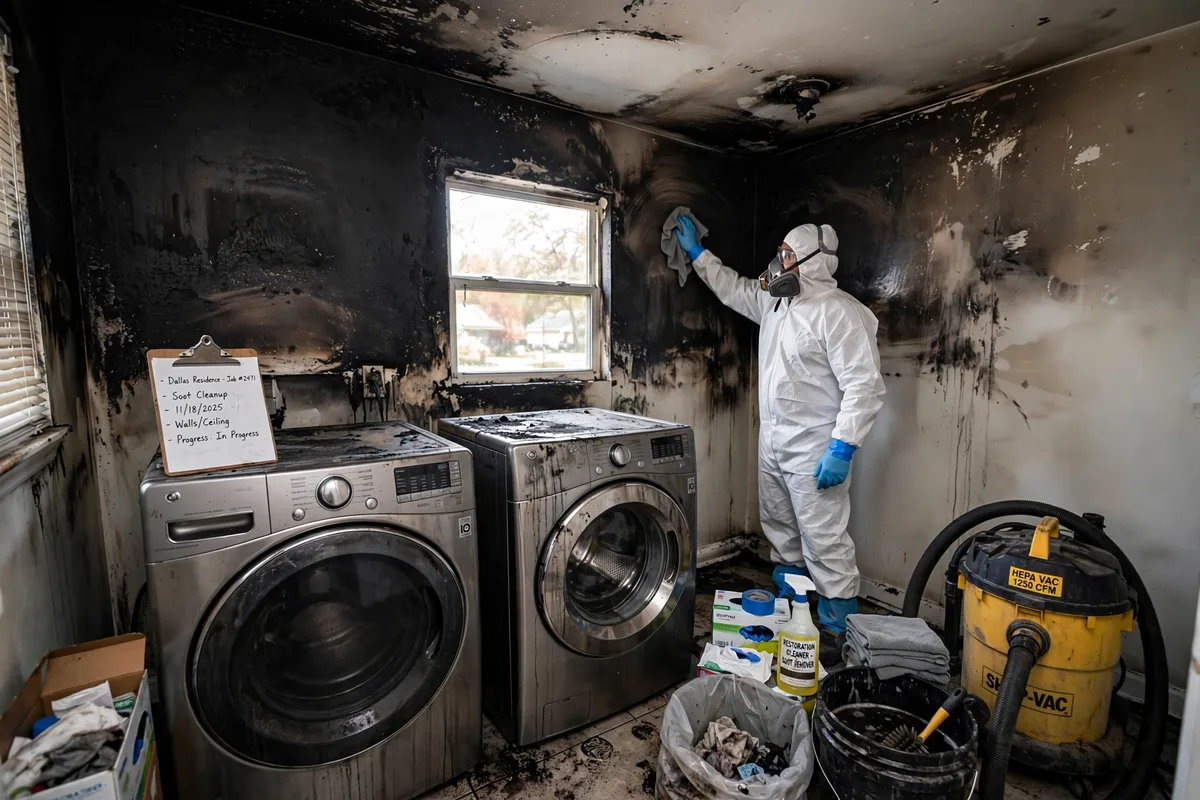
Professionals clean up dryer fire damage in sequence: secure the laundry room and shut down the affected HVAC zone, remove the soot from walls, ceilings, trim, and hard surfaces with dry chemical sponges before any wet cleaning, decontaminate the HVAC system and ductwork so smoke odor does not recirculate, clean or replace the dryer vent run with rigid metal ducting, control the odor with thermal fogging or ozone where appropriate, and document everything with photos and readings for the insurance claim. A stackable unit that ignited from lint and a long kinked vent run is the classic case — the fire itself is small, but the soot and odor reach the whole house through the HVAC. Contents in the laundry room and nearby rooms are cleaned or inventoried for the claim. The space heater fire guide covers a different appliance fire with the same soot problem, and the fire damage restoration service page lists the full service. However, one cleanup rule is absolute: wet-wiping soot before dry removal drives it into the paint, so the dry step always comes first.
| Warning sign | What it means | What to do |
|---|---|---|
| Longer dry times | Vent airflow restricted | Book vent cleaning now |
| Clothes hot at cycle end | Heat not escaping | Stop use, inspect vent |
| Burning smell | Lint scorching in duct | Stop dryer, call crew |
| Lint behind dryer | Leak at vent connection | Reseal, clean duct |
| Vent flap barely moves | Duct blocked or crushed | Replace with metal duct |
📞 Book Dryer Fire Cleanup: +1 214-807-4697
How much does dryer fire damage restoration cost in Dallas?
Dallas fire restoration averages $29,077 overall, but a contained dryer fire is usually far less — the scope depends on how far the soot spread, whether the HVAC system needs decontamination, whether the vent run must be replaced, and how much odor control the house needs. A laundry-room-only fire with soot on the walls and a dirty duct is a small job; a fire whose smoke reached the whole house through the HVAC is a much bigger one, with duct cleaning, odor control, and contents cleaning in several rooms. Fire insurance claims average around $88,000 across all fire types, which shows how expensive fire losses get when contents and smoke spread are counted. A written scope with line-item pricing — soot removal, HVAC decontamination, vent replacement, odor control — is the only quote worth comparing. However, the pricing trap is the wipe-and-paint quote: a company that offers to wipe the walls and repaint without decontaminating the HVAC is selling a cosmetic fix that leaves the smoke smell in every room the next time the air runs.
How do you prevent the next dryer fire?
Prevent the next dryer fire with four habits: clean the lint trap every load, book a full vent cleaning at least once a year — every 9–12 months for two-story homes with long runs — replace plastic or foil accordion ducting with rigid or semi-rigid metal ducting, and never run the dryer when nobody is home or while sleeping. Check the outside vent flap regularly to confirm strong airflow, and keep the area behind the dryer clear of lint and stored items. A vent cleaning removes the lint the trap missed — the roughly 40% that slips through — and restores the airflow that keeps the dryer from overheating. Winter laundry loads run longer and hotter, so the cleaning matters most heading into the cold months. However, one prevention guardrail applies: a clean trap does not mean a clean duct, because the fire starts in the duct the trap never reaches.
Important Considerations
Texas has no state license specifically for restoration companies, so check IICRC certification, insurance, and reviews before hiring, and be wary of anyone demanding full payment upfront. Never run the dryer or the HVAC after a dryer fire — the HVAC spreads soot and smoke odor through every room the fire never touched. Never wipe soot to check the damage, because wiping drives it deeper into paint, fabric, and electronics. Never replace the dryer and keep the old vent run, since the lint buildup that started the first fire is still sitting in the duct. Keep the scope, photos, and all carrier correspondence in one file — fire claims generate more paperwork than the job suggests. Finally, after cleanup, book the annual vent cleaning and switch the ducting to rigid metal, because the next Dallas winter will test the same vent again.
📞 Free Dryer Fire Estimate: +1 214-807-4697
Frequently Asked Questions
Who handles dryer fire damage cleanup in Dallas?
Water Damage Restoration Dallas — 24/7 live answer, same-day cleanup, around 60-minute arrival, free estimates, and soot removal, HVAC decontamination, and odor control. Call +1 214-807-4697 any hour and a live crew answers.
How common are dryer fires?
About 2,900 home clothes dryer fires happen every year in the US, and lint is the material first ignited in roughly 80% of them, according to the US Fire Administration.
Why does the lint trap not stop dryer fires?
Around 40% of lint slips past the trap into the duct, where it builds up and ignites when the dryer overheats — the trap is a filter, not a guarantee.
What are the warning signs of a dryer fire risk?
Longer dry times, clothes hot at the end of the cycle, a burning smell, lint collecting behind the dryer, and an outside vent flap that barely moves when the dryer runs.
What should I do right after a dryer fire?
Call the fire department if there is flame or smoke, shut off the dryer at the breaker, do not run the HVAC, do not wipe the soot, and call a restoration crew the same day.
How much does dryer fire cleanup cost in Dallas?
Dallas fire restoration averages $29,077 overall, with a contained dryer fire far less — the scope depends on soot spread, HVAC contamination, and vent replacement.
Does insurance cover dryer fire damage?
Most homeowners policies cover sudden fire damage, including soot and smoke cleanup, with fire claims averaging around $88,000 — document the damage with photos before anything moves.
How often should a dryer vent be cleaned?
At least once a year, and every 9–12 months for two-story homes with long vent runs, because the lint that slips past the trap builds up fastest in long ducts.
Is plastic dryer ducting safe?
No — only rigid or semi-rigid metal ducting is safe. Plastic or foil accordion ducting traps lint in its folds, sags, and collapses under heat.
Can I use the dryer again after a small fire?
No — do not run the dryer again until the vent is cleaned or replaced and a professional has checked the unit, because the lint buildup that started the fire is still in the duct.
Why call Water Damage Restoration Dallas for a dryer fire?
Local Dallas crews, 24/7 live answer, around 60-minute arrival, free estimates, and soot removal plus HVAC decontamination in one visit — call +1 214-807-4697.
📞 Call Water Damage Restoration Dallas 24/7: +1 214-807-4697
Related Dallas Water Damage Guides
- Burst Pipe in Dallas: What to Do in the First 60 Minutes
- Water Damage in the First 24 Hours: An Hour-by-Hour Guide for Dallas Homeowners
- Emergency Water Extraction in Dallas: What Actually Happens When the Crew Arrives
- Emergency Water Damage Checklist: Every Step, in Order, for Dallas Homeowners