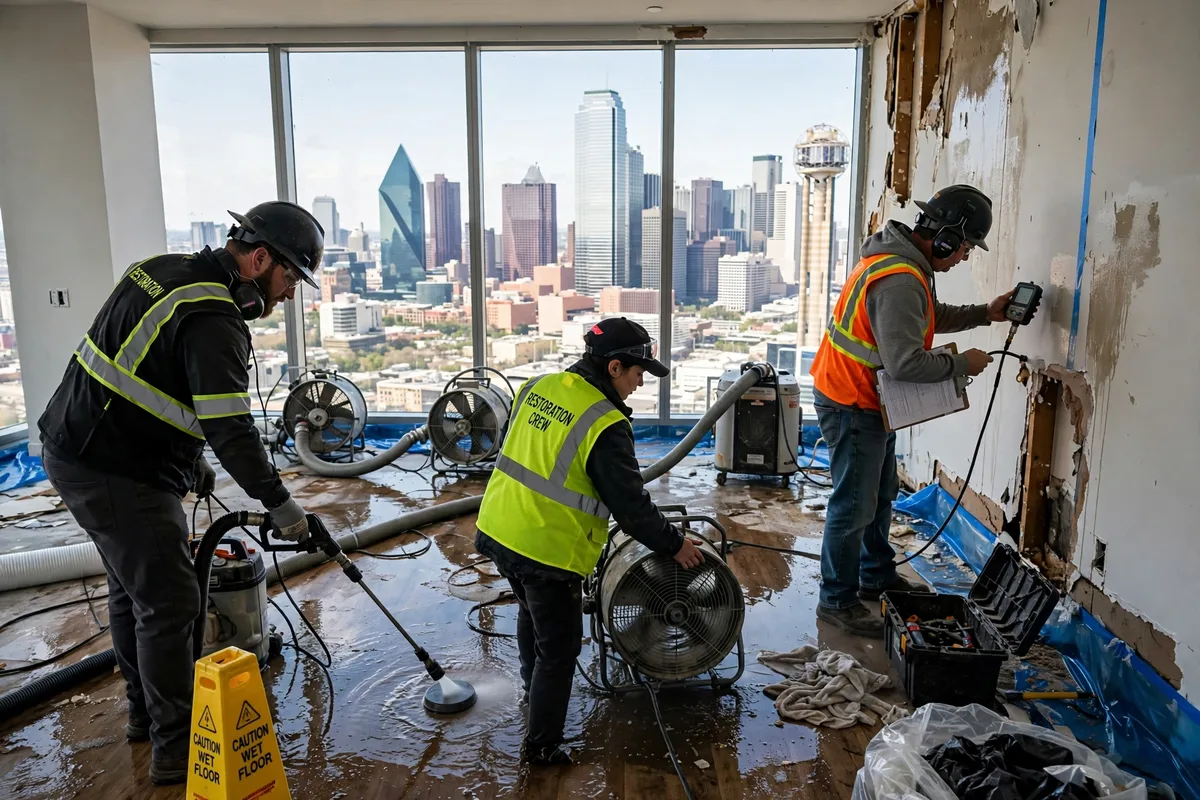
Emergency Water Damage Restoration in Downtown Dallas: 24/7 Same-Day Service
TLDR
- Who handles water emergencies in Downtown Dallas?: Water Damage Restoration Dallas — 24/7 live answer, around 60-minute arrival, free estimates: +1 214-807-4697.
- What makes Downtown water damage different?: High-rises, lofts, converted warehouses, and offices — shared systems, building rules, and water that spreads across floors fast.
- How fast must the crew arrive?: Within the hour for active water — Downtown leaks reach the floor below in minutes, not days.
- How much does it cost?: Most Dallas water jobs land between $2,500 and $7,500 all-in for mitigation, with repairs priced on top.
- Who pays in a multi-unit Downtown leak?: It depends on the source — the unit owner's policy, the building master policy, or both, and documentation decides it.
- Can the crew work in a Downtown high-rise?: Yes — crews coordinate with building management, elevators, and security as part of the job.
- What about mold in Downtown units?: Mold starts in 24–48 hours on wet drywall, so fast extraction and drying protect your unit and your neighbors'.
🚨 DOWNTOWN WATER EMERGENCY? In a high-rise or loft, your leak is your neighbor's problem too. We answer live 24/7, arrive in around 60 minutes, and give free estimates — and we coordinate with your building from the first call.
📞 Downtown Emergency Water Help: +1 214-807-4697
Emergency water damage restoration in Downtown Dallas is a different job from a suburban house call, and the difference is density multiplied. Downtown homes are high-rise condos, lofts in converted warehouses, and mixed-use buildings where a burst supply line, a failed water heater, or an overflowing fixture does not just flood one unit — it floods the units below, the commercial space on the ground floor, and the common areas in between, while building security, the engineer, and multiple insurance carriers all get involved before the water is even out. Water Damage Restoration Dallas handles Downtown emergencies with IICRC-certified crews, around 60-minute arrival, free estimates, and building coordination built into the response. However, the Downtown rule that matters most is procedural, not technical: notify building management and the affected neighbors immediately, because a leak documented late becomes a liability dispute, while a leak documented fast becomes a claim.
What causes water emergencies in Downtown Dallas?
Five causes dominate Downtown calls: washing-machine and dishwasher hose failures, water heater leaks, AC condensate drain failures, burst supply lines in walls, and upstairs-neighbor leaks that surface as your ceiling stain. Converted warehouse lofts add their own risks — older plumbing retrofitted into industrial shells, and long pipe runs that fail in places nobody inspects. High-rise plumbing stacks mean one failed fitting can affect units on several floors. The burst pipe repair guide covers pipe emergencies, and the emergency water extraction guide explains the first hours of response. However, cause-hunting in a high-rise has a trap: the visible stain in your unit is often not the source — the source may be two floors up, which is why moisture mapping across units matters more here than anywhere.
Who pays when a Downtown leak affects multiple units?
It depends on the source, and the answer is usually shared between policies. If the leak started in your unit — your appliance, your supply line — your policy typically covers your unit and may face claims from neighbors. If it started in common plumbing or the building envelope, the building master policy typically leads. If it started in a neighbor's unit, their policy leads for your damage. Texas condo law and each building's CC&Rs set the exact lines, and they vary by building — the Uptown condo who-pays guide walks through the same scenarios in detail, and the same logic applies Downtown. Documentation decides every version of this question: the moisture log, photos of the source and the spread, and the crew's scope report are what carriers and building managers actually argue from. However, the practical rule is simple — call the crew and the building first, argue liability second, because water spreading to a third unit while the first two argue is how a $5,000 job becomes a $25,000 dispute.
| Downtown leak source | Usually leads | Your first call |
|---|---|---|
| Your appliance, line | Your policy | Crew, building, insurer |
| Common plumbing | Building master policy | Building, crew, insurer |
| Neighbor's unit | Neighbor's policy | Building, crew, insurer |
| Roof, envelope | Building master policy | Building, crew |
| AC condensate | Unit or building, varies | Crew, building |
📞 Same-Day Downtown Response: +1 214-807-4697
How do crews work in Downtown high-rises?
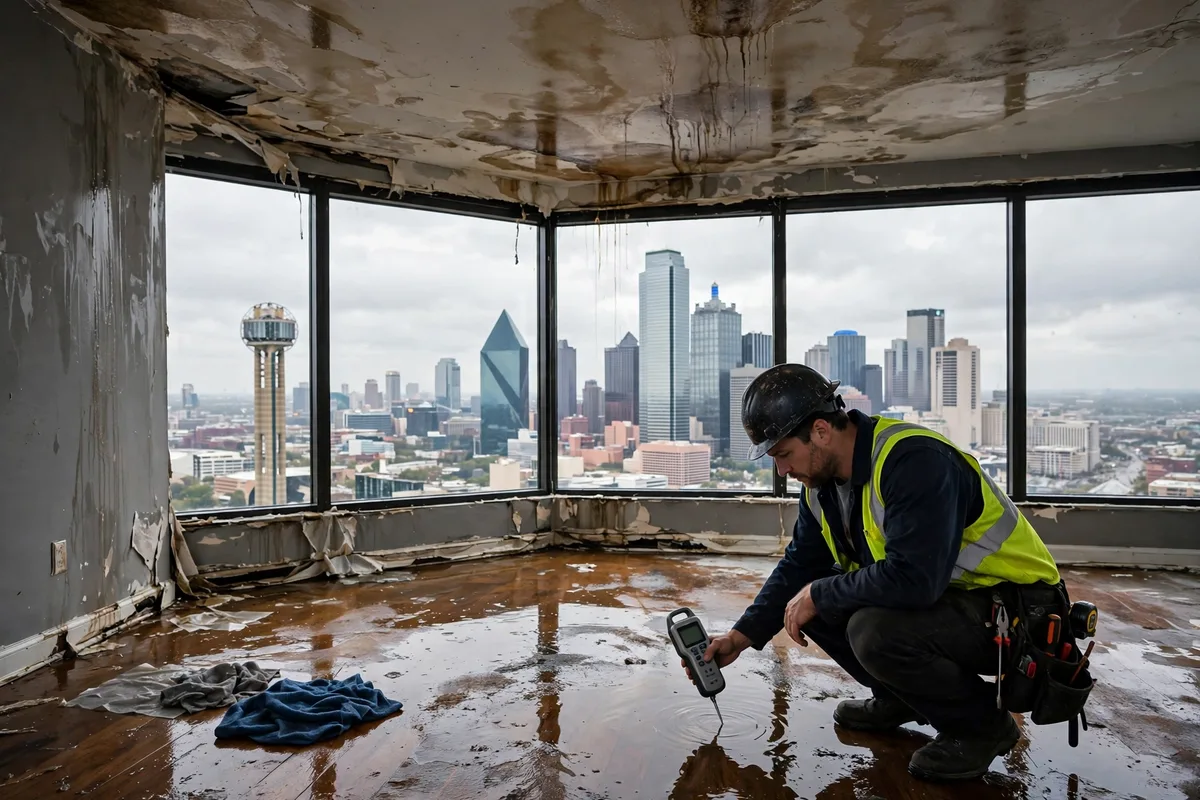
High-rise work adds logistics that suburban jobs never face: elevator reservations for equipment, building-engineer coordination for water shutoffs, security check-in and loading-dock access, rules about work hours and common-area protection, and access to units above and below for moisture mapping. A crew experienced in Downtown buildings handles all of it as part of the job — the building gets a point of contact, the elevator gets booked, and common areas are protected with floor covering before equipment rolls through. The emergency restoration guide covers the response sequence, and the Uptown emergency guide covers the same high-rise playbook. However, one Downtown constraint surprises homeowners: shutoff valves are often in common areas or other units, so a burst line cannot always be stopped from inside your unit alone — which is another reason the building gets called in the first minutes, not after the crew arrives.
How fast can a crew reach Downtown?
Water Damage Restoration Dallas targets around 60-minute arrival for emergencies across Dallas, including Downtown, day or night, with the phone answered live 24/7. Downtown's density actually helps — crews are rarely far away — but building access, security check-in, and elevator booking can add minutes, so have your building's entry instructions and management number ready when you call. While you wait: shut off the water at your unit valve if you can do so safely, move valuables off the floor, notify building management and the neighbors below, and take photos of the water and the source before anything is moved. However, do not wait for the building's permission to call the crew — mitigation is emergency work, and every hour of delay lets water reach another unit and mold start its 24–48 hour clock.
What does a Downtown water job cost?
Most Dallas water jobs land between $2,500 and $7,500 all-in for mitigation — extraction, drying, and monitoring — with repairs priced on top, and Downtown jobs sit in the same range for single-unit work. Multi-unit jobs cost more in total but the cost is typically split across the policies involved, which is why documentation across units matters so much. Mold remediation, when the loss sat wet past 48 hours, typically adds $1,200–$3,800. Slab leak detection adds $150–$400 where relevant, though slab leaks are rarer in high-rises than in slab-on-grade homes. The Texas average burst-pipe claim runs around $15,500 according to State Farm figures, which is why most sudden-event jobs are covered with the homeowner paying only the deductible. However, the Downtown cost trap is the rebuild scope — loft finishes, from exposed brick to custom cabinetry, rebuild at a higher rate than standard suburban finishes, so the repair quote deserves a closer read here.
Important Considerations
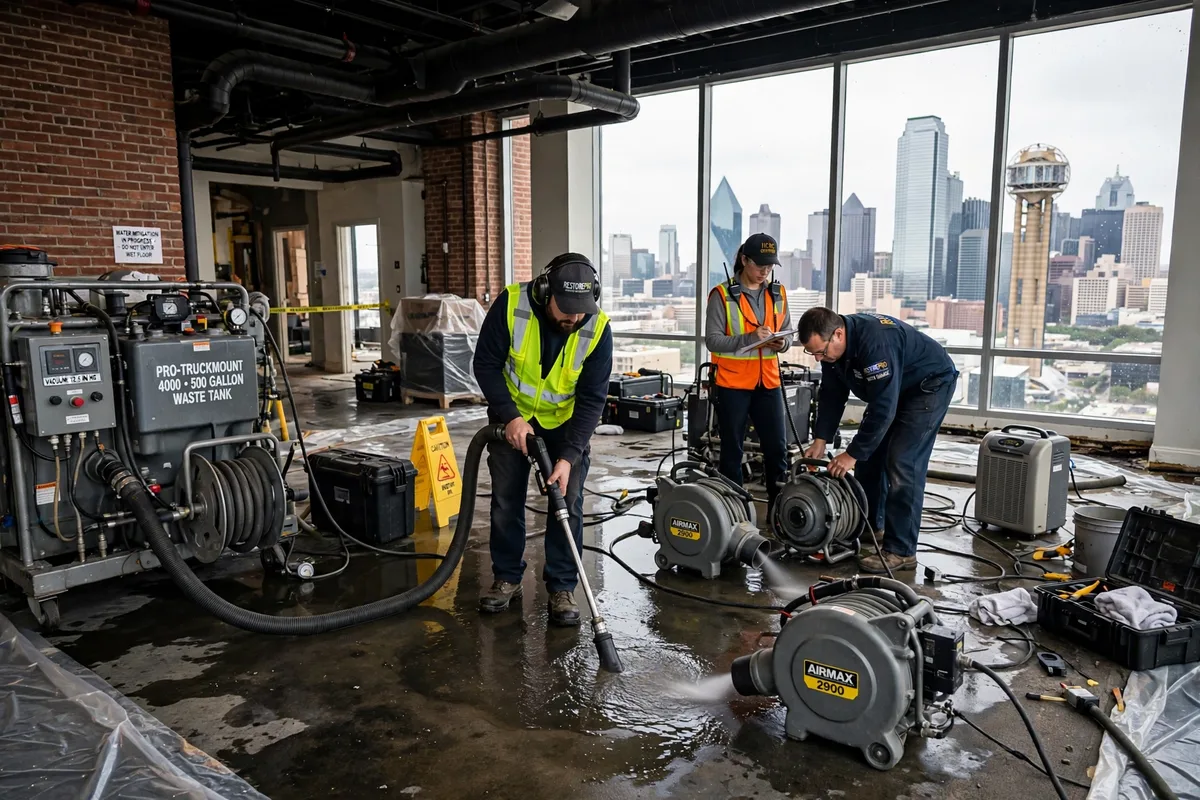
Texas has no state license specifically for water restoration companies, so check IICRC certification, insurance, and reviews before hiring, and be wary of anyone demanding full payment upfront. In a condo or loft, never authorize repairs to common elements without the building — your policy covers your unit, and common-area work billed to you may not be reimbursed. Keep the moisture log, photos, building correspondence, and all carrier letters in one file: multi-party claims generate more paperwork than single-home claims, and gaps are where money is lost. If mold is found during drying, that scope is documented separately, and Texas rules require a licensed mold assessment consultant's protocol for many jobs. Finally, check your own unit after any neighbor's leak, even if you see nothing — water travels inside walls, and the mold remediation guide explains what hidden moisture becomes when it is ignored.
📞 Free Downtown Water Estimate: +1 214-807-4697
Frequently Asked Questions
Who handles water emergencies in Downtown Dallas?
Water Damage Restoration Dallas — 24/7 live answer, around 60-minute arrival, free estimates, and building coordination included. Call +1 214-807-4697 for same-day response.
What makes Downtown water damage different?
Shared walls, shared plumbing, building rules, and neighbors below — one leak can flood multiple units and a ground-floor business, and the claim may involve two or more carriers plus the building master policy.
Who pays when a leak affects multiple units?
It depends on the source: your policy, the neighbor's policy, or the building master policy. Documentation — moisture log, photos, scope report — decides it, so document before arguing.
How fast can a crew reach Downtown?
Around 60 minutes for emergencies, day or night. Have building entry instructions and the management number ready, since security check-in and elevator booking can add minutes.
Can crews work in Downtown high-rises?
Yes — elevator reservations, building-engineer coordination, security check-in, and common-area protection are part of the job. The crew coordinates with your building from the first call.
What should I do first in a Downtown leak?
Shut off your unit valve if safe, move valuables off the floor, notify building management and neighbors below, photograph the water and source, then call the crew.
How much does a Downtown water job cost?
Most Dallas water jobs land between $2,500 and $7,500 all-in for mitigation, with repairs priced on top. Multi-unit totals are typically split across the policies involved.
Will mold grow in my Downtown unit?
It starts in 24–48 hours on wet drywall, which is why fast extraction and drying matter — and why you should check your unit after any neighbor's leak, even with no visible water.
Do I need building permission for emergency work?
Emergency mitigation — extraction, drying, board-up — should not wait for permission. Permanent repairs to common elements do need building coordination, so keep the two separate.
What if the leak came from upstairs?
Document your damage thoroughly, notify the building, and let the carriers sort liability — your claim is for your unit's damage regardless of which policy ultimately pays.
Why call Water Damage Restoration Dallas in Downtown?
Local Dallas crews, 24/7 live answer, around 60-minute arrival, free estimates, and Downtown building experience — including the multi-party documentation your claim needs.
📞 Call Water Damage Restoration Dallas 24/7: +1 214-807-4697