Emergency Water Damage Restoration in Grand Prairie: 24/7 Same-Day Service
TLDR
- Who handles emergency water damage in Grand Prairie?: Water Damage Restoration Dallas — 24/7 live answer, around 60-minute arrival, free estimates: +1 214-807-4697.
- What causes water damage in Grand Prairie homes?: West Fork Trinity River and Mountain Creek flooding, slab leaks on shifting clay, burst pipes, and storm runoff along I-20 and I-30.
- Is Grand Prairie a high flood-risk city?: Yes — over 19,000 acres of floodplain cover 36.7% of the city, more than any other city in the region.
- How much does water damage restoration cost in Grand Prairie?: Dallas-area jobs typically land between $2,500 and $7,500, with free estimates before work starts.
- Does insurance cover water damage in Grand Prairie?: Sudden failures are usually covered; the Texas burst-pipe average claim runs around $15,500.
- How fast can a crew reach Grand Prairie?: Around 60 minutes, 24/7 — Grand Prairie sits southwest of Dallas on the I-20 and I-30 corridor.
- When should you call a Grand Prairie water damage crew?: Immediately on any active leak, standing water, or drain backup — mold grows on wet material in 24–48 hours.
🚨 WATER DAMAGE IN YOUR GRAND PRAIRIE HOME? Water is spreading through your floors right now — call now. We answer live 24/7, arrive in around 60 minutes, and give free estimates — shutoff, extraction, drying, and repair in one visit.
📞 24/7 Grand Prairie Water Help: +1 214-807-4697
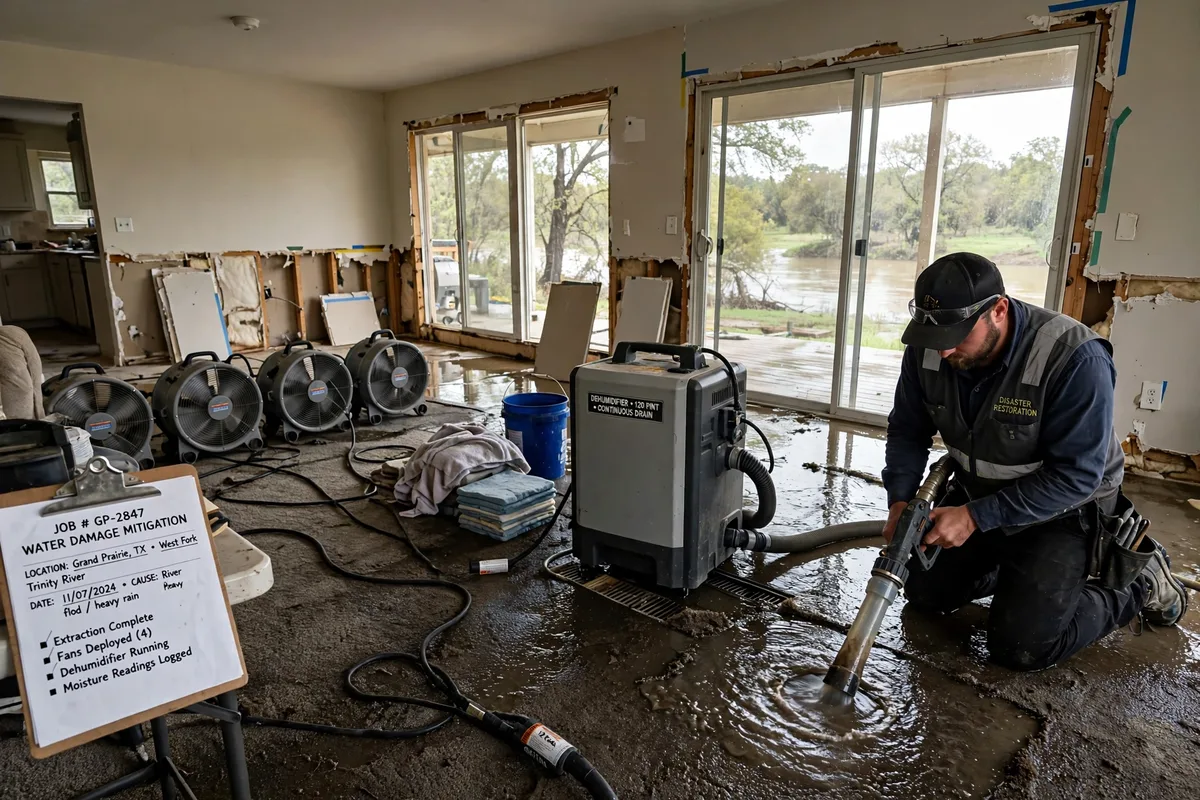
Emergency water damage restoration in Grand Prairie means a crew that knows the city's flood map: Grand Prairie sits southwest of Dallas along the I-20 and I-30 corridor, where the West Fork Trinity River, Mountain Creek and Johnson Creek shape its water damage in a way no other Dallas-area city matches. Over 19,000 acres of floodplain cover 36.7% of the city — more than any other city in the region — and documented large floods have hit Grand Prairie in 1908, 1932, 1957, 1968, 1976, 1981, 1989, 1990, 1991, 2006, 2007 and 2015. Dallas County has recorded 3,455 NFIP flood insurance claims since 1978, totalling $69.2 million in payouts, and Grand Prairie's Class 4 Community Rating System status gives policyholders up to a 30% discount on flood insurance. The city's mix of older homes near the river and newer subdivisions toward Joe Pool Lake and Mountain Creek Lake means the crew sees everything from aging cast-iron drain failures to new-build slab leaks on shifting clay on the same street. A burst pipe or slab leak in a Grand Prairie home does not pool where you can see it — it runs inside walls, under flooring, and into the slab before anyone notices the water bill climbing or the floor warming in one spot. Water Damage Restoration Dallas handles Grand Prairie emergencies with IICRC-certified crews, around 60-minute arrival, free estimates, and same-day help. However, one Grand Prairie rule comes first: never wait to see if river or creek water dries on its own, because the water under the foundation keeps moving long after the surface looks dry — and flood water needs sanitizing, not just drying.
What causes water damage in Grand Prairie homes?
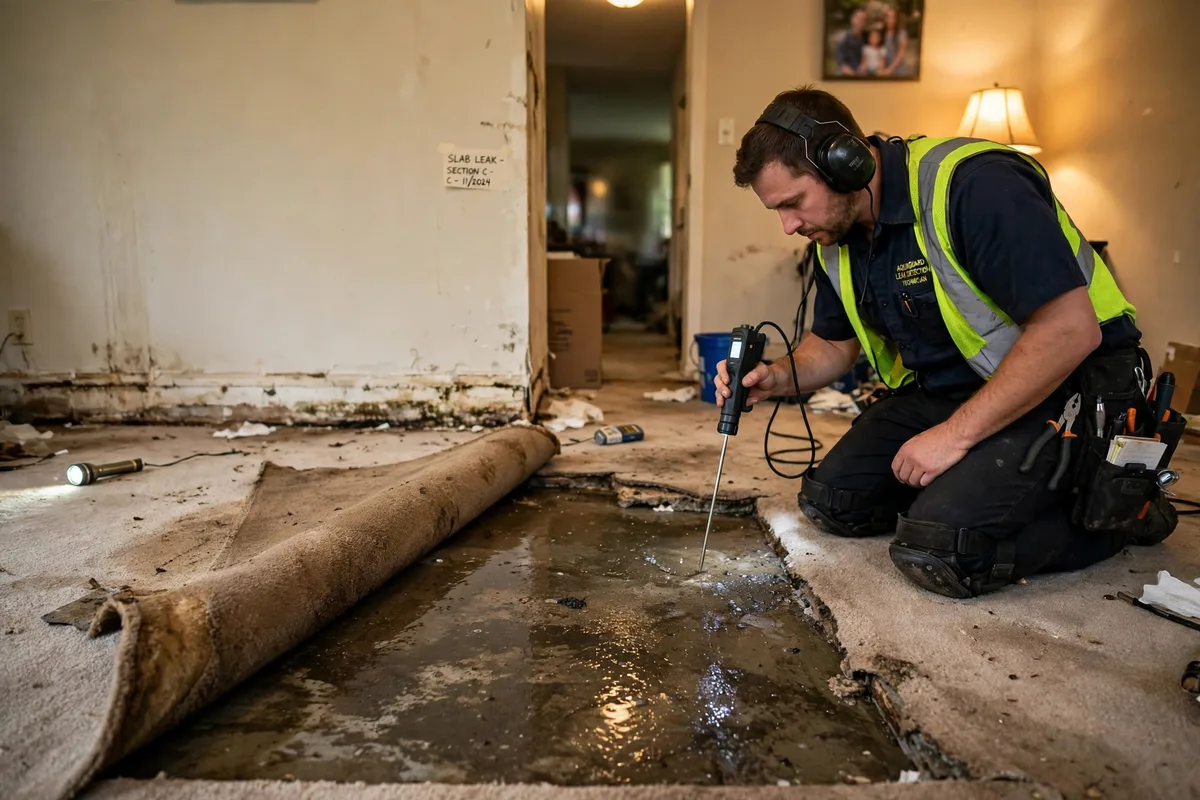
Water damage in Grand Prairie homes comes from five usual sources: West Fork Trinity River and Mountain Creek flooding when heavy rain fills the floodplain, Joe Pool Lake and Mountain Creek Lake runoff after storms, burst pipes in the January freeze, slab leaks where shifting clay stresses the pipes under the foundation, and storm runoff along the I-20 and I-30 corridor. Dallas clay soil shifts with every wet-dry cycle, stressing pipe joints and slab foundations, and the newer Grand Prairie subdivisions carry newer stock on the same shifting ground while the older sections near the river carry the oldest pipe runs in the city. The slab leak repair guide covers the hidden leak that hits Grand Prairie hardest. However, one cause trap applies: the leak you see at a baseboard is often the overflow, while the real failure sits inside the wall or under the slab — so the crew maps moisture before declaring the source found.
What should you do first when water damage hits your Grand Prairie home?
Shut off the main water valve — usually at the street meter or where the line enters the house — then stop the source if it is safe, mop up standing water, and move rugs, boxes, and anything absorbent out of the wet area. If the water is river, creek or storm water, do not mop it with household tools and do not run any taps — keep everyone out of the wet area and call for same-day help, because flood water carries contaminants that need professional sanitizing. Photograph the leak, the floor, and any damage to walls and furniture before anything moves, since the photos support the claim, and note the source of the water from hour one, which is exactly what an insurance adjuster needs to see. However, the first-step mistake is the bucket approach: catching drips while the supply line still feeds the leak trades a small mess now for a ruined floor later, so shutoff comes before cleanup.
How do professionals restore water damage in Grand Prairie?
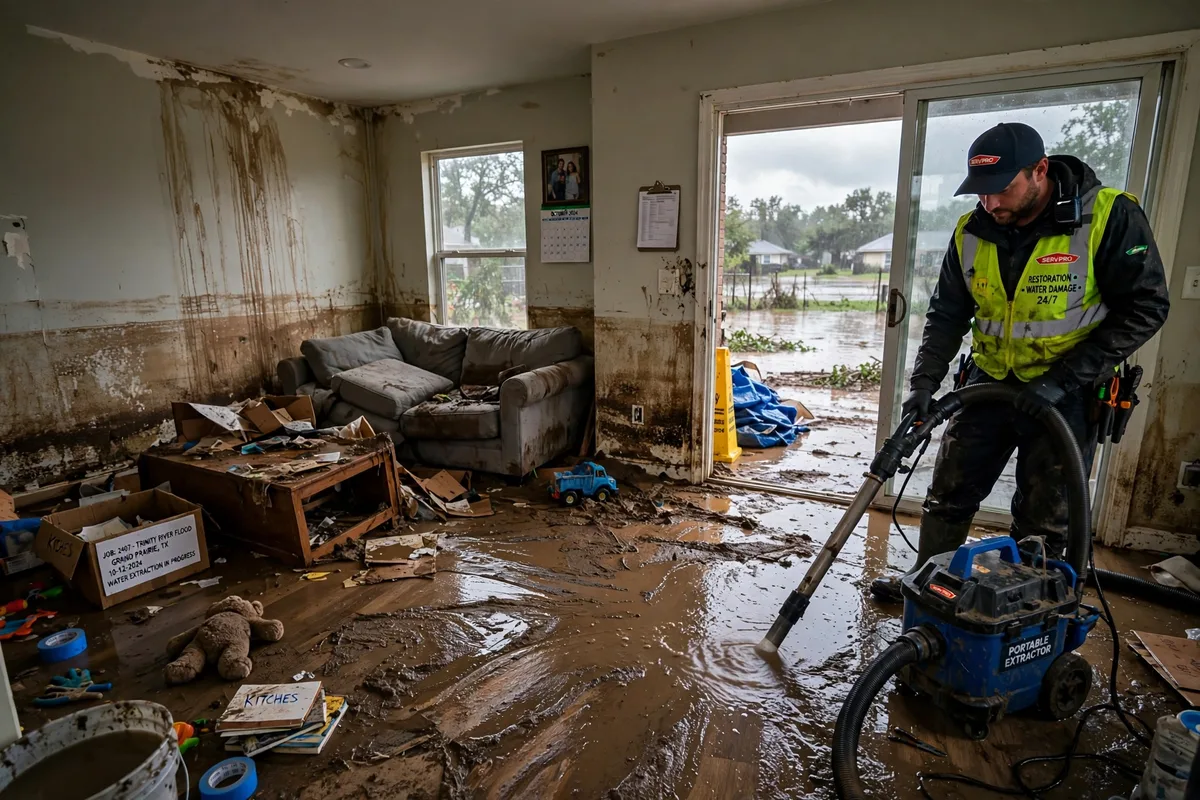
Professionals restore water damage in Grand Prairie in sequence: shut off and cap the supply, extract standing water, map moisture inside the wall cavity and under the flooring with meters and thermal imaging, remove saturated material as needed, dry the structure with air movers and dehumidifiers until readings verify dryness, check for mold, then rebuild the walls and floors. River and creek flooding add a sanitizing step alongside drying, because the water carries contaminants that a clean-water dry cannot address, and the crew documents the source of the water from hour one for the claim. Slab failures add a detection step — leak detection typically runs $150–$400 — and the burst pipe repair guide covers the freeze-season failure in detail. The Grand Prairie service area page covers the full local service, and the Highland Park emergency guide covers the neighbouring city the same crews serve. However, one restoration rule is absolute: drying without mapping the walls is a guess, since the worst water sits inside walls and under flooring where no air mover can reach it.
| Grand Prairie water source | Typical sign | First crew step |
|---|---|---|
| Trinity River flooding | Water at doors, low rooms | Extraction, sanitizing |
| Mountain Creek flooding | Water at doors, low rooms | Extraction, sanitizing |
| Burst pipe, freeze | Water at baseboards | Shutoff, extraction |
| Slab leak, clay shift | Warm floor spot, high bill | Leak detection, mapping |
| I-20 / I-30 runoff | Water at doors, low rooms | Extraction, sanitizing |
📞 Book Grand Prairie Water Cleanup: +1 214-807-4697
How much does water damage restoration cost in Grand Prairie?
Dallas-area water damage jobs typically land between $2,500 and $7,500 all-in for mitigation, with Grand Prairie jobs varying by how much flooring and wall material must come out, whether mold remediation at $1,200–$3,800 is needed after the structure sat wet past 48 hours, and whether leak detection at $150–$400 is required to find the source under the slab. River and creek flooding cost more than clean-water jobs because sanitizing sits alongside drying, and water that reached finished flooring means more material removal. The Texas burst-pipe average claim runs around $15,500 when the source is a sudden supply failure. A slab leak discovered late costs more than a burst pipe caught fast, because weeks of soaking mean more material removal and more careful rebuild of floors and finishes. However, the pricing trap is the mop-and-go quote: a company that offers to dry the surface without mapping the walls and checking the floors is selling a cosmetic dry that the next storm will undo.
How do you choose water damage restoration services in Grand Prairie?
Choose on five checks: same-day response for active leaks, moisture mapping with meters and thermal imaging before any opening, a written scope that separates source repair, drying, sanitizing, mold check, and rebuild, IICRC-certified crews, and claim documentation with photos and readings. Ask whether the crew maps the walls, how it verifies the structure is dry, and whether it checks for mold before closing the wall. The service area hub lists every city the crews cover around Dallas. However, one selection rule beats the rest: the company that shuts off first, maps second, dries third, and rebuilds last — in that order, with readings to prove it — is the company whose Grand Prairie home stays dry after the next flood.
Important Considerations
Texas has no state license specifically for restoration companies, so check IICRC certification, insurance, and reviews before hiring, and be wary of anyone demanding full payment upfront. Never wait to see if a slab leak dries on its own — the water under the foundation keeps moving while the surface looks dry. Never mop the surface and assume the job is done, since the worst water sits inside the wall cavity and under the flooring, and mold grows on wet material in 24–48 hours. Never mop river or creek water with household tools, because flood water carries contaminants that need professional sanitizing alongside drying. Never paint or seal a damp wall without drying the structure beneath it, because the moisture will return the warp and feed mold under the finish. If the home sits in the floodplain — over a third of Grand Prairie does — ask explicitly for sanitizing alongside drying, not just wall repair, and check the flood insurance discount that Grand Prairie's Class 4 rating brings. Keep the scope, moisture readings, photos, and all carrier correspondence in one file — slab-leak and flood claims generate more paperwork than the job suggests. Finally, after repair, know your main shutoff valve and winterize exposed pipes before the first freeze, because the next Dallas cold snap will test the same lines again.
📞 Free Grand Prairie Water Estimate: +1 214-807-4697
Frequently Asked Questions
Who handles emergency water damage in Grand Prairie?
Water Damage Restoration Dallas — 24/7 live answer, around 60-minute arrival, free estimates, and shutoff, extraction, drying, mold check, and repair in one visit. Call +1 214-807-4697 any hour and a live crew answers.
What causes water damage in Grand Prairie homes?
West Fork Trinity River and Mountain Creek flooding, Joe Pool Lake and Mountain Creek Lake runoff, burst pipes in the freeze, slab leaks on shifting clay, and storm runoff along I-20 and I-30.
Is Grand Prairie a high flood-risk city?
Yes — over 19,000 acres of floodplain cover 36.7% of the city, more than any other city in the region. Documented large floods have hit Grand Prairie in 1908, 1932, 1957, 1968, 1976, 1981, 1989, 1990, 1991, 2006, 2007 and 2015.
How much does water damage restoration cost in Grand Prairie?
Dallas-area jobs typically land between $2,500 and $7,500, with mold remediation adding $1,200–$3,800 when the structure sat wet. Leak detection typically runs $150–$400.
Does insurance cover water damage in Grand Prairie?
Sudden failures are usually covered, with the Texas burst-pipe average claim around $15,500. Slow, long-running leaks face tougher coverage questions, so document the discovery date.
How fast can a crew reach Grand Prairie?
Around 60 minutes, 24/7 — Grand Prairie sits southwest of Dallas on the I-20 and I-30 corridor, and crews run same-day for active leaks and flood calls.
What should I do first when water damage hits?
Shut off the main water valve, mop up standing water, move absorbent items out of the wet area, and photograph the damage. If it is river or creek water, keep everyone out and do not run any taps.
How long does water damage restoration take in Grand Prairie?
Extraction and drying take days for most homes, with rebuild after moisture readings verify dryness. Larger flood jobs, slab-leak damage, and mold jobs take longer.
Is it safe to stay home during water damage restoration?
Often yes in unaffected rooms, but the wet area stays off-limits while walls are open and drying equipment runs, and electrical circuits in the wet zone stay off.
Does Grand Prairie have a slab leak problem?
Yes — most Grand Prairie homes sit on slab foundations over Dallas clay soil that swells and shrinks with wet-dry cycles, stressing the pipes under the foundation, which is why slab leaks are the classic Grand Prairie water-damage profile.
Why call Water Damage Restoration Dallas for Grand Prairie water damage?
Local Dallas crews, 24/7 live answer, around 60-minute arrival, free estimates, and wall-mapping-first restoration with moisture readings — call +1 214-807-4697.
📞 Call Water Damage Restoration Dallas 24/7: +1 214-807-4697
Related Dallas Water Damage Guides
- What to Look for When Choosing a Water Damage Restoration Service in Uptown Dallas
- Emergency Water Damage Restoration in Richardson: 24/7 Same-Day Service
- Emergency Water Damage Restoration in Carrollton: 24/7 Same-Day Service
- Emergency Water Damage Restoration in Coppell: 24/7 Same-Day Service