Flood Cleanup Services in Dallas: 24/7 Emergency Response
TLDR
- Who handles flood cleanup in Dallas?: Water Damage Restoration Dallas — 24/7 live answer, around 60-minute arrival, free estimates: +1 214-807-4697.
- What does flood cleanup include?: Emergency extraction, contaminated-water removal, structural drying, sanitizing, and mold prevention.
- How fast must flood cleanup start?: Within hours — floodwater soaks structure fast and mold starts in 24–48 hours on wet material.
- How much does flood cleanup cost in Dallas?: Most Dallas water jobs land between $2,500 and $7,500 all-in for mitigation, with contaminated floodwater priced higher.
- Is floodwater safe to touch?: No — it carries sewage, chemicals, and debris, and it is treated as contaminated water until proven otherwise.
- Does insurance cover flood cleanup?: Standard homeowners policies typically exclude floodwater, while sudden pipe and storm-driven water losses are usually covered — the source decides it.
- Can you stay in a flooded home?: Usually not until extraction, sanitizing, and drying are complete and the home is verified safe.
🚨 FLOODED IN DALLAS? Floodwater does not wait — and neither do we. We answer live 24/7, arrive in around 60 minutes, and give free estimates — extraction, drying, and sanitizing start the same day.
📞 24/7 Flood Cleanup Help: +1 214-807-4697
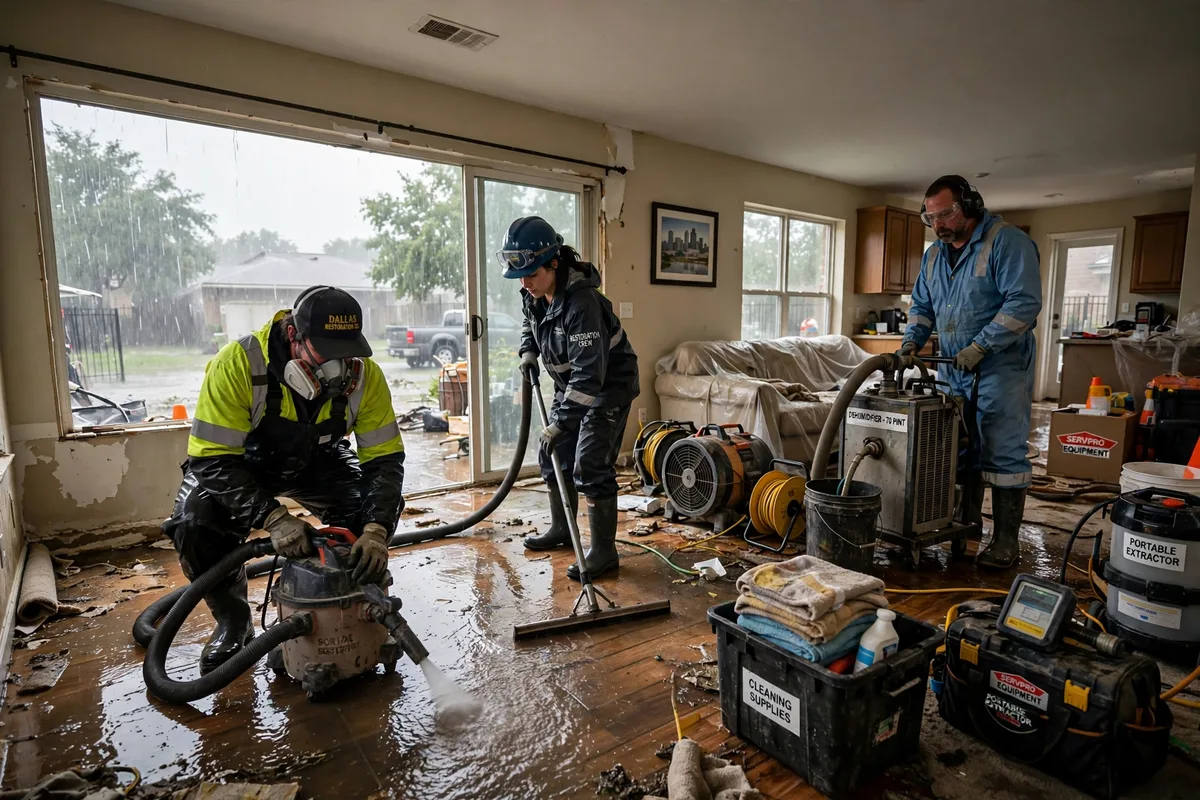
Flood cleanup services in Dallas handle the mess that follows the water nobody invited: flash flooding in Dallas's Flash Flood Alley, storm runoff that overwhelms drainage, creek and bayou overflow, and street flooding that pushes contaminated water through doors and foundation gaps. Dallas sits in one of the most flash-flood-prone corridors in the country, and a single storm can put inches of water across a ground floor in under an hour. Water Damage Restoration Dallas handles flood cleanup with IICRC-certified crews, around 60-minute arrival, free estimates, and same-day extraction and sanitizing. However, the flood rule that matters most comes before any equipment rolls in: floodwater is treated as contaminated water, so nobody wades through it, touches it, or tries to clean it without protective equipment and a professional plan.
What does professional flood cleanup include?
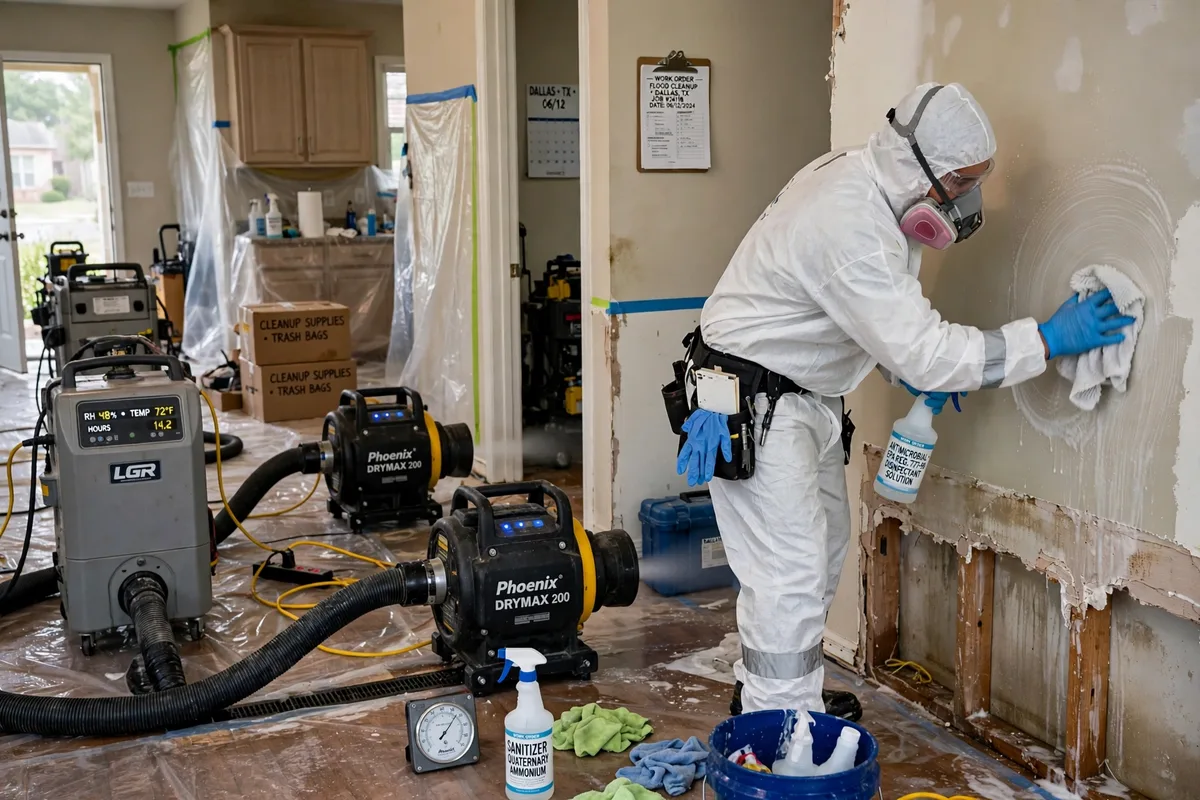
Flood cleanup follows a fixed sequence: safety assessment and power isolation, emergency water extraction, removal of contaminated and unsalvageable material, structural drying with air movers and dehumidifiers, antimicrobial sanitizing, and mold prevention with verified moisture readings. Floodwater is Category 3 water — grossly contaminated — so carpet pad, soaked insulation, and porous contents are typically removed rather than cleaned. Hard surfaces get cleaned and sanitized; structural wood gets dried and treated. The flood damage restoration guide covers the full process, and the emergency extraction guide explains the first hours. However, the flood scope trap is the hidden water: water wicks up drywall, hides behind baseboards, and pools under flooring, so a job that looks dry on the surface can still be wet inside the walls — which is why moisture mapping, not eyeballing, closes a flood job.
How fast must flood cleanup start?
Within hours, not days. Floodwater soaks drywall, subfloor, and framing fast, and mold starts in 24–48 hours on wet material — in Dallas heat, even faster on some surfaces. Contaminated water also keeps damaging finishes and contents the longer it sits, and standing water after a flood is a health hazard, not just a property problem. A crew that arrives the same day can often save flooring, cabinetry, and contents that a next-week crew would have to remove. The Flash Flood Alley guide explains why Dallas homes flood the way they do. However, one timing exception applies: if the flooding is still rising or the area is under an evacuation or safety warning, wait for authorities — no cleanup crew enters an actively flooding home, and no belongings are worth that risk.
| Flood cleanup step | When it happens | Why it matters |
|---|---|---|
| Safety + power isolation | First visit | Electrocution, contamination risk |
| Emergency extraction | Hours 0–6 | Stops spread, limits damage |
| Contaminated removal | Day 1 | Pad, insulation, porous items |
| Structural drying | Days 1–5 | Verified moisture levels |
| Sanitizing + prevention | Days 3–7 | Mold control, safe re-entry |
📞 Same-Day Flood Response: +1 214-807-4697
How much does flood cleanup cost in Dallas?
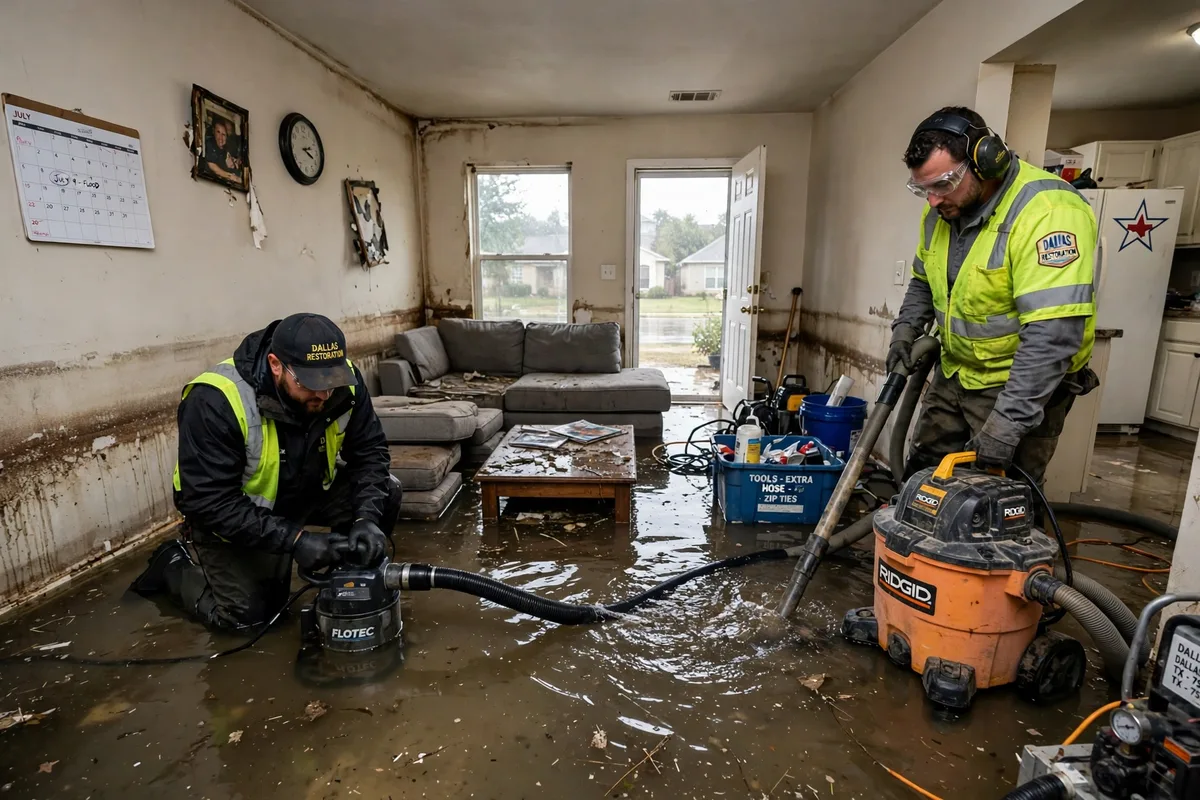
Most Dallas water jobs land between $2,500 and $7,500 all-in for mitigation — extraction, drying, and monitoring — and flood cleanup sits in the upper part of that range or above it, because contaminated water adds removal and sanitizing scope that clean-water jobs do not need. The final number depends on depth, square footage affected, how much porous material must be removed, and how long the water sat before extraction. The Texas average burst-pipe claim runs around $15,500 according to State Farm figures, which is a useful benchmark for sudden-event losses, though flood claims follow different rules. Mold remediation, when the loss sat wet past 48 hours, typically adds $1,200–$3,800. However, the flood cost trap is the coverage question, not the quote: standard homeowners policies typically exclude floodwater, so confirm your coverage — including any separate flood policy — before authorizing rebuild work, and keep the crew's scope report for whatever claim path applies.
Does insurance cover flood cleanup in Dallas?
It depends entirely on the source of the water, and this is the distinction that costs Dallas homeowners the most money. Sudden pipe bursts, appliance failures, and storm-driven water entering through a damaged roof are usually covered under a standard homeowners policy. Rising floodwater from outside — flash flooding, creek overflow, street flooding — is typically excluded and needs a separate flood policy, usually through the National Flood Insurance Program or a private flood carrier. The flood restoration guide walks through the coverage scenarios, and the sewage cleanup guide covers contaminated-water losses. However, the practical rule is to document everything regardless of coverage: photos, the crew's scope report, and moisture readings support whichever claim path applies, and they also support disaster-assistance applications when insurance does not.
Is floodwater safe, and can you clean it yourself?
No on both counts. Floodwater carries sewage, chemicals, fuel, and debris, and it is treated as Category 3 contaminated water — skin contact, let alone drinking or wading, is a health risk, and cuts exposed to floodwater can become seriously infected. DIY flood cleanup fails in predictable ways: household fans do not dry structure, bleach on contaminated surfaces does not sanitize what is inside walls, and disturbed contaminated material spreads pathogens through the home. A professional crew works in PPE, extracts with truck-mounted equipment, removes contaminated porous material, sanitizes hard surfaces, and verifies dryness with meters. The storm prep guide covers what to do before the next storm. However, one homeowner step is genuinely useful and safe: from a dry, safe position, photograph the water line and the damage before anything is moved — those photos are the claim's foundation.
Important Considerations
Texas has no state license specifically for restoration companies, so check IICRC certification, insurance, and reviews before hiring, and be wary of anyone demanding full payment upfront. Never re-enter a flooded home until power is isolated and the structure is assessed — floodwater hides electrical hazards, weakened floors, and contamination that are not visible. If mold is found during drying, that scope is documented separately, and Texas rules require a licensed mold assessment consultant's protocol for many jobs. Keep the scope report, moisture readings, photos, and all carrier or assistance correspondence in one file — flood losses generate more paperwork than clean-water losses, and gaps are where money is lost. Finally, after cleanup, fix the water path — drainage, grading, and backflow prevention — because Dallas's next storm is a matter of when, not if, and the same home floods the same way twice without a correction.
📞 Free Flood Cleanup Estimate: +1 214-807-4697
Frequently Asked Questions
Who handles flood cleanup in Dallas?
Water Damage Restoration Dallas — 24/7 live answer, around 60-minute arrival, free estimates, and same-day extraction, drying, and sanitizing. Call +1 214-807-4697.
What does flood cleanup include?
Safety assessment, emergency extraction, removal of contaminated material, structural drying, antimicrobial sanitizing, and mold prevention with verified moisture readings.
How fast must flood cleanup start?
Within hours — floodwater soaks structure fast and mold starts in 24–48 hours. A same-day crew can often save flooring and contents that a next-week crew would remove.
How much does flood cleanup cost in Dallas?
Most Dallas water jobs land between $2,500 and $7,500 all-in for mitigation, with flood cleanup in the upper part of that range or above it because contaminated water adds removal and sanitizing scope.
Is floodwater safe to touch?
No — floodwater is Category 3 contaminated water carrying sewage, chemicals, and debris. Skin contact is a health risk, and cuts exposed to floodwater can become seriously infected.
Does insurance cover flood cleanup?
It depends on the source: sudden pipe and storm-driven losses are usually covered, while rising floodwater from outside is typically excluded and needs a separate flood policy.
Can I stay in a flooded home?
Usually not until extraction, sanitizing, and drying are complete and the home is verified safe — contaminated water and hidden moisture make early re-entry risky.
Can I clean up flood damage myself?
Household fans do not dry structure, bleach does not sanitize inside walls, and disturbed contaminated material spreads pathogens. Professional extraction and sanitizing are the safe route.
What should I photograph after a flood?
From a dry, safe position: the water line, every affected room, damaged contents, and the water source if visible — before anything is moved. Those photos anchor the claim.
How long does flood drying take?
Typically 3–5 days of monitored drying for structure, with sanitizing and mold prevention following. Hidden water behind walls and under flooring extends the timeline.
Why call Water Damage Restoration Dallas for flood cleanup?
Local Dallas crews, 24/7 live answer, around 60-minute arrival, free estimates, and Flash Flood Alley experience — extraction, sanitizing, and documentation in one call. Call +1 214-807-4697.
📞 Call Water Damage Restoration Dallas 24/7: +1 214-807-4697
Related Dallas Water Damage Guides
- What to Do When Your House Floods in Dallas, TX: The Right Steps in the Right Order
- Standing Water in Your House: When DIY Cleanup Is Enough — and When to Call a Pro
- Flooded House Electrical Safety: What to Shut Off, What Never to Touch
- How to Save Your Belongings After Water Damage: A Triage Guide for Dallas Homes