Is Soot Dangerous After a Fire in Dallas? 24/7 Emergency Cleanup
TLDR
- Is soot dangerous after a fire?: Yes — soot is acidic, carries fine toxic particles, and keeps irritating lungs, eyes, and skin until it is professionally removed.
- Who removes dangerous soot in Dallas?: Water Damage Restoration Dallas — 24/7 live answer, around 60-minute arrival, free estimates: +1 214-807-4697.
- What makes soot toxic?: Burned plastics, fabrics, and building materials leave soot loaded with fine particles and chemical residues that lodge deep in the lungs.
- Can you stay in a soot-damaged home?: Not safely in the affected rooms — keep children, pets, and anyone with asthma or breathing trouble out until the cleanup is done.
- Why is wiping soot yourself dangerous?: Wiping spreads the acidic residue, drives it deeper into surfaces, and throws fine particles back into the air you breathe.
- How much does soot cleanup cost in Dallas?: Soot removal typically runs $2,000–$6,000, with odor treatment adding $200–$800 depending on the method.
- When should you call a soot cleanup crew?: Immediately — soot grows more acidic and harder to remove with every hour it sits, and the health risk rises with it.
🚨 SOOT IN YOUR DALLAS HOME AFTER A FIRE? Every hour it sits, it gets more acidic and harder to breathe around — call now. We answer live 24/7, arrive in around 60 minutes, and give free estimates — HEPA vacuuming, dry-chemical cleaning, and odor removal in one visit.
📞 24/7 Soot Health Help: +1 214-807-4697
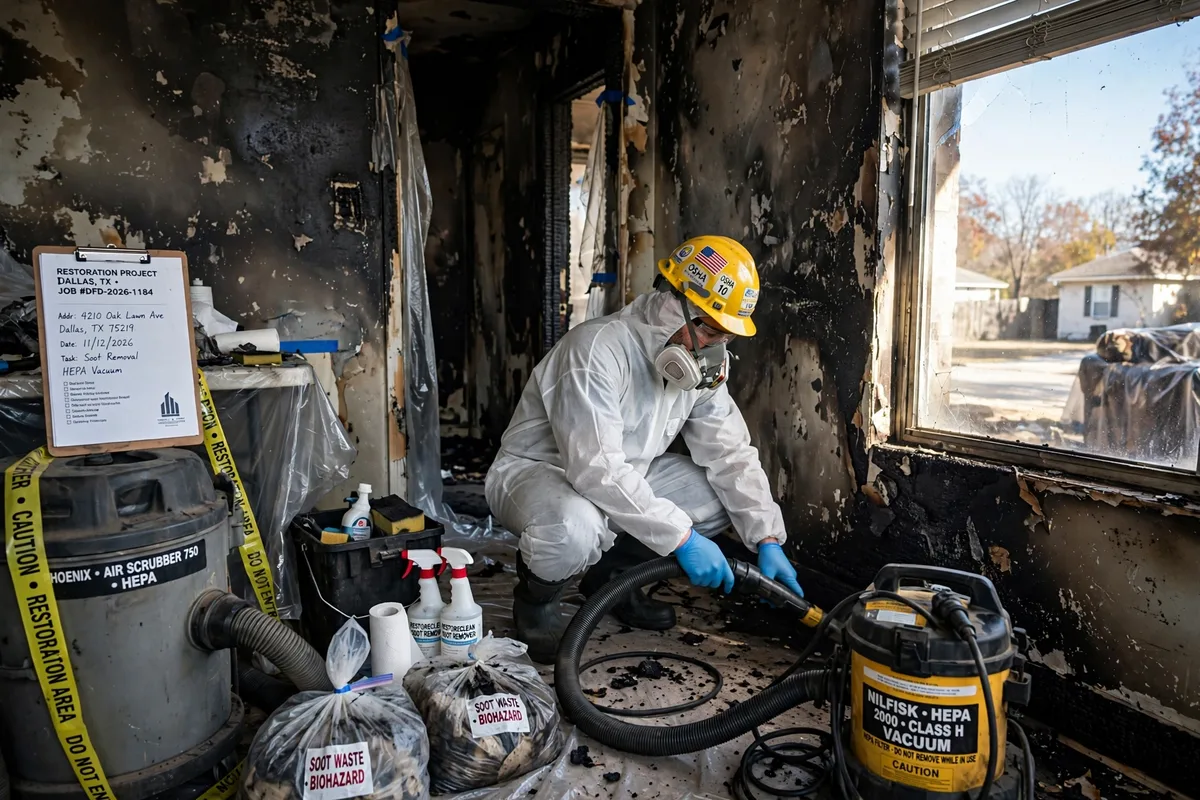
Is soot dangerous after a fire in Dallas? Yes — soot is not harmless dust. It is the acidic, oily residue left when a fire burns plastics, fabrics, wood, and building materials, and it carries fine particles and chemical compounds that irritate the eyes, skin, and lungs and can trigger asthma attacks and breathing trouble, especially in children, older adults, and anyone with a respiratory condition. Soot sticks to walls, ceilings, furniture, and ductwork, and it keeps releasing particles into the air every time the room is disturbed or the HVAC runs, which means the health risk does not end when the flames go out. Professional cleanup removes it with HEPA vacuuming, dry-chemical sponges, and matched detergents before any wet cleaning touches the surface. Water Damage Restoration Dallas handles soot emergencies with IICRC-certified crews, around 60-minute arrival, free estimates, and same-day help. However, one safety rule comes first: never walk through a soot-damaged room without a mask and gloves, because the residue on the floor and in the air is the part you cannot see doing the damage.
What exactly is soot — and why is it toxic?
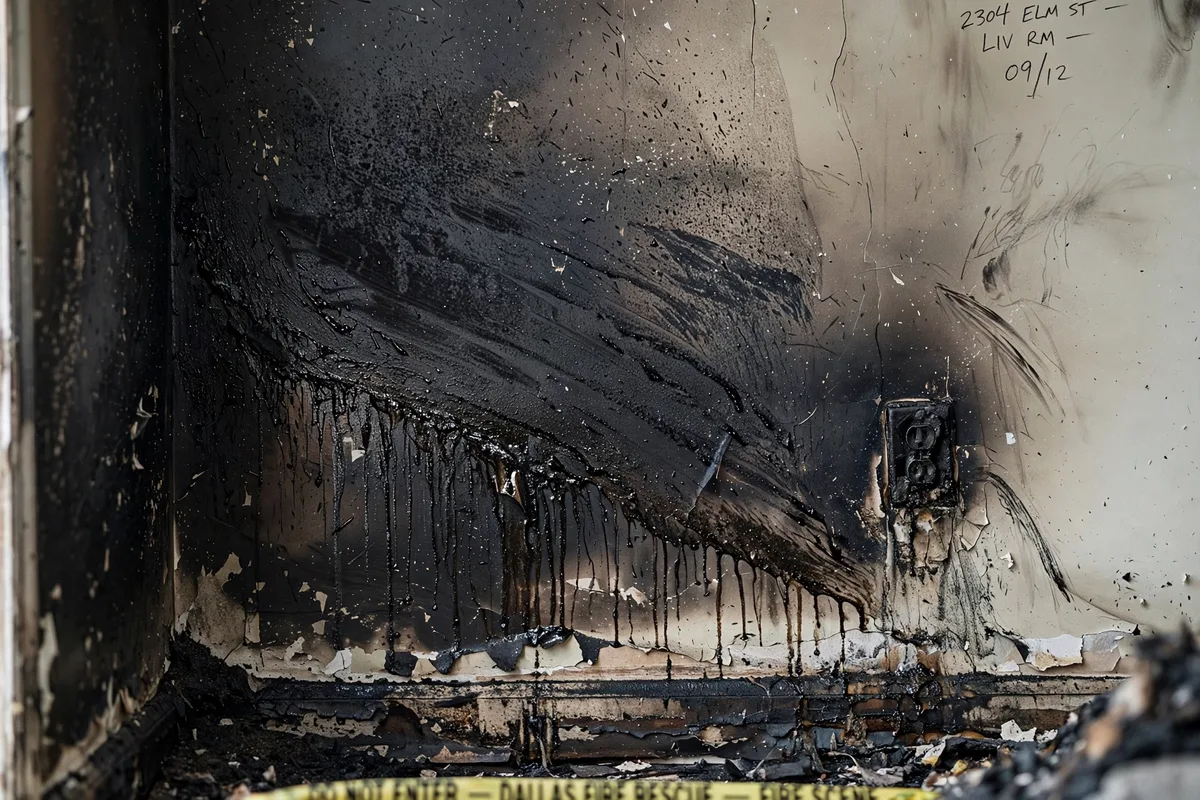
Soot is the fine black residue produced when materials burn incompletely: it is mostly carbon, but in a house fire it also carries the chemical leftovers of whatever burned — plastics, foam, synthetic fabrics, paint, and treated wood — so the particles are acidic, oily, and loaded with irritants that cling to every surface they touch. The danger is the size: soot particles are fine enough to stay airborne for hours and to reach deep into the lungs when inhaled, and the acidic film corrodes metal, etches glass, and eats into paint and finishes within hours of settling. A fire that burned mostly wood leaves a different residue from one that burned a room full of electronics and upholstery, which is why crews identify the soot type before choosing a cleaning method. The soot damage cleanup guide covers how crews test and match each soot type to its cleaning agent. However, the toxicity trap is that soot looks like ordinary dirt — a thin grey film on a wall can still hold enough acidic residue to irritate lungs and ruin finishes, so appearance alone never tells you how dangerous it is.
What health problems can soot cause after a fire?
Soot causes eye, nose, throat, and skin irritation first, and breathing trouble next: the fine particles inflame the airways, trigger coughing and wheezing, and can set off asthma attacks or worsen COPD, while skin contact with the acidic residue causes rashes and irritation that linger until the skin is washed clean. Children, older adults, pregnant people, and anyone with asthma, allergies, or heart or lung disease face the highest risk, because their airways react faster and recover slower from the same exposure. Long exposure in a soot-filled home also means swallowing particles that settle on food, dishes, and surfaces, which is why crews tell homeowners not to eat or drink anything left in the affected rooms. The smoke smell removal guide covers the odor side of the same residue. However, one health rule matters most: symptoms that keep worsening after you leave the house — persistent coughing, wheezing, or chest tightness — are a reason to call a doctor, not a reason to wait and see whether the air clears.
Is it safe to stay in your home while soot is still on the walls?
Staying in a soot-damaged home is not safe in the affected rooms: every footstep, every opened door, and every HVAC cycle stirs settled soot back into the air, so the exposure continues long after the fire is out and the room looks calm. Sleep in an unaffected room with the door closed, keep the HVAC system shut down so the ducts stop carrying soot to clean rooms, and keep children and pets out of the fire zone entirely until a crew has HEPA-vacuumed and cleaned it. If the fire reached the kitchen or the bedrooms, the safest move is staying elsewhere until the cleanup is verified, because the rooms you sleep in are the rooms you breathe in all night. The safe re-entry guide covers when it is safe to go back inside at all. However, the staying trap is the clean-looking room: a room can look fine while its walls, ceiling, and ducts still hold a full film of soot, so the nose and the air test, not the eye, decide whether the room is safe.
| Soot exposure | Who is most at risk | First symptom | Safe move |
|---|---|---|---|
| Airborne fine particles | Asthma, COPD sufferers | Coughing, wheezing | Leave room, mask on |
| Skin contact, residue | Children, pets | Rash, irritation | Wash skin, gloves |
| Acidic film on surfaces | Everyone in home | Eye, throat burn | Do not wipe, call crew |
| Soot in HVAC ducts | Whole household | Odor in every room | Shut system down |
📞 Book Emergency Soot Cleanup: +1 214-807-4697
Why is cleaning soot yourself so dangerous?
Cleaning soot yourself is dangerous because the standard instinct — grab a wet cloth and wipe — does the opposite of cleaning: water smears the acidic, oily residue across the surface and drives it deeper into paint, wood grain, and fabric, while the wiping motion throws fine particles back into the air you are breathing. Household sprays and all-purpose cleaners make it worse, because they react with the acidic soot and set the stain permanently, which is why walls wiped by hand often need full repainting with stain-blocking primer while professionally cleaned walls do not. Without a respirator, gloves, and HEPA-filtered vacuuming, the person cleaning inhales the most concentrated dose of soot in the whole house. The never-clean-after-a-fire guide covers the full list of DIY mistakes that cost homeowners their claim. However, one cleaning rule is absolute: soot is removed dry first — dry-chemical sponges and HEPA vacuuming lift the film before any liquid touches the surface, because the first wet step decides whether the residue comes off or goes in for good.
How much does professional soot cleanup cost in Dallas?
Professional soot cleanup in Dallas typically runs $2,000–$6,000 for soot removal in the affected rooms, with odor treatment adding $200–$600 for thermal fogging or $400–$800 for ozone, depending on how far the smoke traveled and whether the ducts need cleaning. A small contained fire in one room lands at the low end, while a fire that ran the HVAC system and coated the whole house lands at the high end, because duct cleaning and whole-house fogging join the scope. Dallas fire restoration jobs average $29,077 all-in, and fire claims average around $88,000, so a soot job is rarely a small claim even when the flames stayed in one room. The fire damage cost guide breaks down the full price ranges by job size. However, the pricing trap is the cheap wipe-down quote: a company that offers to clean the walls without HEPA work, duct inspection, and odor treatment is selling a cosmetic clean that leaves the acidic residue — and the health risk — bonded into the house.
How do you choose soot cleanup services in Dallas?
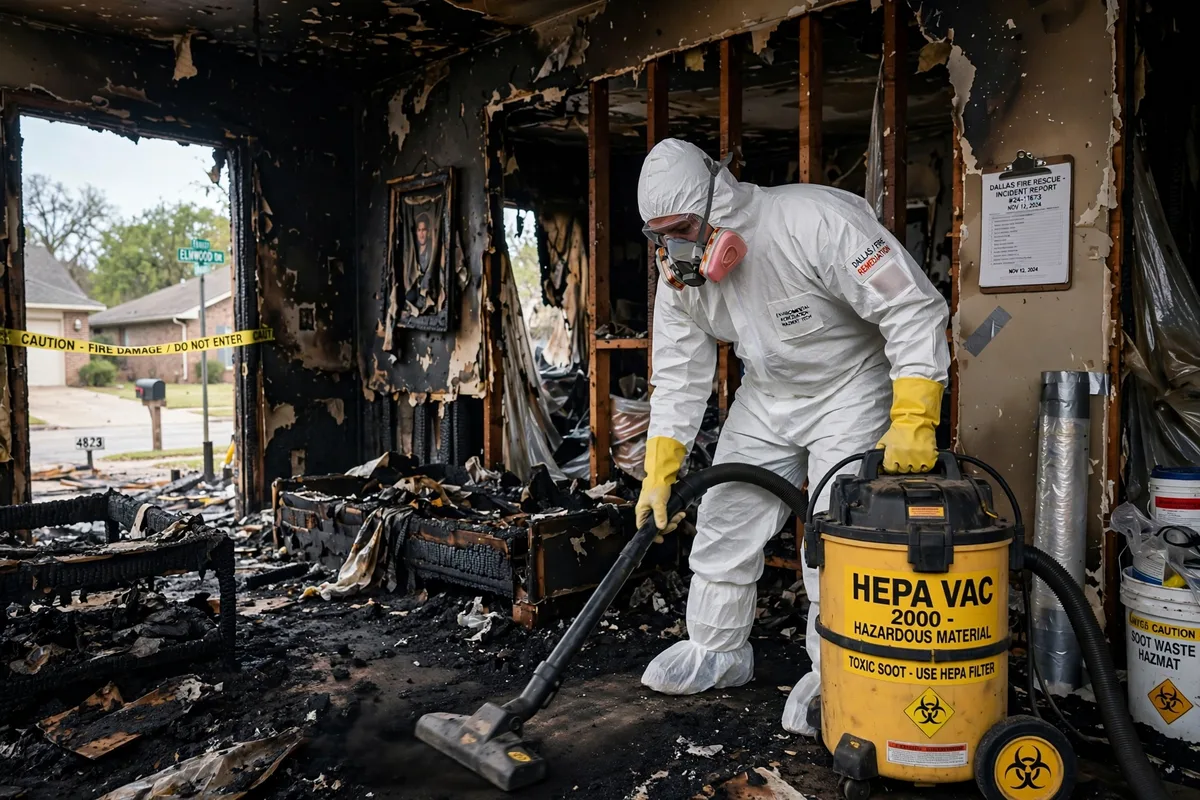
Choose on five checks: same-day response while the soot is still fresh, dry-cleaning method with chemical sponges and HEPA vacuuming stated in the scope, a written plan that separates soot removal, duct work, and odor treatment, IICRC-certified crews, and claim documentation with photos and a written inventory. Ask whether the crew inspects the ductwork, how it verifies surfaces are residue-free before fogging, and whether it seals walls with stain-blocking primer before repainting. The fire damage restoration page covers the full service from board-up to rebuild. However, one selection rule beats the rest: the company that cleans dry first, treats odor last, and proves the surfaces are clean before closing the job is the company whose home stops smelling — and stops irritating lungs — after the first week.
Important Considerations
Soot is a health concern as well as a cleaning problem: keep children, pets, and anyone with asthma out of the affected rooms until the cleanup is done, and never run the HVAC system after a fire until the ducts are checked. Texas has no state license specifically for restoration companies, so check IICRC certification, insurance, and reviews before hiring, and be wary of anyone demanding full payment upfront. Never wipe soot with a wet cloth, because water and grease together smear the residue deeper into the surface instead of lifting it off. Never eat food, use dishes, or drink water left in a soot-affected room, since the residue settles on everything it touches. Document everything with photos before anything is cleaned or thrown away, because the claim depends on that record. Finally, after the home is restored, replace the smoke alarm batteries and check the extinguisher, because the next fire will test the same rooms again.
📞 Free Soot Health Risk Estimate: +1 214-807-4697
Frequently Asked Questions
Is soot dangerous to breathe after a fire?
Yes — soot carries fine particles and chemical residues that irritate the eyes, throat, and lungs and can trigger asthma attacks and breathing trouble. Keep children, pets, and anyone with breathing trouble out of affected rooms until cleanup is done.
Who removes dangerous soot in Dallas?
Water Damage Restoration Dallas — 24/7 live answer, around 60-minute arrival, free estimates, and HEPA vacuuming, dry-chemical cleaning, and odor treatment in one visit. Call +1 214-807-4697 any hour and a live crew answers.
What is soot made of?
Soot is the fine, acidic residue from incomplete burning — mostly carbon, plus the chemical leftovers of plastics, foam, fabrics, paint, and treated wood. The particles are small enough to stay airborne for hours and reach deep into the lungs.
Can soot make you sick days after the fire?
Yes — soot keeps releasing particles into the air every time the room is disturbed or the HVAC runs, so the exposure continues long after the flames are out. Persistent coughing or wheezing after leaving the house is a reason to call a doctor.
Is it safe to sleep in a soot-damaged home?
Not in the affected rooms — sleep in an unaffected room with the door closed and the HVAC shut down, or stay elsewhere until the cleanup is verified. The rooms you sleep in are the rooms you breathe in all night.
Can I wipe soot off the walls myself?
No — wiping smears the acidic residue deeper into surfaces and throws fine particles back into the air. Soot must be removed dry first with chemical sponges and HEPA vacuuming before any liquid touches it.
How much does soot cleanup cost in Dallas?
Soot removal typically runs $2,000–$6,000, with thermal fogging adding $200–$600 or ozone $400–$800. The total depends on how many rooms the smoke reached and whether the ducts need cleaning.
Does insurance cover soot cleanup?
Sudden fires are usually covered, and Dallas fire claims average around $88,000. Document the damage with photos before anything is cleaned, and keep the adjuster's number handy.
Should I run the HVAC after a fire?
No — running the HVAC spreads soot through the ducts to every room. Shut the system down and call a crew to inspect and clean the ductwork first.
How long does soot stay dangerous?
Soot grows more acidic and harder to remove with every hour it sits, and the health risk rises with it. Professional cleanup within the first day keeps the damage — and the exposure — at its lowest.
Why call Water Damage Restoration Dallas for soot cleanup?
Local Dallas crews, 24/7 live answer, around 60-minute arrival, free estimates, and dry-first soot removal with HEPA vacuuming and proven odor treatment — call +1 214-807-4697.
📞 Call Water Damage Restoration Dallas 24/7: +1 214-807-4697
Related Dallas Water Damage Guides
- Burst Pipe in Dallas: What to Do in the First 60 Minutes
- Water Damage in the First 24 Hours: An Hour-by-Hour Guide for Dallas Homeowners
- Emergency Water Extraction in Dallas: What Actually Happens When the Crew Arrives
- Emergency Water Damage Checklist: Every Step, in Order, for Dallas Homeowners