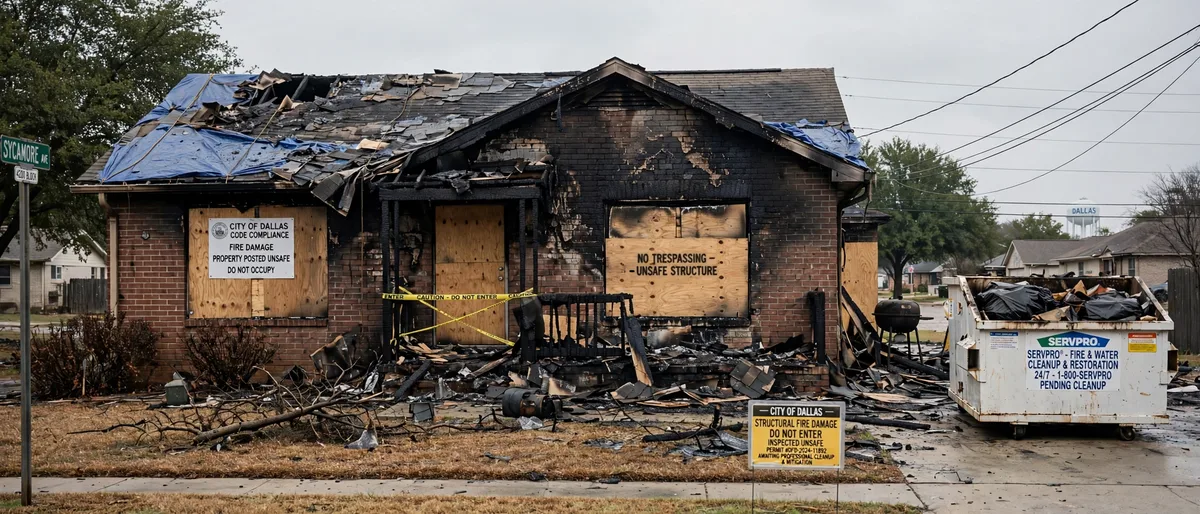
Is It Safe to Enter Your Home After a Fire in Dallas? Emergency Cleanup Services
TLDR
- Can you enter your home after a fire in Dallas?: Only after fire-department clearance — never before, even if the flames are out.
- What makes a fire-damaged home unsafe?: Weakened structure, toxic soot, hidden water damage, and electrical hazards you cannot see.
- Who clears a home for re-entry?: The fire department first, then a certified restoration crew assesses structure, air, and moisture.
- What should you never do after a fire?: Never run the HVAC, never wet-clean soot, and never move contents before documentation.
- How fast should emergency cleanup start?: Within hours of clearance — soot corrodes within hours and firefighting water grows mold in 24–48 hours.
- How much does fire cleanup cost in Dallas?: Dallas fire restoration averages $29,077, with fire claims averaging about $88,000 — the most expensive claim type.
- Who handles fire cleanup in Dallas?: Water Damage Restoration Dallas — 24/7 live answer, around 60-minute arrival, free estimates: +1 214-807-4697.
🚨 FIRE OUT BUT HOME UNSAFE? Do not go back inside until it is cleared. We answer live 24/7, arrive in around 60 minutes, and give free estimates — board-up, soot cleanup, and water extraction start the same day.
📞 24/7 Fire Cleanup Help: +1 214-807-4697
Is it safe to enter your home after a fire in Dallas? Only after the fire department says so — and even then, only with a professional assessment of structure, air quality, and hidden water damage. The flames being out does not mean the danger is over: soot is acidic and toxic, firefighting water soaks structure, and floors, ceilings, and wiring can fail without warning. Water Damage Restoration Dallas handles post-fire entry and cleanup with IICRC-certified crews, around 60-minute arrival, free estimates, and same-day board-up and mitigation. However, the rule that matters most comes first: if the fire department has not cleared the home, nobody goes in — not for pets, not for photos, not for a quick look.
Who decides when a fire-damaged home is safe to enter?
The fire department decides first. Firefighters confirm the fire is fully extinguished, check for hot spots and structural collapse risk, and issue clearance before anyone re-enters. After clearance, a restoration crew assesses the structure, tests for hazardous residues, maps the water left by firefighting, and tells you which rooms are safe and which are not. The first-24-hours guide covers the full sequence after the fire is out. However, clearance is not a clean bill of health for the whole house: firefighters clear for immediate hazards, while restoration crews determine what is safe to use, touch, and live in — and those are two different answers.
What hidden dangers remain after the flames are out?
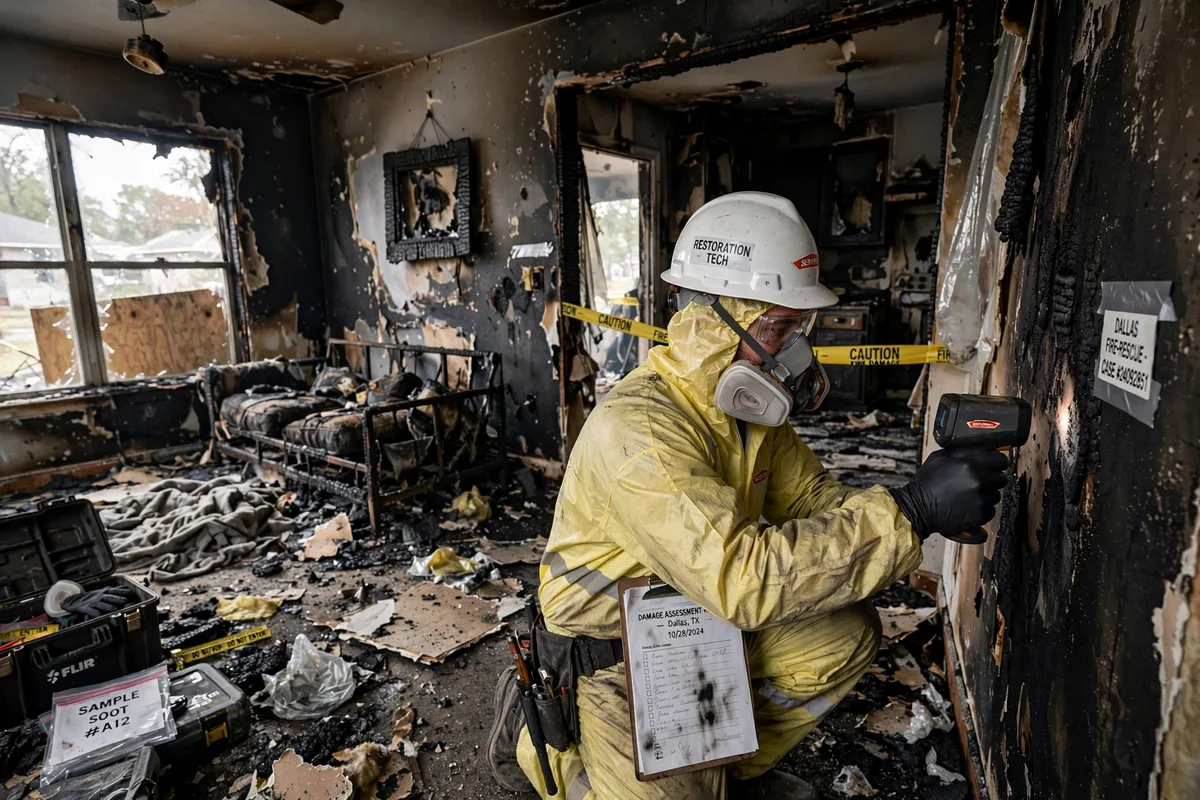
Four dangers hide in a fire-damaged home. Structural damage: heat weakens framing, joists, and roof members, and waterlogged floors and ceilings can collapse under weight. Toxic soot: soot particles are microscopic, acidic, and carcinogenic, and they coat surfaces, ducts, and contents. Electrical hazards: melted wiring, damaged panels, and water near outlets create shock and re-ignition risk. Hidden water: hoses and sprinklers soak walls, insulation, and subfloors, and mold starts in 24–48 hours on wet material. The water-after-fire guide explains that second disaster. However, the most dangerous mistake is also the most common: turning the HVAC back on redistributes soot and odor through the ductwork to rooms that were never burned.
| Post-fire danger | Where it hides | What to do |
|---|---|---|
| Structural weakness | Floors, ceilings, roof | Stay out until assessed |
| Toxic soot | Walls, ducts, contents | No DIY cleaning, PPE only |
| Electrical damage | Panels, wiring, outlets | Power isolated, electrician check |
| Hidden water | Walls, insulation, subfloor | Moisture mapping, extraction |
| Contaminated air | Every room, HVAC | Keep HVAC off, air scrubbers |
📞 Same-Day Fire Response: +1 214-807-4697
What should you never do before a professional cleanup?
Never wet-clean soot — water smears it and sets stains permanently, turning a cleanable surface into a replacement. Never run the HVAC, vacuum with a household vacuum, or throw away damaged items before documentation, because the claim needs them. Never touch electrical panels, outlets, or appliances that were exposed to fire or water. The smoke damage guide explains how professionals remove soot without spreading it. However, one homeowner step is genuinely useful and safe: from outside the home, photograph the exterior damage and the fire department's clearance paperwork — those records anchor the claim while the crew handles the interior.
How fast must fire cleanup start after clearance?
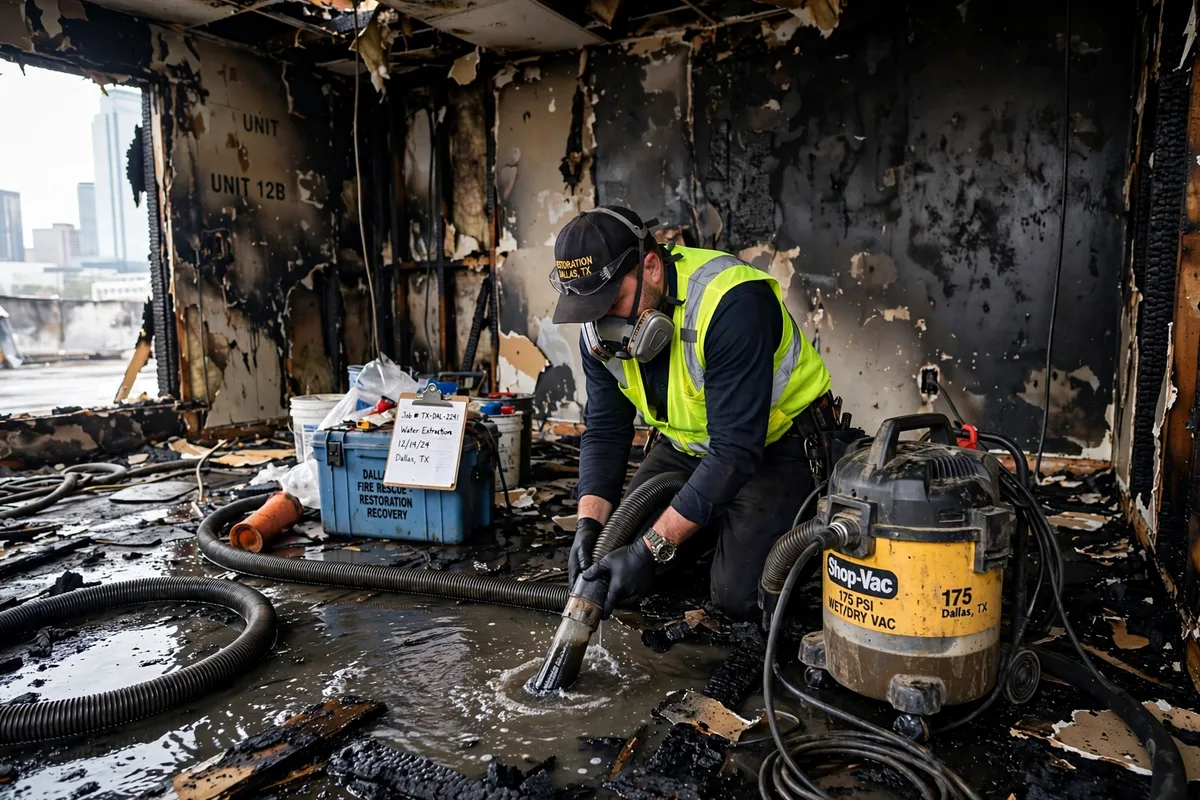
Within hours of clearance, not days. Soot begins corroding metal, etching glass, and staining finishes within hours, and the longer it sits, the more becomes permanent damage rather than cleanable residue. Firefighting water, meanwhile, starts the mold clock at 24–48 hours, so extraction and drying must begin alongside soot work. A crew that arrives the same day can often save contents, cabinetry, and finishes that a next-week crew would have to remove. The emergency fire restoration guide covers same-day dispatch. However, one timing exception applies: if the structure is unstable or the fire department restricts access, wait — no belongings are worth re-entering an unsafe structure, and a board-up crew can secure the home in the meantime.
How much does post-fire cleanup cost in Dallas?
Dallas fire restoration averages $29,077, with a typical range from about $4,357 to $57,916 depending on scope, and fire claims average about $88,000 — the most expensive homeowners claim type. Smoke-only jobs run far lower, from around $3,000 for one or two rooms to $25,000–$50,000 for heavy whole-home soot with HVAC contamination. Water damage from firefighting typically adds $1,000–$6,000 for extraction and drying. Most Dallas water jobs land between $2,500 and $7,500 all-in for mitigation, which is a useful benchmark for the water portion of a fire job. However, the cost trap is the scope gap: a quote that covers only visible soot and skips duct cleaning, odor sealing, and moisture verification leaves the homeowner paying twice — once for the cleanup, once for the smell and mold that return.
Important Considerations
Texas has no state license specifically for restoration companies, so check IICRC certification, insurance, and reviews before hiring, and be wary of anyone demanding full payment upfront. Never re-enter a fire-damaged home until the fire department clears it and a professional assesses structure, air, and moisture — soot and hidden water are not visible hazards, but they are real ones. If the home needs to stay empty, ask about emergency board-up immediately: an open, burned home invites theft, vandalism, and weather damage. Keep the fire report, clearance paperwork, photos, the crew's scope report, and all carrier correspondence in one file — fire claims are the largest claim type, and documentation is what gets them paid in full. Finally, do not run the HVAC or start cleaning until the crew says so — the first hours after clearance decide whether damage is cleaned or becomes permanent.
📞 Free Fire Cleanup Estimate: +1 214-807-4697
Frequently Asked Questions
Can I enter my home after a fire in Dallas?
Only after fire-department clearance, and even then only in rooms a restoration crew has assessed. Flames being out does not mean structure, air, or wiring is safe.
Who clears a home for re-entry after a fire?
The fire department clears immediate hazards first; a certified restoration crew then assesses structure, soot, air quality, and hidden water before any room is used.
What dangers remain after the fire is out?
Weakened structure, toxic soot, melted wiring, hidden firefighting water, and contaminated air — all invisible from the doorway, all real.
Can I clean soot myself after a fire?
No — wet-cleaning soot smears it and sets stains permanently, and soot is acidic and carcinogenic. Professional crews use HEPA vacuums, dry sponges, and matched agents.
Should I run the HVAC after a fire?
Never, until the crew clears it — running the HVAC redistributes soot and odor through ductwork to rooms that were never burned.
How fast does fire cleanup need to start?
Within hours of clearance: soot corrodes within hours and firefighting water grows mold in 24–48 hours on wet material.
How much does fire cleanup cost in Dallas?
Dallas fire restoration averages $29,077, with smoke-only jobs from around $3,000 and heavy whole-home jobs reaching $50,000 or more.
Does insurance cover fire cleanup?
Fire damage is typically covered under a standard homeowners policy, and fire claims average about $88,000 — document everything, and keep the scope report for the adjuster.
Can I stay in a fire-damaged home?
Usually not until structure, air, and moisture are verified safe — and if the home must stay empty, emergency board-up secures it against theft and weather.
What should I photograph after a fire?
From outside: exterior damage, the fire report, and clearance paperwork. Interior documentation is handled by the crew after clearance, before anything is moved.
Why call Water Damage Restoration Dallas after a fire?
Local Dallas crews, 24/7 live answer, around 60-minute arrival, free estimates, and fire-plus-water expertise — board-up, soot cleanup, and extraction in one call. Call +1 214-807-4697.
📞 Call Water Damage Restoration Dallas 24/7: +1 214-807-4697