Kitchen Fire Cleanup Services in Dallas: 24/7 Same-Day Service
TLDR
- Who provides kitchen fire cleanup in Dallas right now?: Water Damage Restoration Dallas — 24/7 live answer, same-day dispatch, around 60-minute arrival: +1 214-807-4697.
- Why is a kitchen fire different from other fires?: Cooking fires leave protein soot — a sticky, nearly invisible residue that smells worse and lasts longer than ordinary soot.
- How fast should cleanup start after a kitchen fire?: The same day — soot is acidic and corrodes metal and finishes within hours, and odor sets deeper the longer it sits.
- How much does kitchen fire cleanup cost in Dallas?: Small contained kitchen fires with smoke cleanup start in the low thousands; Dallas fire restoration averages $29,077 overall for larger jobs.
- Can I clean a kitchen fire myself?: No — wet-cleaning soot first smears it permanently, and protein residue needs professional agents and equipment to remove.
- Does cleanup include smoke odor removal?: Yes — odor treatment with hydroxyl, ozone, or thermal fogging is part of the job, not an add-on, because the smell returns otherwise.
- Will insurance cover kitchen fire cleanup?: Cooking fires are usually covered perils, with documentation provided for your adjuster from the first visit.
🚨 KITCHEN FIRE IN YOUR DALLAS HOME? Do not start scrubbing — call first. We answer live 24/7, dispatch the same day, arrive in around 60 minutes, and give free estimates — soot removal, odor treatment, and repairs in one call.
📞 Kitchen Fire? Call Now: +1 214-807-4697
A kitchen fire in Dallas is usually out in seconds — a grease flare, an unattended pan, a towel too close to a burner — but the damage it leaves behind is out of all proportion to the flame. Cooking fires produce protein soot, the stickiest and worst-smelling residue in fire restoration: nearly invisible, clinging to walls, cabinets, ceilings, and ductwork, and impossible to remove with household cleaners. The smell returns with every temperature change when the residue is only covered rather than removed, and the soot itself is acidic, corroding metal fixtures and finishes within hours. Water Damage Restoration Dallas handles kitchen fire cleanup 24 hours a day with IICRC-certified technicians, free estimates, and direct insurance documentation, arriving in around 60 minutes across Dallas. However, the first rule after a kitchen fire is the hardest one to follow: do not clean anything yet, because the wrong first wipe sets soot permanently and turns a cleanup job into a replacement job.
Why is kitchen fire soot so hard to remove?
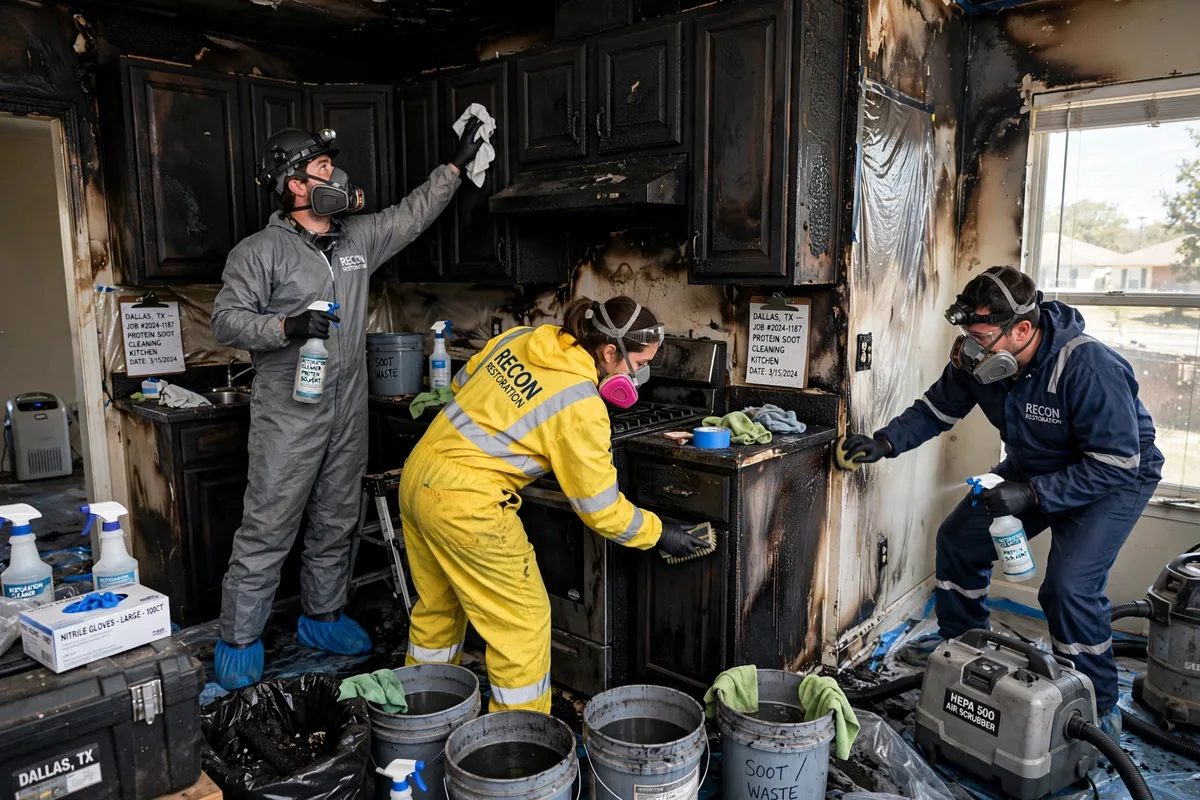
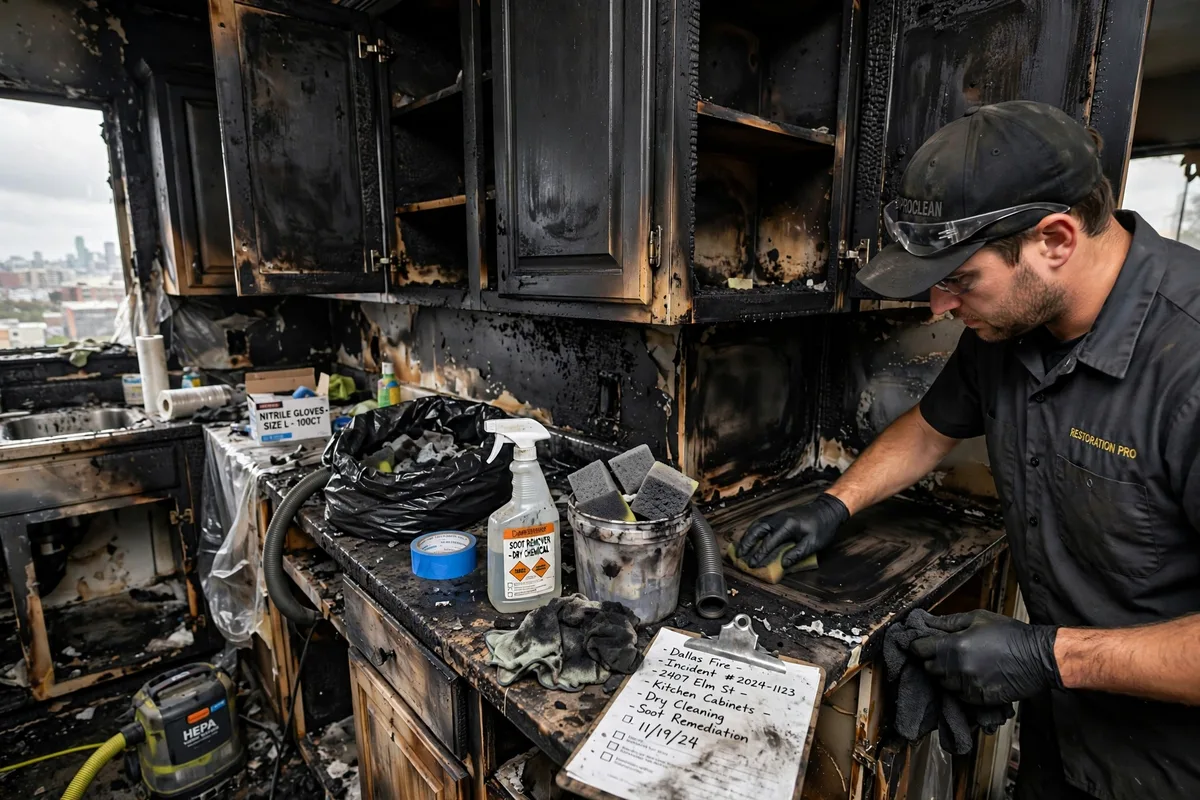
Protein soot differs from ordinary wood or paper soot in three ways that make it the worst residue a Dallas homeowner will meet. First, it is nearly invisible: protein fires burn at lower temperatures and leave a thin, greasy film rather than black ash, so walls look almost clean while the film coats everything. Second, it is sticky: the film bonds to paint, cabinets, appliances, and ductwork, and ordinary wiping spreads it into a larger stain instead of lifting it. Third, it smells: protein residue produces a strong, rancid odor that penetrates porous materials and returns whenever the room warms up, which is why air fresheners and open windows fail within days. Professional cleanup uses dry sponges and HEPA vacuuming before any wet cleaning, matched chemical agents for the residue type, and duct cleaning when the HVAC spread the film beyond the kitchen. The smoke damage cleanup guide explains the soot types crews meet across Dallas fire jobs. However, the kitchen is also where the mistake happens most: a well-meaning homeowner with a wet sponge is the single most common cause of permanent soot staining after small fires.
What does professional kitchen fire cleanup include?
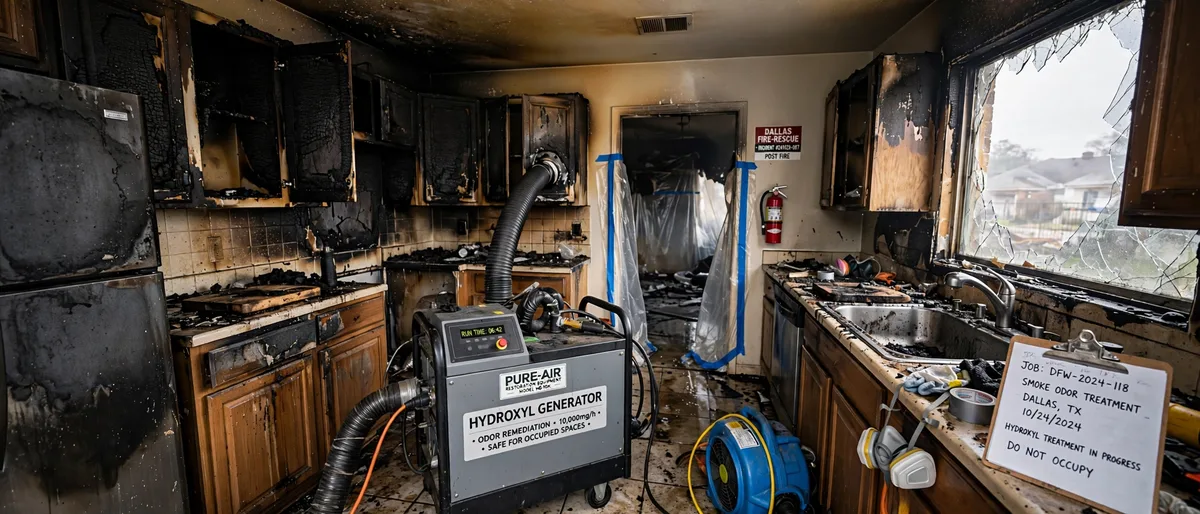
Professional kitchen fire cleanup runs in a fixed order, and skipping steps is how odor and staining survive. Assessment comes first: the crew maps soot migration with light and touch tests, checks ductwork and adjacent rooms, and photographs everything for the insurance file. Dry cleaning follows: HEPA vacuuming and dry chemical sponges lift loose soot without smearing it. Wet cleaning uses agents matched to protein residue on cabinets, walls, ceilings, and appliances, with unsalvageable materials documented and removed. Odor treatment is next: hydroxyl generators for occupied spaces, ozone or thermal fogging for sealed spaces, chosen by severity and whether the family is staying in the home. Water damage from extinguishing gets extracted and dried in parallel, since a kitchen fire usually ends with a wet floor. The emergency fire restoration guide lays out the full sequence from board-up through rebuild. However, contents matter as much as surfaces: dishes, cookware, and food packaging absorb odor and soot, and the crew inventories what cleans, what seals, and what must be discarded.
| Kitchen fire cleanup step | What the crew does | Why it matters |
|---|---|---|
| Assessment | Soot mapping, photos | Scope, insurance file |
| Dry cleaning | HEPA, dry sponges | No smearing, no stains |
| Wet cleaning | Protein-matched agents | Removes sticky film |
| Odor treatment | Hydroxyl, ozone, fogging | Smell gone, not masked |
| Water drying | Extraction, dehumidifiers | Stops mold in 24–48 hrs |
📞 Same-Day Kitchen Fire Cleanup: +1 214-807-4697
How much does kitchen fire cleanup cost in Dallas?
A contained kitchen fire with smoke and soot cleanup typically lands in the low thousands — minor smoke-only jobs in one or two rooms run $3,000–$8,000 across Dallas, while whole-home light soot runs $8,000–$25,000 and heavy soot with HVAC contamination reaches $25,000–$50,000. What moves a kitchen job up the scale is migration: a fire that ran the HVAC spreads protein film through ductwork into rooms that never saw flame, and duct cleaning runs $250–$500 on its own. Thermal fogging adds $200–$600 and ozone treatment $400–$800 where odor has soaked into porous materials. Dallas fire restoration averages $29,077 overall, and fire claims average around $88,000 nationally — the most expensive claim type — so a kitchen fire claim is worth documenting properly even when the visible damage looks small. The estimate is free and confirmed on site after soot mapping. The fire restoration cost guide breaks down every component from soot removal to rebuild. However, the most expensive kitchen fire job is the one done twice: a cheap wipe-down that leaves residue, followed months later by full remediation when the smell and staining return.
What should you do — and not do — right after a kitchen fire?
After the fire is out and the fire department has cleared the home, the right sequence protects both the claim and the cleanup. Photograph everything before touching it, keep the damaged pan or appliance for the adjuster, and call the restoration crew before cleaning anything. Do not run the HVAC: the system spreads soot and odor through ductwork into clean rooms, turning a one-room job into a whole-house job. Do not wet-clean soot, do not throw away damaged items before the adjuster documents them, and do not use the kitchen's water or gas lines until they are checked. If the fire department broke windows or punched ventilation holes, the property needs securing the same night — the emergency board-up guide covers that first step. However, the biggest mistake is waiting: soot corrodes within hours, odor sets within days, and water from extinguishing starts mold within 24–48 hours, so a same-day call is worth more than a perfect call tomorrow.
Important Considerations
Texas has no state license specifically for restoration companies, so check IICRC certification, insurance, and reviews before hiring, and be wary of anyone demanding full payment upfront. Never re-enter a fire-damaged kitchen before the fire department gives clearance, and never restore gas or electrical service to a damaged kitchen without an inspection — hidden damage to wiring and gas lines is common after cooking fires. Protein odor can persist in porous materials even after thorough cleaning; in severe cases, sealing primers on walls and ceilings are part of the honest scope, not an upsell. Keep every receipt and photo: insurers treat kitchen fires as covered perils in most policies, but the claim depends on documentation of the original damage versus later damage. Finally, if the home will sit empty during cleanup, secure it — an open, damaged kitchen invites theft of appliances and copper that complicates the claim.
📞 Free Kitchen Fire Estimate: +1 214-807-4697
Frequently Asked Questions
How fast can a kitchen fire cleanup crew reach Dallas?
Around 60 minutes in most of Dallas, 24 hours a day, including nights, weekends, and holidays. Same-day response matters most for soot, which corrodes metal and finishes within hours.
Can I clean kitchen fire soot myself?
No — wet-cleaning soot first smears it and sets stains permanently, and protein residue needs dry cleaning followed by matched agents. DIY cleaning also risks inhaling acidic soot without PPE and HEPA equipment.
Why does the smell come back after cleaning?
Because protein residue hides in porous materials and ductwork, and surface wiping never reaches it. Professional odor treatment with hydroxyl, ozone, or thermal fogging removes the source rather than covering it.
How much does kitchen fire cleanup cost in Dallas?
Contained kitchen smoke jobs typically run $3,000–$8,000, with whole-home soot reaching $8,000–$25,000 and heavy soot with HVAC contamination $25,000–$50,000. The estimate is free and confirmed on site after soot mapping.
Does insurance cover kitchen fire cleanup?
Cooking fires are usually covered perils under homeowners policies, with the homeowner paying only the deductible in most cases. Documentation from the first visit supports the claim.
Should I run the air conditioner after a kitchen fire?
No — running the HVAC spreads soot and odor through ductwork into clean rooms. Keep the system off until the crew checks and cleans the ducts.
Can smoke-damaged dishes and cookware be saved?
Often yes — non-porous items clean well with professional methods, while porous items and food packaging usually need disposal. The crew inventories contents and documents what is salvaged versus discarded.
How long does kitchen fire cleanup take?
Small contained jobs take days; jobs with ductwork contamination and odor treatment run one to two weeks. Full rebuilds after severe kitchen fires take longer, and the crew gives a timeline by damage level on the first visit.
What if the fire department also caused water damage?
Water from extinguishing gets extracted and dried as part of the same job, because wet framing grows mold within 24–48 hours. Fire and water mitigation run together — neither waits for the other.
Do I need to leave my home during kitchen fire cleanup?
Often you can stay for small jobs with contained cleaning, but ozone and thermal fogging require the space to be vacated during treatment. Your crew explains the safety plan on the first visit.
Why should I call Water Damage Restoration Dallas for kitchen fires?
Local Dallas crews, 24/7 live answer, around 60-minute arrival, protein-soot expertise, odor treatment and water drying in one call, free estimates, and insurance documentation from the first visit.
📞 Call Water Damage Restoration Dallas 24/7: +1 214-807-4697