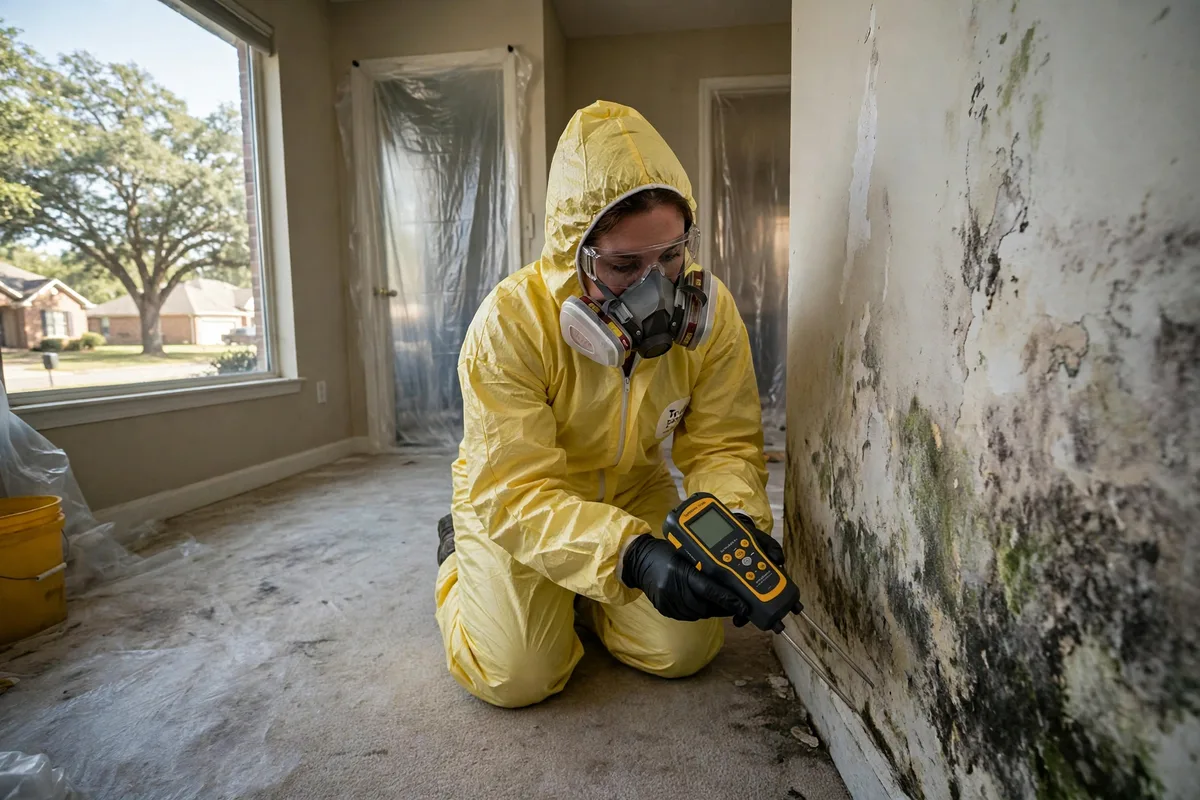
Mold Remediation Cost in Dallas: Get a Same-Day Quote
TLDR
- Who gives free mold remediation quotes in Dallas?: Water Damage Restoration Dallas — 24/7 live answer, same-day dispatch, around 60-minute arrival: +1 214-807-4697.
- How much does mold remediation cost in Dallas?: Most mold remediation jobs run $1,200–$3,800, depending on area, materials, and whether a water source must be fixed first.
- What makes a mold job cost more?: Large affected areas, mold inside walls or HVAC systems, contaminated materials that must be removed, and clearance testing all raise the price.
- How fast does mold grow after water damage?: Mold can start in wet materials within 24–48 hours of saturation, which is why drying and remediation cannot wait for a convenient week.
- Is mold remediation covered by insurance?: Sometimes — sudden water events are usually covered, while long-running leaks and neglected moisture are often excluded as gradual damage.
- Can I just bleach the mold myself?: No — bleach does not kill mold roots in porous materials, it spreads spores when scrubbed, and it leaves the moisture source untouched.
- How fast can remediation start?: Same day in most cases — inspection, containment, and moisture-source repair can begin on the first visit.
🚨 MOLD IN YOUR DALLAS HOME? Do not wait for it to spread. We answer live 24/7, dispatch the same day, arrive in around 60 minutes, and give free estimates — inspection, containment, removal, drying, and clearance in one call.
📞 Mold Problem? Call Now: +1 214-807-4697
A mold remediation quote is really two quotes in one: the cost of removing the mold, and the cost of fixing whatever kept the material wet in the first place. Remediation without source repair is a rental, not a repair — the mold returns as soon as the next leak, condensation cycle, or humidity spike re-wets the same material. Most mold remediation jobs in Dallas run $1,200–$3,800, a band that covers the typical contained job: inspection and moisture mapping, containment, HEPA-filtered removal, antimicrobial treatment, drying to verified readings, and clearance. Small contained jobs land at the low end; whole-room, in-wall, or HVAC-contaminated jobs land above it, and a water job underneath the mold — extraction and structural drying — usually lands in the $2,500–$7,500 band for a typical Dallas water job. Water Damage Restoration Dallas gives free inspections and on-site quotes across Dallas — Downtown, Uptown, Lakewood, and surrounding neighborhoods — with IICRC-certified technicians and direct insurance billing. However, no honest company can price mold over the phone: the real number comes from inspection, moisture readings, and the size of the affected area, and any flat quote given sight-unseen is a guess.
What drives the cost of mold remediation?
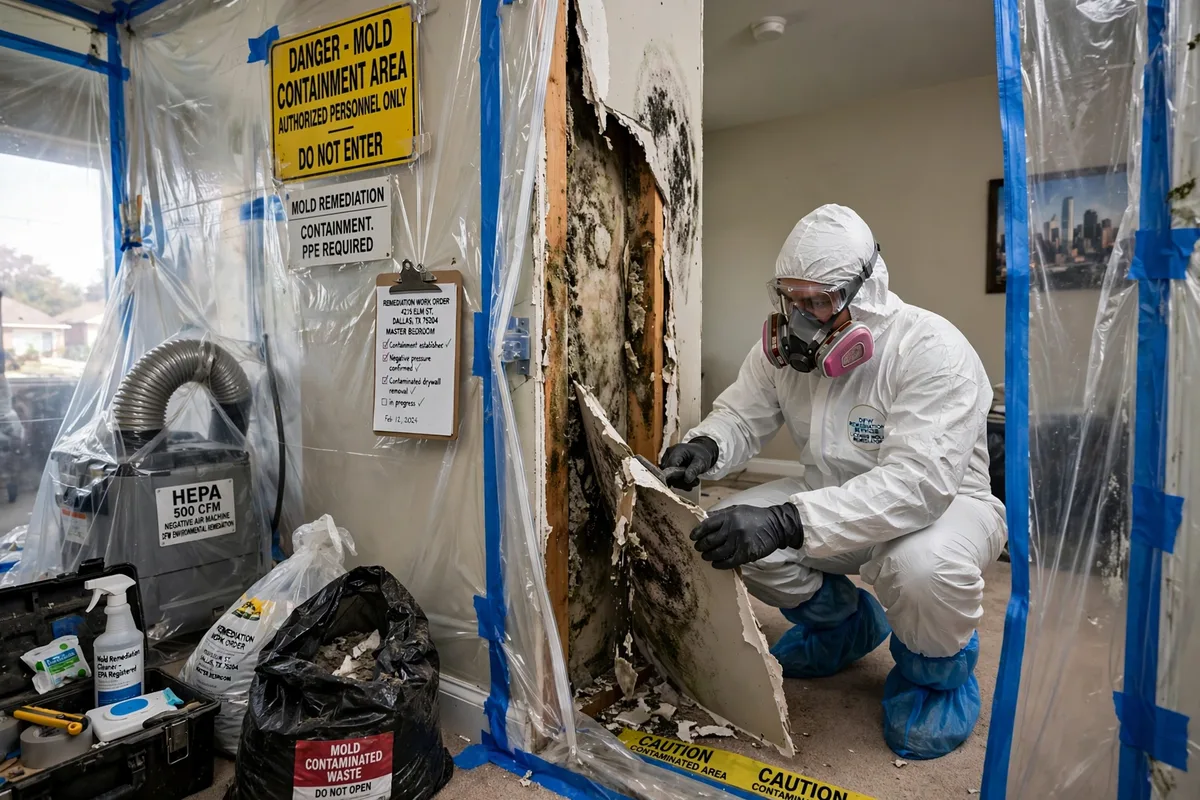
Six factors set the price, and they explain why a bathroom spot and a whole-house problem are different jobs entirely. First, affected area: a contained patch under a sink versus mold across a wall cavity, subfloor, or attic is the biggest price difference. Second, location: surface mold on tile costs far less than mold inside drywall, under flooring, or in ductwork, because access means removal and rebuild of the surrounding material. Third, material: porous materials like drywall, insulation, and carpet usually must be removed, while hard surfaces can often be cleaned and kept. Fourth, the moisture source: a fixed plumbing leak is one visit, while ongoing condensation, poor drainage, or a slab leak needs a repair scope alongside remediation. Fifth, containment and air quality: negative-air containment, HEPA filtration, and air scrubbers protect the rest of the home during removal, and skipping them spreads spores. Sixth, verification: clearance testing by an independent assessor proves the job is done, and insurers and buyers both ask for it. The mold remediation services guide walks through the full process from inspection to clearance. However, the cheapest remediation quote is usually the one that skips containment or clearance — and the mold returning in three months is the bill for that saving.
How much does each stage of mold remediation cost?
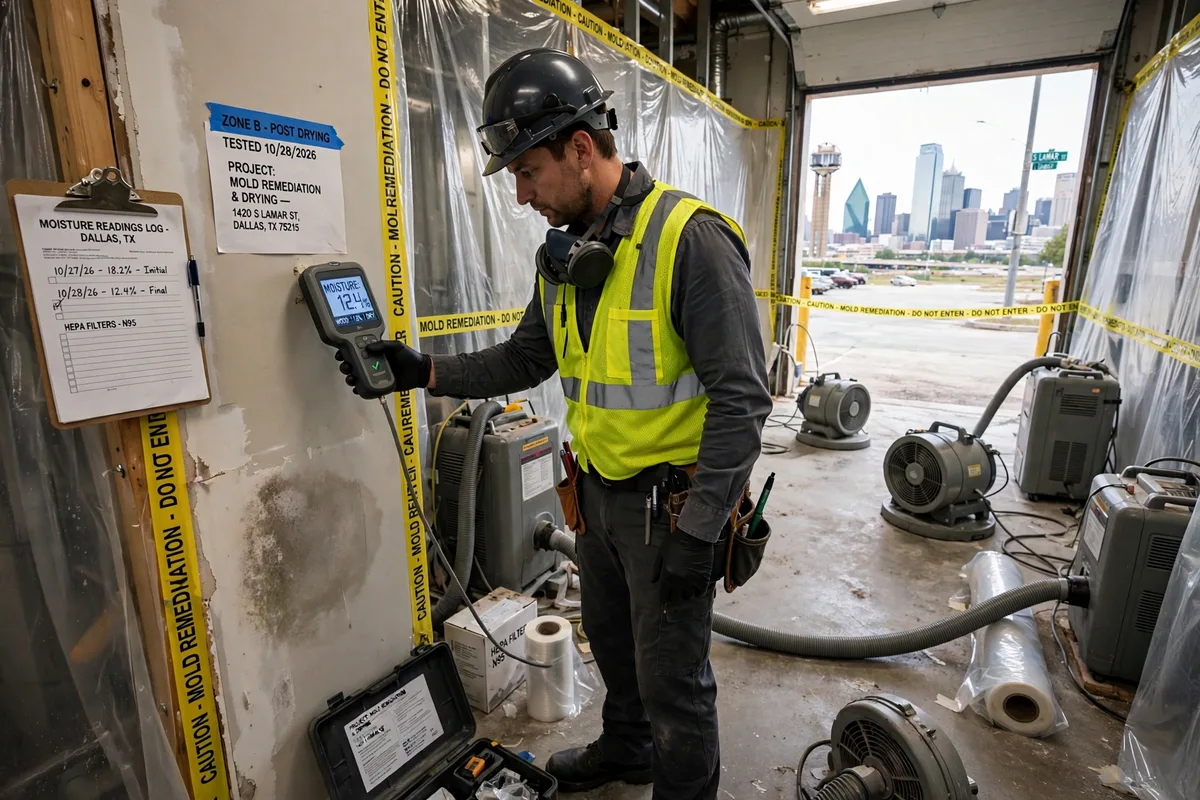
Breaking the job into stages makes the quote readable, and a readable quote is how you spot padding or gaps. Inspection and moisture mapping is often free or low-cost, and it produces the scope everything else is priced from. Containment and air filtration protect clean rooms while removal runs, and the cost scales with the contained area. Removal and cleaning is the core charge: contaminated porous material is cut out under containment, hard surfaces are HEPA-vacuumed and treated, and the area is dried to verified moisture readings. The water side — fixing the leak and drying the structure — is priced as its own scope, and a typical Dallas water job lands between $2,500 and $7,500 depending on area and materials. Rebuild of removed drywall, flooring, or trim is priced by the square foot and the finish level. Clearance testing is a separate line, and it should be performed by an independent party rather than the remediator when Texas rules require it. The post-water-damage remediation guide explains when a water job becomes a remediation job. However, a quote that bundles everything into one lump sum hides the rebuild and testing lines — ask for the itemized scope before signing.
| Mold job scope | Typical Dallas cost | What it includes |
|---|---|---|
| Small contained patch | Low end of $1,200–$3,800 | Inspection, removal, treatment |
| Typical room job | $1,200–$3,800 | Containment, removal, drying |
| In-wall or HVAC mold | Above the typical band | Access, removal, duct work |
| Water source repair | Separate scope | Leak fix plus drying |
| Clearance testing | Separate line item | Independent verification |
📞 Free Mold Inspection: +1 214-807-4697
Will insurance pay for mold remediation in Dallas?
Insurance coverage for mold depends on the water event that caused it, and that distinction decides most claims. A sudden event — a burst pipe, an appliance failure, storm water through a damaged roof — is usually covered, including the mold remediation that follows, with the homeowner paying only the deductible. A long-running leak, ongoing condensation, or a moisture problem ignored for months is often excluded as gradual damage or maintenance failure, and the mold scope gets denied with it. The Texas average burst-pipe claim runs around $15,500 according to State Farm figures, which is why sudden losses are usually covered while slow leaks are not. Documentation decides borderline claims: photos of the water event, the plumber's report, moisture readings from the first visit, and the remediation scope together prove a sudden loss rather than a neglected one. The hidden mold guide explains how mold hides behind walls after a water event, even when surfaces look dry. However, coverage limits for mold vary by policy — some policies cap mold remediation separately — so read the policy before assuming the full scope is covered.
How can Dallas homeowners keep mold remediation costs down?
The biggest cost control is speed, because mold's clock runs in hours, not weeks. Mold can start in wet materials within 24–48 hours of saturation, so a water event dried in the first two days often never becomes a mold job at all. Fix the moisture source first and document it — a repaired leak with a plumber's invoice protects both the home and the claim. Never scrub visible mold with bleach: bleach does not kill mold roots in porous materials, scrubbing spreads spores through the air, and the moisture left behind feeds regrowth. Run dehumidification after any water event until readings verify dry, not until surfaces feel dry — trapped moisture under flooring and inside wall cavities is where mold starts unseen. Keep humidity below 60 percent in Dallas summers, and treat any musty smell as a moisture report rather than an air-freshener problem. The staying-home safety guide explains when occupants can remain in the home during remediation and when they should not. However, the cheapest mold job is still the one that never happens: dry fast, fix the source, and verify with readings.
Important Considerations
Texas rules require a licensed mold assessment consultant's protocol for remediation in many cases, and the assessor should be independent of the remediator — a company that tests its own work is grading its own homework. Be wary of free mold testing offers that exist to sell a remediation job, and of any company demanding full payment upfront. If mold is found during a water job, remediation should follow drying, not precede it, because remediating a still-wet area guarantees regrowth. Dallas clay soil and storm seasons both feed mold risk: soil movement cracks pipes and slabs, and storm water finds every foundation weakness, so a home with one mold event deserves a drainage and plumbing check before the next season. Finally, keep the inspection report, moisture log, clearance results, and photos in one file: insurers, buyers, and future contractors will all ask for them.
📞 Same-Day Mold Quote: +1 214-807-4697
Frequently Asked Questions
How much does mold remediation cost in Dallas?
Most jobs run $1,200–$3,800, depending on affected area, materials, and whether a water source must be repaired first. Small contained jobs land at the low end, while in-wall, whole-room, or HVAC-contaminated jobs land above the typical band. Your free inspection produces the itemized quote.
What is included in a mold remediation quote?
A complete quote covers inspection and moisture mapping, containment, HEPA-filtered removal, antimicrobial treatment, drying to verified readings, and clearance testing. Water source repair and rebuild of removed materials are usually separate lines — ask for the itemized scope.
Does insurance cover mold remediation?
Sometimes — sudden water events like burst pipes are usually covered, including the mold that follows, with only the deductible out of pocket. Long-running leaks and neglected moisture are often excluded as gradual damage, so documentation of the sudden event matters.
Can I remove mold myself with bleach?
No — bleach does not kill mold roots in porous materials, scrubbing spreads spores through the air, and the moisture left behind feeds regrowth. Bleach on drywall is the most common reason a small mold patch becomes a recurring one.
How fast does mold grow after water damage?
Mold can start in wet materials within 24–48 hours of saturation. That window is why fast drying after any water event matters more than any cleaning product — a job dried in two days often never becomes a mold job.
How long does mold remediation take?
Most contained jobs complete in one to three days, plus drying time; larger in-wall or HVAC jobs take longer, and rebuild adds days after clearance. The finish line is verified moisture readings and clearance results, not surfaces that look clean.
Is it safe to stay home during mold remediation?
Often yes for contained jobs with proper containment and negative air, but occupants with asthma, allergies, or immune conditions should stay elsewhere during removal. Your crew should explain the containment plan before work starts.
What is the difference between mold removal and mold remediation?
Removal takes the visible mold out; remediation removes the mold, fixes the moisture source, dries the structure, and verifies clearance. Removal without remediation is a temporary cosmetic fix — the mold returns when the material gets wet again.
Will mold come back after remediation?
Not if the moisture source is fixed and the structure is dried to verified readings — remediation that skips either step invites regrowth. Keep humidity below 60 percent and fix leaks promptly to keep it from returning.
Do I need mold testing before remediation?
An inspection with moisture readings is always needed, and independent clearance testing is required in many Texas cases. Testing that exists only to sell a job is a red flag — the assessor should be independent of the remediator.
Why should I call Water Damage Restoration Dallas for mold?
Local Dallas crews, 24/7 live answer, around 60-minute arrival, inspection plus containment plus removal plus verified drying in one call, free estimates, and insurance documentation from the first visit.
📞 Call Water Damage Restoration Dallas 24/7: +1 214-807-4697