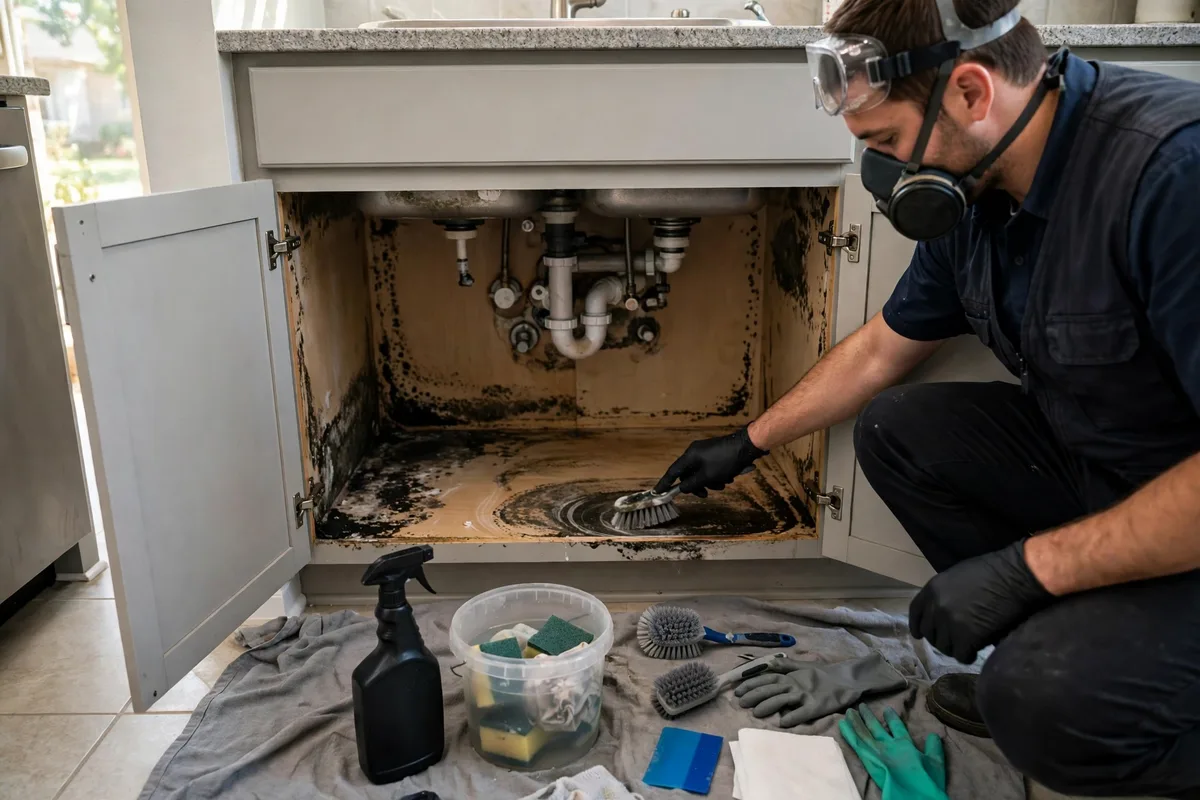
Mold Under Your Kitchen Sink in Dallas: The Slow Drip That Ruins Cabinets
TLDR
- Why does mold grow under a kitchen sink?: A slow drip from a supply line, a drain, or dishwasher seepage keeps the cabinet base damp, and mold grows on wet material in 24–48 hours.
- How do you know there is mold under the sink?: A musty smell with nothing visible, a warped or soft cabinet floor, stained wood, or a toe-kick that feels damp.
- How much does under-sink mold removal cost in Dallas?: Mold remediation typically runs $1,200–$3,800, with under-sink jobs at the low end unless the drywall cavity is involved.
- When does Texas require a licensed mold remediator?: Once visible mold covers 25 contiguous square feet, Texas rules require a licensed remediator, and the same company may not do both the assessment and the remediation.
- Does insurance cover mold under the kitchen sink?: Sudden leaks are often covered; slow leaks and neglect usually are not — the discovery date decides the claim.
- Can under-sink mold be cleaned up the same day?: Small jobs take 1–2 days; larger jobs need containment and clearance testing — call +1 214-807-4697 for same-day inspection.
- Who handles mold under the kitchen sink in Dallas?: Water Damage Restoration Dallas — 24/7 live answer, around 60-minute arrival, free estimates: +1 214-807-4697.
🚨 MOLD UNDER YOUR KITCHEN SINK? The drip is still feeding it — call now. We answer live 24/7, arrive in around 60 minutes, and give free estimates — same-day inspection, mold removal, and cabinet repair in one call.
📞 24/7 Under-Sink Mold Help: +1 214-807-4697
Mold under your kitchen sink in Dallas is the slow drip nobody sees: a supply line that weeps a drop a minute, a drain joint that loosens with every garbage-disposal vibration, or dishwasher seepage that runs behind the cabinet and never reaches the floor you can see. The cabinet base, the toe-kick, and the drywall cavity behind the sink stay damp for weeks, and mold grows on wet material in 24–48 hours, so by the time the musty smell reaches the kitchen, the growth is already established in the wood and the wall. Slow drips under a sink or behind a dishwasher are among the most common mold calls in Dallas, and the job is not the visible spot on the cabinet floor — it is the cavity behind it, where the insulation and the drywall have been soaking. Water Damage Restoration Dallas handles under-sink mold with IICRC-certified crews, around 60-minute arrival, free estimates, and same-day help. However, one under-sink rule comes first: the visible mold is the overflow, while the real growth sits in the cavity, so the crew maps the moisture before declaring the job small.
Why does mold grow under a kitchen sink?
Mold grows under a kitchen sink because three water sources feed the same dark, warm cavity: a supply-line drip at the shutoff valve or the faucet connection, a drain leak at the trap or the disposal joint, and dishwasher seepage that runs along the floor and behind the cabinet. The cabinet base is particleboard or plywood, and both hold water and feed mold, while the drywall behind the sink wicks the moisture upward into the wall cavity. The toe-kick hides the damp floor, and the cabinet doors hide the warped base, so the drip can run for months before anyone opens the doors and looks. The mold remediation services guide covers the full removal process. However, the growth trap is the clean-looking cabinet: a cabinet floor that looks dry on top can be soaked underneath, so the crew checks the base, the toe-kick, and the wall cavity together.
How do you know there is mold under the sink?
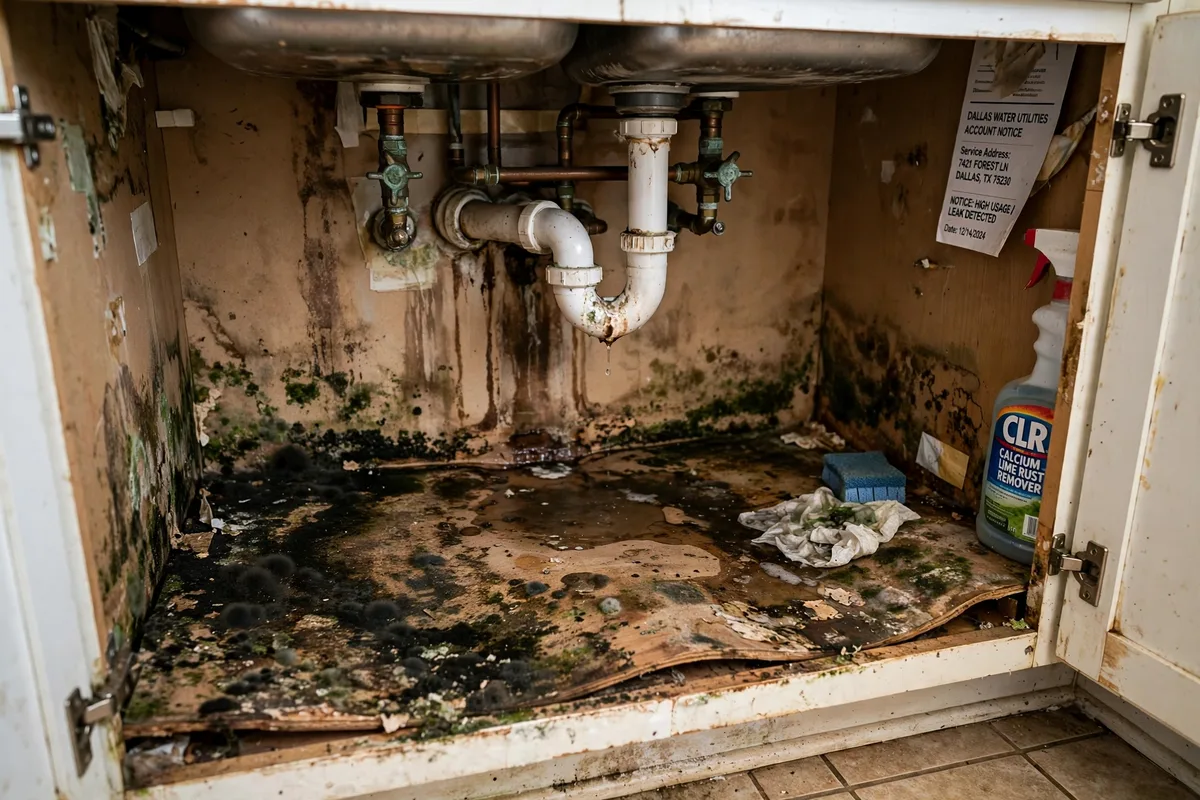
You know there is mold under the sink from five signs: a musty smell with nothing visible, a cabinet floor that feels soft or spongy underfoot, warped or swollen wood at the base, dark staining on the cabinet floor or the back wall, and a toe-kick that feels damp to the touch. The musty smell is the earliest sign, and it appears before any visible growth, because the mold in the cavity releases its odor into the kitchen through the gaps around the pipes. A cabinet floor that gives under a fingertip is already saturated, and the water has been there long enough to weaken the wood. The mold testing services guide covers when a test is worth ordering. However, one detection rule beats the rest: if the smell is there and the cabinet looks clean, the growth is in the cavity, so open the toe-kick and check the wall before deciding the job is small.
How do professionals remove mold under a kitchen sink?
Professionals remove mold under a kitchen sink in sequence: stop the leak and shut off the supply, map the moisture in the cabinet base, the toe-kick, and the wall cavity with meters, set containment around the kitchen if the growth is large, remove the saturated cabinet base and any wet drywall, HEPA vacuum the cavity, clean the framing with an antimicrobial, dry the structure until readings verify dryness, then rebuild the cabinet and the wall. Small jobs take 1–2 days, while larger jobs need containment and clearance testing before the rebuild. The mold in walls guide covers the cavity work that often follows an under-sink find. The mold after water damage guide covers the wider remediation process. However, one removal rule is absolute: the leak comes first and the mold second, because a remediated cabinet with a live drip grows mold again within weeks.
| Under-sink mold source | Typical sign | First crew step |
|---|---|---|
| Supply-line drip | Wet valve, stained base | Shutoff, replace line |
| Drain or trap leak | Musty smell, damp toe-kick | Tighten, reseal, dry |
| Dishwasher seepage | Warped base, wet floor | Pull unit, map cavity |
| Wall cavity growth | Smell, no visible mold | Open wall, HEPA vacuum |
| Cabinet base saturated | Soft floor, dark stain | Remove base, rebuild |
📞 Book Under-Sink Mold Removal: +1 214-807-4697
How much does mold under the kitchen sink cost to remove in Dallas?
Mold remediation typically runs $1,200–$3,800, and an under-sink job sits at the low end when the growth is limited to the cabinet base, while a job that reached the drywall cavity, the insulation, and the subfloor climbs toward the top of the range. The leak repair adds to the scope — a supply line or a trap is a small plumbing fix, while a dishwasher seepage that ran for months adds cabinet and flooring work. Leak detection typically runs $150–$400 when the source is hidden behind the wall. Dallas-area water damage jobs typically land between $2,500 and $7,500 all-in for mitigation, and an under-sink mold job that also needs drying and rebuild sits in that band. The Texas burst-pipe average claim runs around $15,500, which shows the scale of a sudden water disaster claim. However, the pricing trap is the spot-clean quote: a company that offers to wipe the visible mold without opening the cavity and fixing the leak is selling a cosmetic clean that regrows within weeks.
Does insurance cover mold under the kitchen sink?
Sudden leaks are often covered by a standard homeowners policy, while slow leaks and neglect usually are not, and the under-sink mold claim turns on when the leak started and when it was discovered. A supply line that burst overnight is a sudden failure, and the mold that followed it is part of the same claim, while a drain that wept for six months is a maintenance failure, and the carrier will ask why nobody opened the cabinet. Photograph the cabinet, the valve, the trap, and the wall cavity before anything moves, and note the discovery date in writing, because the adjuster will ask for it first. Keep the plumber's invoice and the remediation scope in the same file as the photos. However, one claim rule beats the rest: the homeowner who reports the leak the day it is found and calls a same-day crew gets a documented discovery date, and that date is what separates a covered sudden leak from a denied slow one.
When does Texas require a licensed mold remediator?
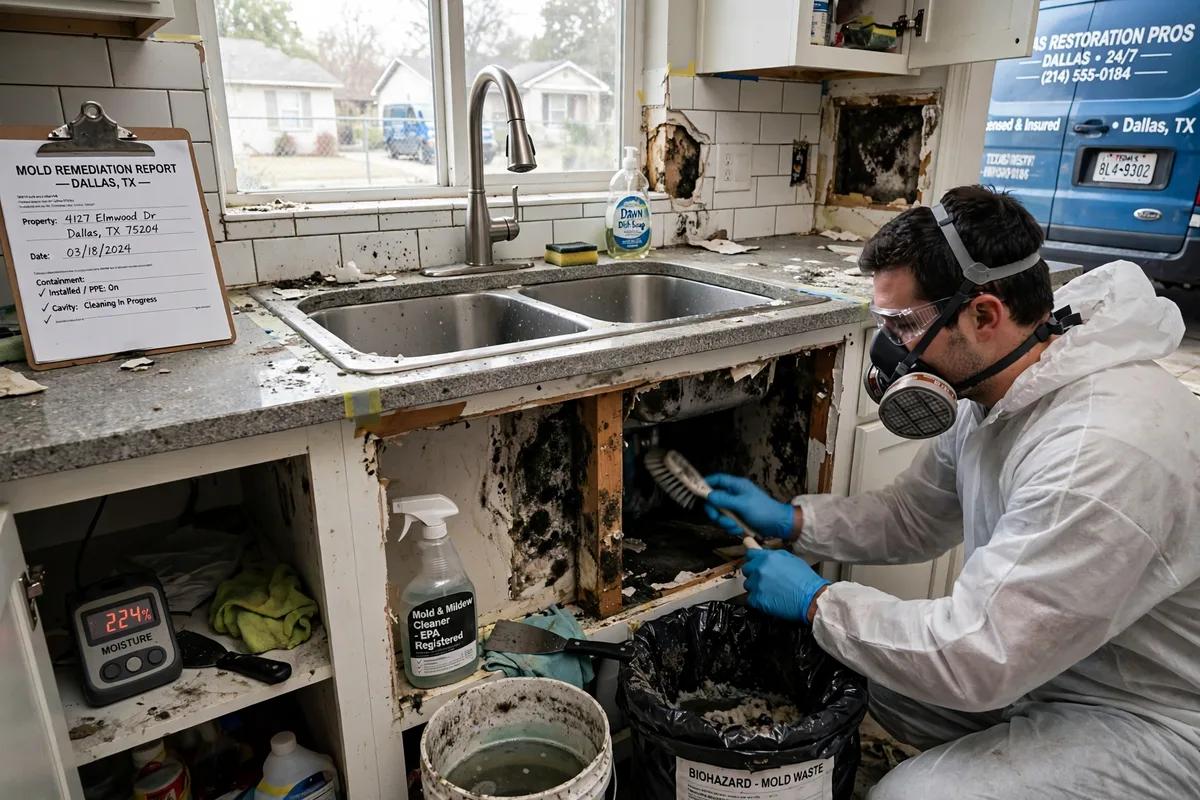
Texas rules require a licensed remediator once visible mold covers 25 contiguous square feet, and the same company may not do both the assessment and the remediation on the same job. An under-sink job rarely crosses 25 square feet on its own, but a job that reached the wall cavity, the insulation, and the subfloor can cross it fast, and the crew measures before deciding which rule applies. The assessment is done by a licensed mold assessment consultant, and the remediation is done by a separate licensed remediator, so the two roles never sit in one company on the same job. A clearance test after the remediation proves the job is done, and the clearance is ordered by the assessor, not the remediator. However, the licensing trap is the single-company shortcut: a company that offers to assess and remediate the same job is breaking the Texas split, so ask for the two licenses before work starts.
Important Considerations
Texas has no state license specifically for restoration companies, so check IICRC certification, insurance, and reviews before hiring, and be wary of anyone demanding full payment upfront. Never wipe visible mold with a wet rag or household bleach, because wiping spreads the spores and bleach does not kill mold in porous wood. Never paint or seal a damp cabinet without drying the structure beneath it, because the moisture will return the warp and feed mold under the finish. Never ignore a musty smell with nothing visible, since the growth is in the cavity and the smell is the only warning before the cabinet base fails. Never run the dishwasher or the disposal after finding under-sink mold until the leak is fixed, because every use feeds the growth. If the mold covers 25 contiguous square feet, ask explicitly for a licensed assessment and a separate licensed remediator, not a single-company shortcut. Keep the photos, the discovery date, the plumber's invoice, and all carrier correspondence in one file — under-sink mold claims generate more paperwork than the job suggests. Finally, after the repair, check under the sink every month and keep a moisture alarm in the cabinet, because the next slow drip will start the same way.
📞 Free Under-Sink Mold Estimate: +1 214-807-4697
Frequently Asked Questions
Why does mold grow under a kitchen sink?
A slow drip from a supply line, a drain, or dishwasher seepage keeps the cabinet base damp, and mold grows on wet material in 24–48 hours. The cabinet base, toe-kick, and drywall cavity hide the damp.
How do you know there is mold under the sink?
A musty smell with nothing visible, a soft or spongy cabinet floor, warped wood, dark staining, or a damp toe-kick. The smell is the earliest sign — it appears before any visible growth.
How much does under-sink mold removal cost in Dallas?
Mold remediation typically runs $1,200–$3,800. Under-sink jobs sit at the low end unless the drywall cavity is involved, and leak detection typically runs $150–$400.
When does Texas require a licensed mold remediator?
Once visible mold covers 25 contiguous square feet, Texas rules require a licensed remediator, and the same company may not do both the assessment and the remediation.
Does insurance cover mold under the kitchen sink?
Sudden leaks are often covered; slow leaks and neglect usually are not. The discovery date decides the claim, so document it in writing the day the leak is found.
Can under-sink mold be cleaned up the same day?
Small jobs take 1–2 days; larger jobs need containment and clearance testing. Call +1 214-807-4697 for same-day inspection and a written scope.
How do professionals remove mold under a kitchen sink?
Stop the leak first, map the moisture, remove the saturated cabinet base and wet drywall, HEPA vacuum the cavity, clean with an antimicrobial, dry, then rebuild.
How long does under-sink mold removal take?
Small jobs take 1–2 days, with rebuild after moisture readings verify dryness. Jobs that reached the wall cavity, insulation, and subfloor take longer.
Is it safe to stay home during under-sink mold removal?
Often yes in unaffected rooms, but the kitchen stays off-limits while the cabinet is open and drying equipment runs, and the water supply to the sink stays off.
Can I clean mold under the sink myself?
Surface mold on a hard, non-porous area can be wiped, but mold in particleboard, drywall, or a wall cavity needs professional removal — bleach does not kill mold in porous wood.
Why call Water Damage Restoration Dallas for under-sink mold?
Local Dallas crews, 24/7 live answer, around 60-minute arrival, free estimates, and leak-first mold removal with moisture readings — call +1 214-807-4697.
📞 Call Water Damage Restoration Dallas 24/7: +1 214-807-4697
Related Dallas Water Damage Guides
- Mold Starts Growing in 24–48 Hours: What That Clock Really Means for Dallas Homes
- Mold in Air Ducts in Dallas: Signs, Health Risks & Same-Day HVAC Mold Removal
- Mold Remediation vs Mold Removal in Dallas: Which Service Do You Actually Need?
- Can Mold Come Back After Remediation in Dallas? Same-Day Help