Fire Damage Restoration Services in Dallas: 24/7 Same-Day Response
TLDR
- Who provides fire damage restoration services in Dallas?: Water Damage Restoration Dallas — 24/7 live answer, around 60-minute arrival, free estimates: +1 214-807-4697.
- What do fire damage restoration services include?: Board-up, water mitigation from firefighting, soot removal, odor removal, contents cleaning, and rebuild coordination.
- How fast must fire restoration start?: Within hours — soot is acidic and corrodes surfaces fast, and firefighting water grows mold in 24–48 hours.
- How much does fire damage restoration cost in Dallas?: The Dallas average is $29,077, with most jobs between $3,000 and $25,000 depending on scope.
- Does insurance pay for fire restoration?: Fire claims average around $88,000 nationally, the priciest claim type — documentation decides how much is paid.
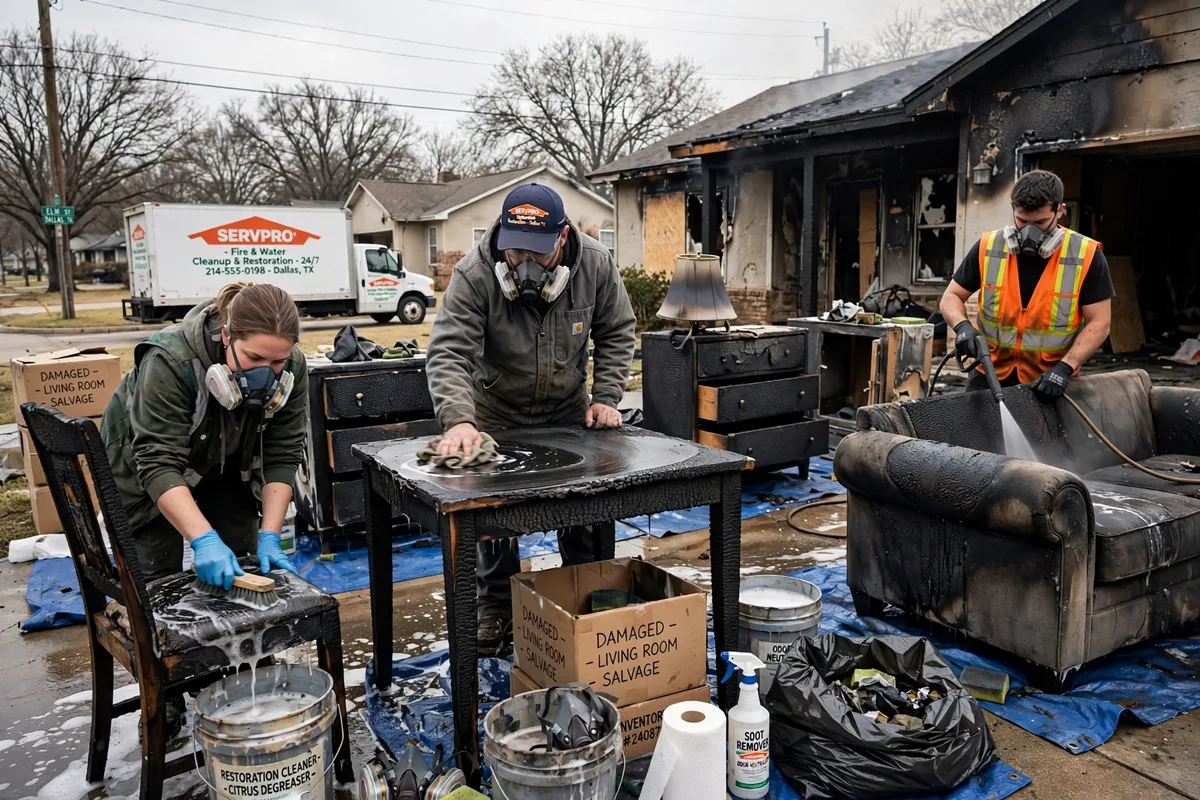
- Can smoke-damaged belongings be saved?: Often yes — pack-out and contents cleaning restore furniture, documents, and electronics that look ruined.
- What should you never do after a fire?: Never start cleaning soot yourself and never run the HVAC — both spread damage to clean rooms.
🚨 FIRE DAMAGE IN DALLAS? The first hours decide what can be saved. We answer live 24/7, arrive in around 60 minutes, and give free estimates — board-up, soot removal, and drying start the same day.
📞 24/7 Fire Damage Help: +1 214-807-4697
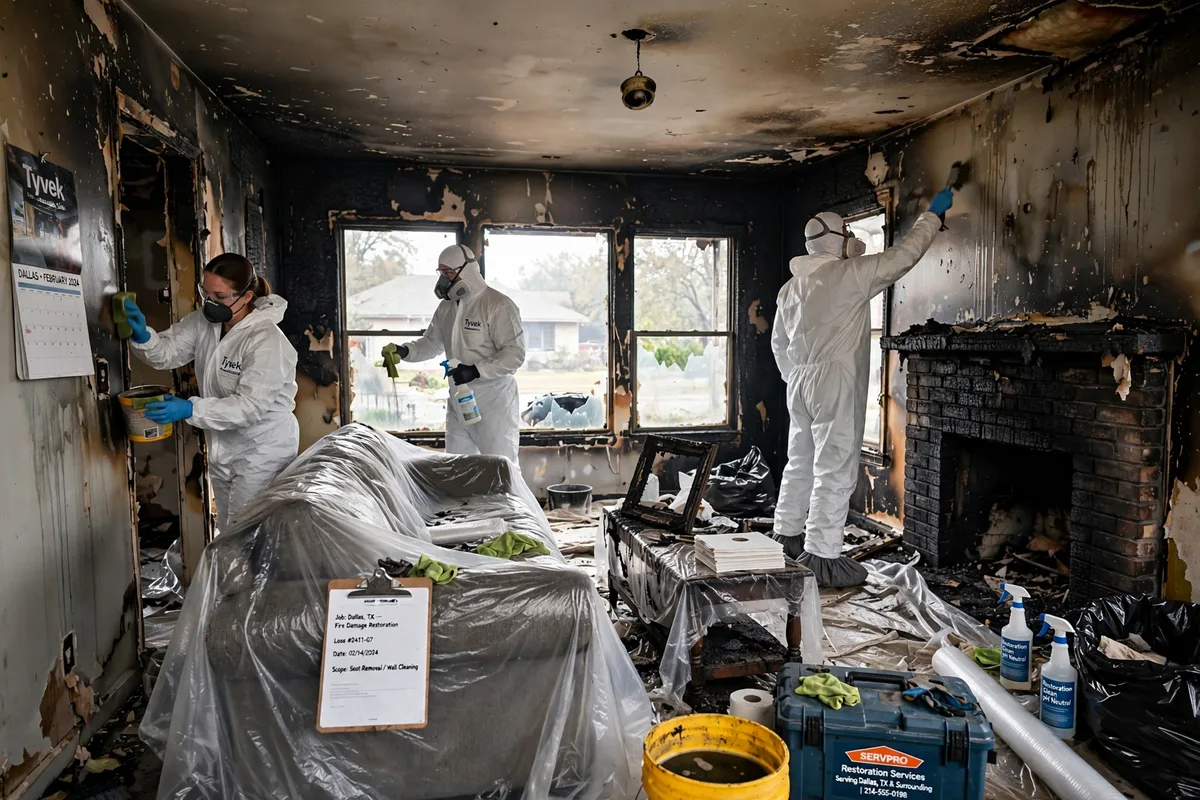
Fire damage restoration services in Dallas handle everything a fire leaves behind, not just the charred room: the soot coating every surface, the smoke odor driven into walls and ducts, the water soaked in by firefighting, and the belongings that look ruined but can often be saved. A house fire is the most expensive homeowners claim in the country, averaging around $88,000, and the Dallas average restoration job runs $29,077 — which is why the first hours matter more than the first week. Water Damage Restoration Dallas handles fire jobs with IICRC-certified crews, around 60-minute arrival, free estimates, and same-day board-up, mitigation, and cleaning. However, the rule that matters most comes first: wait for fire-department clearance before re-entering, and do not touch or clean anything until a crew has assessed it, because the wrong first step can set soot stains permanently.
What do fire damage restoration services include?
Fire restoration follows a fixed sequence: assessment and board-up to secure the home against weather and theft, water mitigation from firefighting hoses and sprinklers, soot removal with HEPA vacuuming and matched cleaning agents, odor neutralization through hydroxyl, ozone, or thermal fogging, contents cleaning or pack-out for furniture and belongings, and finally repairs and reconstruction. Each stage has its own tools and chemistry, and skipping a stage leaves damage behind — odor sealed under fresh paint returns with the first warm day. The emergency fire guide covers the first 24 hours, and the smoke cleanup guide covers soot and odor in depth. However, one sequence rule is absolute: water mitigation comes before soot work, because a wet structure keeps deteriorating while soot waits, and wet soot smears into surfaces that dry soot would have released cleanly.
How much do fire damage restoration services cost in Dallas?
The Dallas average fire restoration job runs $29,077, with a typical range of $3,083–$52,031 and most jobs landing between $3,000 and $25,000. Smoke-only jobs sit far lower: a minor one-to-two-room smoke job runs $3,000–$8,000, whole-home light soot runs $8,000–$25,000, and heavy soot with HVAC contamination runs $25,000–$50,000. Water damage from firefighting typically adds $1,000–$6,000, and a severe fire with structural rebuild runs $50,000–$180,000 or more. The fire cost guide breaks down every component, from duct cleaning at $250–$500 to thermal fogging at $200–$600. However, the fire cost trap is the partial job: a homeowner who pays for surface cleaning only, without odor treatment and HVAC cleaning, often pays twice — once for the cleaning that failed, and again for the full job that should have happened first.
| Fire service | What it covers | Typical scope |
|---|---|---|
| Board-up | Secure openings, roof tarps | Same day, weather + theft |
| Water mitigation | Extraction, drying | Stops mold in 24–48 hours |
| Soot removal | HEPA, dry sponges, agents | Walls, ceilings, surfaces |
| Odor removal | Hydroxyl, ozone, fogging | Ducts, cavities, fabrics |
| Contents cleaning | Pack-out, restore, return | Furniture, documents, electronics |
📞 Same-Day Fire Restoration: +1 214-807-4697
How fast must fire restoration start?
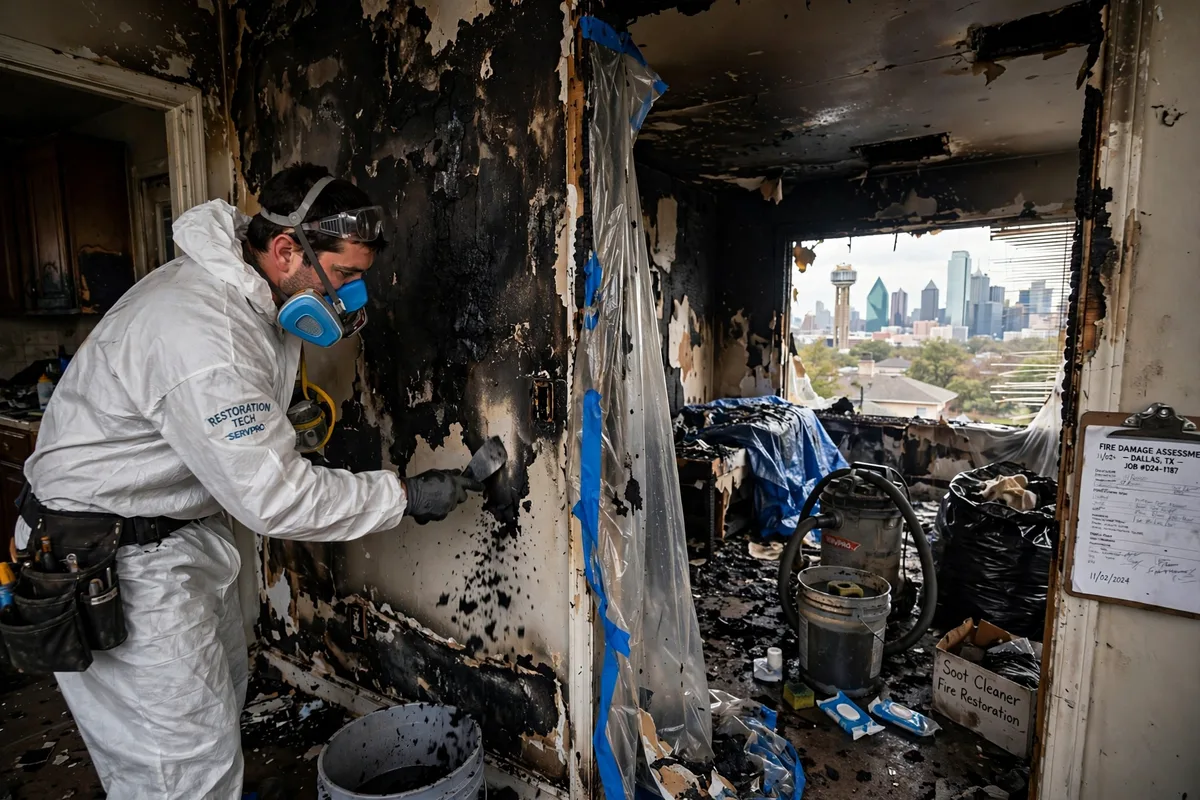
Within hours, not days, because soot is acidic and starts corroding metal, etching glass, and staining surfaces within hours of the fire going out. Firefighting water adds a second clock: wet drywall, insulation, and flooring grow mold in 24–48 hours if they are not extracted and dried. A home left open to weather through a broken window or roof opening deteriorates further with every rain. The water-after-fire guide covers the second disaster in detail. However, one timing exception applies: no restoration work starts before fire-department clearance and a safety assessment, because a fire-weakened structure or a smoldering hot spot is a genuine danger — the crew's first job is making the home safe to work in, and the clock starts from clearance, not from the flames going out.
Does insurance pay for fire damage restoration services?
Fire is usually covered under a standard homeowners policy, and fire claims are the largest claim type in the industry, averaging around $88,000 nationally — which also makes them the most heavily documented. The carrier will want the fire report, the crew's scope report, photos of every room before cleaning, an itemized contents inventory, and moisture readings for the firefighting water damage. Additional living expense coverage pays for temporary housing while the home is uninhabitable, but it has limits, so track every hotel and meal receipt from day one. The fire claims guide covers the mistakes that cost homeowners money. However, the claim rule that matters most is documentation before cleaning: once soot is cleaned, the evidence of scope is gone, and an adjuster who never saw the original damage pays on a smaller scope than the job actually required.
Important Considerations
Texas has no state license specifically for restoration companies, so check IICRC certification, insurance, and reviews before hiring, and be wary of anyone demanding full payment upfront. Never start cleaning soot yourself — wet-cleaning first smears soot and sets stains permanently, and soot itself is toxic without proper protective equipment. Never run the HVAC after a fire, because the system redistributes soot and odor through ductwork to rooms the fire never touched. If the fire involved a kitchen, ask explicitly about protein soot, the worst-smelling residue, which needs different chemistry than ordinary soot. Keep the fire report, scope report, photos, contents inventory, and all carrier correspondence in one file — fire claims generate more paperwork than any other claim type. Finally, after restoration, ask about smoke alarms, electrical checks, and heater safety before winter, because Dallas fire calls spike in the cold months.
📞 Free Fire Restoration Estimate: +1 214-807-4697
Frequently Asked Questions
Who provides fire damage restoration services in Dallas?
Water Damage Restoration Dallas — 24/7 live answer, around 60-minute arrival, free estimates, and board-up, soot removal, odor removal, and drying in one call.
What do fire damage restoration services include?
Board-up, water mitigation from firefighting, soot removal, odor neutralization, contents cleaning, and rebuild coordination — the full sequence from clearance to move-back.
How fast must fire restoration start?
Within hours of clearance — soot corrodes surfaces fast, and firefighting water grows mold in 24–48 hours if it is not extracted and dried.
How much does fire damage restoration cost in Dallas?
The Dallas average is $29,077, with most jobs between $3,000 and $25,000; smoke-only jobs run lower and severe rebuilds run far higher.
Does insurance pay for fire restoration?
Fire is usually covered, and claims average around $88,000 nationally — documentation before cleaning decides how much of the real scope gets paid.
Can smoke-damaged belongings be saved?
Often yes — pack-out and contents cleaning restore furniture, documents, and electronics that look ruined, though extinguisher residue and heavy char limit some items.
What should I never do after a fire?
Never start cleaning soot yourself, never run the HVAC, and never re-enter before fire-department clearance — all three spread damage or create danger.
How long does fire damage restoration take?
Smoke-only jobs take days to two weeks, full jobs take weeks, and major rebuilds can take 6–12 months, depending on scope and permit timelines.
Where do we live during fire restoration?
Additional living expense coverage usually pays for temporary housing while the home is uninhabitable — track every hotel and meal receipt from day one.
Why does the smoke smell keep coming back?
Smoke particles drive deep into drywall, insulation, fabrics, and ducts, so surface cleaning alone fails — real odor removal treats cavities and ductwork too.
Why call Water Damage Restoration Dallas for fire damage?
Local Dallas crews, 24/7 live answer, around 60-minute arrival, free estimates, and fire-season expertise — board-up through rebuild in one call. Call +1 214-807-4697.
📞 Call Water Damage Restoration Dallas 24/7: +1 214-807-4697