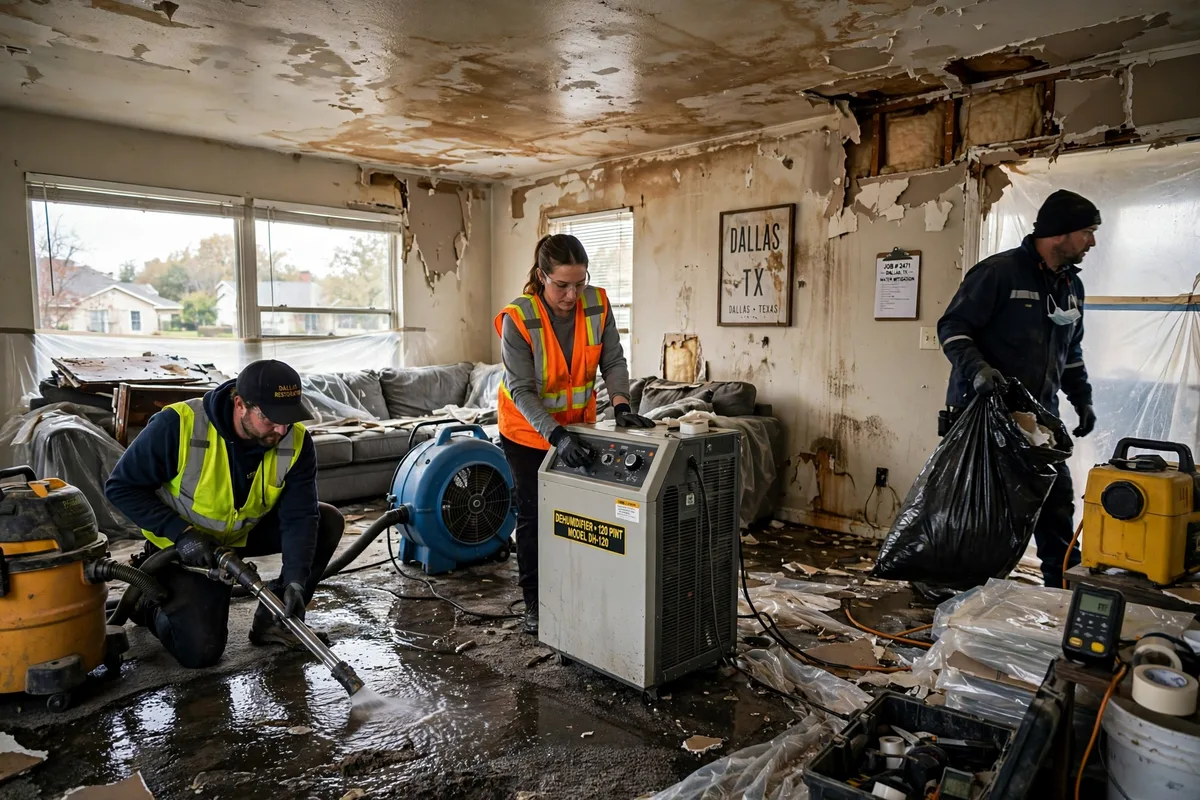
Water Damage Cleanup Services in Dallas: 24/7 Same-Day Help
TLDR
- Who provides water damage cleanup services in Dallas?: Water Damage Restoration Dallas — 24/7 live answer, around 60-minute arrival, free estimates: +1 214-807-4697.
- What do water damage cleanup services include?: Extraction, moisture mapping, structural drying, sanitizing, and mold prevention in one job.
- How fast must cleanup start?: Immediately — mold grows on wet material in 24–48 hours, and drying gets harder every day it waits.
- How much do water damage cleanup services cost in Dallas?: Most Dallas jobs land between $2,500 and $7,500 all-in for mitigation.
- How long does structural drying take?: Most homes dry in 3–5 days with professional equipment and daily moisture readings.
- Does insurance cover water damage cleanup?: Sudden losses are usually covered; the Texas burst-pipe average claim runs around $15,500.
- What separates a real cleanup from a mop-and-fan job?: Moisture mapping, verified drying readings, and sanitizing — not just visible water removal.
🚨 WATER DAMAGE IN DALLAS? Cleanup starts with the call, not the mop. We answer live 24/7, arrive in around 60 minutes, and give free estimates — extraction, drying, and sanitizing start the same day.
📞 24/7 Water Cleanup Help: +1 214-807-4697
Water damage cleanup services in Dallas handle the full job between the flood and the rebuild: getting the water out, finding every wet cavity, drying the structure to verified levels, sanitizing what the water touched, and stopping mold before it starts. A mop and a box fan remove the water you can see; professional cleanup removes the water you cannot see, in wall cavities, under flooring, and inside insulation, where it does its real damage. Water Damage Restoration Dallas handles cleanup jobs with IICRC-certified crews, around 60-minute arrival, free estimates, and same-day service. However, the rule that matters most comes first: cleanup is a drying science, not a cleaning chore, and a room that feels dry on the surface can still be wet enough behind the wall to grow mold within days.
What do water damage cleanup services include?
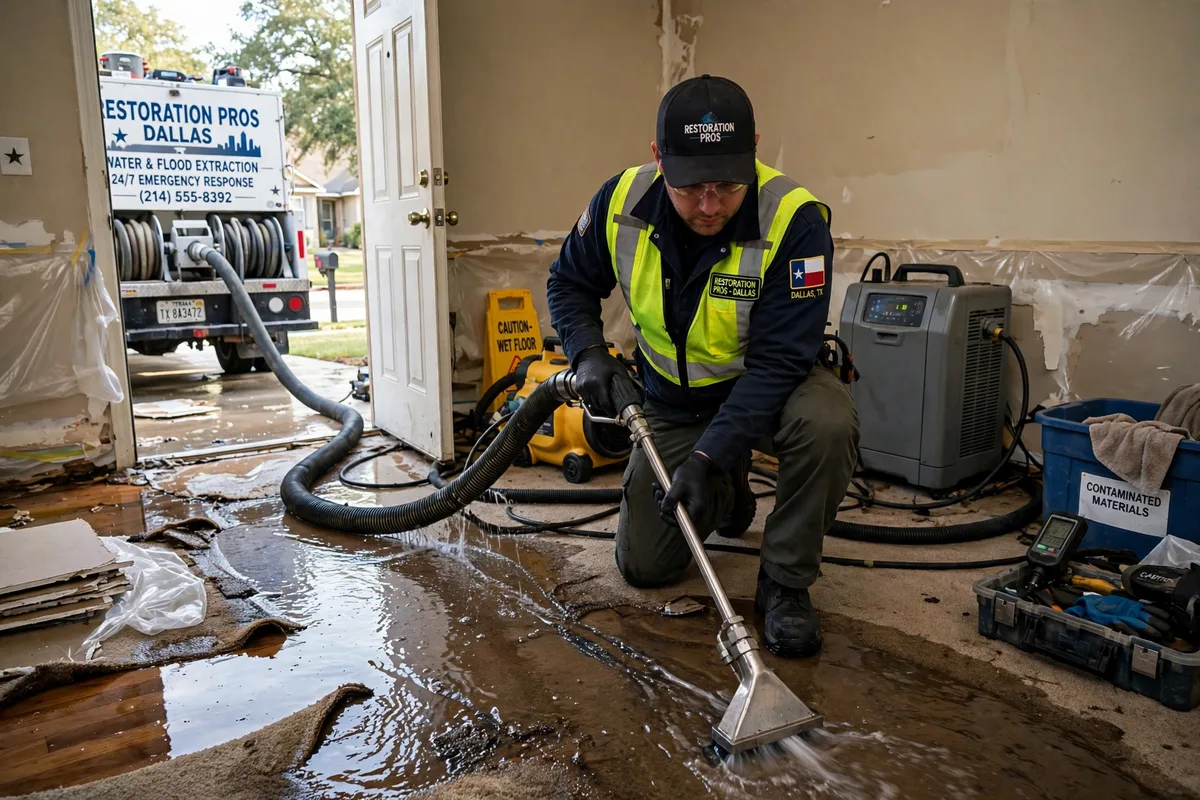
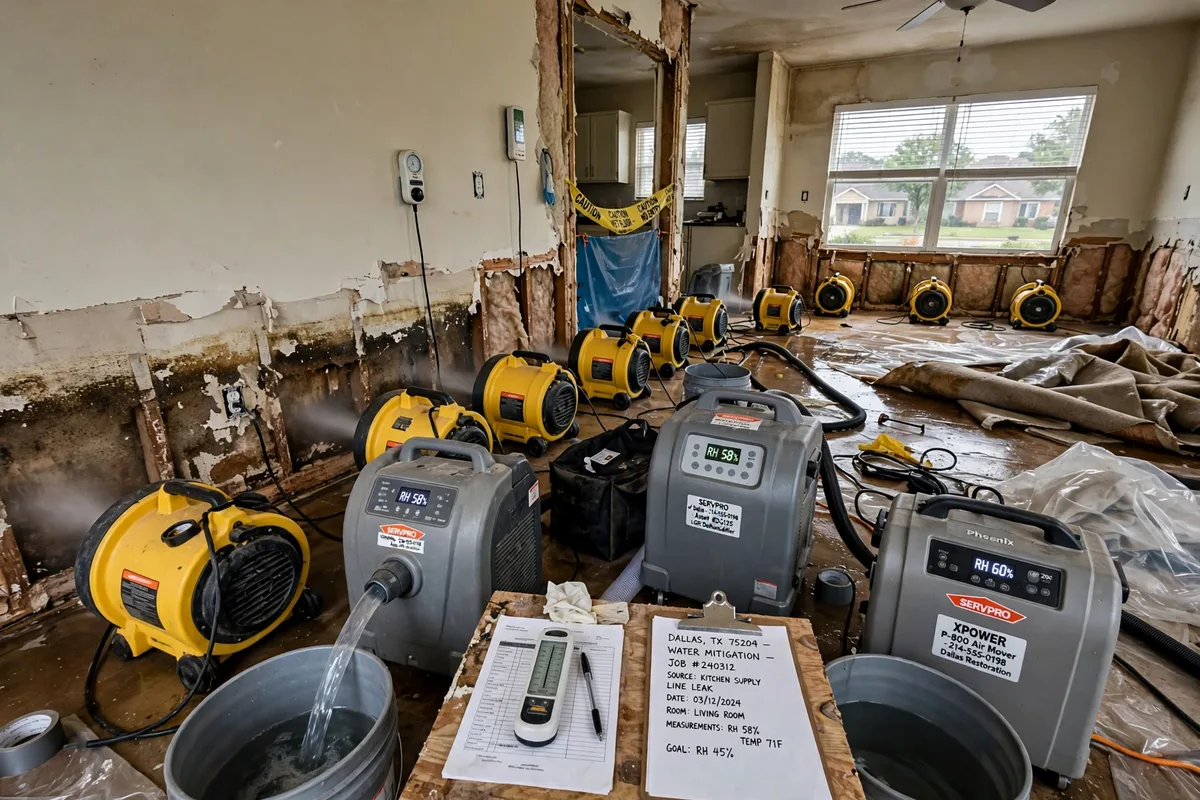
Professional cleanup follows a fixed sequence: safety checks for electrical hazards and contamination, extraction with truck-mounted equipment, moisture mapping with meters and thermal imaging, structural drying with air movers and dehumidifiers, sanitizing with antimicrobial treatment where the water carried contamination, and final moisture verification before equipment is removed. Contents get handled alongside the structure: wet furniture, rugs, and belongings are moved, dried, or cleaned rather than left sitting in water while the crew works around them. The restoration services guide covers the full service range, and the emergency extraction guide covers the first hours. However, one sequence rule is absolute: extraction without moisture mapping is guesswork, because the crew cannot dry what it has not measured, and unmeasured cavities are where mold jobs are born.
How long does water damage cleanup take?
Most homes dry in 3–5 days with professional equipment and daily moisture readings, though the timeline stretches with deep saturation, contaminated water, and multi-room losses. Extraction itself usually finishes the same day the crew arrives; drying is the longer phase, and equipment stays until readings prove the structure is dry, not until it looks dry. The structural drying guide explains the day-by-day process. However, one timeline trap applies: a homeowner who turns off rented equipment early to save a day's rental fee often pays for a mold job instead, because the last 10% of moisture is the 10% that grows mold, and it is invisible without a meter.
| Cleanup stage | What happens | Typical timing |
|---|---|---|
| Safety + extraction | Hazards checked, water out | Same day |
| Moisture mapping | Meters, thermal imaging | Same day |
| Structural drying | Air movers, dehumidifiers | 3–5 days typical |
| Sanitizing | Antimicrobial treatment | After drying starts |
| Verification | Final moisture readings | Before equipment leaves |
📞 Same-Day Water Cleanup: +1 214-807-4697
How much do water damage cleanup services cost in Dallas?
Most Dallas jobs land between $2,500 and $7,500 all-in for mitigation, with the final figure driven by how many rooms the water reached, how deep it went, and whether it carried contamination. Clean-water jobs with fast extraction sit at the low end, while sewage or street-runoff jobs with cavity drying and sanitizing sit at the high end. Mold remediation, when the loss sat wet past 48 hours, typically adds $1,200–$3,800, and slab leak detection, when the source is under the slab, typically runs $150–$400. The flood cleanup guide covers contaminated-water pricing. However, the cleanup cost trap is the partial job: a crew that extracts visible water and leaves without mapping and verification charges less upfront and costs more later, when the hidden moisture becomes a mold claim.
How do you choose water damage cleanup services in Dallas?
Choose on five checks: 24/7 live answer rather than voicemail, IICRC certification, truck-mounted extraction equipment rather than shop vacuums, a written scope with moisture readings, and reviews from Dallas homeowners with similar jobs. Ask whether the quote includes moisture mapping and final verification readings — if it does not, the quote is for water removal, not cleanup. Ask how the crew handles contents, and whether sanitizing is included for contaminated water. Be wary of anyone demanding full payment upfront, and of any quote given sight-unseen over the phone. However, one selection rule beats the rest: the company that measures before it promises — meters out, readings documented, scope in writing — is the company whose drying will hold up, and that habit is visible in the first ten minutes of the visit.
Important Considerations
Texas has no state license specifically for restoration companies, so check IICRC certification, insurance, and reviews before hiring, and be wary of anyone demanding full payment upfront. Never enter standing water to reach a breaker panel, and never run the HVAC through a wet system without checking for contamination spread. Never assume a room is dry because the surface feels dry — wall cavities hold water long after floors look fine, and that hidden moisture is what grows mold. If the water carried sewage or street runoff, ask explicitly for sanitizing and cavity drying, not just surface extraction. Keep the scope report, moisture readings, photos, and all carrier correspondence in one file — cleanup claims generate more paperwork than the job suggests. Finally, after cleanup, fix the source — the pipe, the drain, the appliance, the grading — because the next Dallas storm or freeze will test the same weak point again.
📞 Free Water Cleanup Estimate: +1 214-807-4697
Frequently Asked Questions
Who provides water damage cleanup services in Dallas?
Water Damage Restoration Dallas — 24/7 live answer, around 60-minute arrival, free estimates, and extraction, drying, and sanitizing in one call.
What do water damage cleanup services include?
Extraction, moisture mapping, structural drying, sanitizing, and mold prevention — the full sequence from first water to verified dry.
How fast must cleanup start?
Immediately — mold grows on wet material in 24–48 hours, and drying gets harder and costlier every day the water sits.
How much do water damage cleanup services cost in Dallas?
Most Dallas jobs land between $2,500 and $7,500 all-in for mitigation, with rooms affected, depth, and contamination driving the final figure.
How long does structural drying take?
Most homes dry in 3–5 days with professional equipment and daily moisture readings, though deep saturation extends the timeline.
Does insurance cover water damage cleanup?
Sudden losses are usually covered, with the Texas burst-pipe average claim around $15,500 — document everything and report the same day.
What separates real cleanup from a mop-and-fan job?
Moisture mapping, verified drying readings, and sanitizing — a mop removes visible water, while professional cleanup removes hidden cavity moisture too.
Is it safe to stay home during cleanup?
Often yes for clean-water jobs, since equipment runs quietly in affected rooms — contaminated or large jobs may need temporary relocation.
What happens to wet furniture and belongings?
Wet contents are moved, dried, or cleaned alongside the structure rather than left sitting in water while the crew works around them.
Should I start cleanup myself before the crew arrives?
Move valuables to dry ground and photograph everything if it is safe — but leave extraction and drying to the crew, since partial drying hides moisture.
Why call Water Damage Restoration Dallas for water cleanup?
Local Dallas crews, 24/7 live answer, around 60-minute arrival, free estimates, and meter-verified drying — cleanup done right in one call. Call +1 214-807-4697.
📞 Call Water Damage Restoration Dallas 24/7: +1 214-807-4697