Who Pays for Water Damage in a Dallas Rental: Landlord or Tenant?
TLDR
- Who pays for water damage in a Texas rental?: The landlord pays for structural damage and habitability repairs; the tenant pays for damage they caused and for their own belongings.
- What does Texas law require of landlords?: Texas Property Code requires landlords to repair conditions affecting health and safety — including water damage — after proper written notice.
- Does the landlord's insurance cover the tenant's stuff?: No — the landlord's policy covers the building; the tenant's belongings need renter's insurance.
- What if the tenant caused the leak?: The tenant is liable for damage from their negligence or misuse — overflowing tubs, unreported leaks, unauthorized alterations.
- What should a tenant do when water damage appears?: Notify the landlord in writing immediately, document everything, mitigate what you safely can, and call for emergency help if it is active.
- Who handles the emergency cleanup in Dallas?: Water Damage Restoration Dallas, 24/7: +1 214-807-4697 — we work with landlords, tenants, and property managers.
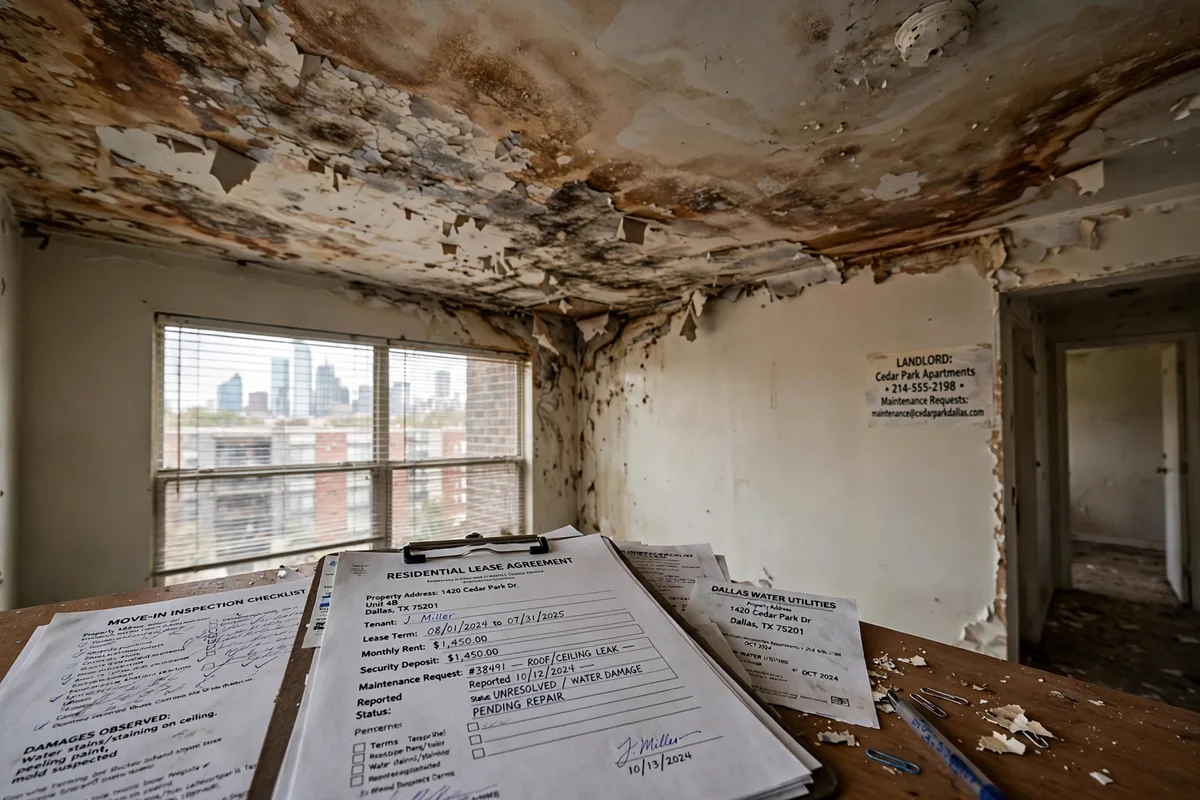
Water pouring through a rental's ceiling starts a second flood — the argument over who pays. Texas law draws the line more clearly than most Dallas renters and landlords expect: the landlord is responsible for the structure and for habitability, the tenant is responsible for damage they caused and for their own property, and the lease fills in the middle. But the law's clarity does not prevent the disputes, because the disputes are about facts — whose pipe was it, who knew what when, what the lease actually says — not about the statute. This guide maps the Texas rules, the lease clauses that matter, the insurance split, and the exact steps each side should take when water appears. However, this is general information about Texas landlord-tenant law, not legal advice — for a live dispute, a Texas tenant-rights attorney or the local housing authority is the right call.
📞 Rental Flooding Right Now? +1 214-807-4697
What Does Texas Law Say About Landlord Responsibility?
Texas Property Code Section 92.052 requires landlords to repair or remedy conditions that materially affect the physical health or safety of an ordinary tenant — and water damage squarely qualifies: active leaks, flooding, the resulting mold, and the structural damage they cause. The tenant's duty is notice: Section 92.056 requires the tenant to give the landlord written notice of the condition and a reasonable time to repair, and the landlord's duty to act runs from that notice. In practice, this means the landlord pays for repairing the building — the burst pipe, the damaged drywall, the flooring, the mold remediation — when the damage is not the tenant's fault. The landlord cannot contract away this duty in the lease: Texas law voids lease clauses that waive the landlord's repair obligations. The Uptown condo guide covers the parallel owner-vs-HOA version of this fight. However, the statute's protection runs through the notice procedure — a tenant who never notifies in writing has a weaker position than one who documented everything, so the paper trail is not bureaucracy, it is the legal foundation.
The landlord's insurance covers the building, not the tenant's life inside it. The landlord's hazard policy pays for structural repairs — the drywall, the flooring, the cabinets the landlord owns — and for the landlord's lost rental income in some policies. It does not cover the tenant's furniture, electronics, clothing, or temporary housing: those belong to renter's insurance, which most Texas leases require but many tenants skip. When a Dallas rental floods, the two policies work in parallel — the landlord's carrier handles the structure, the tenant's renter's policy handles the contents and additional living expenses — and the restoration company documents for both. Dallas restoration jobs run $2,500–$7,500, and the structural portion of that is the landlord's invoice. However, the landlord's deductible and coverage decisions are the landlord's business — the tenant cannot force the landlord to file a claim, which is why the tenant's own renter's policy is the protection the tenant actually controls.
When Is the Tenant Liable for Water Damage?
| Scenario | Usually liable | Why |
|---|---|---|
| Burst pipe, old plumbing | Landlord | Structure, not tenant fault |
| Overflowing tub/sink | Tenant | Tenant negligence |
| Unreported leak worsens | Tenant (partial) | Failed duty to notify |
| Roof leak, storm | Landlord | Building envelope |
| Tenant's appliance hose | Tenant | Tenant's property |
| Mold from humidity | Depends | Ventilation vs habits |
Tenant liability follows fault. The classic tenant-caused events — the overflowing bathtub, the sink left running, the washing machine hose the tenant installed, damage from unauthorized alterations — are the tenant's financial responsibility, including the damage to the landlord's structure. The subtler tenant liability is the unreported leak: a tenant who notices a drip under the sink, says nothing for three months, and then faces a mold colony has contributed to the damage through the failure to notify, and Texas courts have apportioned that cost to the tenant. Renter's insurance covers the tenant's liability in many of these cases — the liability portion of the policy, not just the contents — which is another reason the $15-a-month policy earns its keep. The claim-denied guide documents how the sudden-vs-gradual distinction plays out in these disputes. However, normal wear is not tenant fault — a supply line that bursts from age is the landlord's plumbing failing, not the tenant's misuse, and no lease clause can convert aging infrastructure into tenant negligence.
The lease clauses that decide real disputes are narrower than most tenants realize. The maintenance and repair clause restates the statutory duties — read it for the notice procedure (where to send it, in what form) because following the lease's procedure strengthens the tenant's position. The renter's insurance clause, now standard in Dallas leases, requires the tenant to carry coverage and often to name the landlord as an interested party — a tenant who skipped the required policy has breached the lease before the dispute even starts. The alterations clause matters for the tenant-installed appliance or fixture that later leaks. And the mold addendum, common in Texas leases, typically requires the tenant to maintain ventilation, report moisture promptly, and keep the unit reasonably clean — the landlord's shield against mold claims rooted in tenant habits. However, a lease cannot override the Property Code — any clause purporting to waive the landlord's habitability repair duty is void in Texas, no matter how firmly the lease states it.
📞 Landlords & Tenants: 24/7 Help +1 214-807-4697
What Should Each Side Do When Water Damage Appears?
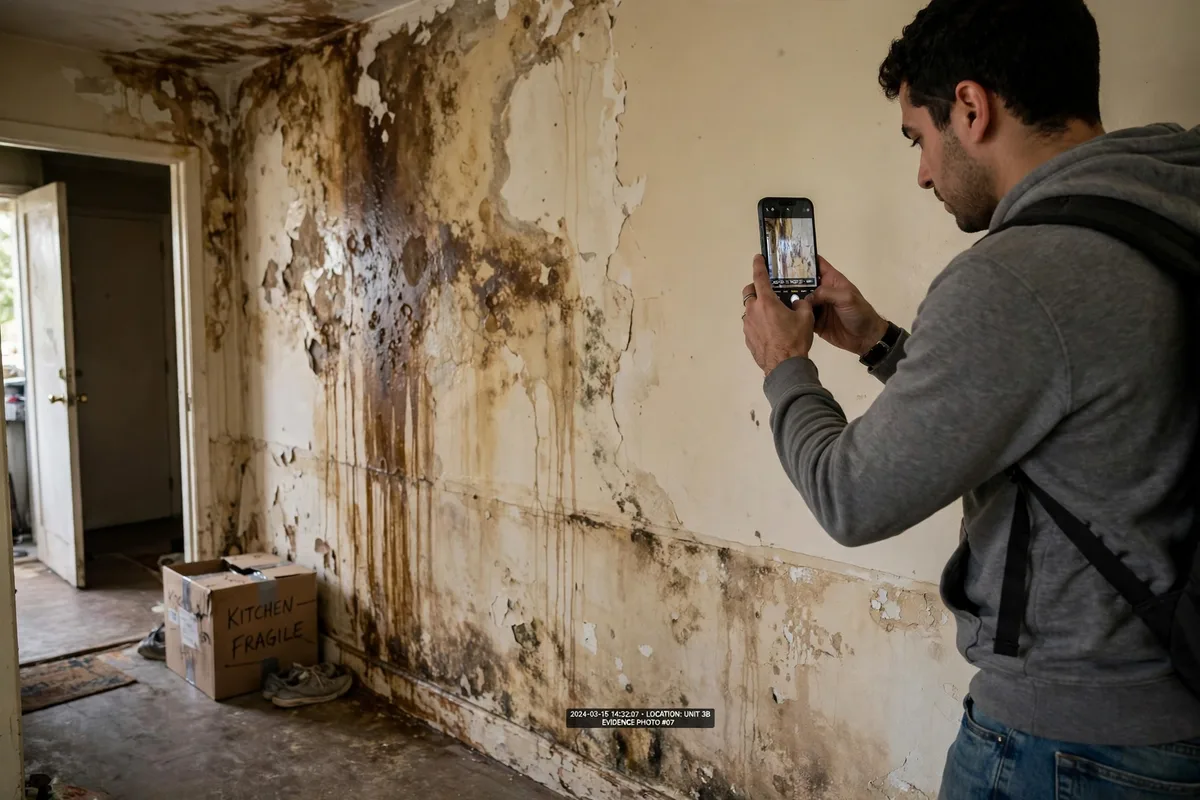
The tenant's playbook is notice, documentation, and mitigation. Notify the landlord in writing immediately — email or text creates the timestamped record the statute wants; a phone call alone does not. Photograph and video everything: the water, the source if visible, the damaged belongings, the conditions. Mitigate what is safely possible: shut off the local valve, move belongings out of the water's path, contain the spread with towels — the duty to mitigate applies to tenants too. If the water is active and the landlord is unreachable, call for emergency help: a restoration company's emergency extraction protects the property, and the cost lands where the liability lands. Keep every receipt — emergency spending, hotel, meals — because additional living expenses are recoverable from the liable party or the tenant's renter's policy. However, do not authorize major repairs yourself and expect reimbursement — the tenant's right is to notice and to repair-and-deduct only after the statutory procedure (written notice, reasonable time, and the statutory conditions) is satisfied, and skipping the procedure converts a right into a dispute.
The landlord's playbook is speed, documentation, and the right vendors. Respond to water notices as emergencies — the 24–48 hour mold window does not pause for the property manager's schedule, and every day of delay expands both the damage and the liability. Document the response: the notice received, the vendors dispatched, the timeline. Send the plumber for the source and the restoration company for the damage in parallel — the roof-vs-plumbing guide helps triage the source. Communicate with the tenant in writing about the plan and the timeline; silence breeds the disputes that end up in front of a judge. For Dallas landlords with multiple units, a standing relationship with a 24/7 restoration company is the operational answer — one call, documented response, adjuster-ready paperwork. Our water extraction services page details the emergency response. However, do not enter the unit without proper notice except for a genuine emergency — Texas requires 24-hour notice for non-emergency entry, and the water emergency is the exception, not the rule; document why the entry was an emergency.
Important Considerations
The mold question is where rental water disputes get genuinely contentious. Texas law treats mold from a landlord's unrepaired leak as the landlord's habitability problem; mold from the tenant's failure to ventilate or report is the tenant's problem; and most real cases are mixed. The practical resolution is the professional assessment: moisture readings and inspection establish the source and the timeline, and the timeline usually settles the argument — a colony behind a wall the tenant never saw is not the tenant's ventilation failure. Dallas mold remediation runs $1,200–$3,800, and the argument over who pays it costs more than the remediation when it goes legal. The mold remediation guide covers the professional process. However, neither side should use mold as a weapon — the tenant who threatens mold litigation over a spot of shower mildew and the landlord who dismisses a real colony as "tenant lifestyle" are both manufacturing the dispute they claim to want resolved.
Security deposits, rent withholding, and repair-and-deduct are the remedies tenants ask about, and Texas structures all three narrowly. The security deposit cannot be used as a water-damage slush fund by either side — it is for the lease-end accounting, and disputes over it follow the statutory bad-faith penalties. Rent withholding is not a recognized Texas tenant remedy; the statutory path is repair-and-deduct under Section 92.0561, which requires the full notice procedure, a reasonable time for the landlord to act, and strict compliance with the statute's conditions — and it is limited in amount. The claim-vs-pay guide covers the parallel financial decision for owners. However, the best remedy is usually the fastest one: documented notice, professional response, and clear communication resolve most rental water events without any statute being invoked — the law is the backstop, not the plan.
Frequently Asked Questions
Is my landlord responsible for water damage in my apartment?
For the structure and habitability repairs, yes — Texas Property Code requires landlords to repair conditions affecting health and safety, including water damage, after the tenant gives written notice. The landlord pays for fixing the pipe, the drywall, the flooring, and the mold remediation when the damage is not the tenant's fault. The landlord's insurance covers the building. What the landlord does not cover is the tenant's belongings or temporary housing — those need the tenant's renter's insurance. However, the duty runs from proper notice — notify in writing immediately, because the landlord's obligation to act starts when the landlord knows, and the timestamped notice is what proves it.
Can my landlord charge me for water damage I didn't cause?
Not lawfully for the repair itself — a burst pipe from aging plumbing, a roof leak, or a storm is the landlord's structure failing, and the cost belongs to the landlord. Where tenants get charged is the gray zone: the leak the tenant noticed and never reported (contributory negligence), damage from the tenant's own appliances or alterations, or lease violations connected to the event. If a landlord bills you for damage you did not cause, respond in writing disputing it, cite the lease's maintenance clause and the Property Code repair duty, and keep the documentation. However, do not ignore the bill — an undisputed charge can end up deducted from the security deposit or sent to collections, so dispute it in writing promptly even while the facts are still being established.
Does renter's insurance cover water damage?
Renter's insurance covers the tenant's belongings damaged by covered water events (burst pipes, appliance failures) and the tenant's additional living expenses if the unit becomes uninhabitable — typically for a modest premium. It also includes liability coverage if the tenant causes water damage to the unit or neighboring units. What it does not cover is flood (rising water needs separate flood insurance, even for renters) or damage from the tenant's neglect. Most Dallas leases require renter's insurance, and the tenants who skip it discover the gap at the worst moment. However, read the water-damage endorsements — some budget policies exclude certain water events, and the time to discover the exclusion is before the ceiling caves, not after.
What if my landlord won't fix water damage?
Follow the statutory procedure: written notice describing the condition, sent as the lease directs; allow a reasonable time for repair (the statute presumes 7 days reasonable); and if the landlord still does not act, the remedies include terminating the lease, repair-and-deduct under Section 92.0561, or a justice-court suit for damages. Document everything — the notice, the lack of response, the worsening condition, the expenses. Contact the local code enforcement or housing authority as well; a city citation moves landlords faster than letters do. However, do not stop paying rent as leverage — Texas does not recognize rent withholding, and the unpaid rent becomes the landlord's counterclaim; use the statutory remedies, which are designed for exactly this situation.
Who pays for mold remediation in a rental?
The landlord pays when the mold results from the landlord's unrepaired leak or structural failure — it is a habitability repair. The tenant pays (or the tenant's renter's policy pays) when the mold results from the tenant's negligence — the unreported leak, the disabled bathroom fan, the indoor drying of laundry in a sealed unit. Mixed cases get apportioned by the facts, and the professional assessment — moisture readings, source identification, timeline — is what establishes them. Dallas mold remediation runs $1,200–$3,800. However, do not let the who-pays argument delay the remediation — the colony grows during the dispute, and the additional damage from delay is never anyone's covered claim; remediate first and apportion second.
Can I break my lease over water damage?
Texas allows lease termination when the landlord fails to repair a condition materially affecting health or safety after proper notice and reasonable time — Section 92.056 sets out the procedure. The water damage must genuinely affect habitability: an active leak, flooding, or resulting mold, not a cosmetic stain. Follow the notice procedure exactly, because the right to terminate runs from the landlord's failure to act after notice, not from the damage itself. Document the condition and the landlord's non-response thoroughly. However, breaking a lease is the nuclear option — it ends the tenancy, triggers the move-out accounting, and invites a dispute over the deposit; for repairable damage with a responsive landlord, the repair path is almost always better.
Should the tenant or landlord call the restoration company?
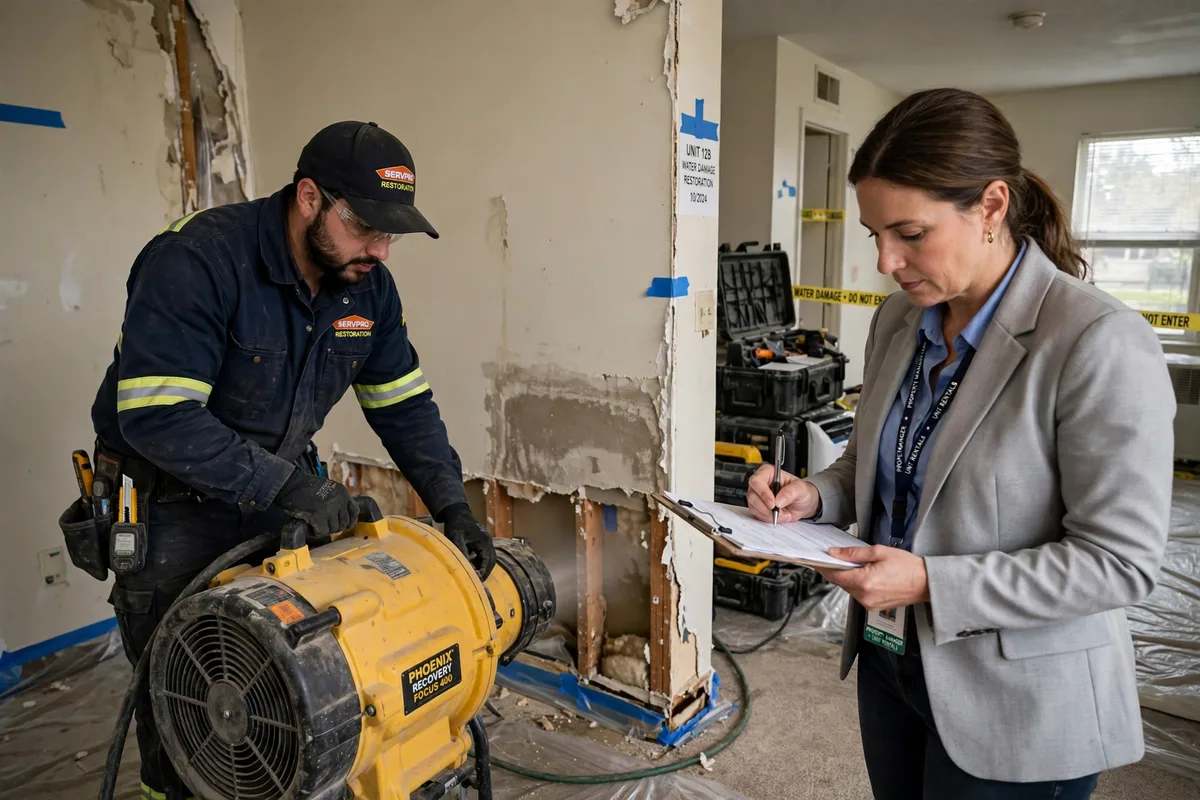
Whoever discovers active water damage should call immediately — the 24–48 hour mold window does not wait for the liability determination. In practice, the tenant calls when the landlord is unreachable and the water is flowing; the landlord or property manager calls when they are managing the response. The restoration company documents everything and bills according to the scope — the invoice lands with the liable party, and the documentation supports both the landlord's property claim and the tenant's renter's claim. Water Damage Restoration Dallas works with tenants, landlords, and property managers across Dallas, 24/7 at +1 214-807-4697. However, the tenant should notify the landlord in writing at the same time as calling for help — the emergency call mitigates the damage, and the written notice preserves the legal position.
What if the water damage affects multiple units?
Multi-unit water events — the upstairs neighbor's burst pipe flooding the unit below — follow the same liability logic with more parties. The upstairs tenant is liable if they caused it; their landlord is liable for the building systems; the downstairs tenant claims against the liable party and their own renter's policy. The building owner's insurance often becomes the central claim for structural damage across units. Document the source, the path, and every affected area, because multi-party claims live or die on the timeline. The Uptown condo guide covers the owner-occupied version of this scenario. However, do not wait for the parties to sort out liability before mitigating — the water does not respect unit boundaries, and neither should the emergency response.
Can a landlord deduct water damage from my security deposit?
Only for damage the tenant caused beyond normal wear — the overflowing tub, the unreported leak, the unauthorized alteration — and the landlord must provide a written itemization of deductions within 30 days of move-out under Texas law. The landlord cannot deduct for the burst pipe, the roof leak, or the aging plumbing that failed on its own. Wrongful withholding triggers the statutory bad-faith penalty (up to $100 plus three times the wrongfully withheld amount, plus attorney's fees), which is why most landlords itemize carefully. Photograph the unit thoroughly at move-in and move-out — the photo record is what wins deposit disputes. However, dispute a wrongful deduction in writing promptly — the 30-day itemization starts the clock, and silence reads as acceptance.
Do landlords have to provide alternative housing during repairs?
Texas law does not directly require landlords to pay for a hotel during repairs, but the tenant's remedies cover it indirectly: if the unit becomes uninhabitable, the tenant can terminate the lease, and the tenant's renter's insurance covers additional living expenses. Some landlords provide or pay for temporary housing voluntarily — it is cheaper than a vacancy and a dispute. The lease may address it; many Dallas leases are silent. Document the uninhabitability (no water, no power, active remediation, health hazard) because the additional-living-expenses claim needs it. However, do not assume the landlord's silence means consent — get any housing arrangement in writing, including who pays and for how long, before checking into the hotel.
What documentation should a tenant keep for a water damage dispute?
Everything, in chronological order: the written notice to the landlord (with timestamps), photos and video of the damage and the source, the lease (especially the maintenance, insurance, and mold clauses), all communications with the landlord and property manager, receipts for every expense (emergency supplies, hotel, meals, laundry), the renter's insurance policy and claim correspondence, and any professional assessments or reports. Store it outside the damaged unit — cloud storage, not the wet desk drawer. This file is the dispute: Texas justice courts decide these cases on documentation far more than on testimony. However, start the file at the first sign of water, not when the dispute begins — the contemporaneous record is worth ten times the reconstructed one.
Does Water Damage Restoration Dallas work with property managers?
Yes — we work with tenants, landlords, and property managers across Dallas, and multi-unit portfolios are a core part of our business. One call dispatches the emergency response: extraction, structural drying with documented moisture readings, remediation if needed, and rebuild — with adjuster-ready documentation for the landlord's property claim and the tenant's renter's claim alike. Serving Dallas 24/7 from 315 North St. Paul Street, Dallas, TX 75201, with typical 60-minute emergency arrival and IICRC-certified technicians. Property managers: ask about priority response arrangements for your portfolio. Call +1 214-807-4697 any time. However, we are the restoration company, not the lawyers — for the lease dispute itself, a Texas tenant-rights attorney is the right call, and we will provide the documentation either side's attorney needs.
📞 Free Rental Damage Assessment: +1 214-807-4697
📞 Call Water Damage Restoration Dallas Now: +1 214-807-4697