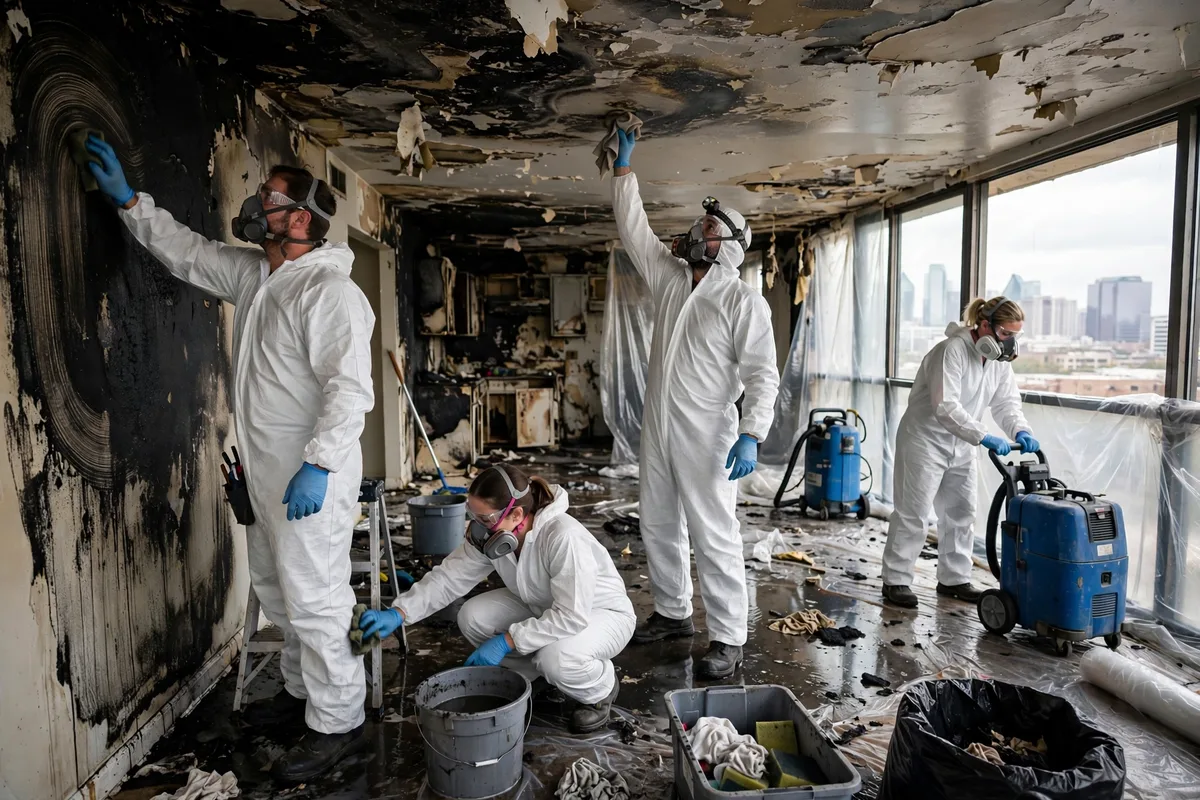
Apartment Fire Damage Restoration in Dallas: Tenants, Property Managers & Same-Day Cleanup
TLDR
- Who handles apartment fire damage in Dallas?: Water Damage Restoration Dallas — 24/7 live answer, around 60-minute arrival, free estimates: +1 214-807-4697.
- What makes an apartment fire different from a house fire?: One fire spreads smoke and firefighting water through shared ceilings and plumbing into units that never burned.
- Who calls the restoration crew first after an apartment fire?: The property manager or building owner, once the fire department clears the building for entry.
- How much does apartment fire restoration cost in Dallas?: Dallas fire restoration averages $29,077, and multifamily claims run higher because several units and common areas sit in one claim.
- Does insurance cover apartment fire damage?: The building policy covers the structure and common areas; each tenant's renters policy covers contents and living expenses.
- How fast can a crew reach a Dallas apartment fire?: Around 60 minutes, 24/7 — assessment, containment, and pack-out start the same day.
- When can tenants move back in after an apartment fire?: After clearance testing and phased re-occupancy — only once each unit is verified safe, dry, and odor-free.
🚨 APARTMENT FIRE IN DALLAS? One fire can displace several households — call now. We answer live 24/7, arrive in around 60 minutes, and give free estimates — containment, pack-out, drying, and rebuild coordinated with your property manager.
📞 24/7 Apartment Fire Help: +1 214-807-4697
Apartment fire damage restoration in Dallas means restoring several homes at once, not one: a single fire in one unit pushes smoke through shared ceilings, wall cavities, and ventilation into the units above and beside it, and the firefighting water that saves the building soaks the floors below, so tenants who never saw a flame still come home to wet ceilings, smoke odor, and soaked belongings. Dallas apartment stock — garden-style complexes in the suburbs, mid-rise buildings near downtown, and older brick buildings with shared attics — spreads damage fast because the structure is shared, and the job needs coordination between the property manager, the building owner, the HOA or building management, and each unit's insurer. Dallas fire restoration averages $29,077, and fire claims average around $88,000, with the multifamily version of those numbers running higher because several units plus hallways, stairwells, and common areas sit inside one claim. Water Damage Restoration Dallas handles apartment fires with IICRC-certified crews, around 60-minute arrival, free estimates, and same-day assessment that documents every unit separately so each claim stands on its own evidence. However, one apartment rule comes first: nobody re-enters until the fire department clears the building, because a unit that looks untouched can hide smoke in the ceiling cavity and water in the walls below.
What makes apartment fire damage different from a house fire?
Apartment fire damage is different because the building is shared: smoke travels through ceiling cavities, pipe chases, and shared ventilation into units that never burned, and firefighting water follows gravity through the floor assembly into the apartments below, so one fire routinely damages three or four units plus the hallway and stairwell. In a house the owner makes every decision; in an apartment the property manager or building owner controls the structure and common areas, each tenant controls their own contents, and every insurer needs its own documentation before paying. The crew therefore works unit by unit — containment per unit, pack-out per unit, moisture readings per unit — while the building stays partly occupied and the unaffected units keep their power and water. The fire damage restoration service page covers the full scope of fire work, and the commercial fire restoration guide covers the same multi-party coordination for business buildings. However, the shared-structure trap is the hidden unit: the apartment two doors down can smell of smoke and test wet in the ceiling while its tenant insists nothing happened, so the crew inspects every adjoining unit before declaring the job scoped.
Who should call first after an apartment fire in Dallas?
The property manager or building owner should call first, once the fire department clears the building for entry, because they hold the building insurance policy and the authority to approve structural work, shut off utilities, and open common areas. Tenants should call their own renters insurer the same day and photograph their contents before anything moves, since the building policy does not cover a tenant's belongings or their hotel stay. The restoration crew's first visit covers a walk-through of every affected unit, moisture mapping, a written scope per unit, and a free estimate — and the documentation is separated by unit so the building claim, each tenant's contents claim, and each tenant's living-expense claim do not get tangled. The additional living expense guide explains what a policy pays while a home is unlivable. However, one calling-order mistake costs days: a tenant who waits for the building's insurer to act before calling their own renters carrier loses the early documentation window, and the contents claim gets harder with every day the pack-out is delayed.
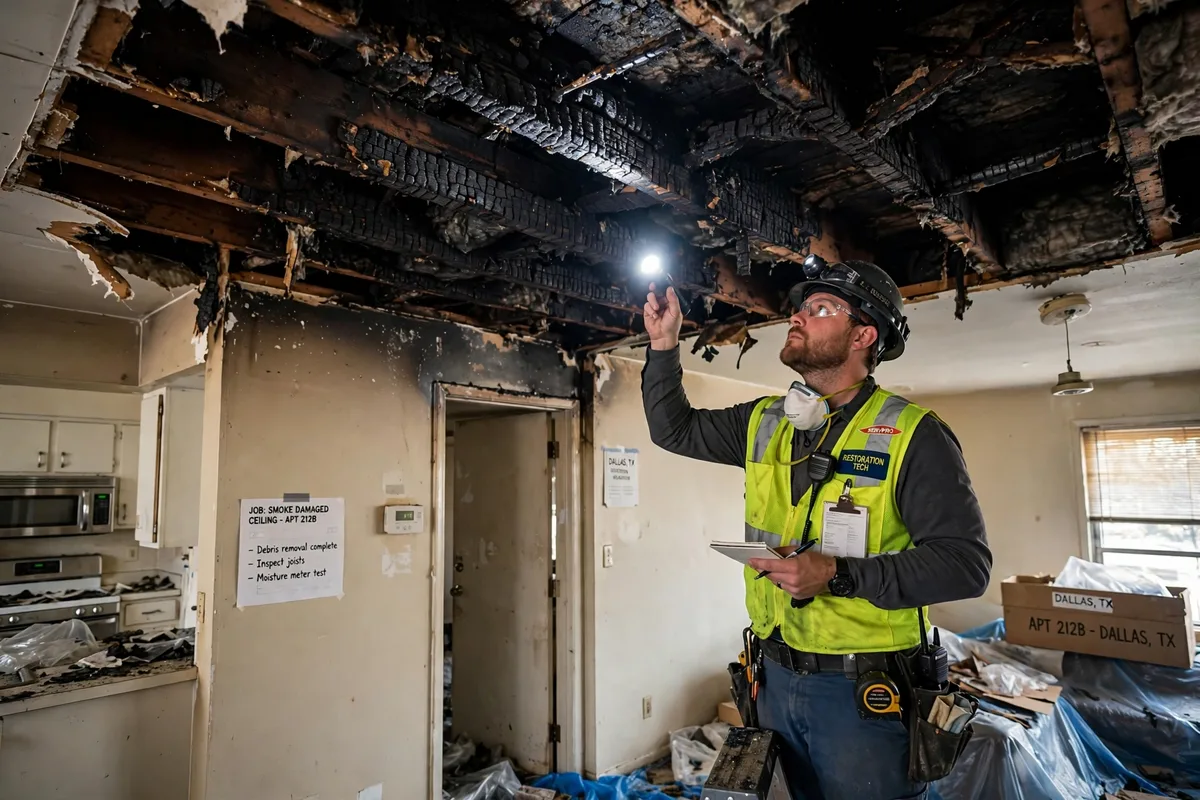
How do crews restore several apartments at once?
Crews restore several apartments at once in phases: containment first, so smoke and soot stop migrating through shared cavities; pack-out second, with each unit's contents inventoried, photographed, and tagged separately; extraction and drying third, with air movers and dehumidifiers placed per unit and moisture readings taken in every wall and ceiling; then soot cleaning, odor removal, and rebuild unit by unit. Unaffected units stay occupied where it is safe, and the crew sequences the noisy, dusty work around the tenants who remain, with temporary barriers on hallways and stairwells. The fire-origin unit takes the longest — structural repair, full soot removal, and odor treatment — while the smoke-only and water-only units often return first, which is why re-occupancy is phased rather than all at once. The fire damage restoration cost guide breaks down where the money goes in a Dallas fire job. However, one phasing rule is absolute: no unit reopens until its own clearance readings pass, because a single damp ceiling cavity left closed will grow mold in 24–48 hours and undo the whole restoration.
| Apartment fire damage | Typical scope | First crew step |
|---|---|---|
| Fire-origin unit | Structural, soot, odor | Board-up, containment |
| Smoke-only neighbour unit | Soot, odor in soft goods | Pack-out, soot cleaning |
| Water-damaged unit below | Wet ceilings, floors | Extraction, moisture mapping |
| Hallways, stairwells | Smoke, water, debris | Containment, cleaning |
| Shared attic, roof void | Hidden smoke, water | Inspection, drying |
📞 Book Apartment Fire Cleanup: +1 214-807-4697
How much does apartment fire damage restoration cost in Dallas?
Dallas fire restoration averages $29,077 for a single-family job, and apartment fires run higher because the claim covers several units plus hallways, stairwells, and common areas, with fire claims averaging around $88,000 across the board. The bill splits three ways: the building policy pays for structure and common areas, each tenant's renters policy pays for contents and the hotel stay, and the contents work — pack-out, cleaning, storage — is priced per unit by volume and by how far the soot travelled. A smoke-only neighbour unit can cost a few thousand dollars, while the fire-origin unit with structural repair and full rebuild can run into the tens of thousands. A free written estimate before work starts, with a scope per unit, is the only way the property manager and each tenant know where they stand. However, the pricing trap is the single lump-sum quote: a price that does not separate structure, contents, and living expenses per unit is a price no insurer can process, so demand the per-unit breakdown before anyone starts.
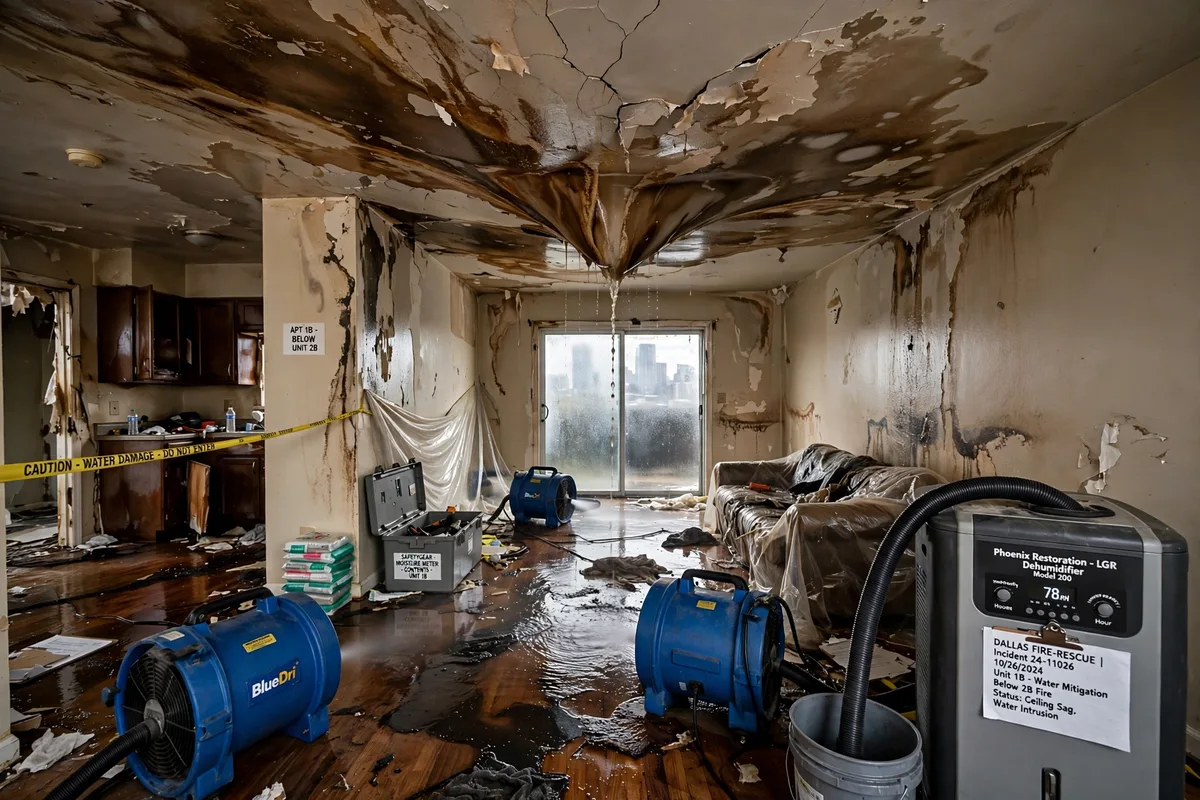
What does firefighting water do to apartments that never burned?
Firefighting water soaks the units below the fire through the floor assembly: ceilings sag, drywall softens, insulation holds water, and flooring warps in apartments whose tenants never saw a flame, and the water keeps moving for hours after the hoses stop. The damage is easy to miss because the ceiling can look dry from below while the cavity above it is saturated, and the first sign is often a stain that appears days later or a musty smell as mold starts growing in 24–48 hours. The crew maps moisture in every ceiling and wall of the units below, extracts what it can, opens cavities that will not dry on their own, and runs dehumidifiers until readings verify the structure is dry. However, one water rule decides the whole job: a wet ceiling that is painted over instead of dried will sag, stain, and feed mold under the finish, so the cavity is opened and verified dry before any repair begins.
How do you choose apartment fire damage restoration services in Dallas?
Choose on five checks: same-day response for an active displacement, experience with multifamily and property-manager coordination, per-unit documentation with photos and moisture readings, IICRC-certified crews, and a written scope that separates building work from tenant contents work. Ask whether the crew has restored apartments before, how it sequences phased re-occupancy, and whether it will document each unit separately for the separate claims. Ask for a single point of contact who keeps the property manager, the tenants, and every insurer updated in the same thread, because a multifamily job fails on communication before it fails on drying. However, one selection rule beats the rest: the company that maps every adjoining unit on the first visit, documents per unit, and hands the property manager a phased re-occupancy plan in writing is the company whose building comes back fastest.
Important Considerations
Texas has no state license specifically for restoration companies, so check IICRC certification, insurance, and reviews before hiring, and be wary of anyone demanding full payment upfront. Never re-enter a fire-damaged apartment before the fire department clears the building, and never run the HVAC until the ductwork is inspected, because the system will push soot and smoke odor into every unit it serves. Never wipe soot with a household cloth — dry soot smears and drives deeper into paint and fabric, and wet wiping sets it permanently. Never assume the unit below is fine because its ceiling looks dry, since the cavity above it can be saturated while the surface reads normal. Keep every unit's documentation separate — photos, readings, pack-out inventory, and carrier correspondence in one file per unit — because a multifamily claim generates more paperwork than the job suggests. Finally, after restoration, ask the property manager about the building's smoke alarm and sprinkler inspection schedule, because the next fire in the same building will test the same shared systems again.
📞 Free Apartment Fire Estimate: +1 214-807-4697
Frequently Asked Questions
Who handles apartment fire damage in Dallas?
Water Damage Restoration Dallas — 24/7 live answer, around 60-minute arrival, free estimates, and containment, pack-out, drying, and rebuild coordinated with your property manager. Call +1 214-807-4697 any hour and a live crew answers.
What makes an apartment fire different from a house fire?
The building is shared, so smoke and firefighting water travel through ceilings, pipe chases, and ventilation into units that never burned. One fire routinely damages three or four units plus hallways and stairwells.
Who calls the restoration crew first after an apartment fire?
The property manager or building owner, once the fire department clears the building. Tenants should call their own renters insurer the same day and photograph contents before anything moves.
How much does apartment fire restoration cost in Dallas?
Dallas fire restoration averages $29,077, and apartment fires run higher because several units and common areas sit in one claim. Fire claims average around $88,000 overall.
Does insurance cover apartment fire damage?
The building policy covers the structure and common areas, while each tenant's renters policy covers contents and living expenses. Document every unit separately so each claim stands on its own evidence.
How fast can a crew reach a Dallas apartment fire?
Around 60 minutes, 24/7 — assessment, containment, and pack-out start the same day, and the crew sequences work so unaffected units can stay occupied where it is safe.
When can tenants move back in after an apartment fire?
After clearance testing and phased re-occupancy — only once each unit is verified safe, dry, and odor-free. Smoke-only units often return first; the fire-origin unit takes longest.
What does firefighting water do to the units below?
It soaks ceilings, drywall, and flooring in apartments that never burned, and the cavity above a ceiling can stay saturated while the surface looks dry. Moisture mapping finds it before mold grows in 24–48 hours.
Should tenants clean soot themselves?
No — dry soot smears when wiped and wet wiping sets it permanently into paint and fabric. Leave soot cleaning to the crew, and do not run the HVAC until the ductwork is inspected.
Do you work with property managers directly?
Yes — the crew coordinates with the property manager, the building owner, and each unit's insurer, with a single point of contact and a written phased re-occupancy plan. Call +1 214-807-4697 to start.
Why call Water Damage Restoration Dallas for an apartment fire?
Local Dallas crews, 24/7 live answer, around 60-minute arrival, free estimates, and per-unit documentation with moisture readings — call +1 214-807-4697.
📞 Call Water Damage Restoration Dallas 24/7: +1 214-807-4697
Related Dallas Water Damage Guides
- Burst Pipe in Dallas: What to Do in the First 60 Minutes
- Water Damage in the First 24 Hours: An Hour-by-Hour Guide for Dallas Homeowners
- Emergency Water Extraction in Dallas: What Actually Happens When the Crew Arrives
- Emergency Water Damage Checklist: Every Step, in Order, for Dallas Homeowners