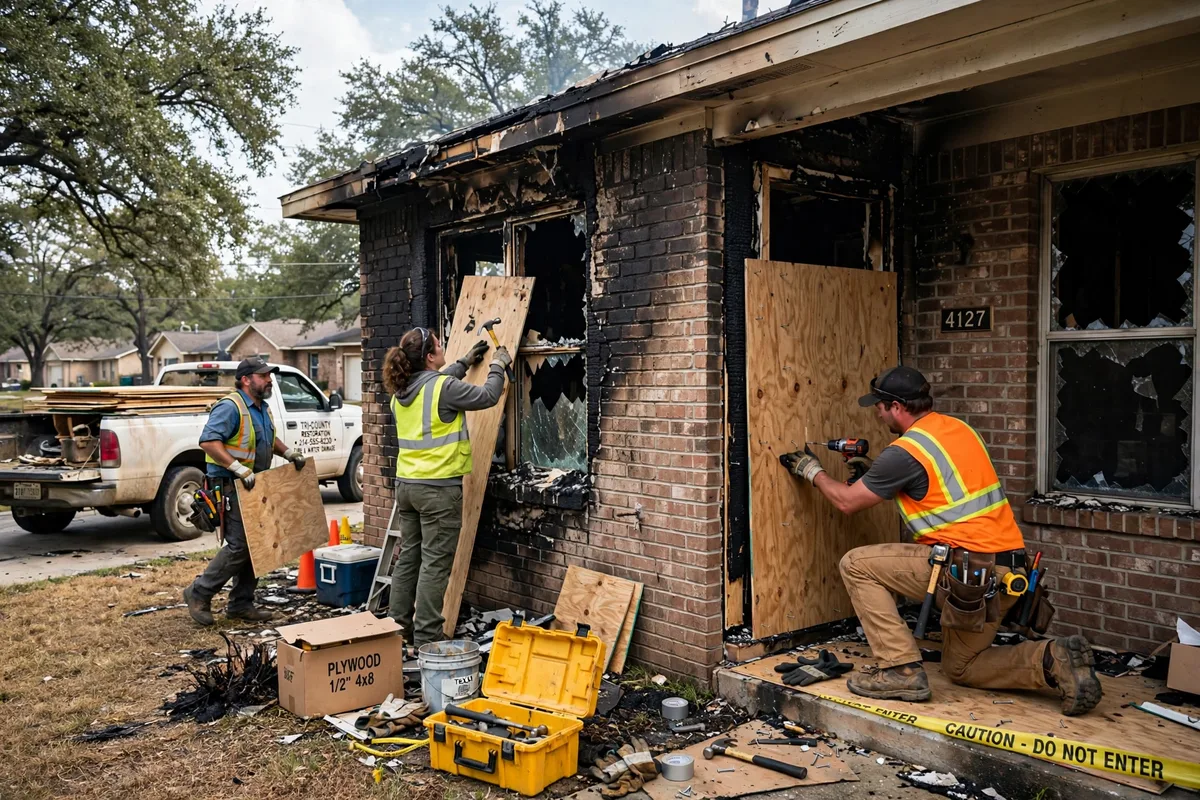
Emergency Board-Up Services in Dallas: 24/7 Same-Day Response
TLDR
- Who provides emergency board-up services in Dallas right now?: Water Damage Restoration Dallas — 24/7 live answer, same-day dispatch, around 60-minute arrival: +1 214-807-4697.
- What is emergency board-up?: Securing broken windows, doors, and roof openings with boards and tarps after fire, storm, or break-in damage so nothing else gets in.
- Why is board-up urgent after a fire?: An open home invites rain, theft, vandalism, and animals — and insurers expect you to prevent further damage immediately.
- How fast do Dallas board-up crews arrive?: Around 60 minutes in most of Dallas, 24 hours a day, including nights, weekends, and holidays.
- What does board-up cost in Dallas?: Most residential board-up jobs are a small fraction of a full restoration — Dallas fire restoration averages $29,077 overall, and securing the property first protects that claim.
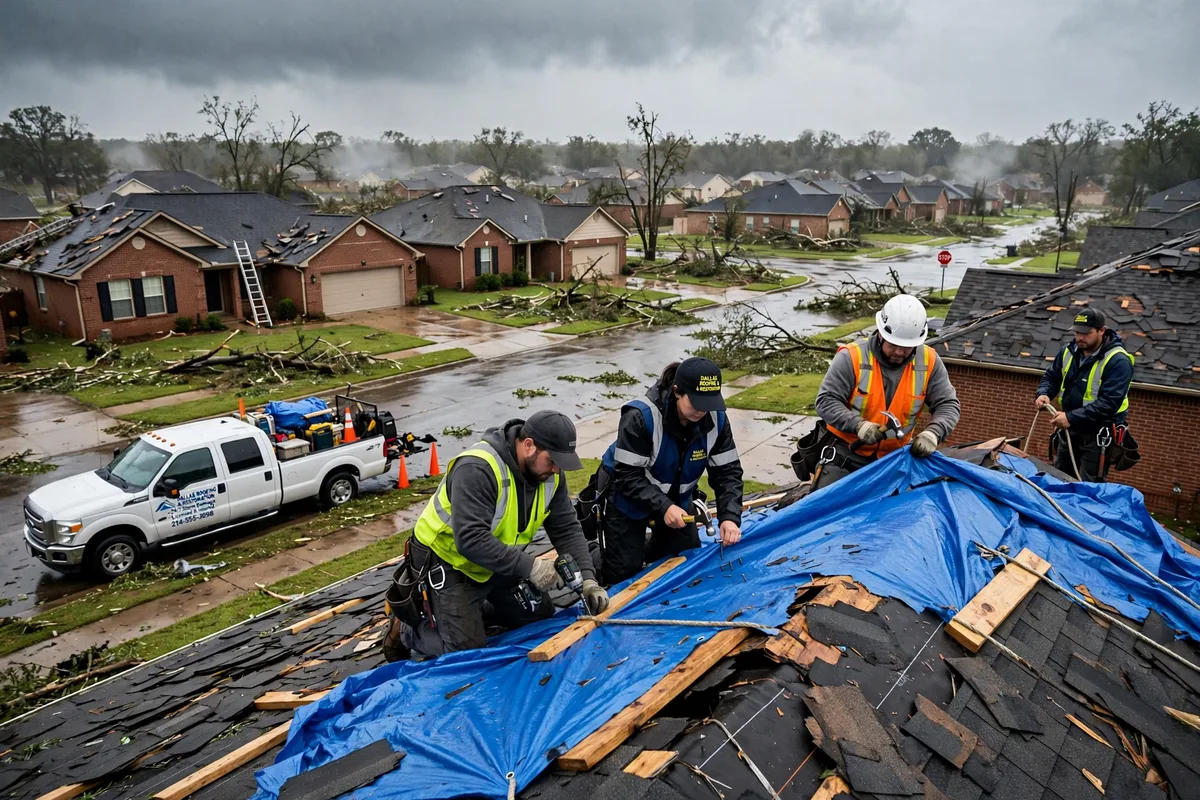
- Does board-up include roof tarping?: Yes — damaged roofs get tarped in the same visit when openings let rain in, so one call secures the whole property.
- Will my insurance cover board-up?: Emergency mitigation like board-up is usually covered as part of a fire or storm claim, with documentation provided for your adjuster.
🚨 FIRE OR STORM LEFT YOUR DALLAS HOME OPEN? Do not leave it overnight. We answer live 24/7, dispatch the same day, arrive in around 60 minutes, and give free estimates — board-up, roof tarping, and property securing in one call.
📞 Dallas Home Open? Call Now: +1 214-807-4697
Emergency board-up is the first job after a fire, storm, or break-in in Dallas — before cleanup, before contents, before any estimate — because an open home keeps taking damage long after the first event ends. Fire crews punch ventilation holes in roofs and walls, break windows for access, and leave openings that rain, wind, and intruders use within hours. Storms tear off roofing and shatter glass the same way. A boarded and tarped property stops the second disaster: water soaking the structure, soot and ash spreading, theft of what survived, and liability if someone enters an unsafe building. Water Damage Restoration Dallas secures Dallas properties 24 hours a day with IICRC-certified technicians, free estimates, and documentation your insurer can use, and the work usually starts within around 60 minutes of your call. However, board-up is emergency mitigation, not a repair — it buys safety and time while the full restoration plan is built, and it should never be delayed until morning for a property that is open tonight.
What does emergency board-up cover in a Dallas home?
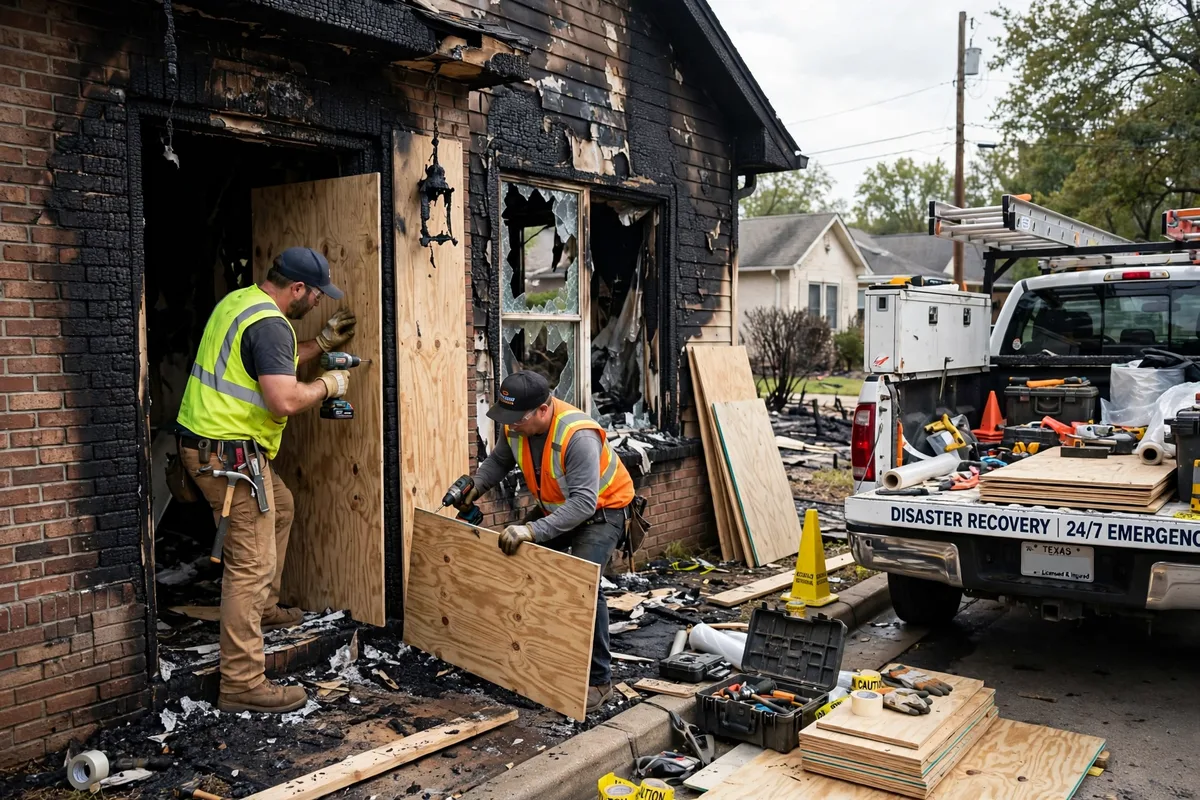
Board-up covers every opening a fire, storm, or intruder created: broken windows, forced or burned doors, holes in walls and roofs, and damaged garage openings. Crews use exterior-grade plywood cut to fit, secured so it resists wind and forced entry, and they tarp damaged roof sections where shingles or decking are gone. The visit also includes a quick safety walk: checking for structural hazards, shutting off utilities where needed, and photographing everything before and after for the insurance file. Contents still inside get noted and, where the opening threatens them directly, moved or covered. The emergency fire restoration guide explains how board-up fits into the first 24 hours after a fire. However, board-up alone does not dry, clean, or repair anything — it protects the property so the restoration that follows starts from the damage already done, not from damage added overnight.
Why is board-up urgent the same night?
Three risks grow every hour a property stays open, and all three cost more than the board-up itself. Weather is the first: a Dallas downpour through an open roof or window soaks drywall, insulation, and flooring, and that water damage from firefighting or storm exposure can add $1,000–$6,000 to the job while starting mold growth within 24–48 hours. Theft and vandalism are the second: an obviously open home is a target, and a second break-in complicates the insurance claim because the carrier separates original loss from later loss. Liability is the third: an unsecured damaged building that injures a trespasser or a neighbor's child creates legal exposure that no homeowner wants. Insurers also expect mitigation: most policies require the homeowner to protect the property from further damage, and documented same-night board-up is exactly the evidence an adjuster looks for. The fire restoration cost guide shows how early securing protects a claim that averages $29,077 in Dallas. However, urgency does not mean recklessness — never enter a fire-damaged home before the fire department clears it, and let the crew handle openings in structurally doubtful areas.
| Dallas board-up situation | First action | Crew response |
|---|---|---|
| Fire damage openings | Wait for fire clearance | Boards, tarps, photos |
| Storm roof damage | Stay clear of debris | Roof tarp, window boards |
| Break-in damage | Call police first | Door and window securing |
| Vacant property risk | Do not enter alone | Full securing, lock check |
| Water already inside | Shut utilities if safe | Board-up, then extraction |
📞 Same-Day Dallas Board-Up: +1 214-807-4697
How much does emergency board-up cost in Dallas?
Residential board-up is priced by the number and size of openings, plus roof tarping where needed, and it is a small line compared with the restoration that follows — Dallas fire restoration averages $29,077 overall, with fire claims averaging around $88,000 nationally, so securing the property early protects a very large claim. A single window or door runs at the low end; a fire-gutted home needing full securing and roof tarping runs higher, and the crew confirms the scope on site before work starts. The estimate is free, and board-up is typically billed as emergency mitigation within the claim, not as a separate out-of-pocket project. What moves the price is access: second-story openings, steep roofs, and properties needing temporary fencing all add labor and materials. The smoke damage cleanup guide explains the cleaning phase that board-up protects. However, the cheapest board-up quote is a bad deal when it uses thin material or skips tarping — a board that blows off in the next storm costs the whole claim's credibility.
What happens after the property is secured?
Securing the property opens the restoration sequence rather than ending it. Once openings are closed, the crew documents the loss in detail — photos, moisture readings, and a scope of work — and that file goes to your adjuster alongside the board-up invoice. Water from firefighting gets extracted and the structure dried, because a boarded home with wet framing still grows mold within 24–48 hours. Soot and smoke cleanup follows with HEPA vacuuming and matched cleaning agents, then odor treatment with hydroxyl, ozone, or thermal fogging depending on severity. Contents get inventoried, packed out where needed, and cleaned or documented as unsalvageable. The emergency water restoration guide covers the drying phase that runs in parallel after fire jobs. However, the sequence only works in order: securing first, drying second, cleaning third, and rebuilding last — skipping the first step lets weather and intruders rewrite the scope of every step after it.
Important Considerations
Texas has no state license specifically for restoration companies, so check IICRC certification, insurance, and reviews before hiring, and be wary of anyone demanding full payment upfront. Never re-enter a fire-damaged home before the fire department gives clearance, and never board up openings in a structure that looks unstable — that assessment belongs to the crew on site. Board-up materials are temporary by design: plywood and tarps protect for weeks, not months, so the restoration plan should follow within days rather than sitting through a season. Keep every receipt and photo from the board-up visit: insurers treat emergency mitigation as reimbursable, but only with documentation. Finally, if the property will sit vacant during restoration, ask about temporary fencing and lock changes — boards alone do not stop a determined intruder from a side the crew was not asked to secure.
📞 Free Dallas Board-Up Estimate: +1 214-807-4697
Frequently Asked Questions
How fast can a board-up crew reach my Dallas home?
Around 60 minutes in most of Dallas, 24 hours a day, including nights, weekends, and holidays. During metro-wide storms, response stretches for every company — honest crews say so on the call rather than promising a minute they cannot keep.
What does emergency board-up actually include?
Plywood securing for broken windows, doors, and wall openings, plus roof tarping where the roof is damaged, a safety walk, and before-and-after photos for your insurance file. Contents at risk near openings are moved or covered during the same visit.
Is board-up covered by homeowners insurance?
Emergency mitigation like board-up is usually covered as part of a fire or storm claim, since policies require you to protect the property from further damage. Keep the invoice and photos for your adjuster.
Can I board up my own home after a fire?
You can, but it is rarely wise: fire-damaged structures can be unstable, soot is acidic and hazardous without PPE, and insurer documentation standards favor professional photos and scope. A professional crew also spots openings a homeowner misses.
How long can board-up stay in place?
Boards and tarps are temporary protection meant to last weeks while restoration is planned, not a permanent repair. The restoration plan should follow within days, especially before the next Dallas storm.
Does board-up stop water damage too?
Roof tarping stops new rain from entering, but water already inside from firefighting or the storm still needs extraction and drying. Board-up and water mitigation run together on fire jobs — one without the other leaves the job half done.
What if my home was broken into rather than fire-damaged?
Call the police first, then the board-up crew — the police report supports the claim, and the crew secures doors and windows the same day. The same 24/7 response applies to break-in damage.
Do you board up commercial properties in Dallas?
Yes — storefronts, offices, and warehouses get the same emergency securing, with temporary fencing available for larger sites. Commercial jobs also get the documentation package adjusters and property managers require.
What should I do before the board-up crew arrives?
Stay out of unsafe areas, do not touch soot or debris, gather your insurance policy number if you have it handy, and photograph the damage from outside if you can do so safely. The crew handles everything else on arrival.
Will board-up damage my home further?
Properly fitted boards attach to framing, not to finished surfaces where avoidable, and tarps protect rather than harm roofing. Poor DIY boarding causes more damage than professional work — another reason to call a crew.
Why should I call Water Damage Restoration Dallas for board-up?
Local Dallas crews, 24/7 live answer, around 60-minute arrival, board-up plus tarping plus documentation in one call, free estimates, and a restoration team that carries the job from securing through rebuild.
📞 Call Water Damage Restoration Dallas 24/7: +1 214-807-4697