Firefighting Water Damage Restoration in Dallas: Who Pays & How Pros Dry It
TLDR
- Who handles firefighting water damage in Dallas?: Water Damage Restoration Dallas — 24/7 live answer, around 60-minute arrival, free estimates: +1 214-807-4697.
- What is firefighting water damage?: Thousands of gallons from hoses and sprinklers soak the floors, walls, and belongings the fire itself spared.
- Who pays for firefighting water damage?: It is normally part of the same fire claim — same deductible, same adjuster, same policy that covers the fire loss.
- How fast must firefighting water be dried?: Within 24–48 hours, because mold grows on wet material in 24–48 hours and the clock starts when the water lands.
- What does firefighting water restoration cost?: Dallas fire restoration averages $29,077, and the water portion depends on how much area the hoses soaked.
- Can I wait for the insurer before drying?: No — never wait for insurer approval before emergency mitigation, or the water damage gets worse and the claim gets harder.
- When should you call a firefighting water crew?: Immediately after the fire department clears the scene — extraction and drying start the same day.
🚨 HOSE WATER SOAKED YOUR DALLAS HOME AFTER THE FIRE? The water is still spreading — call now. We answer live 24/7, arrive in around 60 minutes, and give free estimates — extraction, structural drying, mold prevention, and claim documentation in one visit.
📞 24/7 Fire Water Cleanup: +1 214-807-4697
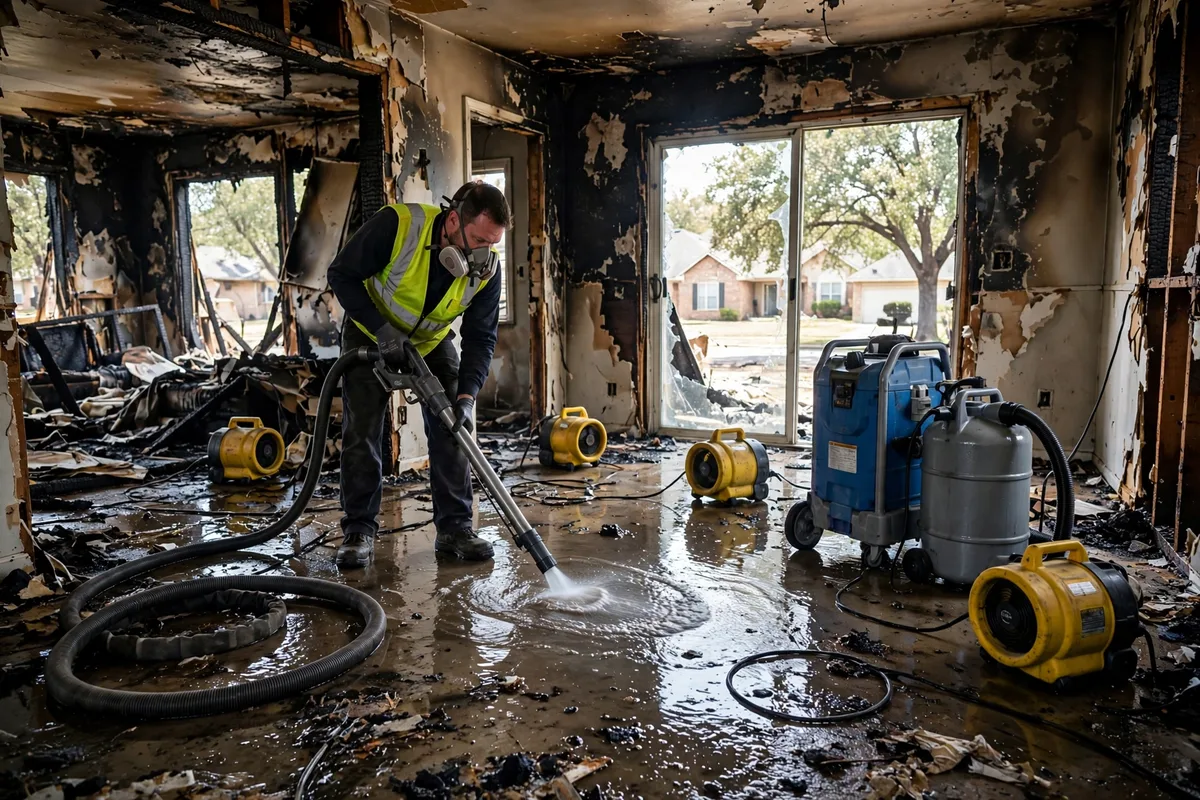
Firefighting water damage restoration in Dallas begins where the fire ends, because the water that saves a home also soaks it — a fire crew can put thousands of gallons through a house in minutes, and a sprinkler system keeps pouring until someone shuts it off, so the rooms the flames never reached end up with standing water, soaked drywall, swollen floors, and wet insulation. The water runs down through ceilings and wall cavities, pools under flooring, and wicks up into furniture and belongings that survived the fire untouched. Homeowners often focus on the charred rooms and miss the water damage entirely, which is the expensive mistake: the water keeps working for days after the fire is out, and mold grows on wet material in 24–48 hours. Professional restoration extracts the standing water, maps the moisture inside walls and under floors, dries the structure with air movers and dehumidifiers, checks for mold, and rebuilds — and documents every step for the same fire claim that covers the burn damage. Water Damage Restoration Dallas handles firefighting water emergencies with IICRC-certified crews, around 60-minute arrival, free estimates, and same-day help. However, one firefighting-water rule comes first: never wait for insurer approval before emergency mitigation, because the carrier expects you to stop the damage from spreading and the water will not wait for a phone call.
How much water does firefighting leave behind?
Firefighting leaves behind far more water than most homeowners expect: a single fire hose flows hundreds of gallons per minute, a sprinkler head pours gallons per minute until it is shut off, and a structure fire can easily put thousands of gallons into a house before the crew packs up. The water does not stay where it landed — it runs through ceiling cavities, down wall studs, under flooring, and into the slab, so the wet area is always larger than the visible puddles. Sprinkler water is cleaner than hose water but just as destructive to drywall, carpet pad, and hardwood, and it reaches rooms on the far side of the house through the ceiling. The water damage restoration services guide covers the extraction and drying sequence. However, one volume trap applies: the rooms that look dry are often the wettest, because water hides inside walls and under floors where no mop can reach it, so the crew maps moisture before declaring any room dry.
Who pays for firefighting water damage in Dallas?
Firefighting water damage is normally part of the same fire claim — the same deductible, the same adjuster, and the same policy that covers the fire loss, because the water damage was caused by fighting the covered fire. Fire claims average around $88,000, and the water portion is documented inside that claim with photos, moisture readings, and a written scope that separates extraction, drying, mold prevention, and rebuild. The adjuster needs to see the water damage before drying starts, so photograph everything and keep the readings. The additional living expense guide explains what the policy pays while the home is unlivable. However, one payment trap applies: if the drying is delayed and mold grows, the carrier can argue the mold damage was preventable, so fast mitigation protects the claim as much as it protects the house.
What should you do first after the fire department leaves?
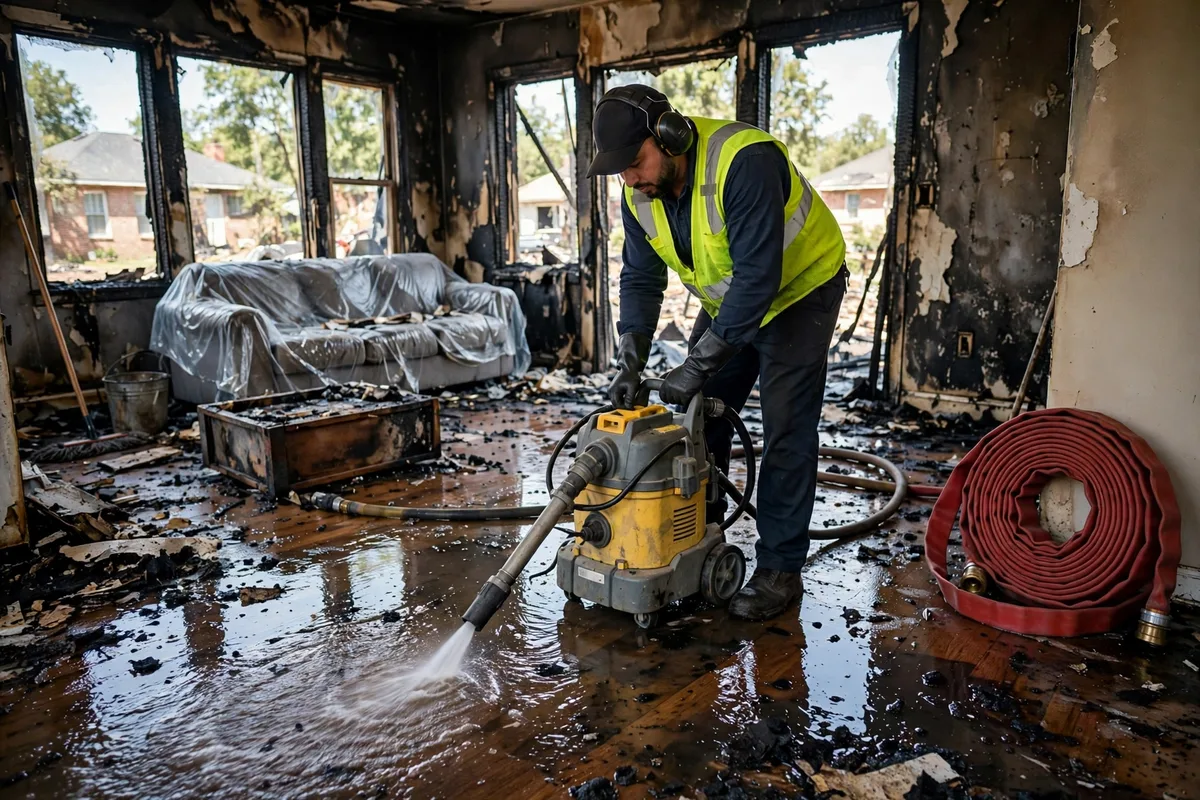
Do not re-enter until the fire department clears the scene, then photograph every wet room, ceiling, and piece of furniture before anything moves, since the photos support the claim. Shut off the sprinkler supply if it is still running and it is safe to reach the valve, and move dry belongings out of the wet rooms. Do not run the HVAC, because it spreads soot and smoke odor into the wet rooms and the ductwork then needs its own cleaning. Call a restoration crew the same day, because the drying clock starts when the water lands and mold grows in 24–48 hours. However, the first-step mistake is the bucket approach: mopping the visible puddles while the walls and floors stay soaked trades a small mess now for a ruined structure later, so extraction and moisture mapping come before any cleanup.
How do professionals dry firefighting water damage?
Professionals dry firefighting water damage in sequence: extract the standing water, map the moisture inside the wall cavity and under the flooring with meters and thermal imaging, remove saturated drywall and carpet pad as needed, dry the structure with air movers and dehumidifiers until readings verify dryness, check for mold, then rebuild the walls and floors. Soot and smoke odor get treated alongside the drying, because the wet soot is more acidic than dry soot and etches finishes faster. The fire damage restoration page covers the full service, and the fire damage cost guide explains how Dallas fire restoration pricing works. The burst pipe repair guide covers the same drying sequence for a different water source. However, one drying rule is absolute: drying without mapping the walls is a guess, since the worst water sits inside walls and under flooring where no air mover can reach it.
| Firefighting water source | Typical damage | First crew step |
|---|---|---|
| Fire hose water | Standing water, soaked walls | Extraction, moisture mapping |
| Sprinkler water | Ceiling and floor soaking | Shutoff, extraction, drying |
| Water in wall cavities | Hidden saturation, mold risk | Meters, thermal imaging |
| Wet soot and smoke | Acidic staining, odor | Dry sponge, fogging |
| Soaked belongings | Warped wood, stained fabric | Pack-out, cleaning, storage |
📞 Book Fire Water Extraction: +1 214-807-4697
How much does firefighting water damage restoration cost?
Dallas fire restoration averages $29,077, and the water portion of the job depends on how many rooms the hoses and sprinklers soaked, how much drywall and flooring must come out, and whether mold remediation at $1,200–$3,800 is needed after the structure sat wet past 48 hours. A sprinkler discharge caught and dried the same day costs far less than a hose job where thousands of gallons soaked the whole floor plan and the drying ran for a week. Dallas-area water damage jobs typically land between $2,500 and $7,500 for the water work alone, and the fire claim usually absorbs that cost inside the same deductible. A free estimate before work starts separates the extraction, drying, mold check, and rebuild into line items the adjuster can approve. However, the pricing trap is the surface-dry quote: a company that offers to dry the floors without mapping the walls is selling a cosmetic dry that the next mold test will undo.
How do you choose firefighting water damage services in Dallas?
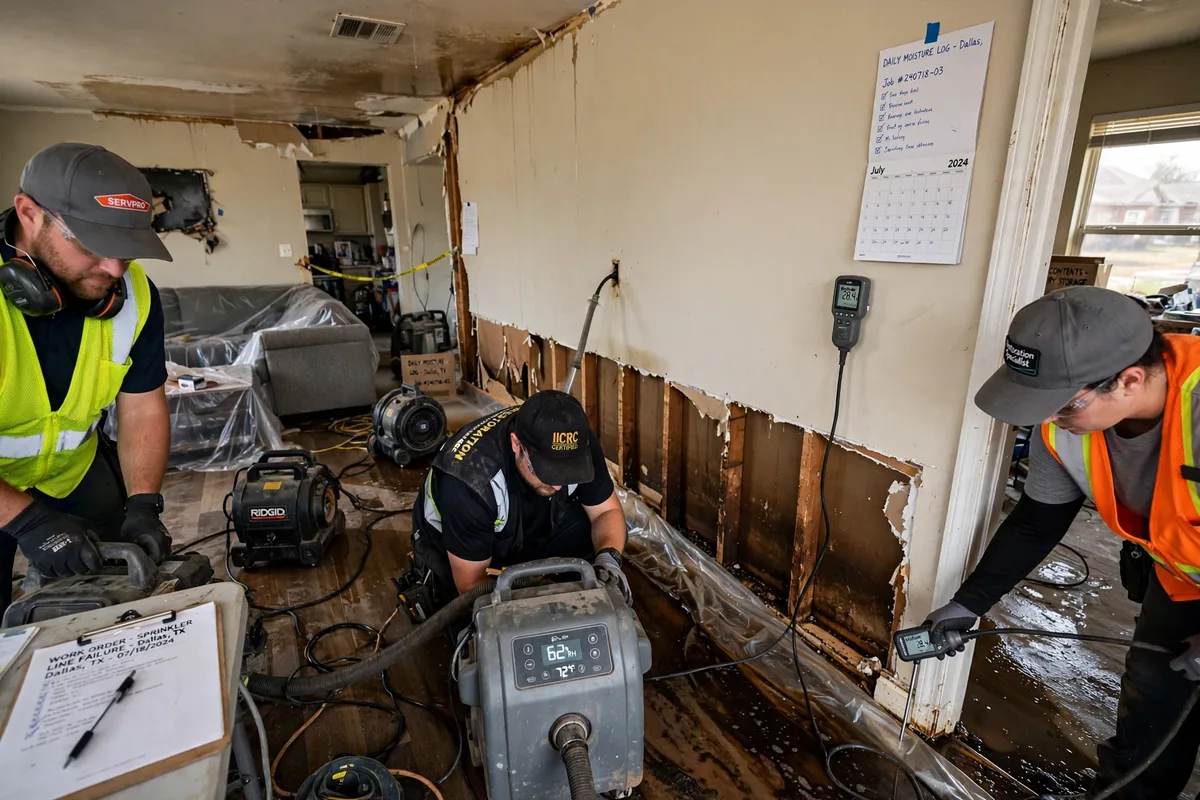
Choose on five checks: same-day response for active water, moisture mapping with meters and thermal imaging before any opening, a written scope that separates extraction, drying, soot cleanup, mold check, and rebuild, IICRC-certified crews, and claim documentation with photos and readings. Ask whether the crew maps the walls, how it verifies the structure is dry, and whether it documents the water damage for the same fire claim. The fire damage restoration page lists the full service. However, one selection rule beats the rest: the company that extracts first, maps second, dries third, and rebuilds last — in that order, with readings to prove it — is the company whose home stays dry after the fire trucks leave.
Important Considerations
Never wait for insurer approval before emergency mitigation — the carrier expects you to stop the damage from spreading, and the water will not wait for a phone call. Never run the HVAC after a fire, since the system spreads soot and smoke odor into the wet rooms. Never mop the surface and assume the job is done, since the worst water sits inside the wall cavity and under the flooring, and mold grows on wet material in 24–48 hours. Never paint or seal a damp wall without drying the structure beneath it, because the moisture will return the warp and feed mold under the finish. Keep the photos, moisture readings, the fire department report, and all carrier correspondence in one file, because the water portion of a fire claim generates more paperwork than the job suggests. Finally, after repair, know your sprinkler shutoff valve and your main water shutoff, because the next emergency will test both.
📞 Free Fire Water Estimate: +1 214-807-4697
Frequently Asked Questions
Who handles firefighting water damage in Dallas?
Water Damage Restoration Dallas — 24/7 live answer, around 60-minute arrival, free estimates, and extraction, structural drying, mold prevention, and claim documentation in one visit. Call +1 214-807-4697 any hour and a live crew answers.
What is firefighting water damage?
Thousands of gallons from hoses and sprinklers soak the floors, walls, and belongings the fire itself spared. The water runs through ceilings and wall cavities and pools under flooring, so the wet area is always larger than the visible puddles.
Who pays for firefighting water damage?
It is normally part of the same fire claim — same deductible, same adjuster, same policy that covers the fire loss. Fire claims average around $88,000, and the water portion is documented inside that claim.
How fast must firefighting water be dried?
Within 24–48 hours, because mold grows on wet material in 24–48 hours and the clock starts when the water lands. Drying should start the same day the fire department clears the scene.
Can I wait for the insurer before drying?
No — never wait for insurer approval before emergency mitigation. The carrier expects you to stop the damage from spreading, and delayed drying can weaken the claim if mold grows.
How much does firefighting water restoration cost?
Dallas fire restoration averages $29,077, and the water portion depends on how many rooms were soaked. Dallas-area water damage jobs typically land between $2,500 and $7,500 for the water work alone.
Is sprinkler water damage covered by insurance?
Yes, when the sprinklers ran to fight a covered fire — the water damage is part of the same fire claim. Photograph the wet rooms and keep the moisture readings for the adjuster.
Should I run the HVAC after a fire?
No — the system spreads soot and smoke odor into the wet rooms, and the ductwork then needs its own cleaning. Keep the HVAC off until the crew clears it.
Can I clean up firefighting water myself?
Mopping the visible puddles leaves the water inside the walls and under the floors, where it feeds mold in 24–48 hours. Extraction and moisture mapping need professional equipment.
How long does firefighting water drying take?
Extraction and drying take days for most homes, with rebuild after moisture readings verify dryness. Larger hose jobs with soaked walls and floors take longer.
Why call Water Damage Restoration Dallas for firefighting water damage?
Local Dallas crews, 24/7 live answer, around 60-minute arrival, free estimates, and wall-mapping-first drying with full claim documentation — call +1 214-807-4697.
📞 Call Water Damage Restoration Dallas 24/7: +1 214-807-4697
Related Dallas Water Damage Guides
- How Much Does Water Damage Restoration Cost in Dallas? A 2026 Price Guide
- Fire Insurance Claim Mistakes in Dallas: Avoid the Errors That Cost Thousands
- Additional Living Expense Coverage After a Fire in Dallas: What Your Policy Pays While Your Home Is Unlivable
- Fire Damage Restoration for Dallas Landlords & Rental Properties: Tenants, Lost Rent & the Claim