Fire Damage Insurance Claims in Dallas: Get Paid in Full
TLDR
- Who helps with fire damage insurance claims in Dallas?: Water Damage Restoration Dallas — 24/7 crews plus insurance-ready documentation from the first visit: +1 214-807-4697.
- How much are fire claims worth?: Fire claims average around $88,000 nationally — the most expensive homeowners claims — and Dallas fire jobs average $29,077.
- What is the biggest claim mistake?: Cleaning up or throwing things away before documenting them — undocumented damage is unpaid damage.
- What should I document first?: Photos and video of every room before anything moves, the fire report, and the crew's moisture and scope logs.
- Does the insurer pay for water damage too?: Yes — firefighting water damage is part of the same fire claim, including extraction and drying.
- What about living elsewhere during repairs?: Additional living expense coverage pays for temporary housing — keep every receipt from day one.
- Should I accept the first offer?: Not before the full scope is priced — first offers often miss hidden water, smoke, and contents damage.
🚨 JUST HAD A FIRE? Do not clean up before you document — and do not accept a low offer. We answer live 24/7, arrive in around 60 minutes, and give free estimates with the documentation your claim needs.
📞 Fire Claim Help in Dallas: +1 214-807-4697
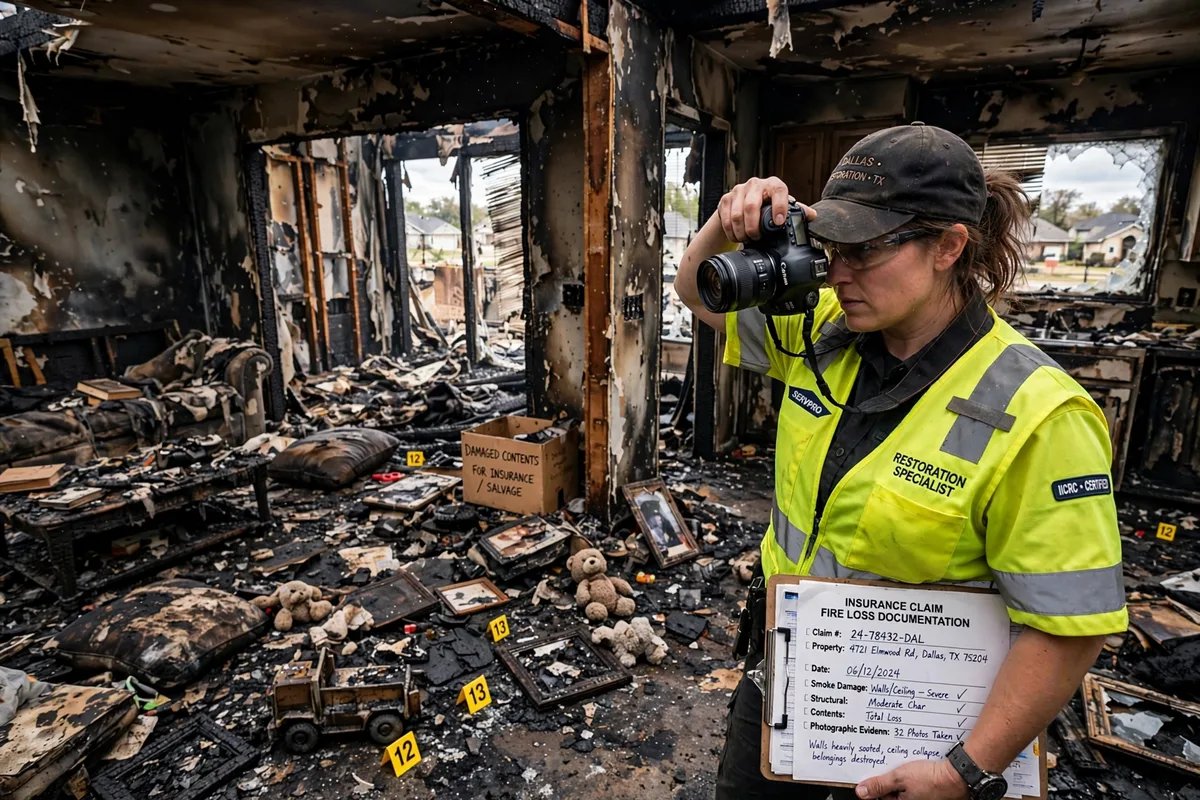
Fire damage insurance claims in Dallas are where homeowners lose the most money with the least warning. Fire claims average around $88,000 nationally — the priciest claims in homeowners insurance — yet families routinely leave thousands on the table through documentation mistakes made in the first 48 hours: cleaning soot before photographing it, throwing away ruined belongings, starting repairs before the adjuster visits, or accepting a first offer that prices only the visible burn. Water Damage Restoration Dallas pairs emergency fire response with insurance-ready documentation from the first visit, so the claim reflects the real loss — fire, smoke, water, and contents together. However, documentation is not the same as advocacy — your crew documents the loss, and you (or a public adjuster, for large claims) decide whether the offer matches it, because no crew can force an insurer to pay.
What should I do in the first 48 hours after a fire?
Five steps protect the claim, in order: get the fire department's clearance and report, photograph and video every room before anything is moved, call your insurer to open the claim, call a restoration crew for emergency mitigation (board-up, extraction, drying), and start a receipts file for every expense. Do not clean soot, do not throw anything away, and do not start repairs — the adjuster needs to see the loss as it is. Emergency mitigation is different from repair: board-up, water extraction, and drying stop further damage, and insurers expect it — delaying it can actually reduce the payout. The emergency fire restoration guide covers the response sequence, and the fire-water cleanup guide covers the water half of the loss. However, the first-48-hours rule has one exception — safety: if the structure is unsafe, stay out and let the crew document from outside, because no claim is worth re-entering a compromised home.
What does a fire claim actually cover?
A standard homeowners policy covers the structure, personal belongings, additional living expenses, and emergency mitigation — but each part is documented and paid differently. Structure covers repairs and rebuild up to the dwelling limit. Belongings are covered at replacement cost or actual cash value depending on the policy, and the difference is thousands of dollars. Additional living expense (ALE) covers temporary housing, meals, and related costs while the home is uninhabitable — keep every receipt, because ALE without receipts is ALE unpaid. Mitigation covers board-up, extraction, drying, and soot work done to stop further damage. The fire restoration cost guide breaks down Dallas job averages, from smoke-only work at $3,000–$8,000 to severe rebuilds at $50,000–$180,000+. However, coverage has edges that surprise families: detached structures, high-value items with sublimits, and code-upgrade costs are often capped or excluded, so read the declarations page before assuming the full loss is covered.
| Claim part | What it pays | Proof needed |
|---|---|---|
| Structure | Repairs, rebuild | Scope, photos, estimates |
| Belongings | Replacement or cash value | Inventory, photos, receipts |
| Living expenses | Hotel, meals, transport | Every receipt, daily log |
| Mitigation | Board-up, drying, soot | Crew logs, invoices |
| Code upgrades | Bring to current code | Ordinance endorsement |
📞 Free Fire Claim Estimate: +1 214-807-4697
What mistakes cost Dallas homeowners the most?
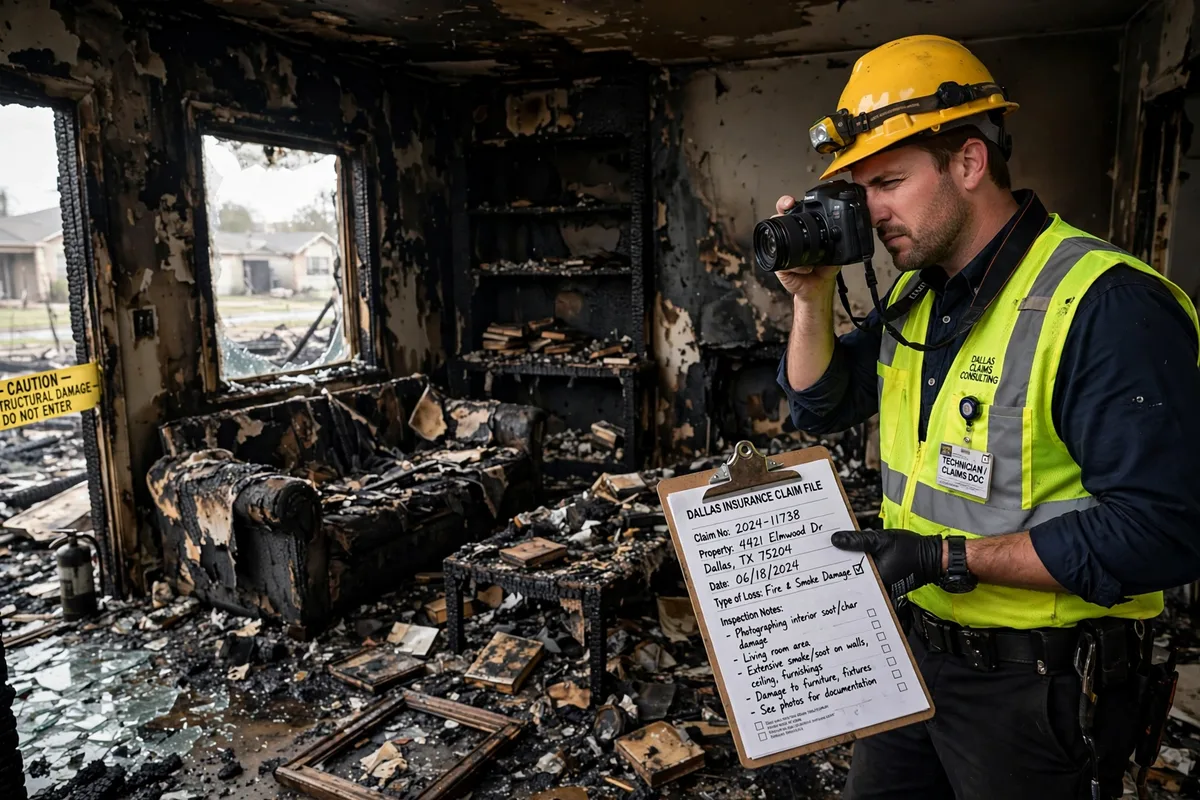
Four mistakes recur in Dallas fire claims, and all four are avoidable. Cleaning before documenting destroys the evidence the adjuster prices from — soot patterns, smoke staining, and water lines are the claim's proof. Discarding belongings before inventory means those items are valued at zero. Accepting the first offer before the full scope is priced locks in a number that misses hidden water damage, duct contamination, and contents the adjuster never saw. And giving a recorded statement before understanding the loss lets early guesses become the claim's official version. The claim denial guide explains how insurers frame denials, and the claim-or-pay guide covers the filing decision. However, the subtlest mistake is the slow one — waiting weeks to open the claim or to start mitigation, because delay lets water turn into mold and lets the insurer argue the extra damage was preventable.
How do I document belongings after a fire?
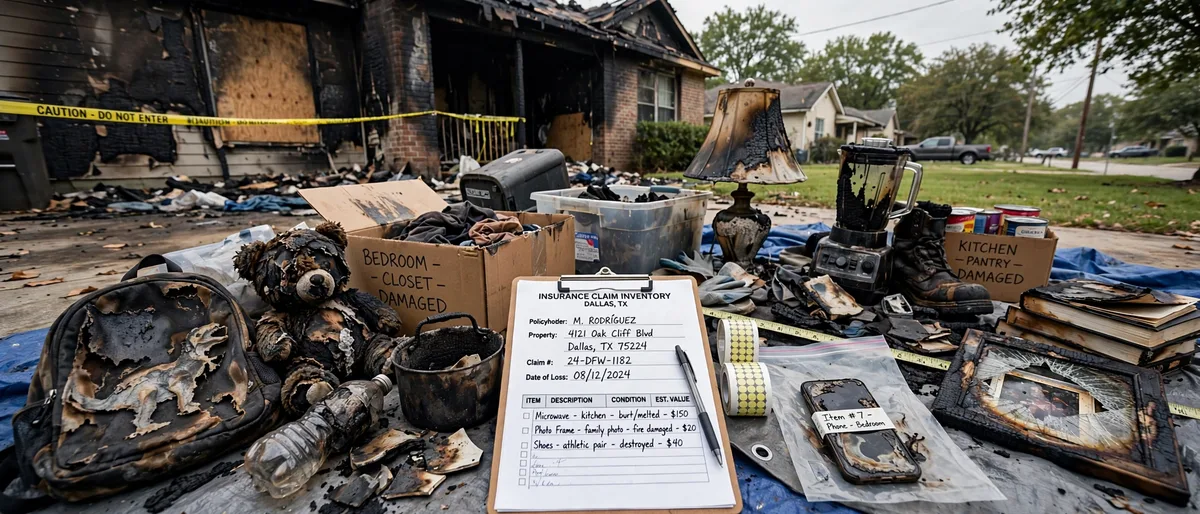
Room by room, before anything moves: video walkthrough narrating what each item is, close-up photos of damage, and a written inventory with brand, age, and approximate value where you know it. For items destroyed beyond recognition, list them from memory and cross-check against purchase records, photos, and credit card statements. Keep damaged items until the adjuster releases them — bagged and tagged if they must be moved for safety. Contents cleaning and pack-out by the restoration crew generates its own inventory, which strengthens the claim because it is third-party and itemized. Smoke-only jobs at $3,000–$8,000 and multi-room soot jobs at $8,000–$25,000 turn heavily on contents documentation, since belongings are often the largest line after structure. However, perfection is not the standard — a good-faith inventory with photos beats a perfect inventory started a month late, because the claim clock starts at the fire, not at your convenience.
Should I hire a public adjuster for a fire claim?
For small smoke-only jobs, usually not — the crew's documentation and a careful inventory are enough. For large fire claims, especially where the first offer falls well short of the priced scope, a licensed Texas public adjuster can be worth the fee (typically a percentage of the settlement) because they negotiate scope, contents valuation, and ALE professionally. Be wary of anyone demanding upfront fees or promising a specific outcome — Texas regulates public adjusters, and reputable ones work on contingency after reviewing the loss. Water Damage Restoration Dallas documents the loss and bills covered work directly where applicable, but the settlement decision stays with you. However, timing matters: bring an adjuster in before accepting an offer, not after cashing the check, because a settled claim is far harder to reopen than an open one is to negotiate.
Important Considerations
Texas has no state license specifically for restoration companies, so verify IICRC certification, insurance, and reviews before hiring, and be wary of anyone demanding full payment upfront or promising a settlement outcome. A fire claim's timeline runs weeks to months — structure, contents, and ALE settle on different tracks, and partial payments are normal. If mold is found during drying, that scope is documented separately, with Dallas remediation typically $1,200–$3,800. Keep the fire report, the crew's logs, photos, inventories, and every receipt in one file — gaps in documentation are where claims lose money. Finally, never sign a release or accept a "final" payment before the full scope — hidden water, smoke, and contents damage — is priced and agreed.
📞 Dallas Fire Claim Support: +1 214-807-4697
Frequently Asked Questions
Who helps with fire damage insurance claims in Dallas?
Water Damage Restoration Dallas — emergency response plus insurance-ready documentation from the first visit, including moisture logs, photos, and itemized scopes. Call +1 214-807-4697 for a free estimate.
How much are fire claims worth?
Fire claims average around $88,000 nationally, and Dallas fire jobs average $29,077. Smoke-only jobs run $3,000–$8,000, multi-room soot $8,000–$25,000, and severe rebuilds $50,000–$180,000+.
What is the biggest fire claim mistake?
Cleaning up or throwing things away before documenting them. Undocumented damage is unpaid damage — photograph and video every room before anything moves.
Does the claim cover firefighting water damage?
Yes — water damage from firefighting is part of the same fire claim, including extraction, drying, and any mold prevention that follows. Document the moisture log as part of the claim.
What does ALE cover?
Additional living expense coverage pays for temporary housing, meals, and related costs while your home is uninhabitable. Keep every receipt from day one — ALE without receipts is unpaid.
Should I accept the first offer?
Not before the full scope is priced. First offers often miss hidden water damage, duct contamination, and contents the adjuster never saw. Compare the offer against the crew's itemized scope.
Can I start repairs before the adjuster visits?
Emergency mitigation — board-up, extraction, drying — yes, and insurers expect it. Permanent repairs should wait until the adjuster documents the loss, or the repair erases the evidence.
How do I document destroyed belongings?
Room-by-room video and photos before anything moves, a written inventory with brand and age where known, and purchase records or card statements for items destroyed beyond recognition.
Do I need a public adjuster?
For small smoke jobs, usually not. For large claims where the first offer falls short of the priced scope, a licensed Texas public adjuster working on contingency can be worth the fee.
How long does a fire claim take?
Weeks to months — structure, contents, and ALE settle on different tracks, and partial payments are normal. Delay hurts: water turns to mold and insurers argue preventable damage.
Why call Water Damage Restoration Dallas after a fire?
Local Dallas crews, 24/7 live answer, around 60-minute emergency arrival, free estimates, and insurance-ready documentation from the first visit — the file your claim needs.
📞 Call Water Damage Restoration Dallas 24/7: +1 214-807-4697