Water Damage After a Fire in Dallas: Emergency Cleanup Services
TLDR
- Who cleans up water damage after a fire in Dallas right now?: Water Damage Restoration Dallas — 24/7 live answer, same-day emergency crews, around 60-minute arrival: +1 214-807-4697.
- Why is there water damage after a fire?: Fire hoses and sprinklers soak floors, walls, and belongings — thousands of gallons that keep destroying your home after the flames stop.
- How fast must the water come out?: Within hours — mold starts growing in 24–48 hours on wet drywall, insulation, and wood.
- What does fire-water cleanup include?: Extraction, structural drying, soot and odor work, contents handling, and documentation for your fire claim.
- How much does it cost?: Firefighting water damage typically runs $1,000–$6,000 for mitigation, with the full fire job averaging $29,077 in Dallas.
- Does insurance cover it?: Yes — water damage from firefighting is part of the same fire claim, not a separate water claim.
- Can I stay in the home?: Usually not until the structure is dried, cleared of soot hazards, and declared safe — your crew will tell you honestly on site.
🚨 FIRE OUT BUT YOUR HOME IS SOAKING? The water is the second disaster — act now. We answer live 24/7, arrive in around 60 minutes, and give free estimates — extraction and drying start the same day you call.
📞 Emergency Fire-Water Cleanup: +1 214-807-4697
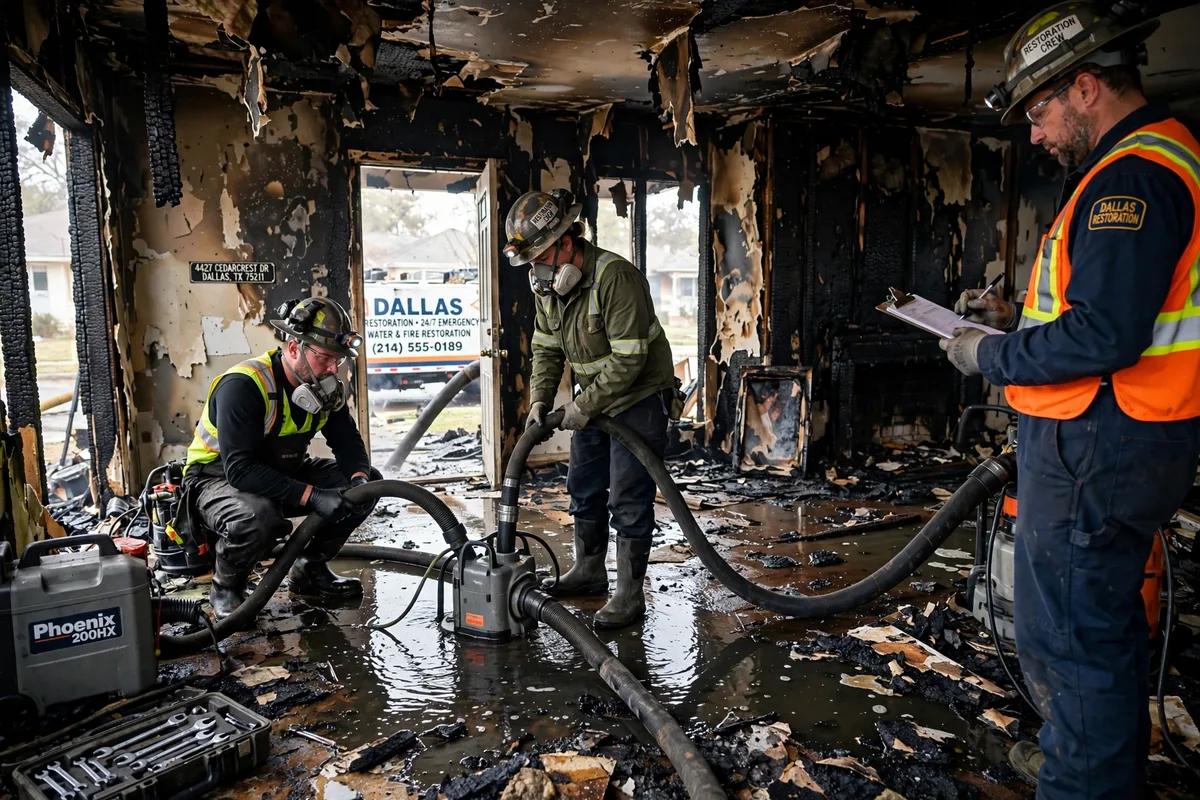
Water damage after a fire in Dallas is the disaster most homeowners never see coming. The fire department saves the structure, and in doing so pumps thousands of gallons of water through rooms the flames never touched — soaking drywall, insulation, flooring, and belongings, then leaving it all to sit while the family deals with the shock. That water does not wait: it wicks up walls, warps wood, shorts electrical systems, and starts mold growth within 24–48 hours. Water Damage Restoration Dallas handles the water half of fire jobs with IICRC-certified crews, around 60-minute emergency arrival, and free estimates across Dallas. However, the order of operations matters more than speed alone — the structure must be cleared by the fire department first, then boarded up, then extracted and dried, because pumping water out of an unsecured, soot-filled home creates new hazards.
How much water does firefighting leave behind?
A single fire hose flows hundreds of gallons per minute, and a working house fire can mean thousands of gallons inside the home before the last flame is out. Sprinkler systems add their own volume, running until shut off. The water pools on floors, soaks into subfloors, runs through wall cavities, and drips into rooms below. It also mixes with soot and ash, which makes it contaminated — not clean water, and not water to mop up by hand. The emergency fire restoration guide explains the full sequence from clearance to rebuild. However, volume alone does not decide the scope — what the water touched decides it, because water trapped inside walls and under floors causes the damage you cannot see until mold or buckling appears weeks later.
What happens first when the crew arrives?
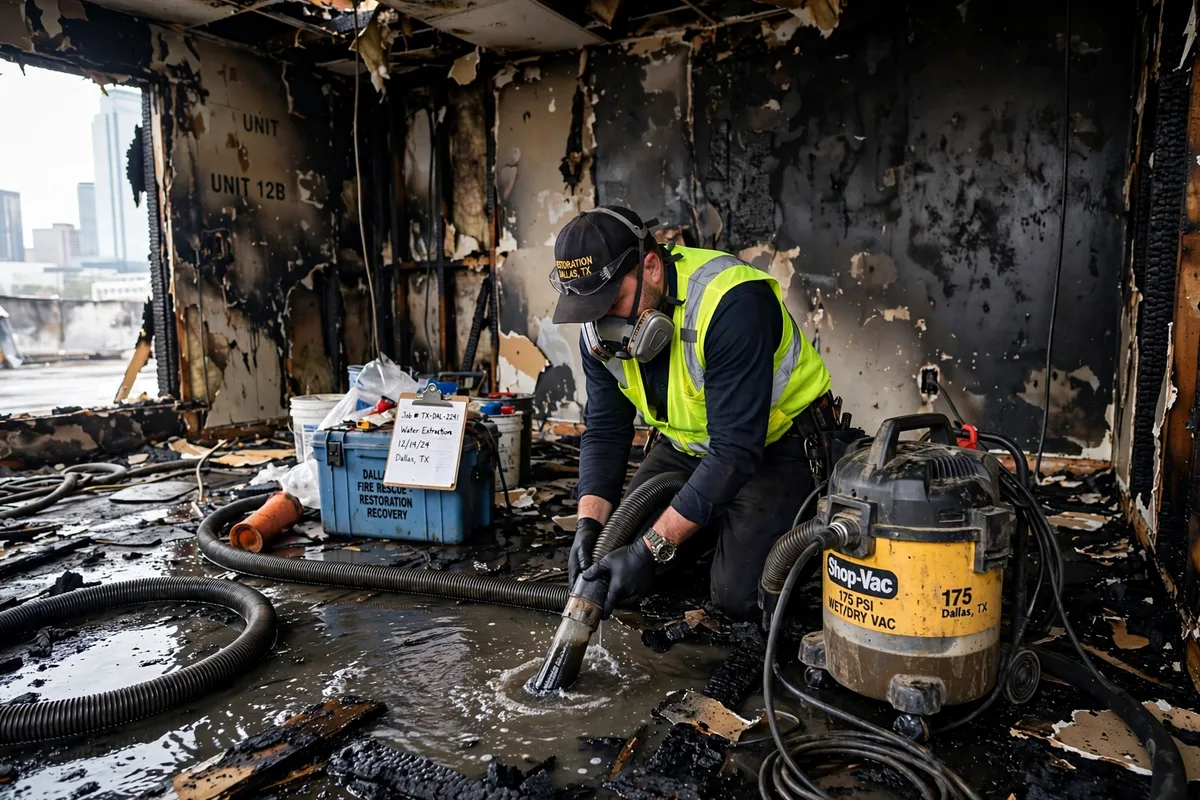
The first visit follows a fixed order: safety clearance, board-up and stabilization, water extraction, then drying. The crew confirms the fire department has released the property and checks for structural damage, live electrical hazards, and compromised ceilings before anyone walks the wet rooms. Board-up secures broken windows, doors, and roof openings against weather and intruders — the board-up services guide covers what that costs and why it cannot wait overnight. Extraction then removes standing water with truck-mounted equipment, and moisture mapping with meters and thermal imaging finds the water hiding inside cavities. The water restoration services guide explains the extraction-to-drying process in detail. However, a crew that skips the safety and board-up steps and goes straight to fans is cutting corners — drying an unsecured home wastes the drying, because the next rain or intruder undoes it.
| Fire-water stage | What happens | Typical timing |
|---|---|---|
| Clearance, board-up | Fire dept release, secure openings | Day 0 |
| Extraction | Standing water removed | Day 0–1 |
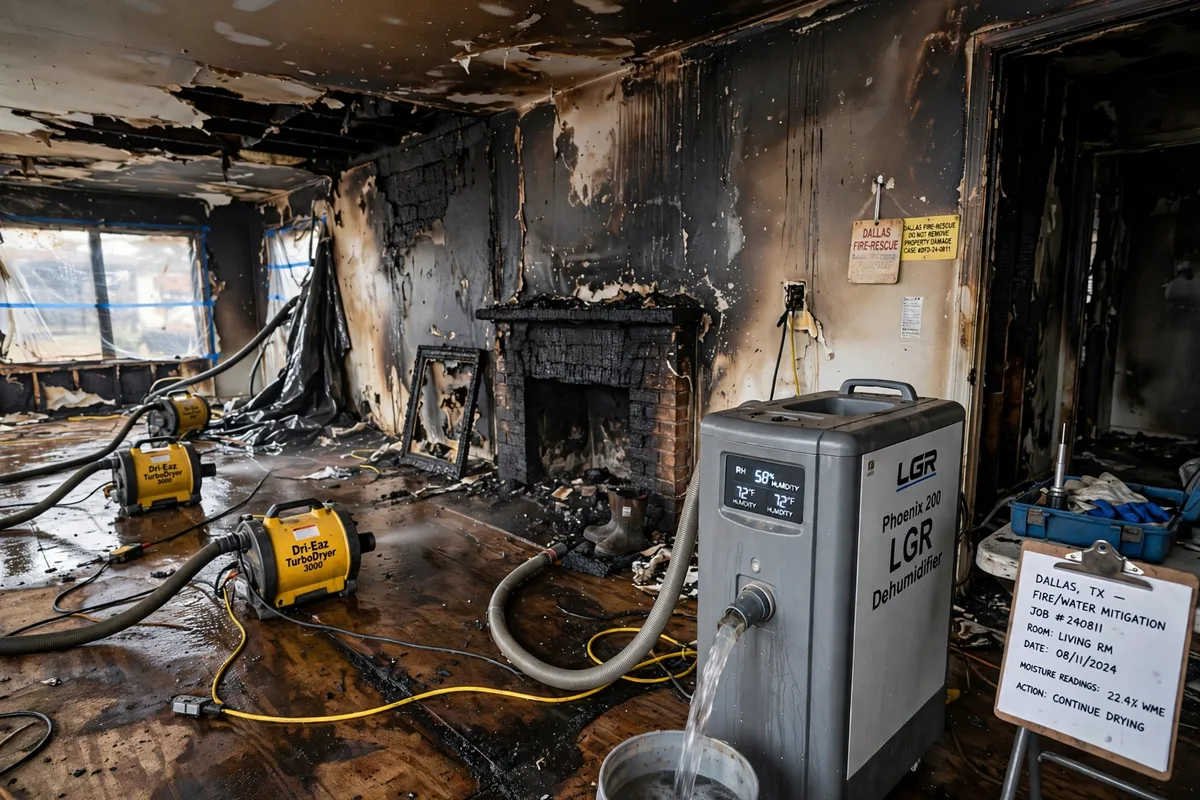
| Structural drying | Air movers, dehumidifiers, readings | 3–5 days |
| Soot, odor work | HEPA cleaning, odor treatment | Days–2 weeks |
| Contents, rebuild | Cleaning, pack-out, repairs | Weeks–months |
📞 Same-Day Fire-Water Extraction: +1 214-807-4697
Why can't I just dry it myself with fans?
Household fans dry surfaces, not structures — and fire water lives inside structures. Water trapped behind drywall, inside insulation, and under flooring keeps feeding mold and rot long after the floor feels dry to the touch. Professional drying uses dehumidifiers sized to the volume, air movers aimed at wall cavities, and daily moisture readings that prove each material reached dry standard. Soot complicates it further: soot is acidic and corrosive, and wet soot smears and stains permanently if wiped with household methods. The smoke damage cleanup guide explains why soot cleaning needs matched agents and HEPA equipment. However, the real cost of DIY drying is not the fans — it is the mold job, the warped subfloor, and the denied claim that follow when undocumented, unmeasured drying fails.
Does insurance cover water damage from firefighting?
Yes — water damage caused by firefighting is part of the fire claim, covered under the same event, and it is one of the reasons fire claims average around $88,000 nationally, the priciest homeowners claims there are. Document everything before anything is moved: photos and video of every wet room, the moisture log from the crew, and the itemized scope of extraction and drying. The adjuster needs to see that the water work was emergency mitigation — work done to stop further damage — because mitigation is covered and even expected by the policy. Dallas fire jobs average $29,077 overall, with firefighting water mitigation typically $1,000–$6,000 of that total. However, coverage is not automatic for everything the water touched — belongings damaged by smoke versus water are documented differently, and a crew that photographs and itemizes both protects the claim in a way a crew that just pumps and leaves cannot.
How long before my home is livable again?
Smoke-only jobs can take days to two weeks; full fire jobs with water damage and rebuild take weeks to months, and major rebuilds can run 6–12 months. The water portion is the fastest part — extraction on day one, drying over 3–5 days — but the home is not livable until soot hazards are cleared, odor is treated, and the structure is verified dry. Mold is the clock that matters: anything still wet past 48 hours is a mold risk, and mold remediation in Dallas typically adds $1,200–$3,800. The mold remediation guide explains when a wet job becomes a remediation job. However, a realistic timeline beats a fast promise — a company that guarantees a move-back date before drying readings exist is guessing, and the guess is what leaves families moving back into a home that still smells and still grows mold.
Important Considerations
Never re-enter a fire-damaged home until the fire department clears it, even if the flames are out — structural damage, live wiring, and toxic soot make re-entry dangerous. Do not run the HVAC system after a fire: it spreads soot through every duct and room, turning a contained job into a whole-house job. Do not start cleaning soot yourself — wet wiping smears acidic residue permanently into surfaces. Texas has no state license specifically for restoration companies, so verify IICRC certification, insurance, and reviews before hiring. Keep every document: the fire report, the crew's moisture log, photos, and receipts, because the fire claim will ask for all of them, and gaps in documentation are where claims lose money.
📞 Free Fire-Water Estimate: +1 214-807-4697
Frequently Asked Questions
Who cleans up water damage after a fire in Dallas?
Water Damage Restoration Dallas — 24/7 emergency crews for extraction, drying, soot work, and claim documentation. Call +1 214-807-4697 for same-day response and a free estimate.
How fast must firefighting water be removed?
Within hours, and always within 48 hours — mold starts growing in 24–48 hours on wet drywall and wood. Extraction on day one is what keeps a water job from becoming a mold job.
Is firefighting water clean or contaminated?
Contaminated — it mixes with soot, ash, and debris, so it needs professional handling, not mopping. Soot is acidic and corrosive, and wet soot stains permanently if wiped wrong.
Does insurance cover the water damage from firefighting?
Yes — it is part of the same fire claim, not a separate water claim. Document the moisture log, photos, and itemized scope, because mitigation work is covered and expected by the policy.
How much does fire-water cleanup cost?
Firefighting water mitigation typically runs $1,000–$6,000, within a Dallas fire job average of $29,077 overall. Your free estimate itemizes extraction, drying, and soot work line by line.
Can I stay in the home during cleanup?
Usually not until the structure is dried, soot hazards are cleared, and the home is declared safe. Your crew will give you an honest answer on site rather than a guess over the phone.
Why can't I dry it with household fans?
Fans dry surfaces, not wall cavities, insulation, and subfloors where fire water hides. Professional drying uses sized dehumidifiers and daily moisture readings to prove dry standard.
What about my belongings?
Contents are inventoried, photographed, and either cleaned on site or packed out for cleaning and storage. Soot-damaged items need matched cleaning agents — household cleaning often makes them worse.
Will mold grow after a fire?
It will if water sits past 48 hours, which is why extraction and drying start the same day. If mold is found, remediation is scoped separately, typically $1,200–$3,800 in Dallas.
Should I run the HVAC after a fire?
No — running HVAC spreads soot through every duct and room. Keep the system off until the crew clears it and the ductwork is inspected.
Why call Water Damage Restoration Dallas for fire-water cleanup?
Local Dallas crews, 24/7 live answer, around 60-minute emergency arrival, free estimates, IICRC-certified technicians, and insurance-ready documentation from the first visit.
📞 Call Water Damage Restoration Dallas 24/7: +1 214-807-4697