Mold After a Burst Pipe in Dallas: The 48-Hour Clock, Hidden Growth & Same-Day Removal
TLDR
- Who handles mold after a burst pipe in Dallas?: Water Damage Restoration Dallas — 24/7 live answer, around 60-minute arrival, free estimates: +1 214-807-4697.
- How fast does mold grow after a burst pipe?: Mold can begin germinating on wet porous materials within 24–48 hours, with visible colonies in 3–7 days and wall-cavity spread in 1–2 weeks.
- Where does mold hide after a burst pipe?: Behind drywall, under carpet pad, and inside wall cavities around the pipe run — the places a mop never reaches.
- How much does mold remediation after a burst pipe cost?: Professional remediation after a burst pipe runs $1,500–$9,000, often more than the pipe repair and water cleanup combined.
- When is drying alone not enough after a burst pipe?: When any area still reads above 16% moisture at the 48-hour mark — that area is at high risk and needs remediation, not just drying.
- Does insurance cover mold after a burst pipe?: Sudden pipe bursts are usually covered, including the mold that follows; slow leaks unnoticed for months commonly are not.
- When should you call a mold crew after a burst pipe?: Immediately — the 48-hour clock starts the moment the pipe bursts, and Dallas indoor temperatures sit in the fastest growth band.
🚨 BURST PIPE IN YOUR DALLAS HOME? The mold clock is already running — call now. We answer live 24/7, arrive in around 60 minutes, and give free estimates — shutoff, extraction, moisture mapping, and mold removal in one visit.
📞 24/7 Burst Pipe Mold Help: +1 214-807-4697
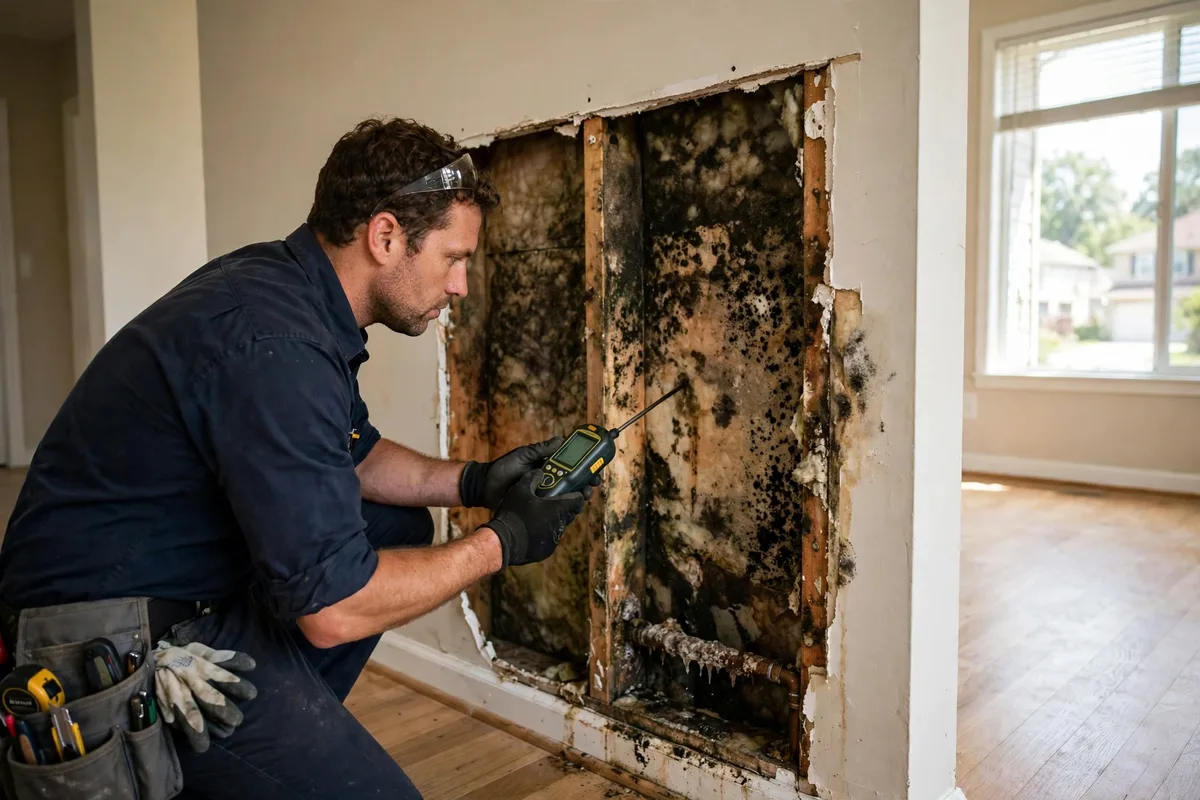
Mold after a burst pipe in Dallas is a mold job waiting to happen: the pipe repair takes an hour, but the water it released keeps working for weeks, and mold can begin germinating on wet porous materials within 24–48 hours, with visible colonies in 3–7 days and spread through wall cavities in 1–2 weeks. Any area still above 16% moisture at the 48-hour mark is at high risk, and Dallas indoor temperatures of 77–86°F sit in the fastest growth band mold knows — normal room temperature in a Dallas home is mold's ideal temperature. Professional mold remediation after a burst pipe runs $1,500–$9,000, often exceeding the pipe repair and water cleanup combined, because the mold hides where the water went: behind drywall, under carpet pad, and inside the wall cavities around the pipe run. Water Damage Restoration Dallas handles burst-pipe mold with IICRC-certified crews, around 60-minute arrival, free estimates, and same-day help. However, one burst-pipe rule comes first: shut the main water valve before anything else, and do not seal or paint over a wet wall, because the moisture underneath will feed mold under the finish.
How fast does mold grow after a burst pipe in Dallas?
Mold grows after a burst pipe in Dallas on a tight clock: germination on wet porous materials within 24–48 hours, visible colonies in 3–7 days, and spread through wall cavities in 1–2 weeks. The first 48 hours decide the job, because any area still above 16% moisture at the 48-hour mark is at high risk and needs remediation, not just drying — and a wall that reads wet on day three is a wall that is already growing mold behind the paint. Dallas indoor temperatures make the clock faster, since mold grows fastest at 77–86°F, which is normal indoor temperature in a Dallas home in every season. The burst pipe repair guide covers the repair itself, while this post covers the aftermath the repair leaves behind. However, one timing trap applies: a wall that looks dry on the surface can still read wet inside the cavity, so the moisture meter — not the eye — decides whether the 48-hour window has closed safely.
Where does mold hide after a burst pipe?
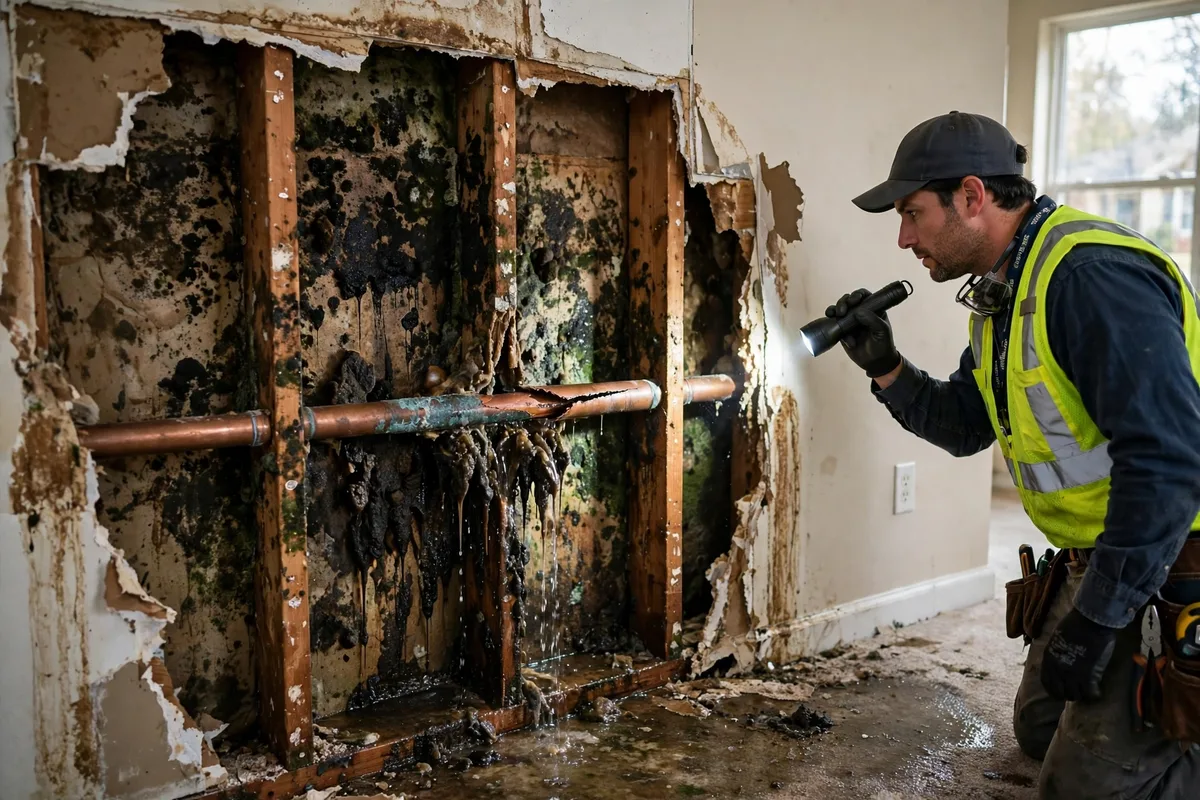
Mold hides after a burst pipe behind drywall, under carpet pad, and inside wall cavities around the pipe run — the three places a mop and a fan never reach. Water from a burst pipe runs down inside the wall before it ever shows on the floor, so the wettest material in the house is often the drywall and insulation you cannot see, and the carpet pad underneath a dry-looking carpet can hold gallons long after the surface feels dry. The pipe run itself is a highway: water follows the pipe through the wall cavity and into the next room, the ceiling below, or the floor above, which is why a burst pipe in an upstairs bathroom can grow mold in a downstairs ceiling a week later. The mold remediation services guide covers the full remediation process. However, one hiding-place rule is absolute: if the only drying was a fan pointed at the floor, the wall cavity is still wet — and the mold growing inside it will not announce itself until it breaks through the paint.
What should you do first when a pipe bursts in Dallas?
When a pipe bursts in Dallas, shut the main water valve first — usually at the street meter or where the line enters the house — then stop the source if it is safe, mop up standing water, and move rugs, boxes, and anything absorbent out of the wet area. Photograph the pipe, the floor, and any damage to walls and furniture before anything moves, since the photos support the claim, and note the time the pipe burst, which is exactly what an insurance adjuster needs to see. Call for same-day help next, because the 48-hour clock starts the moment the pipe bursts, and a crew with moisture meters and thermal imaging can map the wall cavities before the mold clock runs out. Do not seal or paint over a wet wall, and do not run the HVAC system until the ducts are checked, since wet ductwork spreads mold spores through every room the system serves. However, the first-step mistake is the bucket approach: catching drips while the supply line still feeds the leak trades a small mess now for a mold job later, so shutoff comes before cleanup.
How do professionals remove mold after a burst pipe?
Professionals remove mold after a burst pipe in sequence: shut off and cap the supply, extract standing water, map moisture inside the wall cavity and under the flooring with meters and thermal imaging, contain the affected area so spores cannot spread, remove saturated material as needed, clean and treat the remaining structure, dry it until readings verify dryness, then rebuild the walls and floors. Containment matters because opening a moldy wall without it spreads spores through the house, and the crew wears protection and seals the work area before the first cut. Texas requires a licensed mold remediator for jobs over 25 square feet, which is why a burst-pipe mold job is a professional job, not a bleach-and-paint job. The mold clearance testing guide covers the proof that the mold is really gone. However, one remediation rule is absolute: drying without removing the moldy material is a guess, since mold inside a wall cavity cannot be dried away — it has to come out.
| Burst-pipe mold stage | When it happens | What the crew does |
|---|---|---|
| Germination | 24–48 hours | Moisture mapping, extraction |
| Visible colonies | 3–7 days | Containment, removal |
| Wall-cavity spread | 1–2 weeks | Open walls, treat, dry |
| High-risk moisture | Above 16% at 48 hours | Remediation, not drying |
| Clearance proof | After remediation | Testing, clearance letter |
📞 Book Burst Pipe Mold Removal: +1 214-807-4697
How much does mold remediation after a burst pipe cost in Dallas?
Mold remediation after a burst pipe in Dallas runs $1,500–$9,000, often exceeding the pipe repair and water cleanup combined, with the price set by how far the water travelled inside the walls, how much material must come out, and whether clearance testing is needed to prove the job is done. Dallas-area water damage jobs typically land between $2,500 and $7,500 all-in for mitigation, and a burst-pipe mold job adds remediation on top of that figure when the structure sat wet past 48 hours. The Texas burst-pipe average claim runs around $15,500 when the source is a sudden supply failure, and sudden pipe bursts are usually covered, including the mold that follows — while slow leaks unnoticed for months commonly are not. The mold comeback guide covers why mold returns when the moisture is not fully removed. However, the pricing trap is the bleach-and-paint quote: a company that offers to wipe the wall and paint over it without opening the cavity or testing the moisture is selling a cosmetic cover that the mold will grow straight through.
How do you choose a mold removal company after a burst pipe in Dallas?
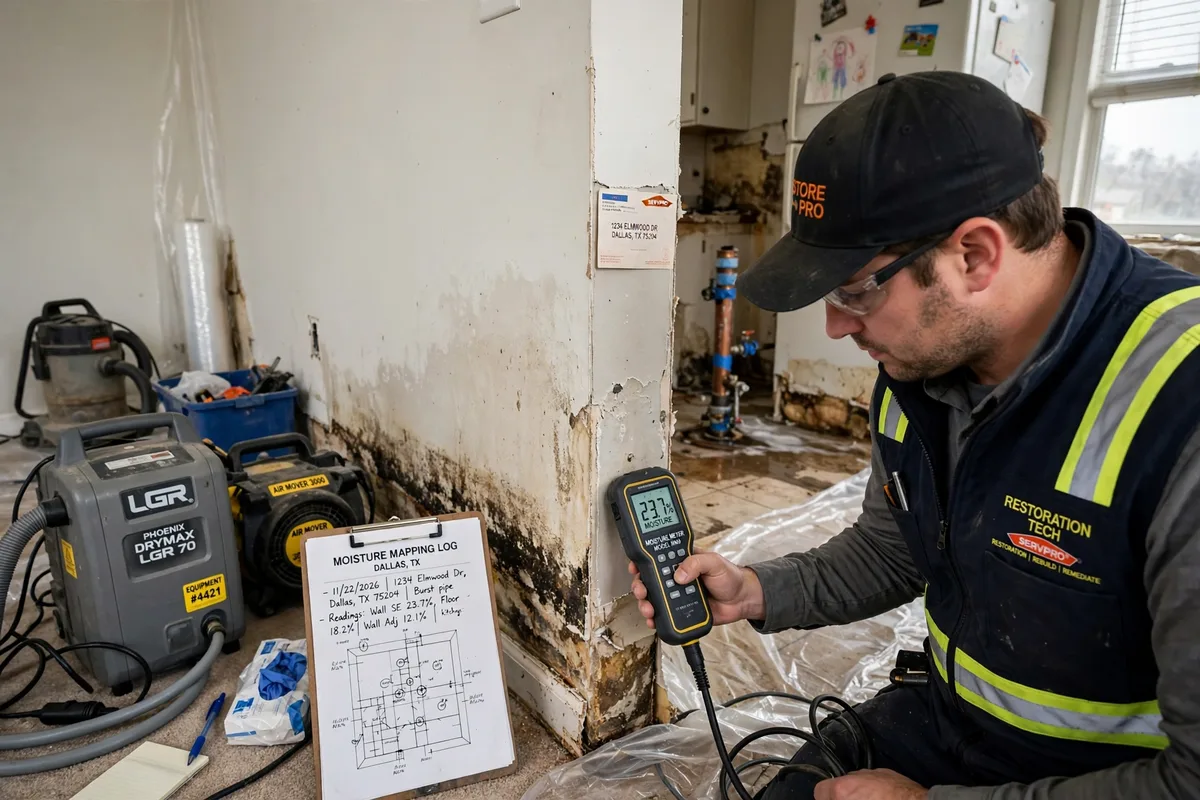
Choose on five checks: same-day response inside the 48-hour window, moisture mapping with meters and thermal imaging before any opening, containment before any wall comes down, a written scope that separates extraction, remediation, drying, clearance testing, and rebuild, and claim documentation with photos and readings. Ask whether the crew is a licensed mold remediator for jobs over 25 square feet, how it verifies the structure is dry, and whether it provides a clearance letter when the job is done. The mold remediation after water damage guide covers the full remediation standard. However, one selection rule beats the rest: the company that maps the walls first, contains second, removes third, and tests last — in that order, with readings to prove it — is the company whose Dallas home stays mold-free after the next freeze.
Important Considerations
Texas has no state license specifically for restoration companies, but Texas does require a licensed mold remediator for mold jobs over 25 square feet, so check IICRC certification, the mold license, insurance, and reviews before hiring, and be wary of anyone demanding full payment upfront. Never seal or paint over a wet wall without drying the structure beneath it, because the moisture will feed mold under the finish and the paint will peel within weeks. Never mop the surface and assume the job is done, since the worst water sits inside the wall cavity and under the flooring, and mold grows on wet material in 24–48 hours. Never run the HVAC system after a burst pipe until the ducts are checked, since wet ductwork spreads mold spores through every room the system serves. Never use bleach on mold inside a wall cavity, because bleach does not reach the roots in porous material and the mold comes back. If any area still reads above 16% moisture at the 48-hour mark, ask explicitly for remediation alongside drying, not just a fan and a dehumidifier. Keep the scope, moisture readings, photos, and all carrier correspondence in one file — burst-pipe mold claims generate more paperwork than the job suggests. Finally, after repair, know your main shutoff valve and winterize exposed pipes before the first freeze, because the next Dallas cold snap will test the same lines again.
📞 Free Burst Pipe Mold Estimate: +1 214-807-4697
Frequently Asked Questions
Who handles mold after a burst pipe in Dallas?
Water Damage Restoration Dallas — 24/7 live answer, around 60-minute arrival, free estimates, and shutoff, extraction, moisture mapping, and mold removal in one visit. Call +1 214-807-4697 any hour and a live crew answers.
How fast does mold grow after a burst pipe?
Mold can begin germinating on wet porous materials within 24–48 hours, with visible colonies in 3–7 days and spread through wall cavities in 1–2 weeks. Dallas indoor temperatures of 77–86°F sit in the fastest growth band.
Where does mold hide after a burst pipe?
Behind drywall, under carpet pad, and inside wall cavities around the pipe run. Water follows the pipe through the wall cavity, so a burst pipe upstairs can grow mold in a downstairs ceiling a week later.
How much does mold remediation after a burst pipe cost?
Professional remediation after a burst pipe runs $1,500–$9,000, often more than the pipe repair and water cleanup combined. Dallas-area water jobs typically land between $2,500 and $7,500 for mitigation alone.
When is drying alone not enough after a burst pipe?
When any area still reads above 16% moisture at the 48-hour mark. That area is at high risk and needs remediation, not just drying — and mold inside a wall cavity cannot be dried away, it has to come out.
Does insurance cover mold after a burst pipe?
Sudden pipe bursts are usually covered, including the mold that follows, with the Texas burst-pipe average claim around $15,500. Slow leaks unnoticed for months commonly are not covered, so document the discovery date.
How fast can a crew reach my Dallas home after a burst pipe?
Around 60 minutes, 24/7. Crews run same-day for burst pipes because the 48-hour mold clock starts the moment the pipe bursts, and moisture mapping has to happen before that window closes.
Is it safe to stay home during mold removal after a burst pipe?
Often yes in unaffected rooms, but the contained work area stays off-limits while walls are open and remediation runs. The crew seals the area so spores cannot spread into the rooms you are living in.
What is the difference between mold after a burst pipe and mold after a flood?
A burst pipe is a clean-water event inside the walls, so the mold grows in the cavities the water travelled through, while a flood brings contaminated water that needs sanitizing alongside drying. Both run on the same 24–48-hour clock.
Do I need a licensed mold remediator in Texas?
Yes, for mold jobs over 25 square feet, Texas requires a licensed mold remediator. A burst-pipe mold job that reaches behind drywall usually crosses that line, which is why it is a professional job.
Why call Water Damage Restoration Dallas for burst-pipe mold?
Local Dallas crews, 24/7 live answer, around 60-minute arrival, free estimates, and moisture-mapping-first remediation with clearance testing — call +1 214-807-4697.
📞 Call Water Damage Restoration Dallas 24/7: +1 214-807-4697
Related Dallas Water Damage Guides
- Mold Starts Growing in 24–48 Hours: What That Clock Really Means for Dallas Homes
- Mold in Air Ducts in Dallas: Signs, Health Risks & Same-Day HVAC Mold Removal
- Mold Remediation vs Mold Removal in Dallas: Which Service Do You Actually Need?
- Can Mold Come Back After Remediation in Dallas? Same-Day Help