Mold Clearance Testing After Remediation in Dallas: Proof It's Really Gone
TLDR
- Who handles mold clearance testing in Dallas?: Water Damage Restoration Dallas — 24/7 live answer, around 60-minute arrival, free estimates: +1 214-807-4697.
- What is mold clearance testing?: An independent assessment after remediation that proves the mold is gone, using moisture checks and air and surface sampling against an outdoor baseline.
- When do you need clearance testing?: When insurance, a home sale, a rental dispute, or peace of mind after a big job requires written proof the remediation worked.
- Who does the clearance test?: A licensed mold assessment consultant — in Texas, the assessor must be independent of the company that did the remediation.
- What does clearance testing cost in Dallas?: Mold remediation runs $1,200–$3,800, and the clearance test is a separate assessment fee on top of the job.
- Can clearance testing fail?: Yes — if moisture is still high or spore counts are above the outdoor baseline, the area gets cleaned again and retested.
- When should you call about clearance testing?: Before the containment comes down and the fans are switched off — testing while fans are still running is useless.
🚨 REMEDIATION DONE BUT NO PROOF IT WORKED? Get independent clearance testing now. We answer live 24/7, arrive in around 60 minutes, and give free estimates — independent assessment, moisture checks, and air and surface sampling in one visit.
📞 24/7 Mold Clearance Help: +1 214-807-4697
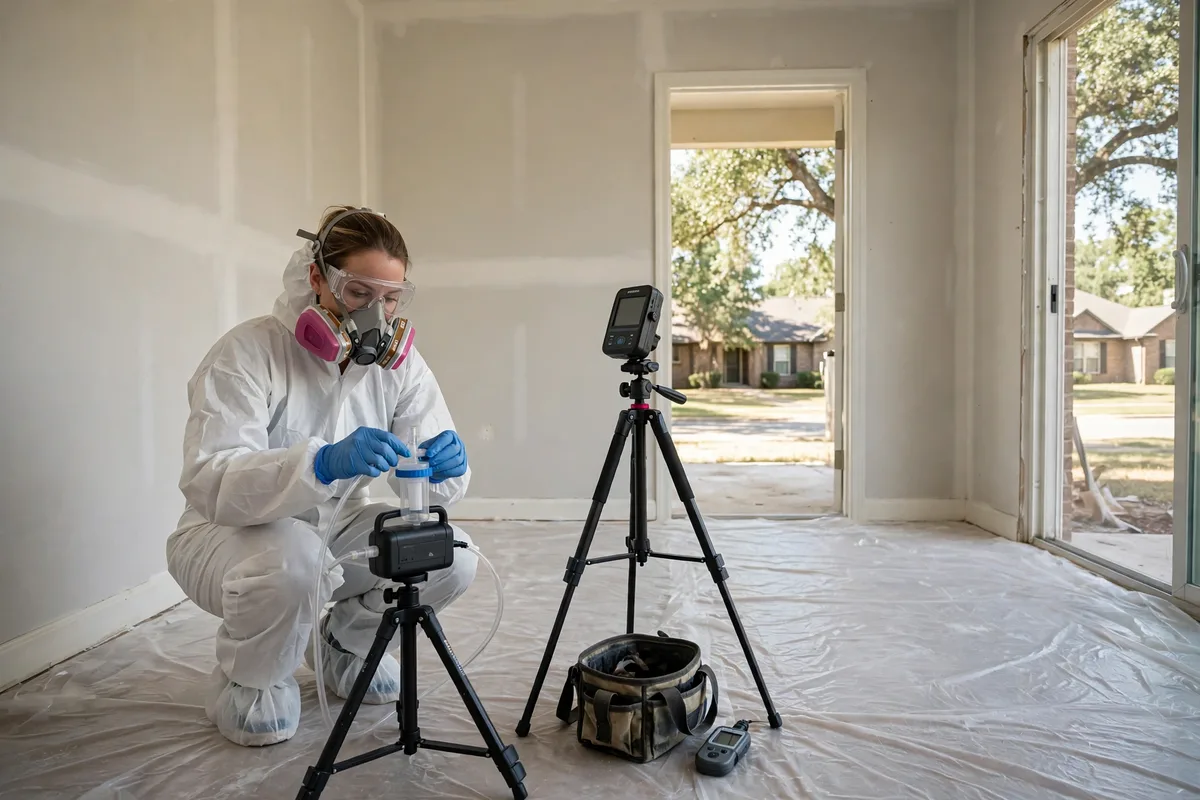
Mold clearance testing after remediation in Dallas is the step that turns a finished job into a proven job, because remediation removes the visible mold and the wet material, but only an independent test proves the air and the surfaces are clean. The assessor checks the remediated area with moisture meters, takes air samples inside the containment and outside the house for a baseline, and swabs surfaces where mold grew — behind drywall, in wall cavities, under carpet pad and tack strip, and at duct boots — then compares the indoor results against the outdoor air. If the indoor spore counts match the outdoor baseline and the moisture readings are dry, the job passes and the Texas Certificate of Mold Damage Remediation becomes possible. If the counts are high or the moisture is still up, the area gets cleaned again and retested. Water Damage Restoration Dallas handles mold assessment and remediation with IICRC-certified crews, around 60-minute arrival, free estimates, and same-day help. However, one clearance rule comes first: testing while the drying fans are still running is useless, because the moving air dilutes the samples and hides the mold that is still there.
What is mold clearance testing?
Mold clearance testing is an independent post-remediation assessment that verifies the mold is gone before the containment comes down and the room goes back into use. The assessor inspects the remediated area visually, checks moisture in the walls, floors, and framing, takes air samples inside the work area and outdoors for comparison, and swabs surfaces where mold grew. The indoor air is judged against the outdoor baseline, not against zero — outdoor air always carries mold spores, so a pass means the indoor counts look like the outdoor counts, not that the air is sterile. The mold remediation services guide covers the cleanup that comes before the test. However, one definition trap applies: a clearance test is not the same as the initial mold test — the first test finds the problem, and the clearance test proves the fix worked.
When do you need mold clearance testing in Dallas?
You need mold clearance testing in Dallas when insurance requires proof the job worked, when you are selling or renting the home and the buyer or tenant wants written assurance, when a landlord dispute turns on whether the unit is safe, or when a big remediation job leaves you wanting peace of mind before the family moves back in. Texas law makes the clearance step the gateway to the Certificate of Mold Damage Remediation, which is the document that proves the work was done and passed. A small bathroom job may not need it, but any job with containment, wall removal, or an insurance claim usually does. The allergies and mold testing guide covers when to test in the first place. However, one timing trap applies: the clearance test belongs after remediation and before rebuild, because once the walls are closed the assessor can no longer see the cavities that matter most.
What does the clearance assessor actually check?
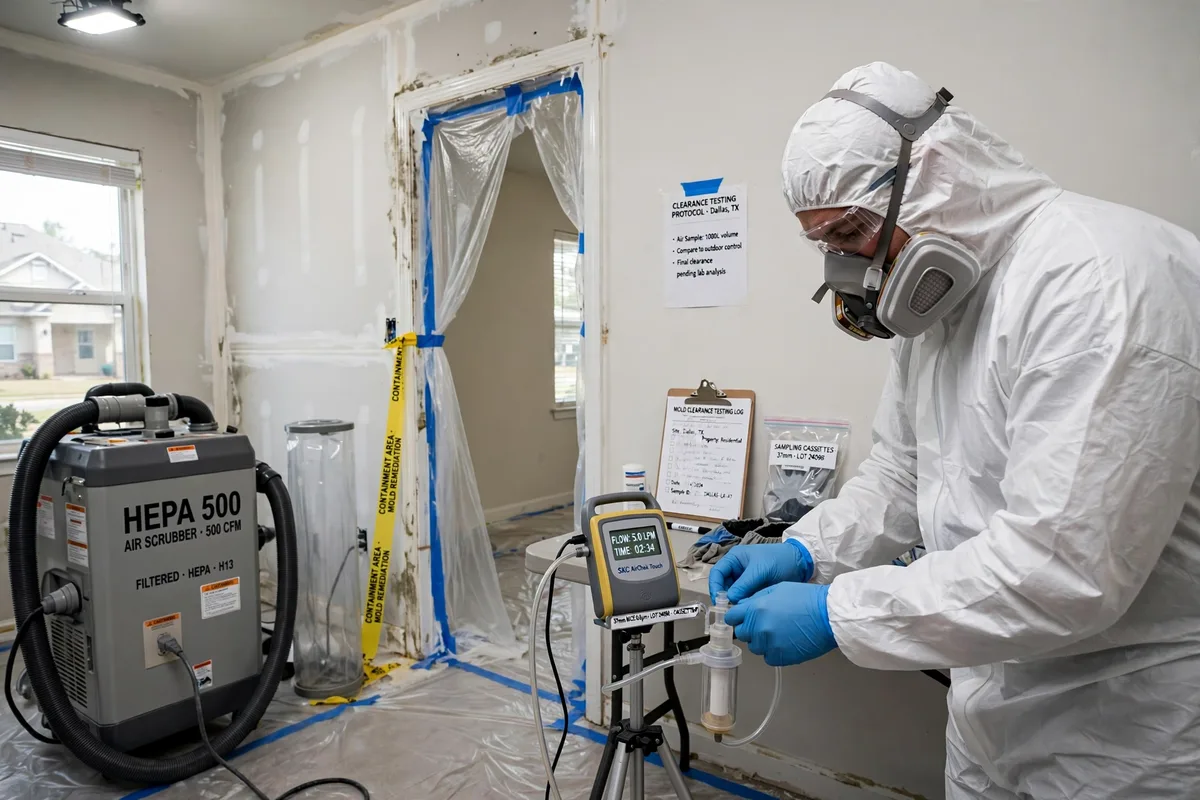
The clearance assessor checks the places mold hides: behind drywall and inside wall cavities, under carpet pad and along the tack strip, at duct boots where the HVAC meets the room, and around window frames and baseboards where moisture collects. The assessor measures moisture in the framing and the drywall, compares air samples from the work area against an outdoor baseline, and swabs the surfaces where mold grew to confirm the spores are gone. The containment itself gets inspected — a torn barrier or a gap at the zipper door means the clean area was never really sealed. The mold comeback guide explains why the hidden spots matter. However, one inspection trap applies: a clean-looking wall proves nothing, because the mold that matters grows inside the cavity and under the pad, so the assessor's meters and samples decide the pass, not the appearance.
How does mold clearance testing work step by step?
Mold clearance testing works in sequence: the remediation crew finishes the cleanup and switches off the drying fans, the containment stays up, the assessor inspects the area visually and checks moisture in the walls and framing, air samples are taken inside the work area and outdoors, surface swabs are taken where mold grew, and the lab compares the indoor counts against the outdoor baseline. If the results pass, the assessor issues the clearance report and the Certificate of Mold Damage Remediation becomes possible. If the results fail, the area gets cleaned again and the test repeats. The mold remediation cost guide explains how remediation pricing works. However, one sequence rule is absolute: the fans must be off and the air still for the samples to mean anything, because running fans dilute the air and hide the spores that are still present.
| Clearance test step | What it checks | Pass means |
|---|---|---|
| Visual inspection | Containment, surfaces | No visible mold left |
| Moisture readings | Walls, framing, floors | Readings back to dry |
| Indoor air samples | Spore counts inside | Matches outdoor baseline |
| Outdoor baseline | Normal spore levels | Fair comparison point |
| Surface swabs | Cavities, pad, ducts | No mold on swabbed spots |
📞 Book Mold Clearance Testing: +1 214-807-4697
How much does mold clearance testing cost in Dallas?
Mold remediation runs $1,200–$3,800, and the clearance test is a separate assessment fee on top of the job, priced by the number of air samples and swabs the assessor takes. A single-room clearance with two or three samples costs far less than a whole-house clearance after a flood, where the assessor samples several rooms and swabs multiple cavities. Dallas-area water damage jobs typically land between $2,500 and $7,500, and the clearance test is a small fraction of a job that size — but it is the fraction that makes the insurance file complete and the home saleable. A free estimate before work starts separates the remediation, the assessment, and any retest into line items the adjuster or the buyer can approve. However, the pricing trap is the remediation-only quote: a company that cleans the mold without arranging independent clearance leaves the homeowner with no proof the job worked, and no proof means no certificate.
Can mold clearance testing fail?
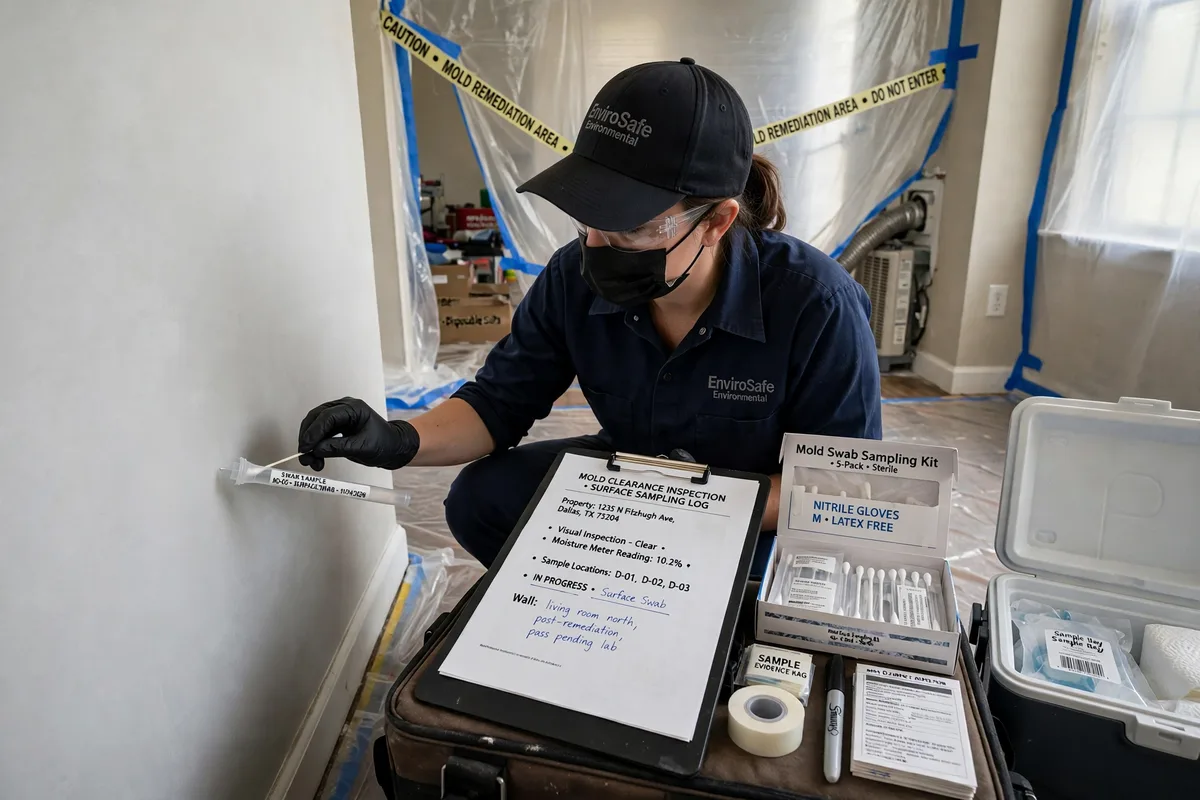
Yes — clearance testing fails when moisture readings are still high, when indoor spore counts sit above the outdoor baseline, or when a surface swab still finds mold in a cavity, under the pad, or at a duct boot. A fail does not mean the job was wasted; it means the area gets cleaned again, the moisture source gets fixed, and the test repeats until it passes. The most common fail is a moisture source that was never fixed — a slow leak behind the wall that keeps the framing damp no matter how many times the surface is cleaned. The mold after water damage guide covers the moisture fix that comes first. However, one failure trap applies: testing while the fans are still running can produce a false pass, because the moving air dilutes the samples, so a pass taken with fans on is not a real pass.
How do you choose mold clearance testing services in Dallas?
Choose on five checks: a licensed mold assessment consultant who is independent of the remediation company, air and surface sampling against an outdoor baseline, moisture readings in the walls and framing before any sampling, a written clearance report that supports the Texas Certificate of Mold Damage Remediation, and a retest plan if the first test fails. Ask whether the assessor samples the wall cavities and the duct boots, how many samples the fee covers, and whether the report goes to the insurer or the buyer. However, one selection rule beats the rest: the assessor who tests with the fans off, samples against an outdoor baseline, and writes a report the insurer accepts is the assessor whose clearance actually proves the mold is gone.
Important Considerations
Never test while the drying fans are still running, because the moving air dilutes the samples and hides the mold that is still there. Never close the walls before the clearance test, since the assessor needs to see the cavities, the pad, and the duct boots that matter most. Never accept a clearance from the same company that did the remediation, because Texas requires the assessor to be independent. Never treat a visual check as a clearance — the mold that matters grows inside the cavity and under the pad, where no eye can reach it. Keep the clearance report, the lab results, and the Certificate of Mold Damage Remediation in one file, because the buyer, the insurer, and the next tenant will all ask for it. Finally, fix the moisture source before the retest, because a slow leak behind the wall will fail every test until it is repaired.
📞 Free Mold Clearance Estimate: +1 214-807-4697
Frequently Asked Questions
Who handles mold clearance testing in Dallas?
Water Damage Restoration Dallas — 24/7 live answer, around 60-minute arrival, free estimates, and independent assessment, moisture checks, and air and surface sampling in one visit. Call +1 214-807-4697 any hour and a live crew answers.
What is mold clearance testing?
An independent assessment after remediation that proves the mold is gone, using moisture checks and air and surface sampling against an outdoor baseline. It is the step that turns a finished job into a proven job.
When do you need clearance testing?
When insurance, a home sale, a rental dispute, or peace of mind after a big job requires written proof the remediation worked. Texas law makes it the gateway to the Certificate of Mold Damage Remediation.
Who does the clearance test?
A licensed mold assessment consultant — in Texas, the assessor must be independent of the company that did the remediation. The same company cannot test its own work.
What does clearance testing cost in Dallas?
Mold remediation runs $1,200–$3,800, and the clearance test is a separate assessment fee priced by the number of samples. A single-room clearance costs far less than a whole-house clearance after a flood.
Can clearance testing fail?
Yes — if moisture is still high or spore counts are above the outdoor baseline, the area gets cleaned again and retested. The most common fail is a moisture source that was never fixed.
Should fans be running during a clearance test?
No — testing while fans are still running is useless, because the moving air dilutes the samples and hides the mold that is still there. The fans must be off and the air still.
What is the Texas Certificate of Mold Damage Remediation?
It is the document that proves the remediation was done and passed clearance testing. Only a clearance test makes the certificate possible, and buyers, insurers, and tenants all ask for it.
How is clearance testing different from mold testing?
The first test finds the problem; the clearance test proves the fix worked. Clearance testing happens after remediation and before rebuild, with the containment still up.
How long does clearance testing take?
The site visit takes hours, and the lab results take days. A fail means another cleaning round and a retest, so the full clearance can take a week on a big job.
Why call Water Damage Restoration Dallas for mold clearance testing?
Local Dallas crews, 24/7 live answer, around 60-minute arrival, free estimates, and independent assessment with full clearance reporting — call +1 214-807-4697.
📞 Call Water Damage Restoration Dallas 24/7: +1 214-807-4697
Related Dallas Water Damage Guides
- Mold Starts Growing in 24–48 Hours: What That Clock Really Means for Dallas Homes
- Mold in Air Ducts in Dallas: Signs, Health Risks & Same-Day HVAC Mold Removal
- Mold Remediation vs Mold Removal in Dallas: Which Service Do You Actually Need?
- Can Mold Come Back After Remediation in Dallas? Same-Day Help