Smoke-Damaged Contents Restoration in Dallas: Save Your Furniture & Belongings
TLDR
- Can smoke-damaged furniture and clothes be saved?: Often yes — with professional cleaning, ozone or hydroxyl treatment, and proper deodorization, most hard goods and many soft goods recover.
- What is contents restoration?: Pack-out, inventory, off-site cleaning, deodorization, and return of salvageable belongings after a fire.
- What cannot be saved after smoke damage?: Food, medicines, and heavily charred or melted items — and anything the crew or insurer flags as unsafe.
- How fast must contents work start?: Within days — soot corrodes and sets stains fast, and odor deepens the longer it sits in fabrics.
- Does insurance cover contents restoration?: Fire claims average about $88,000, and contents coverage typically includes professional cleaning or replacement value.
- What does contents restoration cost?: It scales with volume — a single room costs far less than a whole-home pack-out, and Dallas fire jobs average $29,077 overall.
- Who restores smoke-damaged contents in Dallas?: Water Damage Restoration Dallas — 24/7 live answer, around 60-minute arrival, free estimates: +1 214-807-4697.
🚨 SMOKE RUINED YOUR BELONGINGS? Do not throw anything away yet. We answer live 24/7, arrive in around 60 minutes, and give free estimates — pack-out, cleaning, and odor removal start the same day.
📞 24/7 Contents Restoration Help: +1 214-807-4697
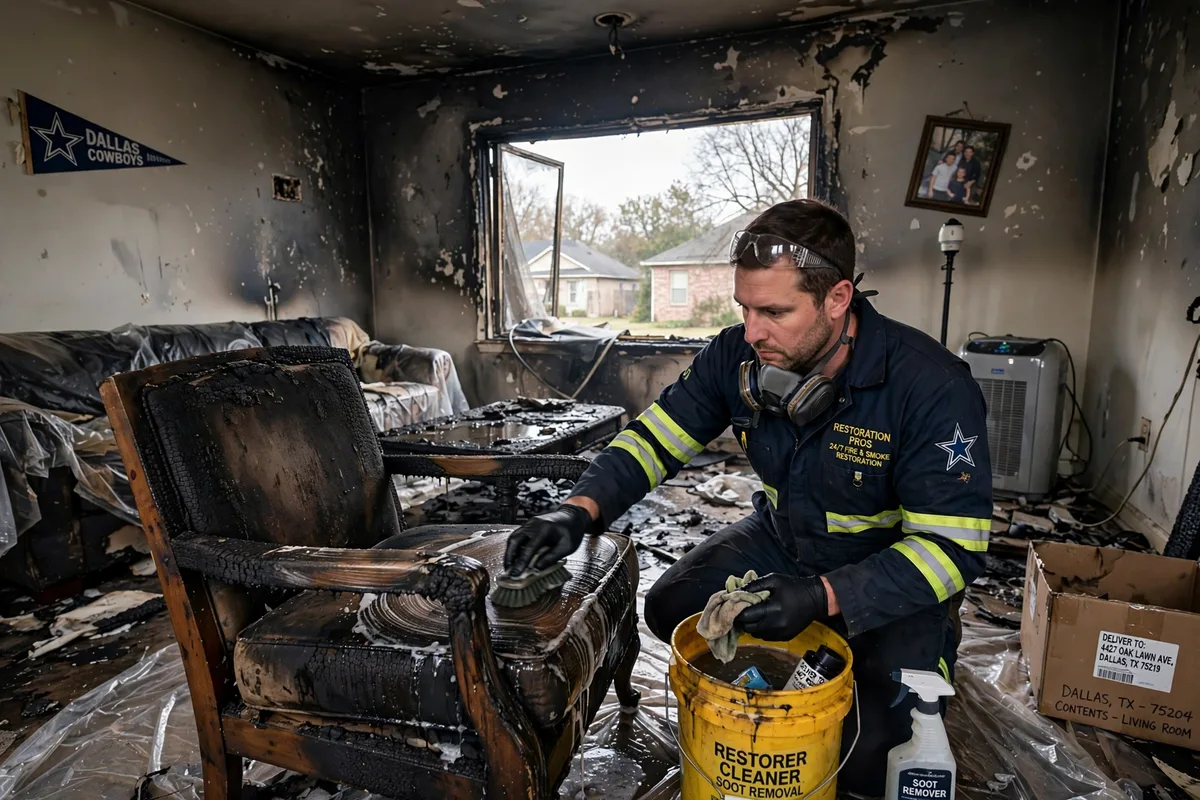
Can smoke-damaged furniture and clothes be saved in Dallas? Often yes — far more than homeowners expect, provided the contents are handled correctly in the first days after the fire. Soot is acidic and corrosive, so the clock matters: metal tarnishes, fabrics absorb odor deeper, and finishes etch the longer residue sits. Water Damage Restoration Dallas handles contents restoration with IICRC-certified crews, around 60-minute arrival, free estimates, and same-day pack-out and cleaning. However, the rule that matters most comes first: do not throw anything away, do not wash soot-covered items at home, and do not run the HVAC — every one of those steps can turn a salvageable item into a total loss and weaken the claim.
What does professional contents restoration include?
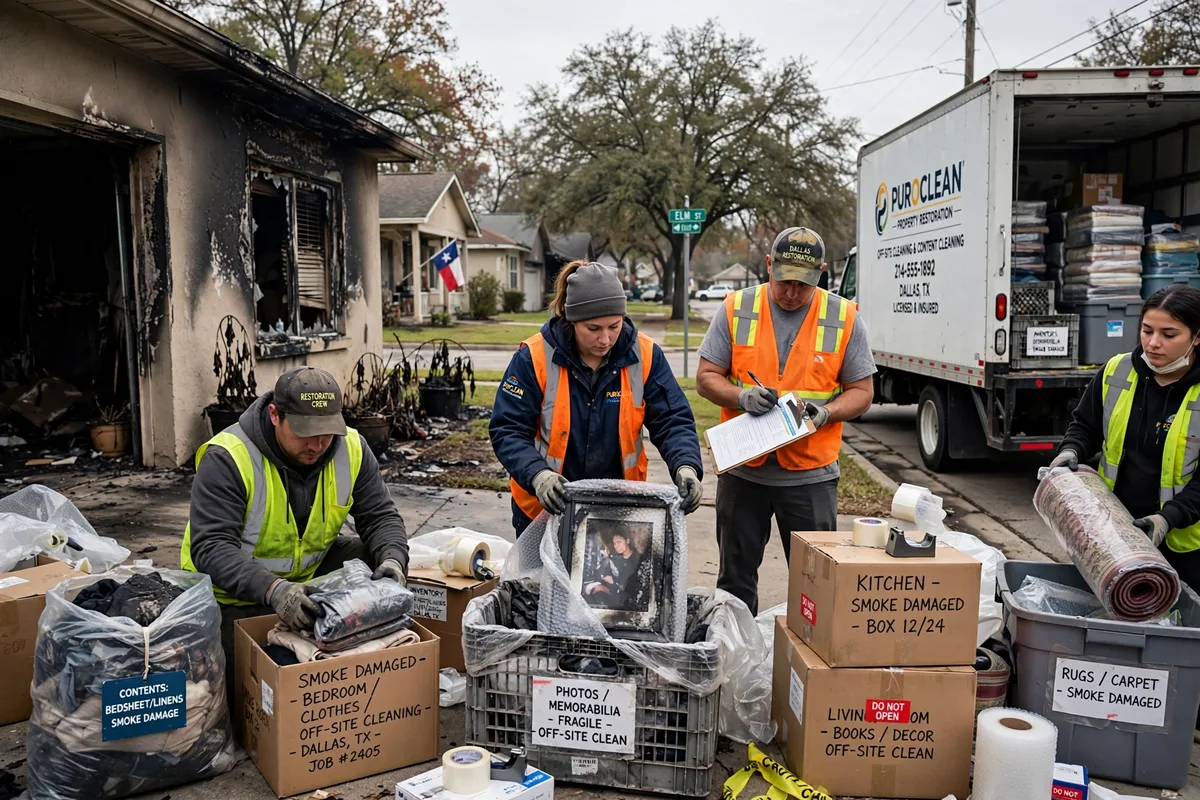
Contents restoration follows a fixed sequence: inventory and photo documentation, pack-out of salvageable items, off-site cleaning matched to each material, deodorization, and return once the home is clean and dry. Hard goods get HEPA vacuuming and agent-matched cleaning; soft goods get specialized laundry or dry cleaning; electronics get corrosion checks before any power-up. The smoke damage guide covers the home-side cleanup that must finish before contents come back. However, the contents trap is the return timing: bringing cleaned belongings back into a home that still smells of smoke re-contaminates them — contents return last, after odor sealing and clearance, never first.
What can be saved, and what cannot?
Hard furniture, solid wood, metal, glass, and ceramics usually recover well with professional cleaning. Clothing, linens, and drapes often recover with specialized cleaning and ozone or hydroxyl deodorization, though protein soot from kitchen fires is the hardest odor to remove. Electronics are a judgment call: extinguisher residue is corrosive, and powering a soot-coated device can destroy it, so electronics are inspected before testing. Food, medicines, cosmetics, and anything charred, melted, or structurally compromised should be discarded. The kitchen fire guide explains why protein soot is the worst-smelling residue. However, the practical rule is to let the crew and the adjuster make the discard calls — items thrown away before documentation cannot be claimed, and items kept without cleaning can spread odor and soot to clean rooms.
| Contents type | Usually saved? | How it is cleaned |
|---|---|---|
| Hard furniture, wood | Yes, often | HEPA vacuum, agent cleaning |
| Clothing, linens | Often | Specialized laundry, ozone |
| Electronics | Sometimes | Corrosion check, no power-up |
| Photos, documents | Sometimes | Freeze-dry, gentle cleaning |
| Food, medicines | No | Discard, document for claim |
📞 Same-Day Contents Help: +1 214-807-4697
How does odor removal actually work for belongings?
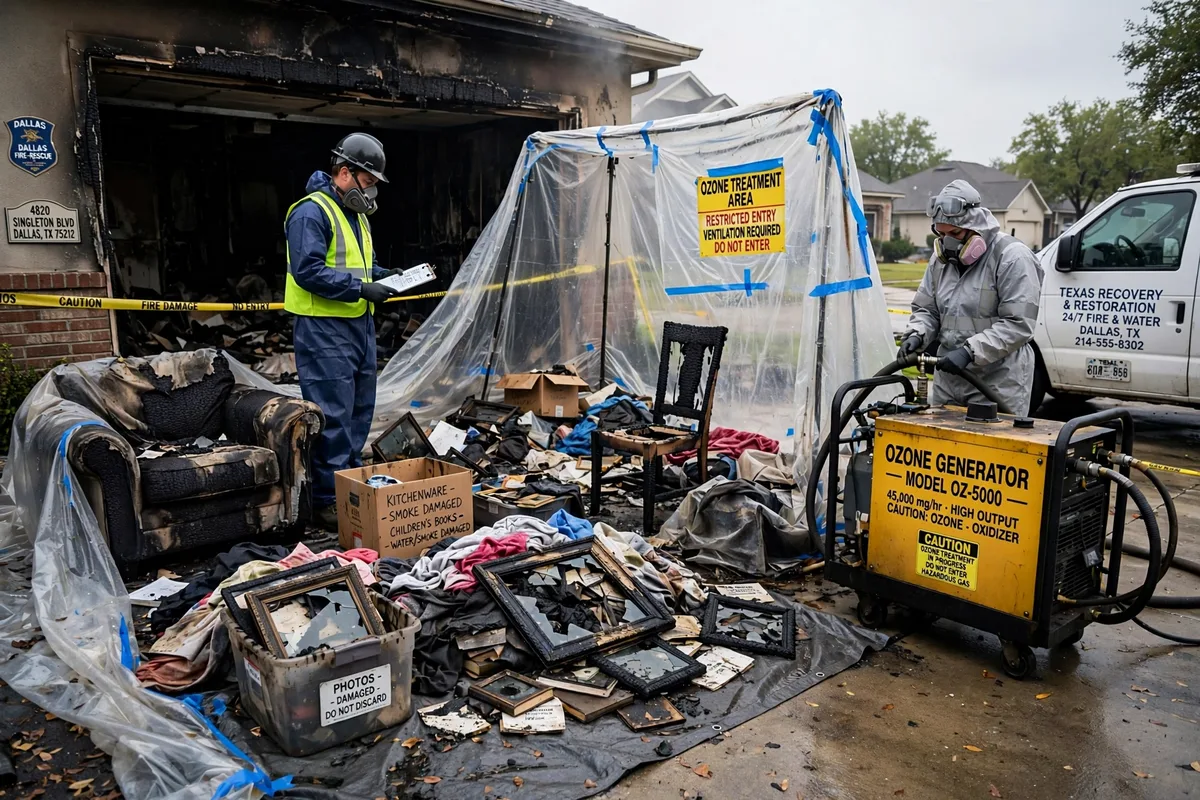
Odor removal works by neutralizing odor molecules, not covering them. Ozone treatment breaks down odor compounds in a controlled chamber, hydroxyl generators work safely alongside occupied spaces, and thermal fogging drives deodorizer into porous materials the way smoke drove odor in. Air fresheners, candles, and open windows fail because they mask the surface while odor stays embedded in foam, fabric, and wood grain. The first-24-hours guide covers what to do before the crew arrives. However, one odor exception applies: items that absorbed heavy protein soot or sat in standing firefighting water may never fully deodorize — the crew will say so honestly, and those items are documented for replacement rather than cleaned twice at your expense.
How fast must contents restoration start?
Within days of the fire, and ideally alongside the home cleanup. Soot corrodes metal within hours, etches glass and finishes within days, and sets stains permanently if wet-cleaned wrong or left too long. Firefighting water adds a second clock: wet contents grow mold in 24–48 hours, so wet items need extraction and drying before cleaning. A crew that packs out the same week can often save furniture, clothing, and documents that a next-month crew would have to discard. The emergency fire restoration guide covers same-day dispatch. However, one timing exception applies: if the structure is unstable, pack-out waits for clearance — no belongings are worth entering an unsafe home, and the crew secures the property first.
How much does contents restoration cost in Dallas?
It scales with volume and soil level: a single-room pack-out and cleaning costs far less than a whole-home pack-out with off-site storage. Dallas fire restoration averages $29,077 overall, with smoke-only jobs from around $3,000 for one or two rooms to $25,000–$50,000 for heavy whole-home soot with HVAC contamination. Fire claims average about $88,000, and contents coverage typically pays for professional cleaning up to replacement value. Most Dallas water jobs land between $2,500 and $7,500 all-in for mitigation, which is a useful benchmark when firefighting water is part of the job. However, the cost trap is the storage clock: off-site storage is billed monthly, so a fast home cleanup that returns contents quickly costs less than a slow one — another reason the crew and the rebuild schedule must stay in sync.
Important Considerations
Texas has no state license specifically for restoration companies, so check IICRC certification, insurance, and reviews before hiring, and be wary of anyone demanding full payment upfront. Never power up soot-coated electronics, never wash soot-covered fabrics at home, and never throw items away before the crew inventories and photographs them — the claim depends on that record. If the home must stay empty during cleanup, ask about emergency board-up: an open, fire-damaged home invites theft and weather damage on top of the fire loss. Keep the inventory, photos, cleaning scope, and all carrier correspondence in one file — contents claims are where small documentation gaps become large out-of-pocket costs. Finally, expect honesty about what cannot be saved: a crew that promises to save everything is selling, not restoring.
📞 Free Contents Estimate: +1 214-807-4697
Frequently Asked Questions
Can smoke-damaged furniture be saved?
Often yes — hard furniture and solid wood usually recover with HEPA vacuuming and agent-matched cleaning, provided soot is handled professionally and early.
Can smoke-damaged clothes be saved?
Often yes, with specialized laundry or dry cleaning plus ozone or hydroxyl deodorization — though protein soot from kitchen fires is the hardest odor to remove.
What is a pack-out?
The crew inventories, photographs, and moves salvageable belongings off-site for cleaning and storage, then returns them once the home is clean, dry, and odor-free.
What cannot be saved after smoke damage?
Food, medicines, cosmetics, and anything charred, melted, or structurally compromised — plus items the crew or insurer flags as unsafe.
Should I clean smoke-damaged items myself?
No — wet-cleaning soot smears it and sets stains permanently, and household washing spreads odor. Professional cleaning matches the agent to the material.
How does odor removal work?
Ozone, hydroxyl, and thermal fogging neutralize odor molecules inside porous materials — air fresheners and candles only mask the surface and the smell returns.
Can smoke-damaged electronics be saved?
Sometimes — electronics are inspected for corrosion before any power-up, because extinguisher residue is corrosive and powering a soot-coated device can destroy it.
How fast must contents work start?
Within days: soot corrodes within hours and wet contents grow mold in 24–48 hours, so pack-out, drying, and cleaning start alongside the home cleanup.
Does insurance cover contents restoration?
Fire claims average about $88,000, and contents coverage typically includes professional cleaning or replacement value — documented items claim best.
When do my belongings come back?
Last, after the home is cleaned, dried, and odor-sealed — returning them early re-contaminates them with smoke odor still in the structure.
Why call Water Damage Restoration Dallas for contents?
Local Dallas crews, 24/7 live answer, around 60-minute arrival, free estimates, and fire-plus-water expertise — pack-out, cleaning, and odor removal in one call. Call +1 214-807-4697.
📞 Call Water Damage Restoration Dallas 24/7: +1 214-807-4697