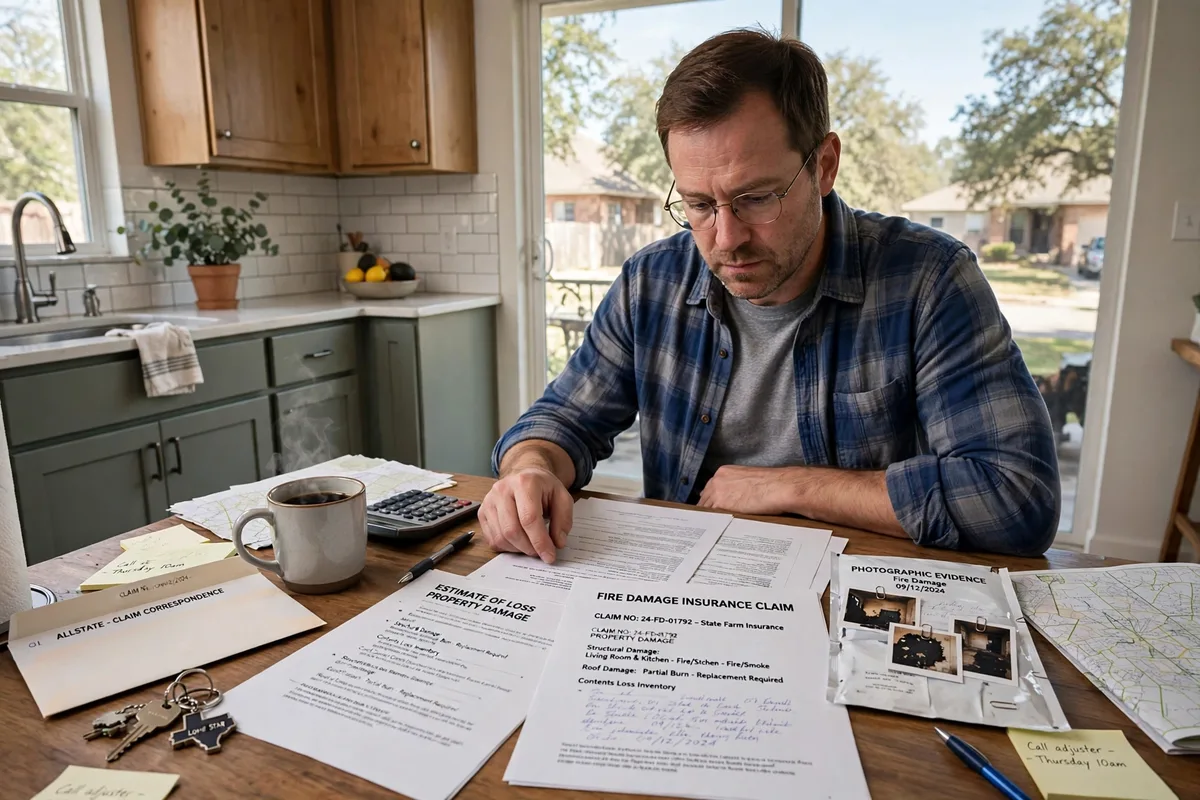
Fire Insurance Claim Mistakes in Dallas: Avoid the Errors That Cost Thousands
TLDR
- What is the biggest fire insurance claim mistake in Dallas?: Cleaning up or throwing things away before documenting the damage — the proof is gone and the claim shrinks with it.
- Who helps with fire damage claims in Dallas?: Water Damage Restoration Dallas — 24/7 live answer, around 60-minute arrival, free estimates: +1 214-807-4697.
- How much is a Dallas fire claim worth?: Fire claims average around $88,000, and Dallas fire restoration jobs average $29,077 — the stakes are the highest of any home claim.
- Should you accept the first settlement offer?: No — the first offer is often a starting position, not the full value of the loss.
- What does ALE cover after a fire?: Additional Living Expenses — hotel, meals, and rent while your home is uninhabitable — but only if you track and claim it.
- When should you file a fire claim in Dallas?: Immediately, and before any cleanup or repairs begin, so the adjuster sees the damage as it happened.
- What documentation protects a fire claim?: Photos, video, a room-by-room inventory, receipts, and the restoration crew's written scope and moisture readings.
🚨 FIRE DAMAGE IN YOUR DALLAS HOME? Every hour of cleanup before documentation costs you money — call now. We answer live 24/7, arrive in around 60 minutes, and give free estimates — documentation, cleanup, and claim-ready records in one visit.
📞 24/7 Fire Claim Help: +1 214-807-4697
Fire insurance claim mistakes in Dallas cost homeowners thousands because a fire claim is the biggest, most complex claim a homeowner will ever file: fire claims average around $88,000, and Dallas fire restoration jobs average $29,077, yet the difference between a full settlement and a short one usually comes down to what the homeowner did in the first 48 hours. The mistakes are almost always the same — cleaning before documenting, throwing damaged items away, accepting the first estimate, forgetting additional living expenses, and waiting too long to file. Each one quietly removes money from the settlement, and none of them can be undone once the evidence is gone. A restoration crew that documents as it works protects the claim at every step, with photos, a written inventory, and a scope the adjuster can verify. Water Damage Restoration Dallas handles fire damage with IICRC-certified crews, around 60-minute arrival, free estimates, and claim-ready documentation on every job. However, one rule comes first: never start cleanup before the damage is photographed and inventoried, because the claim is only worth what you can prove.
What is the costliest fire insurance claim mistake in Dallas?
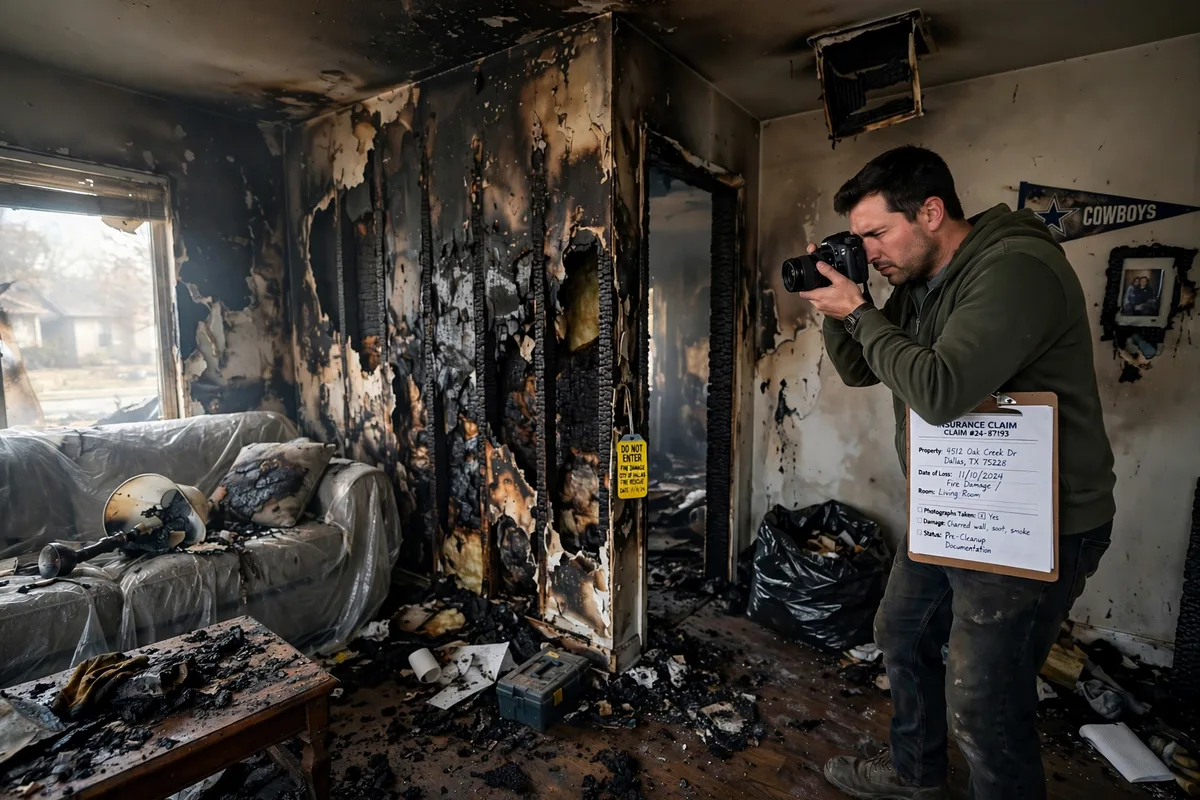
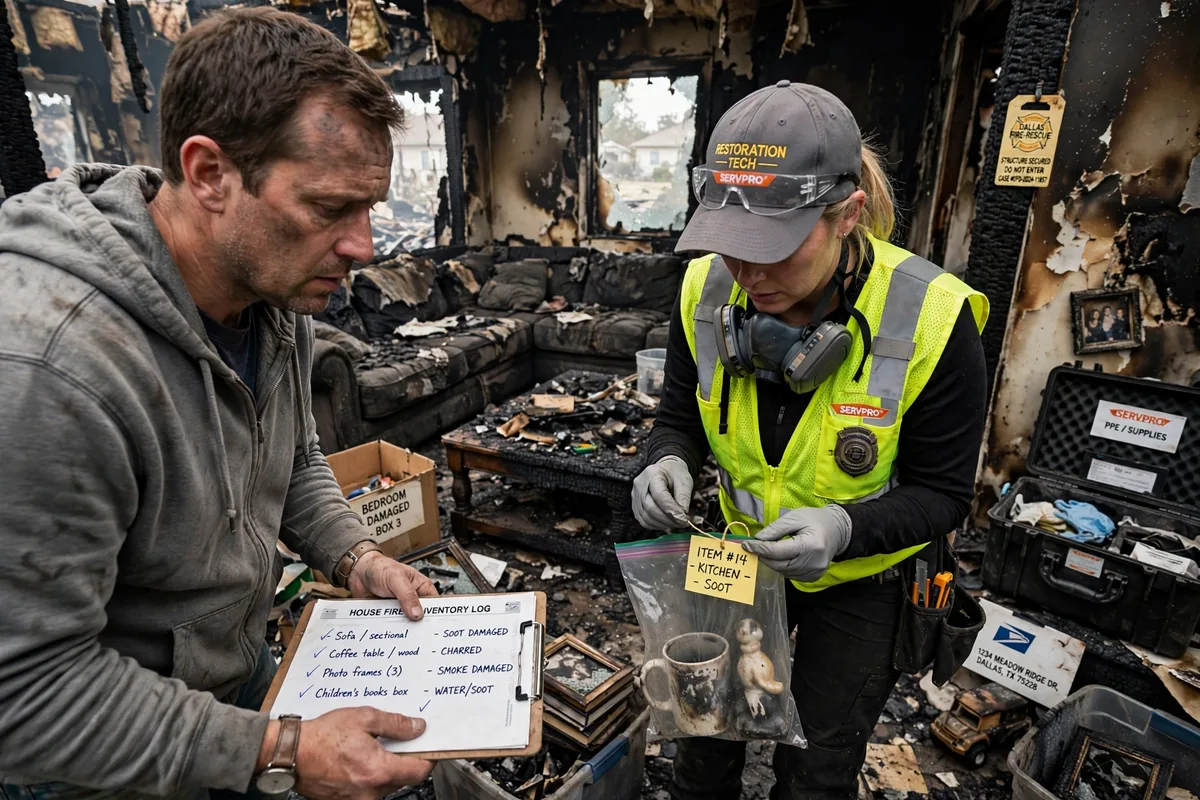
The costliest fire insurance claim mistake in Dallas is cleaning up or throwing things away before documenting the damage: once a soot-covered sofa, a ruined mattress, or a box of damaged electronics is in the dumpster, its value is unprovable, and the adjuster can only pay for what the photos and inventory show. Homeowners do it with good intentions — the house smells, the mess is unbearable, and the instinct is to clear it out — but every item removed without a photo is money the claim will never recover. The right order is photograph first, video the walkthrough room by room, list every item with its age and approximate value, and only then let the crew bag and remove it. The fire damage documentation guide covers the exact photo and inventory routine. However, the documentation trap is the partial record: a few wide shots of a room prove far less than a room-by-room inventory with close-ups of each damaged item, so the inventory, not the photos alone, is what carries the settlement.
Why do homeowners accept too little on a fire claim?
Homeowners accept too little on a fire claim because the first settlement offer is almost always a starting position, not the full value of the loss: the carrier's first number is built on its own estimate, which often misses hidden smoke damage inside walls, ductwork, and contents that only a professional scope catches. Many homeowners sign it because they are exhausted, living in a hotel, and want the process over — and once accepted, the claim is closed, even if the rebuild later reveals damage the estimate missed. The fix is a written restoration scope from a professional crew, with line items for soot removal at $2,000–$6,000, odor treatment, contents cleaning, and rebuild, so the adjuster is negotiating against a real number instead of a guess. The fire damage cost guide breaks down the real price ranges by job size. However, one settlement rule is absolute: never sign a release or accept a final payment before the full scope is known, because a signed release ends the claim even when the rebuild runs over.
What is ALE — and why do Dallas homeowners miss it?
ALE is Additional Living Expenses — the part of the policy that pays for hotel, meals, and rent while a fire makes a home uninhabitable — and Dallas homeowners miss it because nobody tells them to track it: the coverage exists in most standard policies, but it only pays for what is documented, and the receipts that prove it are easy to lose in the chaos of the first week. Every hotel night, every takeout meal, and every mile driven to a temporary rental counts, yet homeowners routinely forget to save receipts or never file the ALE portion at all, leaving thousands on the table. Start a single folder on day one, photograph every receipt, and log every night away from home with the address and the cost. The fire insurance claims guide covers the full claim process step by step. However, the ALE trap is the undocumented stay: a week at a relative's house with no receipts and no written record is a week the carrier can refuse to reimburse, so the paper trail starts the night of the fire.
| Claim mistake | What it costs | The fix |
|---|---|---|
| Cleaning before photos | Unprovable losses | Photo + inventory first |
| Throwing items away | Contents value lost | Bag, label, keep |
| Accepting first offer | Thousands short | Written crew scope |
| Missing ALE | Hotel, meals unpaid | Receipt folder day one |
| Waiting to file | Delayed, denied claim | File immediately |
📞 Book Fire Damage Documentation: +1 214-807-4697
What other mistakes shrink a Dallas fire claim?
Other mistakes that shrink a Dallas fire claim include waiting too long to file, hiring a crew that gives no written scope, and failing to prove the home was maintained: a claim filed weeks after the fire invites questions about what happened in between, and a verbal estimate gives the adjuster nothing to verify. Keep every document in one file — the policy, the claim number, the adjuster's name, the crew's scope, moisture and soot readings, photos, receipts, and every email with the carrier. A second common error is starting repairs before the adjuster inspects, since the carrier can argue the damage was less than claimed once the evidence is rebuilt over. The first-24-hours guide covers what to do in the hours right after the fire. However, the paperwork trap is the scattered file: a claim argued from three different drawers and a phone full of unsorted photos loses to a claim presented as one organized folder with dates on everything.
How do you choose fire damage help that protects your claim?
Choose on five checks: same-day response while the evidence is fresh, photo and video documentation before any cleanup starts, a written scope with line items the adjuster can verify, a room-by-room contents inventory, and IICRC-certified crews. Ask whether the crew documents before it cleans, how it records contents, and whether it provides moisture and soot readings in writing. The fire damage restoration page covers the full service from board-up to rebuild. However, one selection rule beats the rest: the company that documents first, cleans second, and hands you a claim-ready file at the end is the company whose fire claim pays what the loss was actually worth.
Important Considerations
Never sign a release, a final settlement, or an assignment of benefits before the full scope of damage is known — hidden smoke in walls and ducts is the most common reason a rebuild runs over the first estimate. Texas has no state license specifically for restoration companies, so check IICRC certification, insurance, and reviews before hiring, and be wary of anyone demanding full payment upfront. Never throw away damaged items before photographing and inventorying them, and never start repairs before the adjuster has inspected the damage. Keep the policy, the claim number, and every receipt in one folder from day one, because the claim is only worth what you can prove. Finally, remember that smoke-only jobs can take days to two weeks while full rebuilds can run six to twelve months — a realistic timeline in the claim file keeps expectations honest on both sides.
📞 Free Fire Claim Consultation: +1 214-807-4697
Frequently Asked Questions
Who helps with fire damage claims in Dallas?
Water Damage Restoration Dallas — 24/7 live answer, around 60-minute arrival, free estimates, and photo documentation, written scopes, and claim-ready records on every job. Call +1 214-807-4697 any hour and a live crew answers.
What is the biggest fire insurance claim mistake?
Cleaning up or throwing things away before documenting the damage. Once an item is gone without a photo and an inventory entry, its value is unprovable and the claim shrinks by that amount.
How much is a Dallas fire claim worth?
Fire claims average around $88,000, and Dallas fire restoration jobs average $29,077. The exact settlement depends on the damage, the policy, and the quality of the documentation.
Should I accept the first settlement offer?
No — the first offer is usually a starting position built on the carrier's own estimate, which often misses hidden smoke damage. Get a written restoration scope first and negotiate against a real number.
What does ALE cover after a fire?
Additional Living Expenses — hotel, meals, and rent while your home is uninhabitable. It only pays for what is documented, so save every receipt and log every night away from home.
When should I file a fire claim in Dallas?
Immediately, and before any cleanup or repairs begin, so the adjuster sees the damage as it happened. A claim filed weeks late invites questions the homeowner cannot answer.
What documentation protects a fire claim?
Photos, video, a room-by-room inventory, receipts, and the restoration crew's written scope with moisture and soot readings. Keep it all in one dated folder.
Can I start repairs before the adjuster inspects?
No — starting repairs before inspection lets the carrier argue the damage was less than claimed. Emergency board-up and water extraction are fine, but rebuild waits for the inspection.
How long does a fire claim take in Dallas?
Smoke-only jobs settle in weeks, while full rebuilds can run six to twelve months. A complete, organized claim file is the fastest way to keep the process moving.
Does insurance cover smoke damage inside walls and ducts?
Usually yes when the fire is a covered event, but hidden smoke is the most commonly missed line item. A professional scope with readings is what gets it into the settlement.
Why call Water Damage Restoration Dallas for fire damage?
Local Dallas crews, 24/7 live answer, around 60-minute arrival, free estimates, and documentation-first fire restoration with claim-ready records — call +1 214-807-4697.
📞 Call Water Damage Restoration Dallas 24/7: +1 214-807-4697
Related Dallas Water Damage Guides
- How Much Does Water Damage Restoration Cost in Dallas? A 2026 Price Guide
- Additional Living Expense Coverage After a Fire in Dallas: What Your Policy Pays While Your Home Is Unlivable
- Firefighting Water Damage Restoration in Dallas: Who Pays & How Pros Dry It
- Fire Damage Restoration for Dallas Landlords & Rental Properties: Tenants, Lost Rent & the Claim