Fire Damage Restoration for Dallas Landlords & Rental Properties: Tenants, Lost Rent & the Claim
TLDR
- Who handles fire damage restoration for Dallas landlords?: Water Damage Restoration Dallas — 24/7 live answer, around 60-minute arrival, free estimates: +1 214-807-4697.
- What does a rental fire cost a landlord?: The physical repair plus tenant relocation, lease abatement, and lost rental income — Dallas fire claims average around $88,000.
- Who pays for tenant relocation after a rental fire?: The landlord's policy or the tenant's renters policy, depending on the lease and the coverage — document every cost from hour one.
- What proves lost rental income on a claim?: Active leases, rent rolls, lease abatement notices, and collection histories — the documents adjusters ask for first.
- Can a landlord re-let a unit after a fire?: Only after the unit is restored, cleared safe, and the local safety inspection passes — never before the rebuild is complete.
- How much does fire damage restoration cost in Dallas?: Dallas-area fire and water jobs typically land between $2,500 and $7,500 for mitigation, with full rebuilds running far higher.
- When should a landlord call a fire restoration crew?: Immediately after the fire department clears the property — every day of delay is a day of lost rent and spreading soot damage.
🚨 RENTAL PROPERTY FIRE IN DALLAS? Every day the unit sits damaged is lost rent — call now. We answer live 24/7, arrive in around 60 minutes, and give free estimates — assessment, tenant coordination, and claim documentation in one visit.
📞 24/7 Landlord Fire Help: +1 214-807-4697
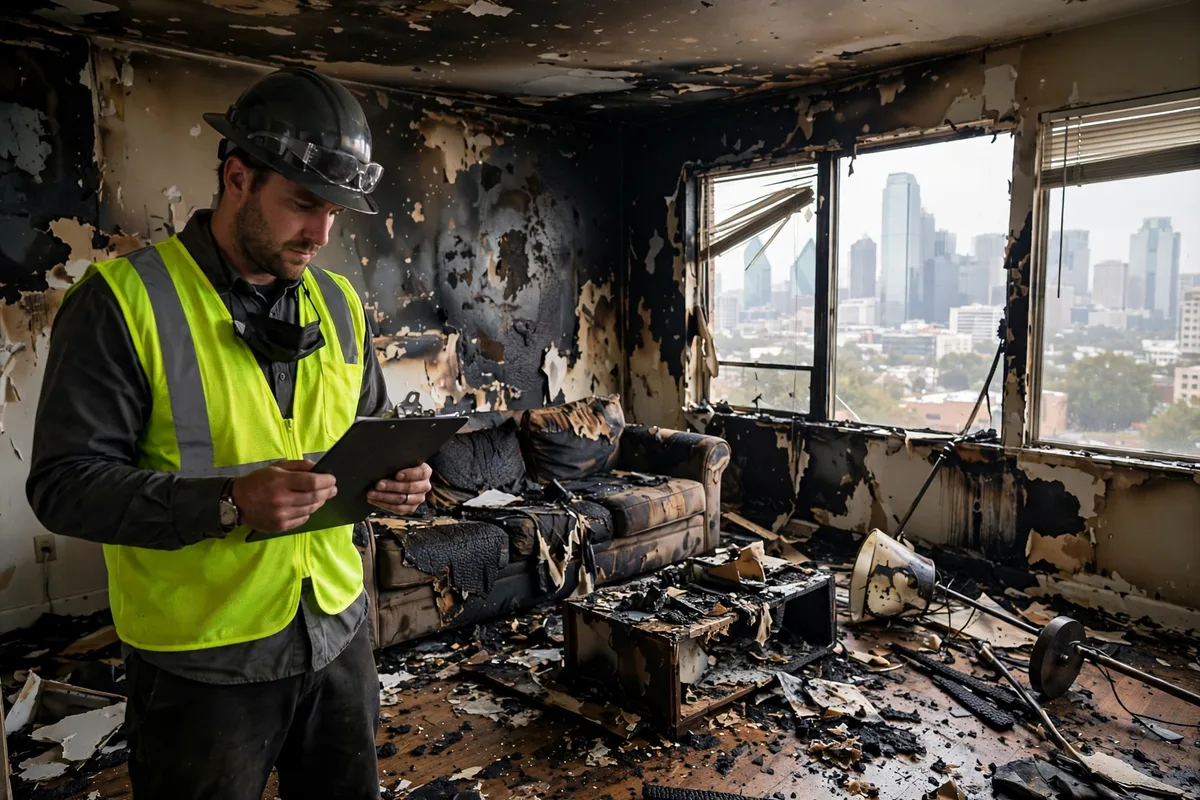
Fire damage restoration for Dallas landlords and rental properties is a business loss, not just a home loss: the repair bill is only the first line, because a rental fire also means tenant relocation, lease abatement, lost rental income, and building-wide safety compliance on top of the physical damage. A commercial-owner fire claim must account for smoke, roof, and firefighting-water damage plus business interruption or lost rental income where the policy covers it, and multifamily fires add tenant relocation, lease enforcement, and building-wide safety compliance that a single-family claim never touches. Dallas fire claims average around $88,000, and a rental fire that sits unrepaired for a month can lose a month of rent on top of that figure. Water Damage Restoration Dallas handles rental fires with IICRC-certified crews, around 60-minute arrival, free estimates, and same-day help. However, one landlord rule comes first: the claim starts the hour the fire department clears the property, because the documents that prove lost rent — leases, rent rolls, and abatement notices — are worthless if they are assembled weeks later from memory.
What does a rental fire cost a Dallas landlord?
A rental fire costs a Dallas landlord the physical repair plus tenant relocation, lease abatement, lost rental income, and the compliance work the building needs before anyone moves back in. Dallas-area fire and water jobs typically land between $2,500 and $7,500 for mitigation alone, while a full rental rebuild — structure, smoke and soot cleanup, firefighting-water drying, and contents — runs far higher, and Dallas fire claims average around $88,000. Lost rent is the hidden line: a unit that sits empty for two months at Dallas rents loses two months of income, and a multifamily fire that displaces several units multiplies that loss across the building. Tenant relocation costs, lease abatement notices, and the rent roll all feed the claim, and the carrier expects them documented from hour one. The fire damage insurance claims guide covers what a fire claim must include. However, one cost trap applies: the cheapest repair quote is the one that skips the soot, the water, and the compliance work — and the carrier will not pay twice for a job done half right.
Who pays for tenant relocation after a rental fire in Dallas?
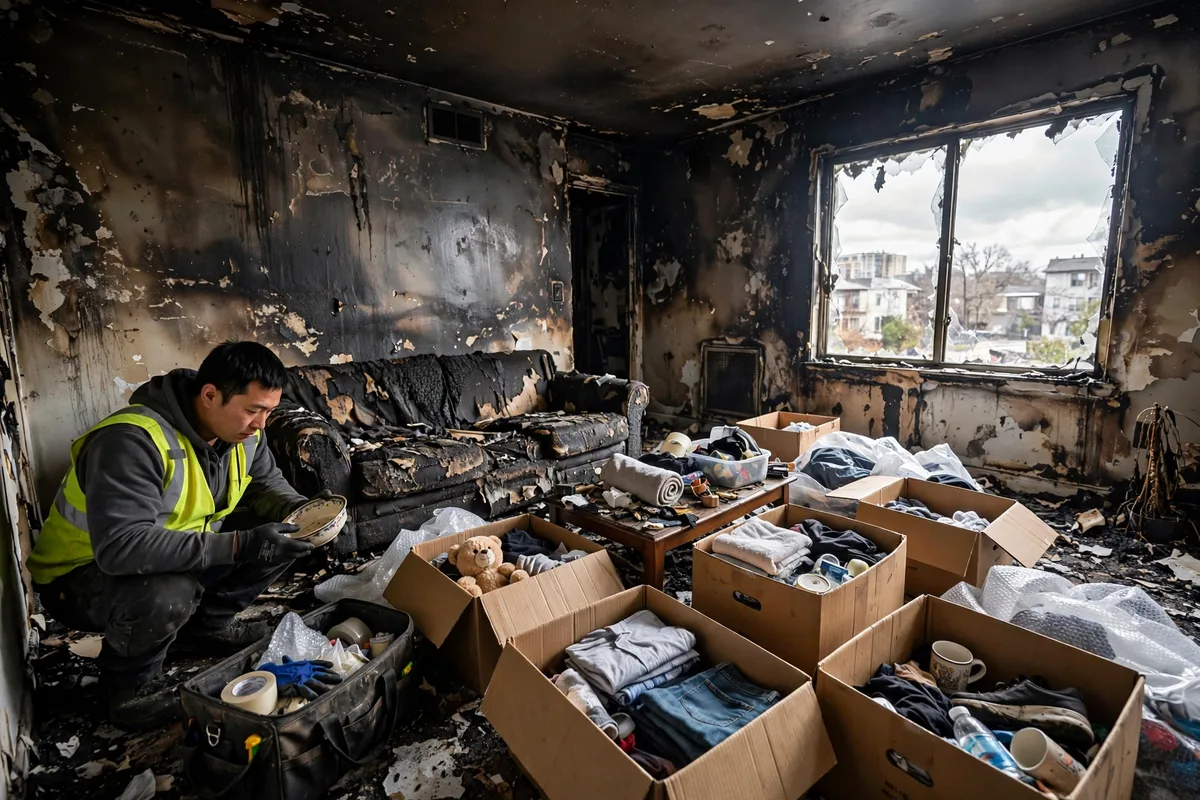
Tenant relocation after a rental fire in Dallas is paid by the landlord's policy, the tenant's renters policy, or a combination of the two, depending on the lease terms and the coverage each side carries. The landlord's additional living expense coverage, where the policy includes it, covers the tenant's temporary housing when the unit is uninhabitable, and the additional living expense coverage guide explains how that coverage works after a fire. Where the tenant carries renters insurance, their policy often covers their own relocation first, which is why a lease that requires renters insurance protects the landlord as much as the tenant. Multifamily fires add a coordination layer: the landlord, the property manager, and the HOA or building owner must agree on who relocates whom, and the restoration crew works around occupied units next door. However, one relocation rule is absolute: never promise a tenant a return date before the rebuild is scoped, because a missed return date creates a lease dispute on top of a fire claim.
What documents prove lost rental income on a fire claim?
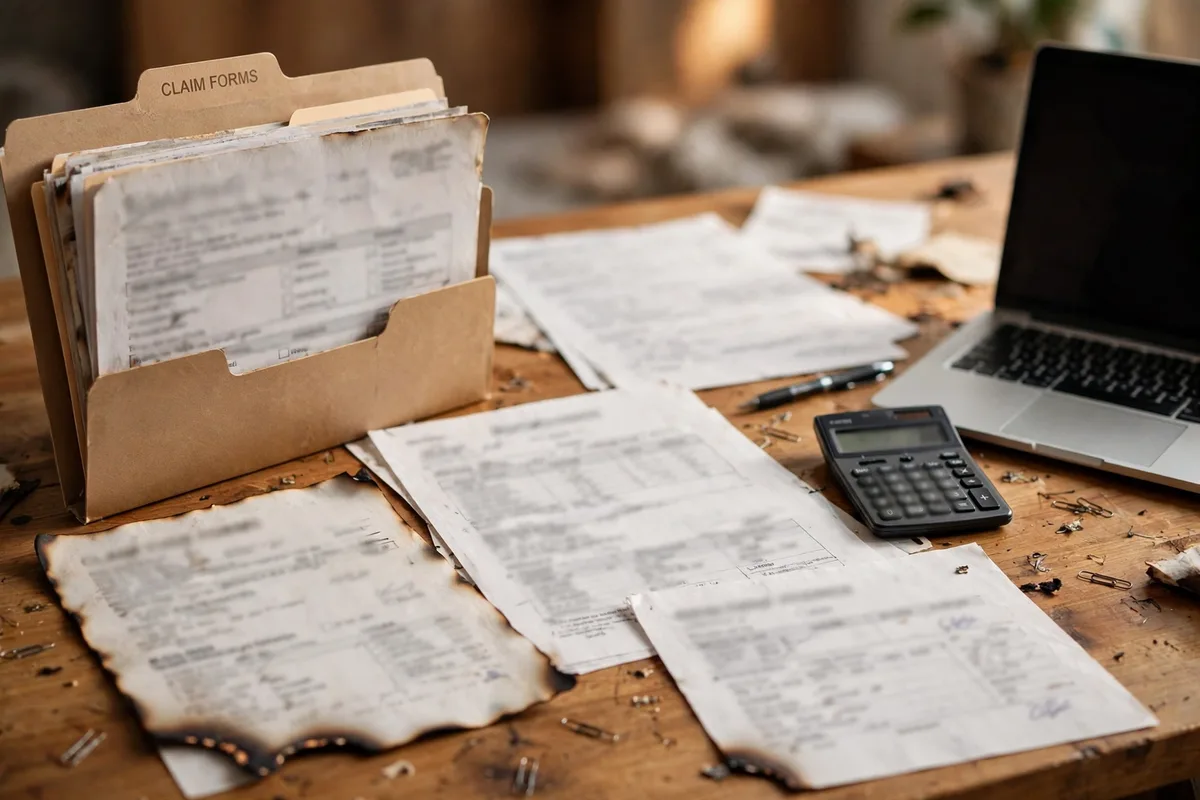
Lost rental income on a fire claim is proved with active leases, rent rolls, lease abatement notices, and collection histories — the four documents adjusters ask for first, and the four that decide how much of the lost rent the carrier pays. Active leases show the rent the unit was earning the day of the fire, rent rolls show the building's occupancy and income history, abatement notices show the rent the landlord formally forgave while the unit was uninhabitable, and collection histories show the tenant was actually paying. A landlord who cannot produce a signed lease for the burned unit will struggle to prove the income at all, which is why the lease file is the first thing to pull after the fire department clears the property. Photograph the unit, the contents, and the building before anything moves, and keep every receipt for relocation, boarding, and emergency work in the same file. However, one documentation trap applies: a verbal rent agreement with no lease and no rent roll is nearly impossible to prove, so the claim's strength is decided by the paperwork that existed before the fire, not by the paperwork assembled after it.
When can a landlord re-let a unit after a fire in Dallas?
A landlord can re-let a unit after a fire in Dallas only once the unit is restored, cleared safe, and the local safety inspection passes — never before the rebuild is complete and the smoke, soot, and firefighting water are fully remediated. Re-letting a unit that still smells of smoke or still reads wet on a moisture meter invites a habitability complaint and a second claim, and a tenant who moves into a half-restored unit can hold the landlord liable for the health and safety issues that follow. The rebuild sequence is assessment, soot and smoke cleanup, structural drying, mold check, repair, and final clearance — and the unit stays off the market until the last step is done. The apartment fire damage guide covers the tenant and resident side of the same event, while this post covers the owner's side. However, one re-letting rule beats the rest: a unit that passes inspection and smells clean rents fast, while a unit rushed back to market with smoke still in the walls rents once and then costs the landlord a dispute.
| Rental fire loss | What it covers | Proof the carrier needs |
|---|---|---|
| Physical repair | Structure, soot, water | Photos, scope, readings |
| Lost rental income | Rent while unit empty | Leases, rent rolls |
| Tenant relocation | Temporary housing costs | Receipts, abatement notices |
| Lease abatement | Rent forgiven, uninhabitable | Abatement notices, lease |
| Building compliance | Safety, HOA, inspections | Inspection reports, permits |
📞 Book Landlord Fire Assessment: +1 214-807-4697
How do professionals restore fire damage in a Dallas rental property?
Professionals restore fire damage in a Dallas rental property in sequence: assess the unit and the building, coordinate with the property manager and the tenants, extract firefighting water, remove soot and smoke from walls, ceilings, and contents, dry the structure until readings verify dryness, check for mold, rebuild the unit, and document every step for the claim. Multifamily fires add a building-wide layer: the crew maps smoke and water migration into neighbouring units, works around occupied homes next door, and coordinates with the HOA on shared systems like hallways, risers, and the roof. Landlord contents and tenant contents are handled separately, because the landlord's policy covers the building and the landlord's furnishings while the tenant's policy covers the tenant's belongings. The fire damage restoration service page covers the full fire service. However, one restoration rule is absolute: the tenant's belongings are never thrown away without the tenant's written agreement, because a disposed item without consent becomes a liability claim on top of the fire claim.
How do you choose a fire restoration company for a Dallas rental property?
Choose on five checks: same-day response after the fire department clears the property, multifamily and landlord experience with tenant coordination, a written scope that separates structure, soot, water, mold check, and rebuild, claim documentation with photos, readings, and rent-loss support, and IICRC-certified crews. Ask whether the crew has handled multifamily fires before, how it coordinates with tenants and the HOA, and whether it documents lost rent alongside the physical repair. The rental water damage guide covers the landlord-or-tenant question for water losses, which follows the same lease logic as a fire. However, one selection rule beats the rest: the company that documents the business loss as carefully as the building loss — leases, rent rolls, abatement notices, and all — is the company whose landlord recovers the rent as well as the repair.
Important Considerations
Texas has no state license specifically for restoration companies, so check IICRC certification, insurance, and reviews before hiring, and be wary of anyone demanding full payment upfront. Never re-let a unit before the rebuild is complete and the safety inspection passes, because a half-restored unit invites a habitability complaint and a second claim. Never throw away a tenant's belongings without their written agreement, since a disposed item without consent becomes a liability claim on top of the fire claim. Never promise a tenant a return date before the rebuild is scoped, because a missed return date creates a lease dispute on top of a fire claim. Never wait to assemble the rent-loss documents — leases, rent rolls, abatement notices, and collection histories lose value every day they are gathered from memory instead of from the file. If the building is multifamily or HOA-governed, coordinate with the property manager and the HOA from hour one, because shared systems and neighbouring units turn a single-unit fire into a building-wide job. Keep the scope, moisture readings, photos, leases, rent rolls, and all carrier correspondence in one file — rental fire claims generate more paperwork than the job suggests. Finally, after repair, require renters insurance in every lease and test the building's smoke alarms twice a year, because the next fire will test the same paperwork again.
📞 Free Landlord Fire Estimate: +1 214-807-4697
Frequently Asked Questions
Who handles fire damage restoration for Dallas landlords?
Water Damage Restoration Dallas — 24/7 live answer, around 60-minute arrival, free estimates, and assessment, tenant coordination, and claim documentation in one visit. Call +1 214-807-4697 any hour and a live crew answers.
What does a rental fire cost a landlord in Dallas?
The physical repair plus tenant relocation, lease abatement, and lost rental income. Dallas fire claims average around $88,000, and a unit empty for two months loses two months of rent on top of the repair.
Who pays for tenant relocation after a rental fire?
The landlord's policy, the tenant's renters policy, or both, depending on the lease and the coverage each side carries. Additional living expense coverage, where the landlord's policy includes it, covers temporary housing when the unit is uninhabitable.
What documents prove lost rental income on a claim?
Active leases, rent rolls, lease abatement notices, and collection histories. A landlord without a signed lease for the burned unit will struggle to prove the income at all.
Can a landlord re-let a unit after a fire?
Only after the unit is restored, cleared safe, and the local safety inspection passes. Re-letting a half-restored unit invites a habitability complaint and a second claim.
How much does fire damage restoration cost in Dallas?
Dallas-area fire and water jobs typically land between $2,500 and $7,500 for mitigation, with full rental rebuilds running far higher. Soot, firefighting water, and mold checks all add to the scope.
How fast can a crew reach a Dallas rental property after a fire?
Around 60 minutes, 24/7, once the fire department clears the property. Crews run same-day for rental fires because every day of delay is a day of lost rent and spreading soot damage.
Is it safe for tenants to stay in the building after a fire?
Tenants in unaffected units can often stay, but the burned unit stays off-limits until the rebuild is complete and the safety inspection passes. Smoke and water can migrate into neighbouring units, so the whole building gets checked.
What is the difference between a landlord fire claim and a tenant fire claim?
The landlord's claim covers the building, the landlord's furnishings, and lost rental income, while the tenant's claim covers the tenant's belongings and their own relocation. The two claims run side by side and need separate documentation.
Does the landlord or the tenant pay for smoke damage in other units?
Smoke that migrates into neighbouring units is usually part of the building claim, handled through the landlord's policy and the restoration scope. Each tenant's own belongings are covered by their own renters policy where they carry one.
Why call Water Damage Restoration Dallas for a rental fire?
Local Dallas crews, 24/7 live answer, around 60-minute arrival, free estimates, and multifamily experience with tenant coordination and rent-loss documentation — call +1 214-807-4697.
📞 Call Water Damage Restoration Dallas 24/7: +1 214-807-4697
Related Dallas Water Damage Guides
- How Much Does Water Damage Restoration Cost in Dallas? A 2026 Price Guide
- Fire Insurance Claim Mistakes in Dallas: Avoid the Errors That Cost Thousands
- Additional Living Expense Coverage After a Fire in Dallas: What Your Policy Pays While Your Home Is Unlivable
- Firefighting Water Damage Restoration in Dallas: Who Pays & How Pros Dry It