Mold in Your Dallas Laundry Room: The Slow Washer Drip Nobody Sees
TLDR
- Who removes laundry-room mold in Dallas?: Water Damage Restoration Dallas — 24/7 live answer, around 60-minute arrival, free estimates: +1 214-807-4697.
- What causes mold in a Dallas laundry room?: A slow washer supply-hose or drain leak, plus dryer-vent humidity in a small, warm, often unventilated room.
- Where does laundry-room mold hide?: Behind the machines, inside the wall cavity and under the flooring, where a drip runs for weeks before anyone sees it.
- How much does laundry-room mold remediation cost in Dallas?: Mold remediation typically runs $1,200–$3,800, depending on how much material must come out.
- Does insurance cover laundry-room mold?: A sudden leak is often covered; a slow leak that ran for months is usually treated as maintenance and denied.
- When is a licensed remediator required in Texas?: When the mold covers more than 25 square feet, Texas requires a licensed mold remediator.
- How fast can a crew reach my Dallas laundry room?: Around 60 minutes, 24/7 — same-day inspection, moisture mapping and containment.
🚨 MOLD IN YOUR DALLAS LAUNDRY ROOM? The drip behind the washer has been feeding it for weeks — call now. We answer live 24/7, arrive in around 60 minutes, and give free estimates — moisture mapping, source fix, containment, and remediation in one call.
📞 24/7 Laundry Room Mold Help: +1 214-807-4697
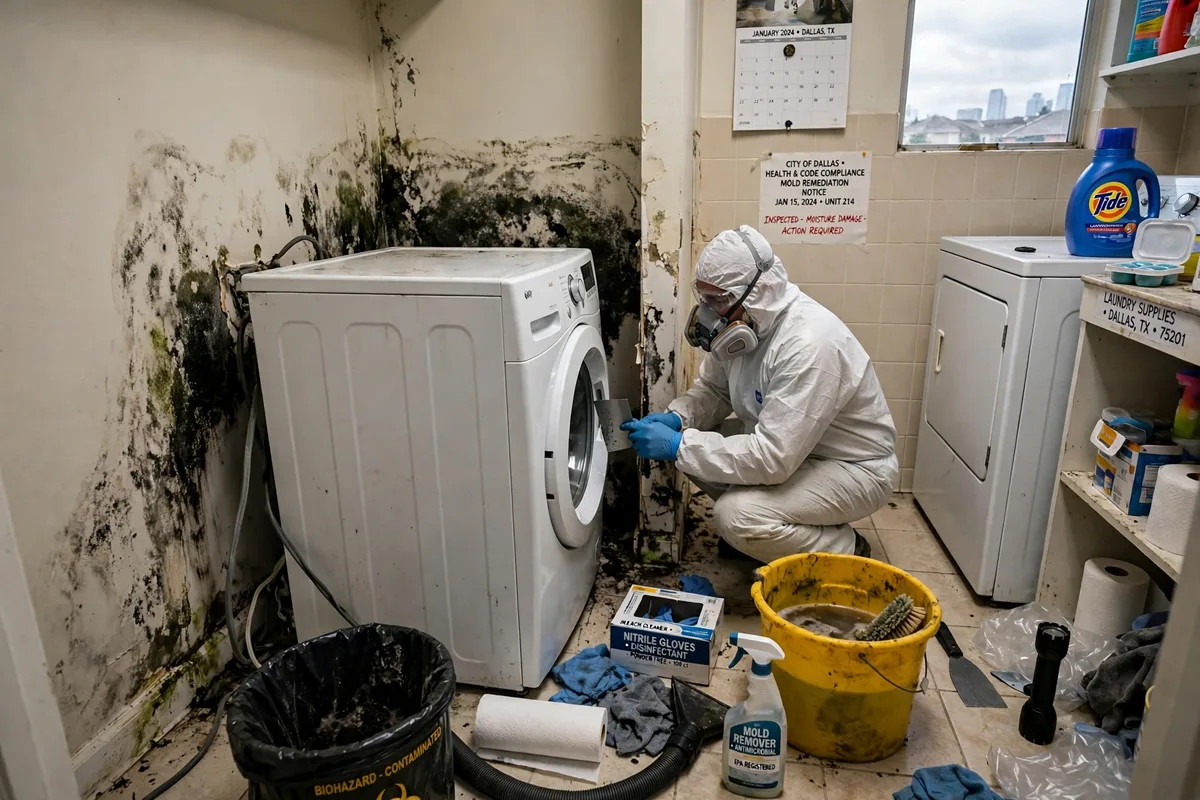
Mold in a Dallas laundry room grows from the leak nobody sees: a washer supply hose weeps a few drops an hour, the drain backs up a little with every cycle, or the dryer vent pushes warm, damp air into a small room with no ventilation, and the mold colonizes the wall cavity behind the machines long before a spot shows on the paint. The laundry room is small, warm and often unventilated, which is exactly the combination mold needs, and the machines sit tight against the wall, so the damp patch hides behind the washer and dryer for weeks. Mold grows on wet material in 24–48 hours, and a slow drip keeps the drywall, the baseboard and the subfloor wet around the clock. Texas requires a licensed mold remediator when the mold covers more than 25 square feet, and the assessment and the remediation are split by law — the company that tests the mold cannot be the company that removes it. Water Damage Restoration Dallas handles laundry-room mold with IICRC-certified crews, around 60-minute arrival, free estimates, and same-day help. However, one laundry-room rule comes first: never scrub the visible spot and call the job done, because the spot on the paint is the overflow while the colony lives behind the machines and inside the wall.
Where does mold hide in a Dallas laundry room?
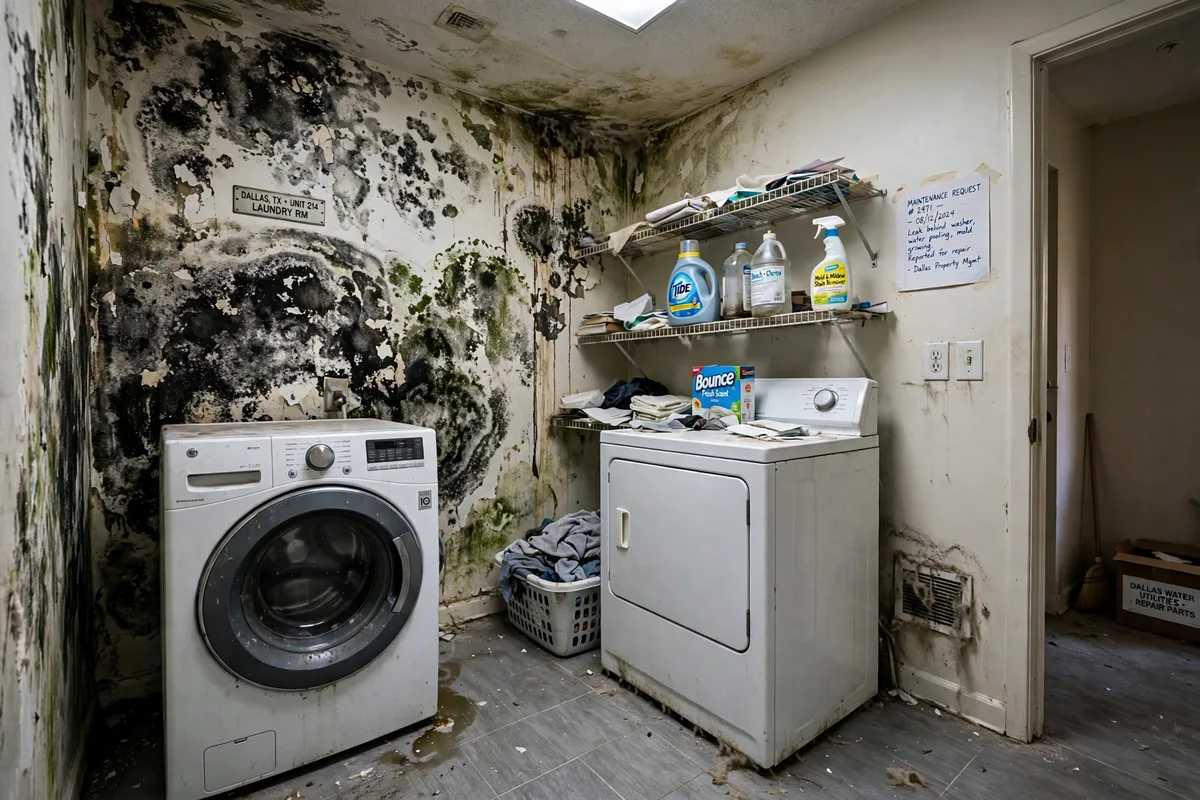
Laundry-room mold hides in four places: behind the washer and dryer where the supply hoses meet the wall, inside the wall cavity where a slow drip runs down the studs, under the flooring where water pools beneath the machines, and around the dryer vent where warm, damp air condenses. The supply hoses are the classic source — rubber hoses age, crack and weep, and the drip runs down the wall behind the washer where nobody looks. The drain is the second source: a partially blocked standpipe backs up a little with every cycle, and the overflow wets the floor behind the machines. The dryer vent is the third source: a loose or crushed vent dumps warm, humid air into the room, and the moisture condenses on the coolest surface, which is usually the wall behind the dryer. The hidden mold guide covers the wall-cavity problem in detail, and the mold testing guide covers how a licensed assessor finds what the eye cannot see. However, the hiding-place trap applies: the laundry room shares walls with bedrooms and closets, so a colony behind the machines can push mold into the next room before anyone checks the shared wall.
How do you know the mold is more than surface mildew?
Surface mildew wipes off a hard, dry surface with a damp cloth and stays gone, while a real colony comes back within days, spreads across the baseboard, and carries a musty smell that survives cleaning. The warning signs are a musty smell that gets stronger when the washer runs, a soft or swollen baseboard behind the machines, paint that bubbles or peels near the floor, and a floor that feels spongy underfoot. A moisture meter reading above 17% in drywall or above 20% in wood confirms the wall is wet enough to feed mold, and a reading that stays high after the room dries points to an active drip rather than an old stain. Allergy symptoms that flare at home — sneezing, itchy eyes, a cough that clears when you leave — are a common early signal in a laundry room, because the room sits beside the bedrooms and the HVAC return pulls the spores through the house. However, the diagnosis has a limit: a surface swab cannot tell you how far the colony runs inside the wall, so a licensed assessor maps the moisture and opens the cavity before anyone prices the job.
What does laundry-room mold remediation involve?
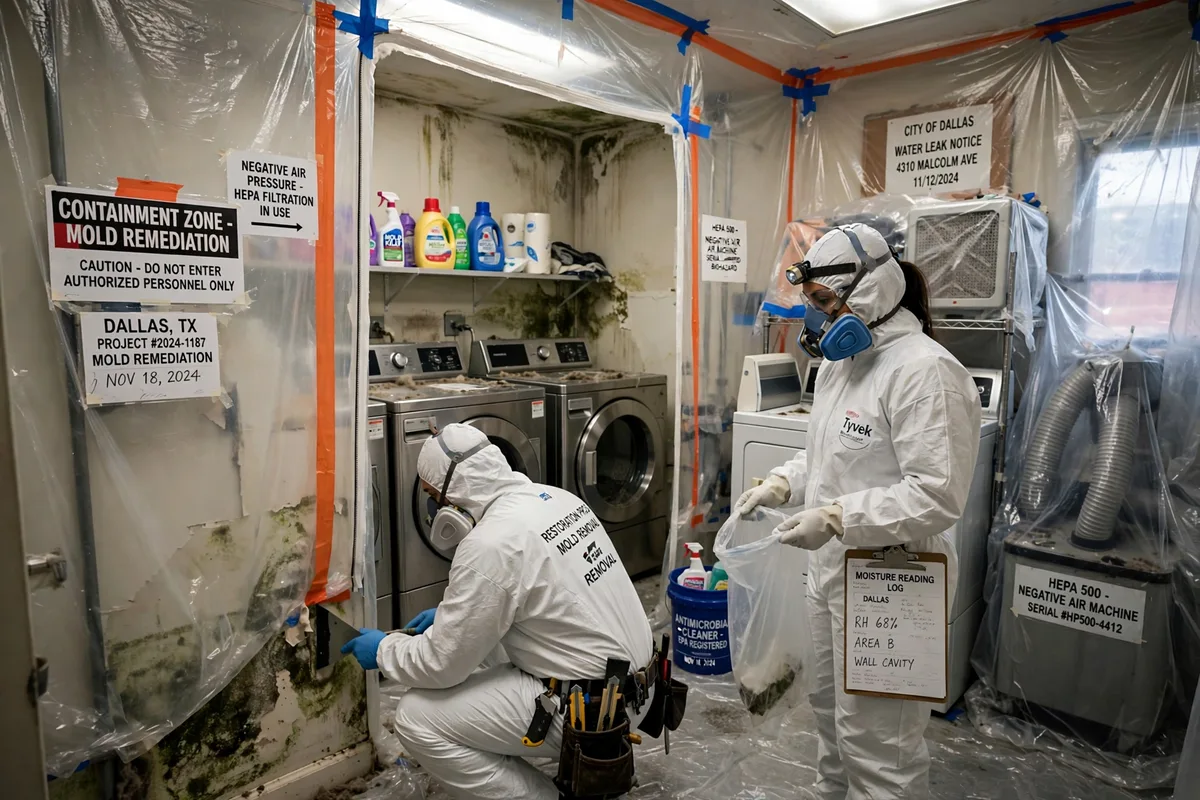
Laundry-room mold remediation runs in sequence: find and fix the source, contain the work area, remove the contaminated material, dry the structure, clean the remaining surfaces, then verify with clearance testing. The source fix comes first — a new braided-steel supply hose, a cleared drain, or a repaired dryer vent — because remediation without a source fix grows the mold back. Containment goes up next: plastic sheeting and negative air pressure keep the spores inside the laundry room while the crew works. Contaminated drywall, baseboard and flooring come out, the studs and subfloor get HEPA-vacuumed and treated, and the structure dries until the meter readings verify dryness. Texas splits the job by law: a licensed assessor writes the protocol and a licensed remediator executes it, and the assessor returns for clearance testing before the wall closes. The mold remediation services guide covers the full service, and the mold after water damage guide covers the drying half of the job. However, one remediation rule is absolute: drying without removing the contaminated material is a guess, since the colony lives inside the drywall and no air mover can reach it.
| Laundry-room mold source | Typical sign | First crew step |
|---|---|---|
| Supply-hose drip | Wet wall behind washer | Replace hose, map moisture |
| Drain backup | Water behind machines | Clear drain, extract |
| Dryer-vent humidity | Condensation, musty smell | Repair vent, ventilate |
| Wall-cavity colony | Bubbling paint, soft baseboard | Open wall, contain |
| Subfloor saturation | Spongy floor, warped tile | Remove flooring, dry |
📞 Book Laundry Room Mold Cleanup: +1 214-807-4697
How much does laundry-room mold remediation cost in Dallas?
Mold remediation in Dallas typically runs $1,200–$3,800, and a laundry-room job lands in that range when the colony is limited to the wall behind the machines and the floor beneath them. The price climbs when the colony has spread into the shared wall with the bedroom, when the subfloor must come out, or when the job needs a licensed assessor's protocol and clearance testing on top of the remediation. A 1–2 day job with containment and a small material removal sits at the low end, while a job that opens two walls and replaces the subfloor lands at the high end. Dallas-area water damage jobs typically land between $2,500 and $7,500 all-in for mitigation, and a laundry-room mold job adds the containment and clearance scopes on top of the drying. The Texas burst-pipe average claim runs around $15,500, which is a useful scale check for how insurers think about a sudden-loss claim. However, the pricing trap is the spray-and-paint quote: a company that offers to fog the room and repaint without fixing the hose, opening the wall and verifying dryness is selling a cosmetic fix that the next wash cycle will undo.
Will insurance pay for laundry-room mold in Dallas?
Insurance usually pays when the mold follows a sudden, accidental leak — a supply hose that burst, a drain that backed up without warning — and usually denies when the mold follows a slow leak that ran for months, because a slow drip is treated as a maintenance failure. The distinction is the discovery date: document when you first noticed the smell, the soft baseboard or the wet wall, and keep the failed hose or the plumber's report as evidence. Most homeowner policies cap mold coverage, so read the mold limit before filing, and expect the adjuster to ask for the assessor's protocol and the clearance report. The Texas 25-square-foot rule matters here too: a job over 25 square feet needs a licensed remediator, and the insurer expects that license on the invoice. However, the claim has a limit: a policy that covers the mold rarely covers the failed hose itself, so the source repair often stays out of pocket while the remediation is covered.
Important Considerations
Texas has no state license specifically for restoration companies, but mold remediation over 25 square feet does require a licensed mold remediator, so check the license, the IICRC certification, insurance, and reviews before hiring, and be wary of anyone demanding full payment upfront. Never scrub a large mold colony with a household cleaner and a sponge, because scrubbing releases spores into the room and the HVAC system carries them through the house. Never run the dryer until the vent is repaired, because a loose vent keeps pumping warm, humid air into the room that the mold feeds on. Never close a wall without clearance testing, because a colony that survives behind the drywall grows back through the paint within weeks. Never ignore a musty smell that gets stronger when the washer runs, since the smell is the colony telling you the drip is still active. If the laundry room shares a wall with a bedroom, ask the assessor to check that wall too, because mold crosses a shared wall before anyone notices the next room. Keep the scope, moisture readings, photos, the assessor's protocol, the clearance report, and all carrier correspondence in one file — mold claims generate more paperwork than the job suggests. Finally, after repair, replace rubber supply hoses with braided-steel hoses, vent the dryer outside, and check behind the machines every month, because the next slow drip will hide in the same place.
📞 Free Laundry Room Mold Estimate: +1 214-807-4697
Frequently Asked Questions
Who removes laundry-room mold in Dallas?
Water Damage Restoration Dallas — 24/7 live answer, around 60-minute arrival, free estimates, and moisture mapping, source fix, containment and remediation in one visit. Call +1 214-807-4697 any hour and a live crew answers.
What causes mold in a Dallas laundry room?
A slow washer supply-hose or drain leak is the usual cause, plus dryer-vent humidity in a small, warm, often unventilated room. The drip runs behind the machines for weeks, and mold grows on wet material in 24–48 hours.
Where does laundry-room mold hide?
Behind the machines, inside the wall cavity and under the flooring. The supply hoses weep down the wall, the drain backs up a little each cycle, and the dryer vent condenses moisture on the coolest surface — all out of sight.
How much does laundry-room mold remediation cost in Dallas?
Mold remediation typically runs $1,200–$3,800, depending on how much material must come out and whether the colony spread into a shared wall. A 1–2 day job with containment sits at the low end, and every job starts with a free estimate.
Does insurance cover laundry-room mold?
A sudden leak is often covered, while a slow leak that ran for months is usually treated as maintenance and denied. Document the discovery date, keep the failed hose, and read the mold cap in your policy before filing.
When is a licensed remediator required in Texas?
When the mold covers more than 25 square feet, Texas requires a licensed mold remediator. The assessment and the remediation are split by law — the company that tests the mold cannot be the company that removes it.
Is it safe to stay home during laundry-room mold remediation?
Often yes in unaffected rooms, because containment and negative air pressure keep the spores inside the laundry room. The wet area stays off-limits while walls are open and drying equipment runs.
How long does laundry-room mold remediation take?
Most laundry-room jobs take 1–2 days for containment, removal and drying, plus clearance testing before the wall closes. Jobs that open two walls or replace the subfloor take longer.
Can I just bleach the mold in my laundry room?
No — bleach does not kill mold inside porous drywall, and scrubbing releases spores into the room. A colony behind the machines needs containment, material removal and verified drying, not a surface wipe.
Will the mold come back after remediation?
Not if the source is fixed — a new braided-steel hose, a cleared drain, a repaired vent — and the wall is verified dry before it closes. Remediation without a source fix grows the mold back within weeks.
Why call Water Damage Restoration Dallas for laundry-room mold?
Local Dallas crews, 24/7 live answer, around 60-minute arrival, free estimates, and moisture-mapping-first remediation with clearance testing — call +1 214-807-4697.
📞 Call Water Damage Restoration Dallas 24/7: +1 214-807-4697
Related Dallas Water Damage Guides
- Mold Starts Growing in 24–48 Hours: What That Clock Really Means for Dallas Homes
- Mold in Air Ducts in Dallas: Signs, Health Risks & Same-Day HVAC Mold Removal
- Mold Remediation vs Mold Removal in Dallas: Which Service Do You Actually Need?
- Can Mold Come Back After Remediation in Dallas? Same-Day Help