Hardwood Floor Water Damage in Dallas: Save It, Dry It or Replace It?
TLDR
- Who handles hardwood floor water damage in Dallas?: Water Damage Restoration Dallas — 24/7 live answer, around 60-minute arrival, free estimates: +1 214-807-4697.
- Can a hardwood floor be saved after water damage?: Most floors can be saved if drying starts within 24–48 hours — clean water, mild cupping, and a dry subfloor are the deciding factors.
- What is cupping, crowning, and buckling?: Cupping is edges higher than the centre, crowning is the centre higher, and buckling is boards lifting off the subfloor — buckling usually means replacement.
- Why should you never sand a cupped floor early?: Sanding a cupped floor before the moisture has evened out causes crowning — the centre ends up higher than the edges, and the floor is ruined.
- How dry must hardwood be before refinishing?: The NWFA target is 6–9% moisture content, and readings must match a dry area of the same floor and stay steady for several days.
- How long does a soaked hardwood floor take to dry?: A soaked floor or subfloor can take 2–6 weeks to dry, and drying is slow on purpose.
- When should you call a hardwood drying crew?: Immediately — the 24–48-hour window decides whether the floor is saved or replaced, and mold grows under the boards if drying is late.
🚨 HARDWOOD FLOOR WET IN YOUR DALLAS HOME? The 48-hour clock is running — call now. We answer live 24/7, arrive in around 60 minutes, and give free estimates — moisture mapping, controlled drying, and save-or-replace advice in one visit.
📞 24/7 Hardwood Drying Help: +1 214-807-4697
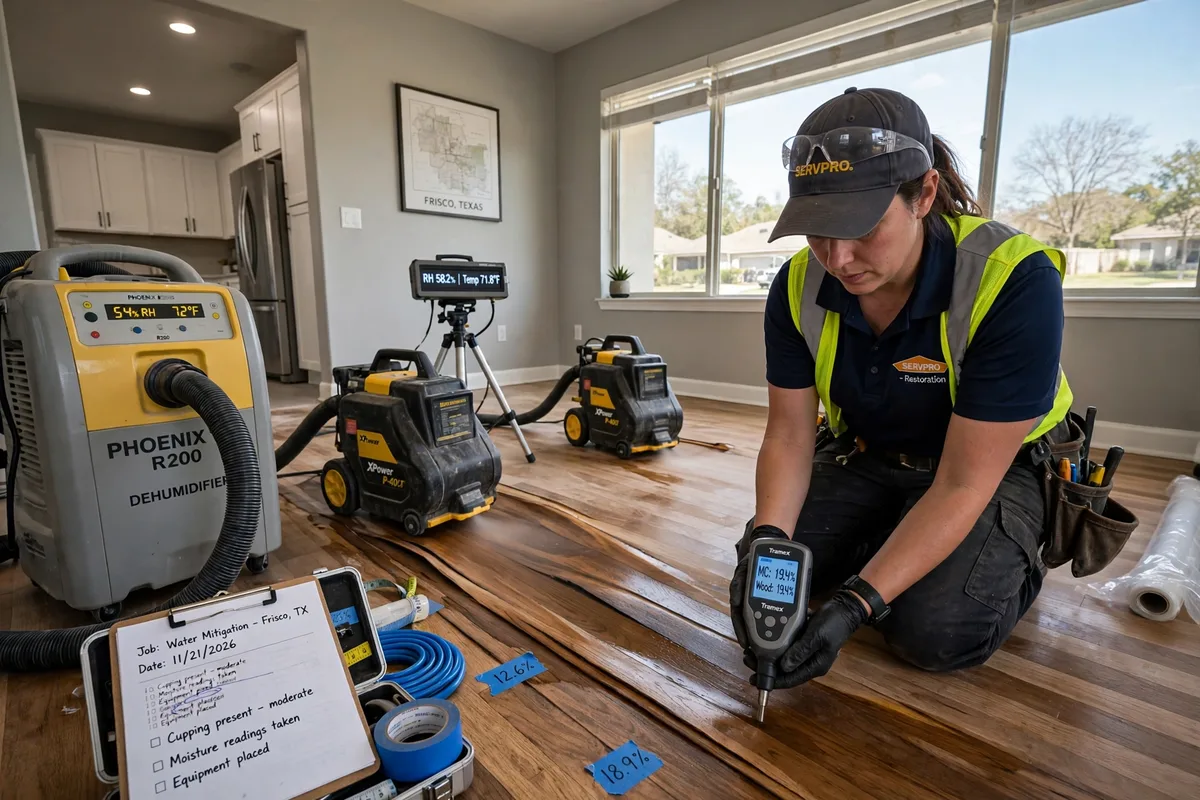
Hardwood floor water damage in Dallas is the save-or-replace decision homeowners get wrong by rushing: the floor cups, the instinct is to sand it flat and refinish it, and the sanding itself ruins the floor — because a cupped floor sanded too early comes back crowned, with the centre higher than the edges, and the only fix left is replacement. Most floors can be saved if drying starts within 24–48 hours, and the deciding factors are the water source, the exposure time, the cupping, the subfloor readings, and whether the floor is solid hardwood or engineered. Drying is slow on purpose: air movers and LGR dehumidifiers, sometimes drying mats, run for days or weeks until the moisture readings match a dry area of the same floor. Water Damage Restoration Dallas handles hardwood drying with IICRC-certified crews, around 60-minute arrival, free estimates, and same-day drying. However, the rule that saves floors is the one homeowners hate: readings — not looks — decide when refinishing is safe, and a floor that looks dry can still be wet underneath.
What is cupping, crowning, and buckling in a hardwood floor?
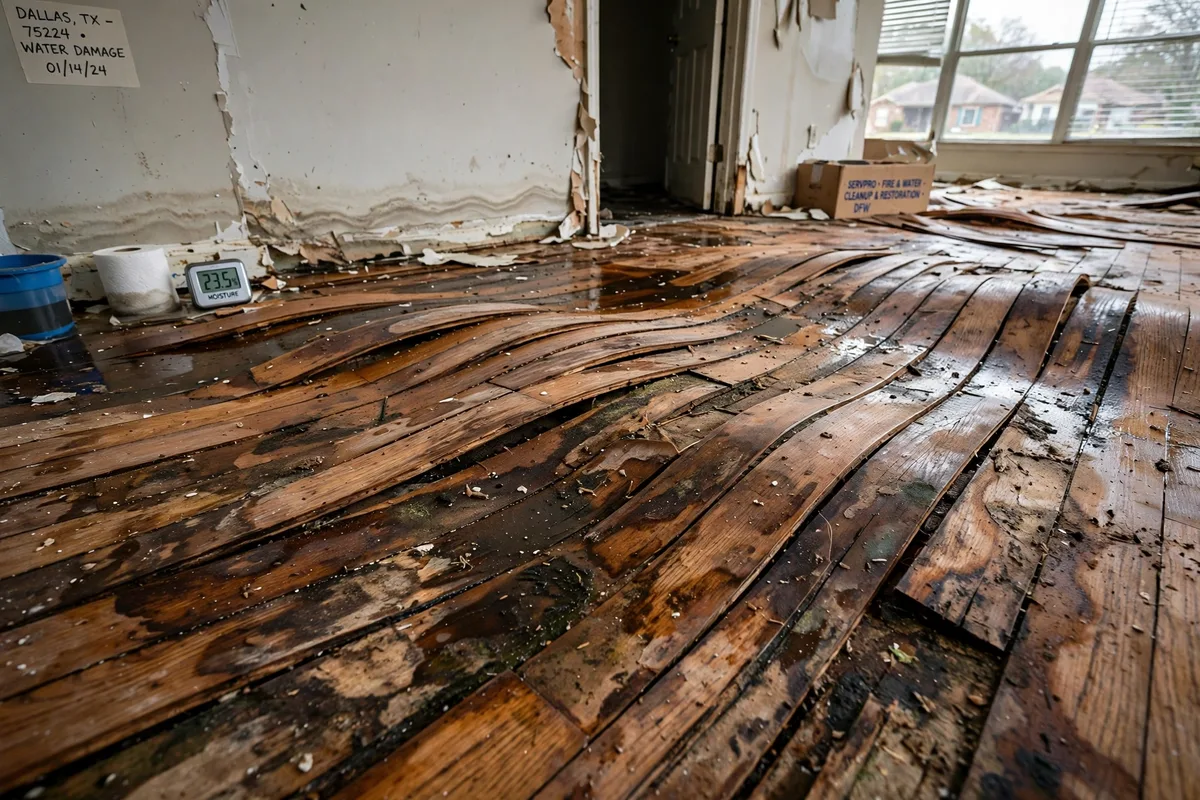
Cupping, crowning, and buckling are the three shapes a wet hardwood floor takes, and each one means something different. Cupping is the edges of the boards higher than the centre, because the bottom of the board is wetter than the top — it is the most common shape, and it is frequently reversible with controlled drying. Crowning is the centre higher than the edges, and it often happens when a cupped floor is sanded too early, before the moisture has evened out — the sander flattens the raised edges, the moisture equalizes, and the centre ends up higher than the edges. Buckling is boards lifting off the subfloor, and it is severe — buckling usually means replacement, because the boards have swollen past the point where drying can bring them back. A professional crew reads the shape, the moisture, and the subfloor before calling it, because the shape alone does not decide the outcome. However, one shape rule is absolute: cupping is a drying job, crowning is a sanding mistake, and buckling is a replacement — so the shape tells you what went wrong, and what the fix costs.
Can a hardwood floor be saved after water damage?
A hardwood floor can usually be saved after water damage if drying starts within 24–48 hours, and the save-if checklist is five items: a clean water source, exposure under 48 hours, mild cupping only, dry subfloor readings, and solid hardwood rather than engineered. Solid hardwood can be sanded and refinished after drying, while engineered hardwood has a thin veneer that cannot take a second sanding — so the same water damage that is a drying job on solid oak is a replacement job on engineered plank. The subfloor is the deciding factor: a dry subfloor means the floor can be dried in place, while a soaked subfloor means the floor has to come up, the subfloor has to dry, and the floor has to be relaid or replaced. The mold in carpet and flooring guide covers what grows when drying is late, and the burst pipe repair guide covers the most common source of floor water. However, the save-or-replace trap is the look of the floor: a floor that looks dry on top can still be wet underneath, and a floor that looks ruined can still dry flat — so the moisture meter decides, not the eye.
How much does hardwood floor water damage cost in Dallas?
Hardwood floor water damage in Dallas costs by the outcome: a quickly dried spot may only need refinishing, at a few hundred dollars, while a floor and subfloor soaked for days can run into five figures once removal, drying, and replacement are counted. Professional drying for one room runs $1,000–$3,000, drywall and flooring repair runs $500–$2,500, and Dallas-area water damage jobs typically land between $2,500 and $7,500 all-in for mitigation — a hardwood job that reached the subfloor sits in the middle of that range. Mold remediation at $1,200–$3,800 applies when the structure sat wet past 48 hours, which a hidden leak under a hardwood floor almost always has, because mold grows under the boards where nobody looks. The refinishing itself is the cheapest part of the job — the drying and the subfloor work are where the money goes. However, the pricing trap is the refinish-only quote: a company that offers to sand and refinish a wet floor without drying the subfloor first is selling a floor that will crown, cup again, or grow mold under the finish — so ask for moisture readings in writing before you accept any price.
How do professionals dry a hardwood floor without ruining it?
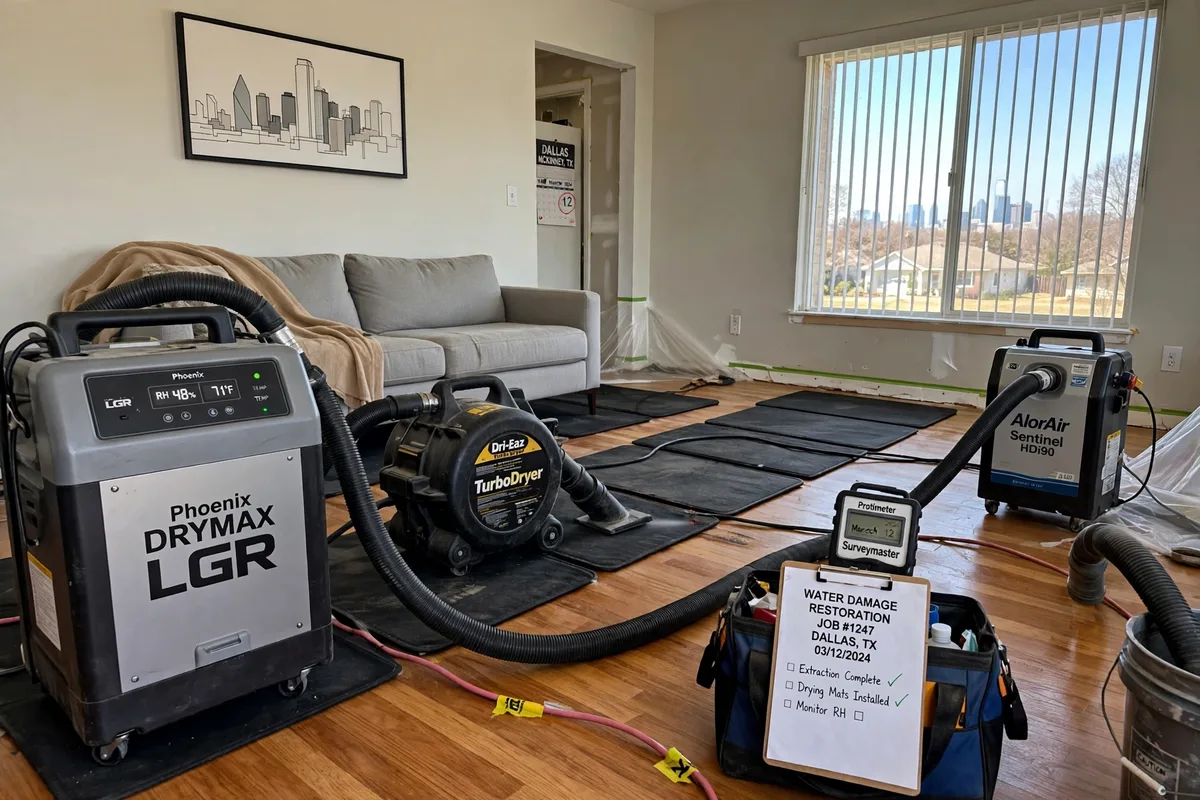
Professionals dry a hardwood floor without ruining it by drying slowly on purpose: air movers and LGR dehumidifiers run for days, sometimes with drying mats that pull moisture from under the boards, until the readings match a dry area of the same floor and stay steady for several days. A space heater or a heat gun dries the surface too fast and splits or cracks the boards, because the top dries while the bottom stays wet — so heat is the enemy, not the helper. The NWFA target moisture content is 6–9% for installed hardwood, and the crew never sands or refinishes until the readings hit that target and hold. A soaked floor or subfloor can take 2–6 weeks to dry, and the crew checks the readings every few days, because the moisture moves slowly through the wood and the subfloor. The mold remediation after water damage guide covers what happens when the drying is late. However, one drying rule is absolute: drying is not done when the floor looks dry, it is done when the meter says dry — and a floor that is refinished before the meter says so is a floor that will be replaced within the year.
| Hardwood floor condition | What it needs | Typical cost |
|---|---|---|
| Mild cupping, dry subfloor | Controlled drying, refinish | A few hundred dollars |
| Cupping, subfloor damp | Drying mats, 2–6 weeks | $1,000–$3,000 |
| Crowning from early sanding | Re-sand, refinish | $2,500–$7,500 |
| Buckling, subfloor soaked | Remove, dry, replace | Five figures |
| Mold under the boards | Remediation + drying | $1,200–$3,800 |
📞 Book Hardwood Drying: +1 214-807-4697
What should you do first when your hardwood floor gets wet?
When your hardwood floor gets wet, stop the source first — shut the valve, the appliance, or the main — then mop up the standing water, move rugs and furniture off the wet boards, and call for same-day drying, because the 24–48-hour window decides whether the floor is saved or replaced. Do not sand the floor, do not refinish it, and do not run a space heater or a heat gun on it, because heat dries the surface too fast and splits the boards. Photograph the floor, the water source, and any cupping before anything moves, since the photos support the claim, and write down the time the water was discovered. A professional crew maps the moisture in the floor and the subfloor with meters before deciding whether the floor dries in place or comes up. The water damage cost guide covers what the whole job costs by severity. However, the first-step mistake is the towel approach: mopping the surface while the subfloor stays wet trades a small mess now for a buckled floor later, so shutoff and drying come before anything else.
How do you prevent hardwood floor water damage in Dallas?
You prevent hardwood floor water damage in Dallas by fixing the sources before they fail: replace the ice-maker line with a braided stainless line, check the dishwasher and washing machine hoses every year, and fit leak detectors under the sink, behind the fridge, and at the washing machine. Wipe up spills immediately, because a spill that sits on a hardwood floor overnight is a spill that soaks into the boards and the subfloor. Keep the humidity in the house steady, because Dallas summers swell the boards and Dallas winters shrink them, and a floor that swings between wet and dry is a floor that cups. Check the floor near the kitchen, the bathrooms, and the exterior doors once a season, since those are the rooms where the water starts. However, one prevention rule beats the rest: the leak you catch in the first hour is the leak that never reaches the subfloor, so the yearly hose check is worth more than any alarm — it catches the drip before it becomes a buckle.
Important Considerations
Texas has no state license specifically for restoration companies, so check IICRC certification, insurance, and reviews before hiring, and be wary of anyone demanding full payment upfront. Never sand a cupped floor before the moisture has evened out, because sanding too early causes crowning and the floor is ruined. Never use a space heater or a heat gun to dry a hardwood floor, because it dries the surface too fast and splits or cracks the boards. Never refinish a floor until the moisture readings match a dry area of the same floor and stay steady for several days — readings, not looks, decide when refinishing is safe. Never assume a floor is dry because it looks dry, since the worst water sits under the boards and in the subfloor. Never mop the surface and assume the job is done, because mold grows under the boards if drying is late — mold grows on wet material in 24–48 hours. If the floor is engineered hardwood, ask explicitly whether it can be sanded at all, because the thin veneer often cannot take a second sanding. Keep the scope, moisture readings, photos, and all carrier correspondence in one file — hardwood claims generate more paperwork than the job suggests, especially around the save-versus-replace line. Finally, after repair, fit leak detectors under the sink and behind the fridge, and check the appliance hoses once a year, because the next leak will start in the same place.
📞 Free Hardwood Estimate: +1 214-807-4697
Frequently Asked Questions
Who handles hardwood floor water damage in Dallas?
Water Damage Restoration Dallas — 24/7 live answer, around 60-minute arrival, free estimates, and moisture mapping, controlled drying, and save-or-replace advice in one visit. Call +1 214-807-4697 any hour and a live crew answers.
Can a hardwood floor be saved after water damage?
Most floors can be saved if drying starts within 24–48 hours — clean water, exposure under 48 hours, mild cupping, dry subfloor readings, and solid hardwood rather than engineered. The moisture meter decides, not the eye.
What is the difference between cupping, crowning, and buckling?
Cupping is the edges higher than the centre and is often reversible with drying. Crowning is the centre higher, often caused by sanding a cupped floor too early. Buckling is boards lifting off the subfloor, and it usually means replacement.
Why should I never sand a cupped floor early?
Sanding a cupped floor before the moisture has evened out causes crowning — the sander flattens the raised edges, the moisture equalizes, and the centre ends up higher than the edges. The floor is then ruined, and the only fix left is replacement.
How dry must hardwood be before refinishing?
The NWFA target is 6–9% moisture content, and readings must match a dry area of the same floor and stay steady for several days. A floor that is refinished before the meter says so will be replaced within the year.
How fast can a crew reach my Dallas home after a hardwood floor leak?
Around 60 minutes, 24/7. The 24–48-hour window decides whether the floor is saved or replaced, and mold grows under the boards if drying is late, so crews run same-day for hardwood drying.
How much does hardwood floor water damage cost?
A quickly dried spot may only need refinishing, at a few hundred dollars, while a floor and subfloor soaked for days can run into five figures. Professional drying for one room runs $1,000–$3,000.
Does insurance cover hardwood floor water damage?
Most homeowner policies cover sudden water damage to hardwood floors, including the drying and the refinishing, minus the deductible. Slow leaks unnoticed for months are commonly excluded, so document the discovery date and photograph the damage.
Can engineered hardwood be saved after water damage?
Usually not by sanding — engineered hardwood has a thin veneer that cannot take a second sanding. The same water damage that is a drying job on solid oak is often a replacement job on engineered plank.
How do I prevent hardwood floor water damage?
Replace the ice-maker line with a braided stainless line, check the dishwasher and washing machine hoses every year, fit leak detectors under the sink and behind the fridge, and wipe up spills immediately.
Why call Water Damage Restoration Dallas for hardwood floor damage?
Local Dallas crews, 24/7 live answer, around 60-minute arrival, free estimates, and meter-first drying with a written save-or-replace call — call +1 214-807-4697.
📞 Call Water Damage Restoration Dallas 24/7: +1 214-807-4697
Related Dallas Water Damage Guides
- How to Find Your Main Water Shutoff Valve in a Dallas Home (Before You Need It)
- Slab Leak Detection in Dallas: Signs, Methods, Costs, and Repair Options
- Burst Pipe Water Damage Repair in Dallas, TX: The Full Process From Flood to Fixed
- Dishwasher Leak Water Damage in Dallas: 24/7 Emergency Cleanup
Water Damage Restoration in Your Area
- Water Damage Restoration Service Areas — Dallas & Surrounding Cities
- Fire Damage Restoration in Dallas, TX
- Water Damage Restoration in Addison, TX
- Water Damage Restoration in Arlington, TX
- Water Damage Restoration in Balch Springs, TX
- Water Damage Restoration in Carrollton, TX
- Water Damage Restoration in Cedar Hill, TX
- Water Damage Restoration in Coppell, TX
- Water Damage Restoration in Denton, TX
- Water Damage Restoration in DeSoto, TX
- Water Damage Restoration in Duncanville, TX
- Water Damage Restoration in Farmers Branch, TX
- Water Damage Restoration in Flower Mound, TX
- Water Damage Restoration in Fort Worth, TX
- Water Damage Restoration in Frisco, TX
- Water Damage Restoration in Garland, TX
- Water Damage Restoration in Grand Prairie, TX
- Water Damage Restoration in Grapevine, TX
- Water Damage Restoration in Highland Park, TX
- Water Damage Restoration in Hutchins, TX
- Water Damage Restoration in Irving, TX
- Water Damage Restoration in Lancaster, TX
- Water Damage Restoration in Lewisville, TX
- Water Damage Restoration in Mesquite, TX
- Water Damage Restoration in Midlothian, TX
- Water Damage Restoration in Plano, TX
- Water Damage Restoration in Richardson, TX
- Water Damage Restoration in Rowlett, TX
- Water Damage Restoration in Sachse, TX
- Water Damage Restoration in Seagoville, TX
- Water Damage Restoration in Sunnyvale, TX
- Water Damage Restoration in Trophy Club, TX
- Water Damage Restoration in University Park, TX
- Water Damage Restoration in Wilmer, TX