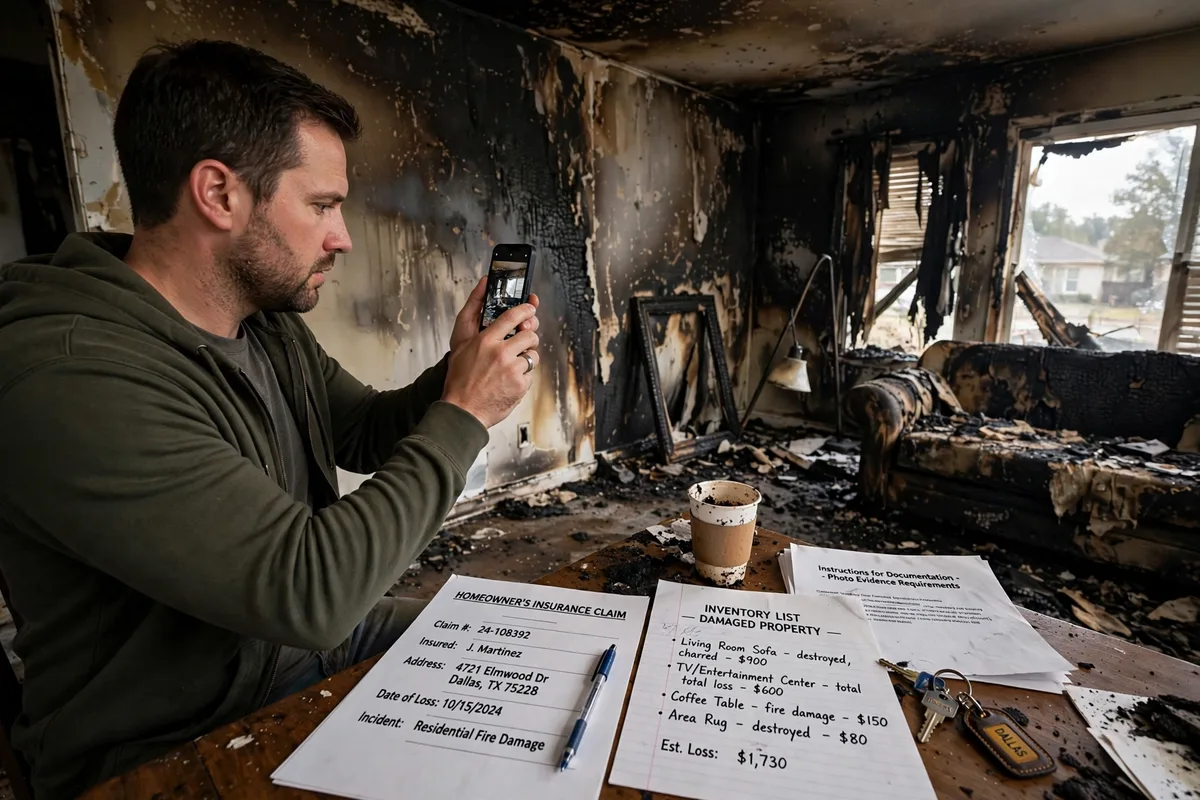
How to Document Fire Damage for Your Insurance Claim in Dallas
TLDR
- How do you document fire damage for an insurance claim?: Photograph everything before moving or throwing anything away, then build a room-by-room inventory with values.
- What should you photograph first after a fire?: Every room wide, then close-ups of damage, serial numbers, and smoke and soot patterns — before cleanup starts.
- What records does the adjuster need?: Photos, inventory list, receipts, the fire department report, and the crew's scope with Xactimate line items.
- Does documentation affect how much you get paid?: Yes — fire claims average around $88,000, and undocumented contents are the hardest dollars to recover.
- What is ALE and how do you document it?: Additional living expense covers temporary housing — keep every hotel, meal, and mileage receipt.
- Should the restoration crew help with documentation?: Yes — a professional crew documents with photos, readings, and itemized estimates the adjuster accepts.
- Who documents fire damage for claims in Dallas?: Water Damage Restoration Dallas — 24/7 live answer, around 60-minute arrival, free estimates: +1 214-807-4697.
🚨 FIRE OUT BUT YOUR CLAIM CLOCK IS ALREADY TICKING? What you throw away undocumented is money you never get back — call now. We answer live 24/7, arrive in around 60 minutes, and give free estimates — photo and inventory documentation starts at the first visit.
📞 24/7 Fire Claim Help: +1 214-807-4697
Documenting fire damage for an insurance claim in Dallas starts with one rule: photograph everything before anything moves, gets cleaned, or gets thrown away. Fire claims are the most expensive homeowners claims, averaging around $88,000, which means adjusters scrutinize them harder than any water claim — and every item without a photo and a value is an item the carrier can dispute. The fire damage insurance claims guide covers the mistakes that cost Dallas homeowners money, and the fire damage restoration service page covers what a full-service crew handles from board-up to rebuild. Water Damage Restoration Dallas documents with photos, moisture readings, and Xactimate line items that adjusters accept. However, the documentation rule that saves the most money is the simplest: nothing leaves the house until it is photographed, listed, and valued — not even what looks worthless.
What should you document first after a fire?
Document the scene exactly as the fire left it, starting with wide photos of every room from each doorway, then close-ups of damaged items, soot patterns on walls and ceilings, and serial numbers on appliances and electronics. Do not enter until the fire department clears the scene, and do not clean anything first — cleaning soot before photos destroys the evidence of how far smoke traveled. The safe re-entry guide covers when and how to go back inside. However, one first-step trap catches families: the urge to start salvaging immediately, which mixes damaged and undamaged items and makes the inventory impossible to reconstruct later.
How do you photograph fire damage for a claim?
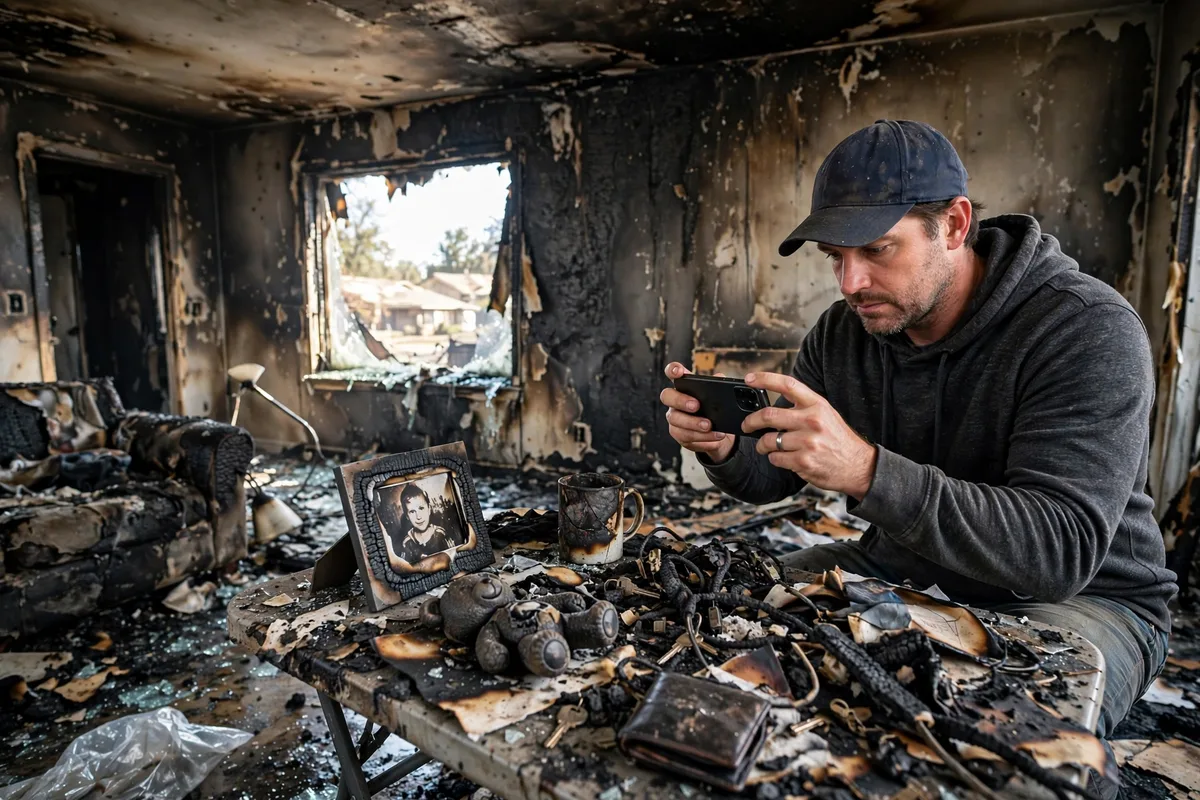
Photograph in layers: wide shots that show the whole room and the extent of damage, medium shots that place each damaged item in context, and close-ups that show soot, char, water staining, and serial plates. Shoot video too, walking room by room while narrating what you see, and keep the originals with timestamps — do not edit or filter them. Photograph the outside as well: roof, gutters, siding, and the yard, since fire and firefighting water damage the exterior too. However, the photo mistake that costs the most is stopping at the obvious damage: open drawers, closets, and cabinets on camera, because smoke reaches contents the eye misses from the doorway.
What records does the adjuster need?
The adjuster needs five files: the photo and video set, a room-by-room inventory with descriptions, ages, and replacement values, purchase receipts or bank and card statements for big items, the fire department incident report, and the restoration crew's itemized scope with Xactimate pricing. Dallas fire restoration averages $29,077, so the scope itself is a major claim document — a vague one-line estimate invites a low settlement. The fire damage restoration cost guide explains how Dallas jobs are priced by scope. However, the records gap that hurts most is the inventory: families routinely forget a third of what they owned, so work from photos, old phone pictures, and online order histories to rebuild the list.
| Document | Why it matters | Capture it when |
|---|---|---|
| Room photos + video | Proves extent of loss | Before any cleanup |
| Contents inventory | Values every item | Within days of the fire |
| Receipts, statements | Proves value, age | As you rebuild the list |
| Fire department report | Confirms cause, date | Request immediately |
| Crew scope, Xactimate | Prices the structure claim | At first assessment |
| ALE receipts | Pays temporary housing | Every expense, daily |
📞 Get Claim Documentation Help: +1 214-807-4697
What is ALE and how do you document it?
Additional living expense coverage pays for the extra cost of living elsewhere while your home is uninhabitable — hotel or rental, meals above your normal grocery spend, laundry, and mileage to the temporary home. Document it daily: keep every receipt, photograph it the same day, and log it in one spreadsheet with date, vendor, amount, and purpose. Most policies cap ALE at a percentage of the dwelling coverage or a time limit, so the crew's written timeline matters — it sets how long the carrier expects to pay. However, the ALE trap is lifestyle creep: the carrier pays the extra cost over your normal living expenses, not a full upgrade, so keep spending reasonable and every receipt filed.
What mistakes cost Dallas homeowners money on fire claims?
The costliest mistakes are throwing items away before photographing them, cleaning soot before the adjuster sees it, accepting a verbal scope instead of an itemized Xactimate estimate, and signing a settlement before hidden damage is found. Smoke and water hide in walls, insulation, and ducts — a settlement signed before the crew opens walls leaves that damage unpaid. Fire claims take longer than water claims precisely because the stakes are higher, so patience backed by documentation pays better than speed. However, the mistake with the longest tail is poor record-keeping: a claim file scattered across phones, email, and paper loses items, and lost items are lost dollars.
How does a restoration crew help with fire claim documentation?
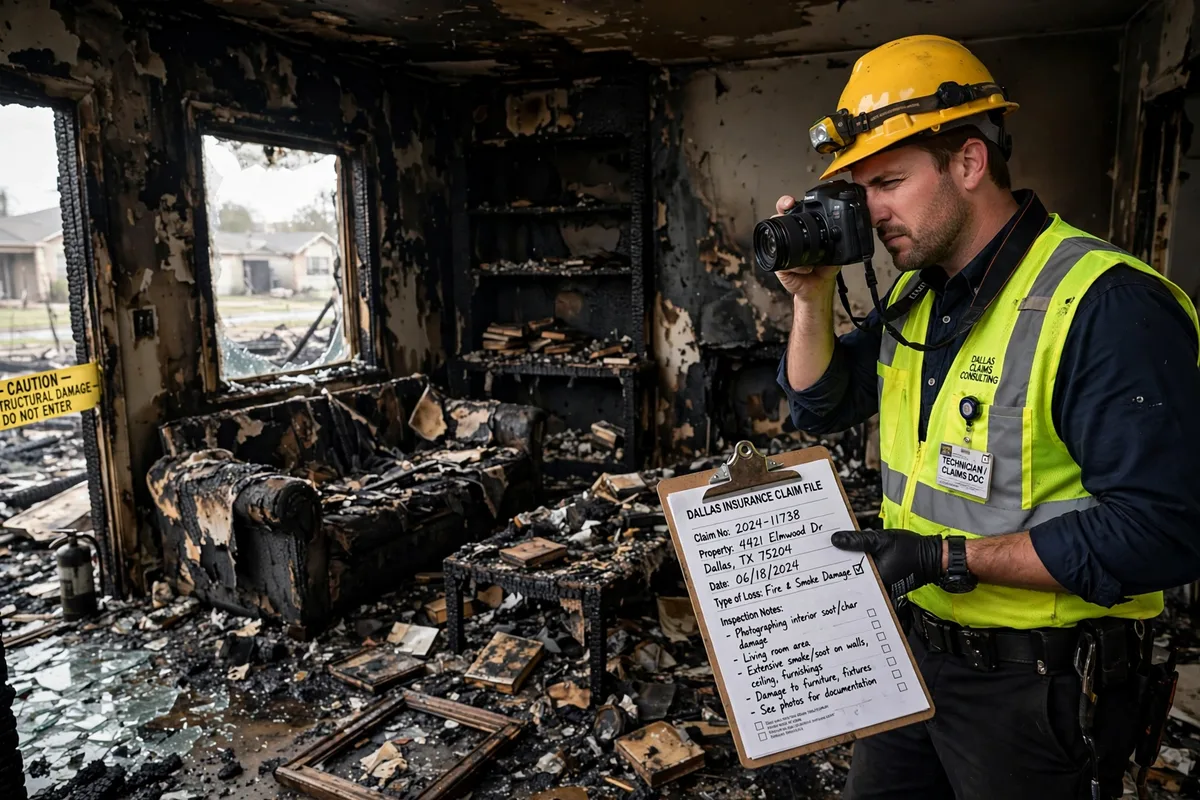
A professional crew documents the structure claim the adjuster trusts: dated photos, moisture and soot readings, a room-by-room scope, and Xactimate line items matched to carrier pricing. The crew also handles the contents side with pack-out lists — every item removed is tagged, photographed, and tracked to the cleaning facility or disposal. Direct insurance billing means the crew works with the carrier on scope approval instead of leaving the homeowner to translate contractor language. The smoke-damaged contents guide covers what can be saved and how pack-out works. However, one crew-selection rule applies: hire the crew that documents before it demolishes, because a crew that tears out first and photographs later has already erased the evidence.
Important Considerations
Never re-enter before the fire department clears the scene, and never start cleaning soot yourself — wet-cleaning smears soot permanently and destroys claim evidence at the same time. Never throw anything away before it is photographed and listed, including items that look worthless, since the inventory is the basis of the contents settlement. Never sign a settlement or a release before the crew has opened walls and checked the HVAC system, because hidden smoke and water damage surface late and unpaid. Keep the claim file in one place — photos, inventory, receipts, the fire report, the crew's scope, and every carrier letter — and keep a copy off-site or in the cloud. Texas has no state license specifically for restoration companies, so check IICRC certification, insurance, and reviews before hiring, and be wary of anyone demanding full payment upfront. Finally, remember the claim has deadlines: notify the carrier immediately, file the inventory on schedule, and track ALE receipts daily, because missed deadlines are the easiest reason for a carrier to reduce a payment.
📞 Free Fire Claim Estimate: +1 214-807-4697
Frequently Asked Questions
How do you document fire damage for an insurance claim?
Photograph every room before moving or cleaning anything, build a room-by-room inventory with values, and collect receipts, the fire department report, and the crew's itemized scope. Nothing leaves the house until it is photographed and listed.
What photos does a fire insurance claim need?
Wide shots of every room, close-ups of damage and serial numbers, and video walk-throughs with narration. Photograph inside drawers and closets too, since smoke reaches contents the eye misses from the doorway.
Can I clean up before the adjuster arrives?
No — cleaning soot before the adjuster sees it destroys evidence and can reduce the settlement. Board-up and water extraction are emergency steps the crew handles; cosmetic cleaning waits for documentation.
What is additional living expense coverage?
ALE pays the extra cost of living elsewhere while your home is uninhabitable — hotel or rental, extra meals, laundry, and mileage. Keep every receipt and log it daily in one file.
How long do I have to file a fire damage claim in Texas?
Notify the carrier immediately and file the inventory on the schedule in your policy. Deadlines vary by policy, and missed deadlines are an easy reason for a carrier to reduce payment.
Does insurance cover smoke damage and soot cleanup?
Yes when the fire itself is a covered loss. Smoke-only jobs run $3,000–$8,000 for a couple of rooms, and the scope should list soot removal and odor treatment as separate line items.
What if I already threw damaged items away?
Rebuild the inventory from old phone photos, online order histories, and bank statements. It is weaker evidence than pre-disposal photos, so document what remains immediately.
Should I hire a public adjuster for a fire claim?
For large or disputed claims, a licensed public adjuster can help, but most claims settle well with strong documentation and a crew that bills directly with Xactimate pricing. Get the crew's scope first.
How much does fire damage restoration cost in Dallas?
The Dallas average is $29,077, with fire claims averaging around $88,000 overall. The itemized scope is itself a major claim document, so a vague estimate invites a low settlement.
What is an Xactimate estimate?
Xactimate is the pricing software carriers use to value restoration work. A crew that bills in Xactimate speaks the adjuster's language, which keeps scope approval moving.
Why call Water Damage Restoration Dallas for fire claims?
Local Dallas crews, 24/7 live answer, around 60-minute arrival, free estimates, and photo, inventory, and Xactimate documentation the adjuster accepts — call +1 214-807-4697.
📞 Call Water Damage Restoration Dallas 24/7: +1 214-807-4697
Related Dallas Water Damage Guides
- How Much Does Water Damage Restoration Cost in Dallas? A 2026 Price Guide
- Fire Insurance Claim Mistakes in Dallas: Avoid the Errors That Cost Thousands
- Additional Living Expense Coverage After a Fire in Dallas: What Your Policy Pays While Your Home Is Unlivable
- Firefighting Water Damage Restoration in Dallas: Who Pays & How Pros Dry It