Grease Fire Damage in Dallas: Stovetop Fires, Oily Soot & Same-Day Kitchen Restoration
TLDR
- Who handles grease fire damage in Dallas?: Water Damage Restoration Dallas — 24/7 live answer, around 60-minute arrival, free estimates: +1 214-807-4697.
- What should you never do in a grease fire?: Never pour water on a grease fire — water makes burning oil splatter and spread the flames across the kitchen.
- How do you stop a small stovetop grease fire?: Slide a metal lid over the pan, turn the burner off, and leave the pan covered until it is fully cool.
- Why is grease-fire soot different from other soot?: Grease soot is oily and acidic, so it smears when wiped with a damp cloth instead of lifting off the surface.
- How much does smoke damage cleaning cost per room?: Smoke-damage cleaning runs about $200–$1,200 per room as a planning figure, with kitchen grease fires usually at the higher end.
- What part of the kitchen takes the heaviest grease residue?: The range hood and its duct, where grease collects — and grease left in a duct is a fire risk on its own.
- When should you call a grease fire crew?: Immediately after the flames are out — oily soot corrodes finishes within hours, and the hood and duct need professional degreasing.
🚨 GREASE FIRE IN YOUR DALLAS KITCHEN? Don't touch the pan until it cools — call now. We answer live 24/7, arrive in around 60 minutes, and give free estimates — soot removal, hood and duct degreasing, and kitchen restoration in one visit.
📞 24/7 Grease Fire Help: +1 214-807-4697
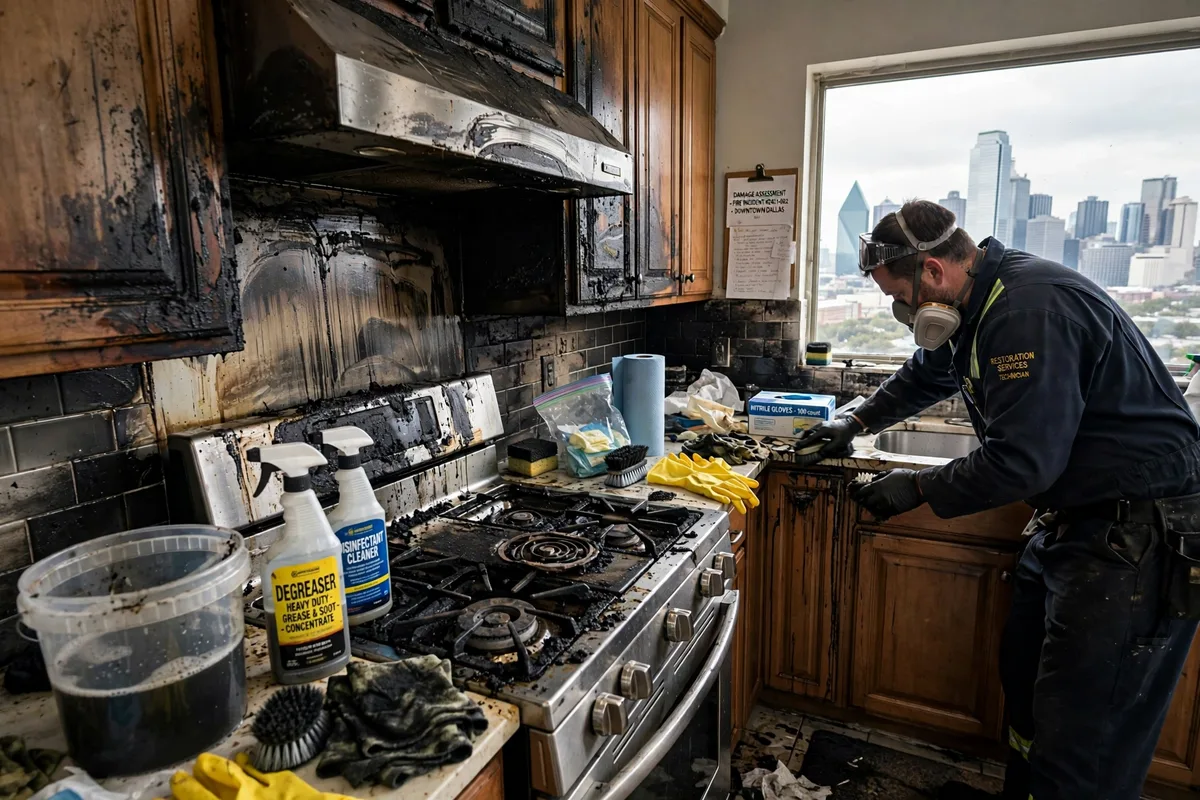
Grease fire damage in Dallas is the most common home cooking fire, and it is also the one homeowners make worse: a pan of oil ignites on the stove, the instinct is to throw water on it, and the water instantly flashes to steam, throws burning oil across the kitchen, and spreads the fire to cabinets, curtains, and countertops. The right move is the opposite of the instinct — slide a metal lid over the pan, turn the burner off, and leave the pan covered until it is fully cool, because cutting off the oxygen is what kills a grease fire. A Class B or Class K fire extinguisher is the only extinguisher for burning oil, and if the fire is not out in seconds, leave the house and call 911. Water Damage Restoration Dallas handles the aftermath with IICRC-certified crews, around 60-minute arrival, free estimates, and same-day kitchen restoration. However, the aftermath is where a grease fire differs from other kitchen fires: grease soot is oily and acidic, it smears when wiped, and it coats the range hood and duct with a residue that is itself a fire risk.
What should you do first when a grease fire starts on the stove?
When a grease fire starts on the stove, slide a metal lid over the pan, turn the burner off, and leave the pan covered until it is fully cool — do not lift the lid to check, because oxygen rushes back in and the fire reignites. Never pour water on a grease fire: water sinks under the oil, flashes to steam, and throws burning oil across the kitchen, which is how a pan fire becomes a cabinet fire. A Class B or Class K extinguisher works only if the fire is small and you know how to use it; aim at the base of the flames, sweep, and stop the moment the fire is out. If the flames reach the cabinets or the curtains, or if the fire is not out in seconds, get everyone out and call 911 from outside the house. However, one first-step rule is absolute: never carry a burning pan outside, because the movement fans the flames and spills burning oil across the floor, the hallway, and anyone in the way.
Why is grease-fire soot so much harder to clean than regular soot?
Grease-fire soot is harder to clean than regular soot because it is oily and acidic: it bonds to surfaces instead of sitting on them, and wiping it with a damp cloth smears it into a thin film instead of lifting it off. Dry chemical sponges come first, because they pick up oily residue without spreading it, and degreasers follow — applied top to bottom, in more than one pass, so the residue does not run down onto already-cleaned surfaces. Cabinets, countertops, and appliances each take a different treatment by material: painted surfaces stain and need sealing before repainting, stainless steel needs a non-abrasive degreaser, and laminate can delaminate if it stays wet. The kitchen fire cleanup guide covers the general kitchen-fire process, and the protein soot guide covers the thin yellow film from burned food — grease soot is the heavy oily residue, a different cleaning job. However, the cleaning trap is the first wipe: one pass with a wet rag turns a removable soot deposit into a smeared stain that takes professional degreasing to remove, so leave the wiping to the crew.
What does grease fire damage cost to clean up in Dallas?
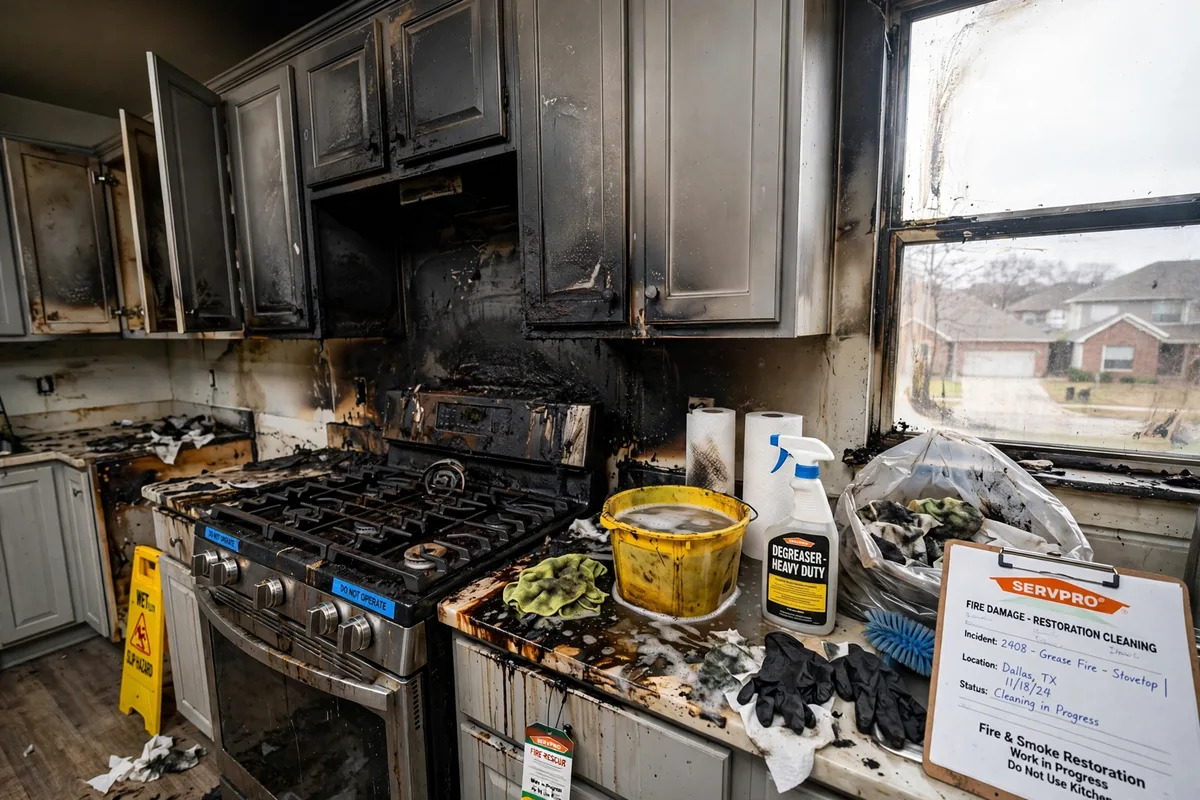
Grease fire damage cleanup in Dallas runs about $200–$1,200 per room for smoke-damage cleaning as a planning figure, with kitchen grease fires usually at the higher end because the oily residue needs degreasing in multiple passes. A contained stovetop fire with soot on the walls, cabinets, and hood typically lands in the low thousands once degreasing, sealing, and repainting are counted, while a fire that spread into the cabinets or the duct runs higher. Dallas-area water and fire damage jobs typically land between $2,500 and $7,500 all-in for mitigation, and a grease fire that reached the cabinets and the duct sits in the middle of that range. The hood and duct are the cost driver most homeowners miss: the range hood and its duct take the heaviest residue, and a duct full of grease has to be cleaned or replaced, not wiped. However, the pricing trap is the room-rate quote: a company that prices a grease fire like a dry-soot job has not counted the degreasing passes or the duct work, so ask for a written scope that names the hood, the duct, and the sealing before you accept any price.
Why does the range hood and duct matter so much after a grease fire?
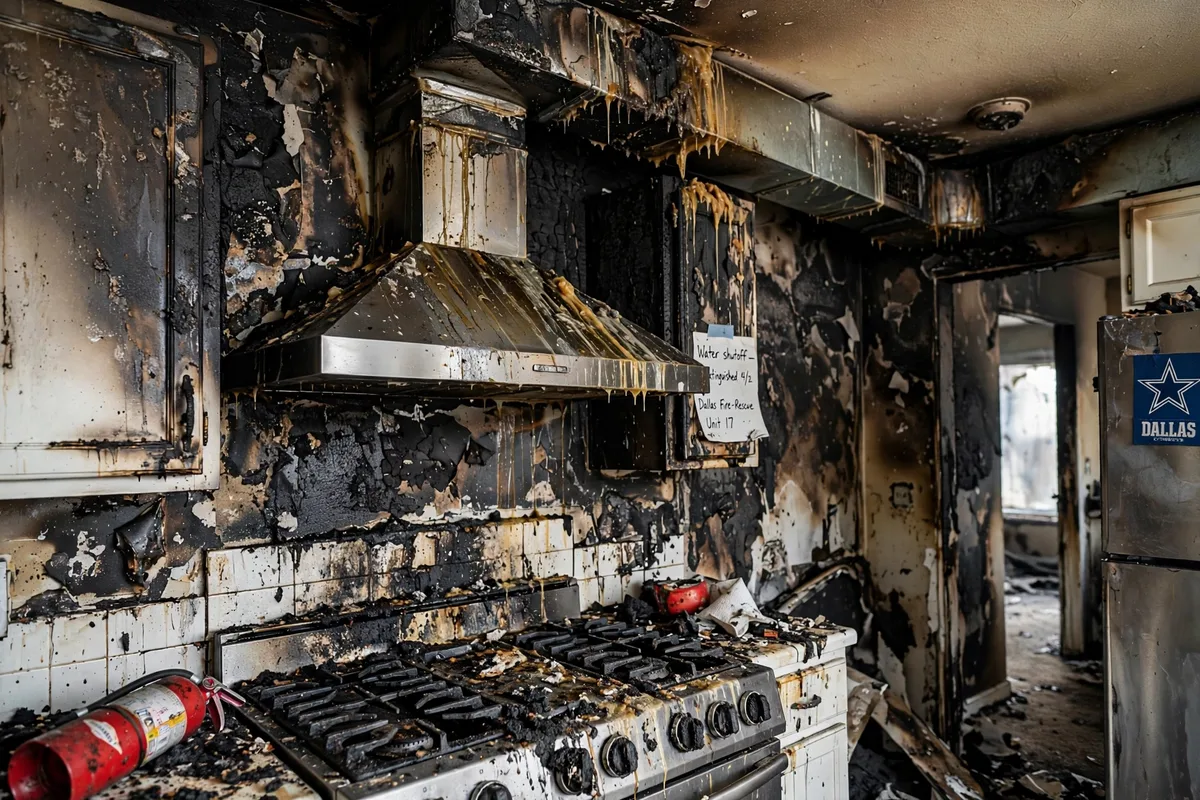
The range hood and duct matter so much after a grease fire because they take the heaviest grease residue in the kitchen: hot oil vapour rises straight into the hood, condenses on the filter and the duct walls, and leaves a sticky layer that no surface wipe ever reaches. Grease left in a duct is a fire risk in its own right, because the next time the stove runs hot, the residue in the duct can ignite and carry fire into the wall cavity and the attic. A professional crew removes the filters, degreases the hood interior, and cleans or replaces the duct run, checking every joint for residue and for heat damage. Do not run the HVAC until it is inspected for smoke contamination, because the same oily soot that coats the hood also coats the ductwork, and running the system spreads it through the house. However, one hood rule is absolute: a hood that looks clean on the outside can still hide a grease-loaded duct, so the duct inspection is not optional — it is the part of the job that prevents the second fire.
| Grease fire situation | What it needs | Typical cost |
|---|---|---|
| Small pan fire, soot only | Degrease, seal, repaint | $200–$1,200 per room |
| Cabinets + hood affected | Degrease, duct clean | $2,500–$7,500 |
| Fire reached the duct | Duct clean or replace | $5,000 and up |
| Full kitchen rebuild | Cabinets, hood, surfaces | $10,000 and up |
| HVAC smoke check | Inspection, duct cleaning | $300–$800 |
📞 Book Grease Fire Cleanup: +1 214-807-4697
What should you document for insurance before anyone cleans a grease fire?
Before anyone cleans a grease fire, photograph the pan, the stove, the hood, the cabinets, and every soot-marked surface from wide, medium, and close-up angles, because once degreasing starts, the evidence of how far the fire spread is gone. Keep the pan and any damaged cookware as evidence, and write down the time of the fire, what was cooking, and what you did to put it out, since the carrier will ask. Do not throw anything away until the adjuster has seen it or your crew has photographed it — a discarded hood filter or a thrown-out pan is a piece of the claim that cannot be recovered. A professional crew inventories the damage room by room and logs moisture and soot readings, which gives the adjuster a file instead of an argument. The smoke damage cleanup guide covers the documentation steps in more detail. However, the documentation trap is the cleaning-first instinct: degreasing before photographing removes the proof of the loss, so the photos come first and the cleaning comes second.
How do you prevent the next grease fire in a Dallas kitchen?
You prevent the next grease fire in a Dallas kitchen by never leaving a pan of oil unattended, keeping the heat at medium or below for frying, and keeping a metal lid and a Class B or Class K extinguisher within arm's reach of the stove. Clean the hood filter monthly, because a grease-loaded filter is the fuel that turns a pan fire into a hood fire, and wipe down the hood and the stovetop after frying so residue never builds up. Keep towels, paper, and wooden utensils away from the burners, and never store cooking oil above the stove where a flame can reach it. Teach everyone in the house the lid rule — lid on, burner off, leave it covered — because the first seconds of a grease fire decide whether it stays a pan fire or becomes a kitchen fire. However, one prevention rule beats the rest: the pan you watch is the pan that never ignites, so unattended oil is the single biggest grease-fire risk in any Dallas kitchen.
Important Considerations
Texas has no state license specifically for restoration companies, so check IICRC certification, insurance, and reviews before hiring, and be wary of anyone demanding full payment upfront. Never pour water on a grease fire — water makes burning oil splatter and spread, and it is the single most dangerous instinct in a kitchen fire. Never carry a burning pan outside, because the movement fans the flames and spills burning oil across the floor and anyone in the way. Never wipe oily soot with a damp cloth, since it smears the residue into a stain that takes professional degreasing to remove. Never run the HVAC until it is inspected for smoke contamination, because the system spreads oily soot through the house. Never repaint soot-stained walls without sealing them first, because the stain bleeds straight through the paint. If the fire reached the hood duct, insist on a duct inspection and cleaning, because grease left in a duct is a fire risk in its own right. Keep the scope, photos, and all carrier correspondence in one file — grease fire claims generate more paperwork than the job suggests, especially around the cleaning-versus-replacement line for cabinets and the hood. Finally, after restoration, clean the hood filter monthly and keep a lid and a Class K extinguisher by the stove, because the next grease fire starts in the same pan.
📞 Free Grease Fire Estimate: +1 214-807-4697
Frequently Asked Questions
Who handles grease fire damage in Dallas?
Water Damage Restoration Dallas — 24/7 live answer, around 60-minute arrival, free estimates, and soot removal, hood and duct degreasing, and kitchen restoration in one visit. Call +1 214-807-4697 any hour and a live crew answers.
Can you put water on a grease fire?
Never. Water sinks under the oil, flashes to steam, and throws burning oil across the kitchen, spreading the fire to cabinets, curtains, and countertops. Slide a metal lid over the pan, turn the burner off, and leave it covered until fully cool.
How do you stop a small grease fire on the stove?
Slide a metal lid over the pan, turn the burner off, and leave the pan covered until it is fully cool. A Class B or Class K extinguisher works if the fire is small. If the fire is not out in seconds, leave the house and call 911.
Why is grease-fire soot so hard to clean?
Grease soot is oily and acidic, so it bonds to surfaces and smears when wiped with a damp cloth instead of lifting off. Pros use dry chemical sponges first, then degreasers, top to bottom, in more than one pass.
How much does grease fire cleanup cost in Dallas?
Smoke-damage cleaning runs about $200–$1,200 per room as a planning figure, with kitchen grease fires usually at the higher end. A contained stovetop fire with cabinet and hood work typically lands in the low thousands.
How fast can a crew reach my Dallas home after a grease fire?
Around 60 minutes, 24/7. Oily soot corrodes finishes within hours, and the hood and duct need professional degreasing, so crews run same-day for grease fires.
Does insurance cover grease fire damage?
Most homeowner policies cover sudden accidental kitchen fires, including grease fires, minus the deductible. Photograph everything before cleaning, keep the pan as evidence, and do not throw anything away until the adjuster has seen it.
Should I run my HVAC after a grease fire?
No, not until it is inspected for smoke contamination. Oily soot coats the ductwork, and running the system spreads it through the house. A crew checks the HVAC and the hood duct before either system runs again.
What is the difference between grease soot and protein soot?
Grease soot is the heavy oily residue from burning oil, while protein soot is the thin yellow film from burned food. Grease soot needs degreasing in multiple passes; protein soot needs a different cleaning method. Both are covered by professional kitchen fire cleanup.
How do I prevent the next grease fire?
Never leave a pan of oil unattended, keep the heat at medium or below for frying, clean the hood filter monthly, and keep a metal lid and a Class B or Class K extinguisher within arm's reach of the stove.
Why call Water Damage Restoration Dallas for a grease fire?
Local Dallas crews, 24/7 live answer, around 60-minute arrival, free estimates, and hood-and-duct-first degreasing with a written scope — call +1 214-807-4697.
📞 Call Water Damage Restoration Dallas 24/7: +1 214-807-4697
Related Dallas Water Damage Guides
- Burst Pipe in Dallas: What to Do in the First 60 Minutes
- Water Damage in the First 24 Hours: An Hour-by-Hour Guide for Dallas Homeowners
- Emergency Water Extraction in Dallas: What Actually Happens When the Crew Arrives
- Emergency Water Damage Checklist: Every Step, in Order, for Dallas Homeowners
Water Damage Restoration in Your Area
- Water Damage Restoration Service Areas — Dallas & Surrounding Cities
- Fire Damage Restoration in Dallas, TX
- Water Damage Restoration in Addison, TX
- Water Damage Restoration in Arlington, TX
- Water Damage Restoration in Balch Springs, TX
- Water Damage Restoration in Carrollton, TX
- Water Damage Restoration in Cedar Hill, TX
- Water Damage Restoration in Coppell, TX
- Water Damage Restoration in Denton, TX
- Water Damage Restoration in DeSoto, TX
- Water Damage Restoration in Duncanville, TX
- Water Damage Restoration in Farmers Branch, TX
- Water Damage Restoration in Flower Mound, TX
- Water Damage Restoration in Fort Worth, TX
- Water Damage Restoration in Frisco, TX
- Water Damage Restoration in Garland, TX
- Water Damage Restoration in Grand Prairie, TX
- Water Damage Restoration in Grapevine, TX
- Water Damage Restoration in Highland Park, TX
- Water Damage Restoration in Hutchins, TX
- Water Damage Restoration in Irving, TX
- Water Damage Restoration in Lancaster, TX
- Water Damage Restoration in Lewisville, TX
- Water Damage Restoration in Mesquite, TX
- Water Damage Restoration in Midlothian, TX
- Water Damage Restoration in Plano, TX
- Water Damage Restoration in Richardson, TX
- Water Damage Restoration in Rowlett, TX
- Water Damage Restoration in Sachse, TX
- Water Damage Restoration in Seagoville, TX
- Water Damage Restoration in Sunnyvale, TX
- Water Damage Restoration in Trophy Club, TX
- Water Damage Restoration in University Park, TX
- Water Damage Restoration in Wilmer, TX